- Company Articles
- Products and Technology
- Product knowledge
- 3060 EU Standard Aluminum Profile in Retail Displays: Customizable & Sturdy Designs

3060 EU Standard Aluminum Profile in Retail Displays: Customizable & Sturdy Designs
Related Product
3060 EU Standard Aluminum Profile
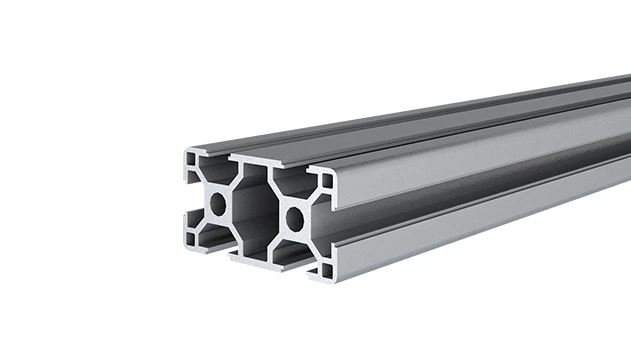
3060 is a 3.00 x 6.00CM fractional 30 series square extrusion T-slot profile with four open T-slots, two side with 3.00cm face, two side with 6.0cm face. The profile has align-a-grooves to assist in aligning connecting profiles.
Walk into any retail store—whether it's a cozy bookstore downtown, a bustling electronics shop in the mall, or a sleek clothing boutique—and you'll notice something right away: the displays. They're not just shelves or racks; they're the silent storytellers of a brand. They hold products, guide customers, and even shape how we feel about a space. But here's the thing: behind every great display is a great material. And these days, more and more retailers are turning to one material in particular to bring their vision to life: the 3060 EU standard aluminum profile.
If you've never heard of it, don't worry—you're not alone. But once you learn about its mix of sturdiness, flexibility, and endless customization options, you'll wonder how retail displays ever managed without it. Let's dive in and explore why this unassuming aluminum profile is becoming the go-to choice for retailers who refuse to compromise on design or durability.
First Things First: What Is 3060 EU Standard Aluminum Profile?
Let's start with the basics. The name "3060" might sound like a random code, but it's actually a clue to its size: this profile measures 30 millimeters in width and 60 millimeters in height. Think of it as a long, slender beam with a cross-section that's roughly a rectangle—though, thanks to modern extrusion techniques, it's far from basic. The "EU standard" part is key too; it means this profile meets strict European union guidelines for quality, safety, and consistency. That's a big deal for retailers who need materials they can trust, no matter where their store is located.
So how is it made? Aluminum profiles like this are created through a process called extrusion. Imagine pushing a soft, malleable material (in this case, aluminum alloy) through a shaped die—kind of like squeezing toothpaste out of a tube, but on an industrial scale. The result? A long, uniform beam with precise dimensions and a smooth finish. The 3060 profile is typically made from 6063 aluminum alloy, a type known for its excellent strength-to-weight ratio, corrosion resistance, and ease of machining. In short, it's tough enough to handle daily wear and tear but light enough to make installation a breeze.
But what really sets it apart from other materials? Unlike wood, which can warp or rot, or plastic, which bends under heavy loads, aluminum holds its shape. And unlike steel, it won't rust or add unnecessary weight to your displays. For retailers, that means less time worrying about repairs and more time focusing on what matters: selling products and creating a great customer experience.
So how is it made? Aluminum profiles like this are created through a process called extrusion. Imagine pushing a soft, malleable material (in this case, aluminum alloy) through a shaped die—kind of like squeezing toothpaste out of a tube, but on an industrial scale. The result? A long, uniform beam with precise dimensions and a smooth finish. The 3060 profile is typically made from 6063 aluminum alloy, a type known for its excellent strength-to-weight ratio, corrosion resistance, and ease of machining. In short, it's tough enough to handle daily wear and tear but light enough to make installation a breeze.
But what really sets it apart from other materials? Unlike wood, which can warp or rot, or plastic, which bends under heavy loads, aluminum holds its shape. And unlike steel, it won't rust or add unnecessary weight to your displays. For retailers, that means less time worrying about repairs and more time focusing on what matters: selling products and creating a great customer experience.
Why Sturdiness Matters More Than You Think in Retail Displays
Let's talk about sturdiness. When you're running a retail store, your displays take a beating. Think about it: customers lean on shelves, kids climb on lower racks (we've all seen it), and staff are constantly restocking heavy items—cans of soup, stacks of jeans, boxes of electronics. A flimsy display doesn't just look unprofessional; it's a safety hazard. That's where the 3060 aluminum profile shines.
Let's break down its strength. The 3060 profile's 30x60mm cross-section is no accident. That shape gives it exceptional rigidity, meaning it resists bending even when loaded with heavy products. For example, a material rack built with 3060 profiles—like the aptly named Material Rack B (3 row and 3 floor) —can easily hold dozens of boxes without sagging. I've seen grocery stores use these racks to store cases of bottled water, and clothing stores stack folded sweaters on them for weeks on end—no warping, no wobbling, just reliable support.
And it's not just about weight. Retail spaces are busy, and displays get bumped, pushed, and rearranged constantly. Aluminum's inherent toughness means the 3060 profile can handle those daily knocks without denting or cracking. Plus, its corrosion resistance is a lifesaver in environments like bakeries (where humidity is high) or outdoor pop-up shops (where rain or snow might strike). Unlike steel, you won't find rust spots forming after a few months of use. Even better, it's easy to clean—just wipe it down with a damp cloth, and it looks as good as new.
One retailer I spoke to recently put it best: "We used to replace our wooden display shelves every year because they'd get scratched, stained, or just fall apart. Since switching to 3060 aluminum, we haven't had to replace a single shelf in three years. It's like the displays finally keep up with our store's pace." That's the kind of peace of mind every retailer deserves.
Let's break down its strength. The 3060 profile's 30x60mm cross-section is no accident. That shape gives it exceptional rigidity, meaning it resists bending even when loaded with heavy products. For example, a material rack built with 3060 profiles—like the aptly named Material Rack B (3 row and 3 floor) —can easily hold dozens of boxes without sagging. I've seen grocery stores use these racks to store cases of bottled water, and clothing stores stack folded sweaters on them for weeks on end—no warping, no wobbling, just reliable support.
And it's not just about weight. Retail spaces are busy, and displays get bumped, pushed, and rearranged constantly. Aluminum's inherent toughness means the 3060 profile can handle those daily knocks without denting or cracking. Plus, its corrosion resistance is a lifesaver in environments like bakeries (where humidity is high) or outdoor pop-up shops (where rain or snow might strike). Unlike steel, you won't find rust spots forming after a few months of use. Even better, it's easy to clean—just wipe it down with a damp cloth, and it looks as good as new.
One retailer I spoke to recently put it best: "We used to replace our wooden display shelves every year because they'd get scratched, stained, or just fall apart. Since switching to 3060 aluminum, we haven't had to replace a single shelf in three years. It's like the displays finally keep up with our store's pace." That's the kind of peace of mind every retailer deserves.

Customization: Because No Two Retail Stores Are the Same
Here's the truth about retail: cookie-cutter displays don't cut it anymore. A high-end jewelry store needs delicate, minimalist shelving; a toy store wants bright, playful racks that double as part of the decor; a hardware store needs rugged, no-nonsense storage that can handle power tools. The 3060 aluminum profile isn't just sturdy—it's
adaptable
, and that adaptability is its superpower.
Let's start with the basics of customization: cutting and drilling. Unlike some materials that crack or splinter when modified, aluminum is easy to work with. You can cut 3060 profiles to any length with a standard hacksaw or miter saw, and drilling holes for screws or bolts is a breeze. That means if you need a 4-foot shelf for a checkout counter or a 10-foot display for a window showcase, you can get it done in minutes, not days.
But the real magic is in the aluminum profile accessories . These little add-ons turn a simple beam into a fully customizable system. Let's say you want to build a corner display: grab a 90° aluminum profile connector, slide it into the T-slot (that's the groove running along the length of the profile), and bolt it in place—done. Need to cap the ends to prevent sharp edges (especially important if you have little kids in the store)? Pop on some 3060 aluminum profile end caps , and suddenly your display looks polished and safe.
I visited a local boutique last month that used 3060 profiles to create floating shelves for their handbags. They wanted the shelves to angle slightly downward so customers could see the bags better, so they used adjustable angle connectors to tilt each shelf by 15 degrees. Then, they added LED strip lights along the T-slots to highlight the products at night. The result? A display that felt high-end and unique—exactly what their brand needed. And because the system is modular, they can rearrange the shelves next season when they launch new handbag styles. No need to buy new displays; just reconfigure the existing ones. That's customization that saves time and money.
Let's start with the basics of customization: cutting and drilling. Unlike some materials that crack or splinter when modified, aluminum is easy to work with. You can cut 3060 profiles to any length with a standard hacksaw or miter saw, and drilling holes for screws or bolts is a breeze. That means if you need a 4-foot shelf for a checkout counter or a 10-foot display for a window showcase, you can get it done in minutes, not days.
But the real magic is in the aluminum profile accessories . These little add-ons turn a simple beam into a fully customizable system. Let's say you want to build a corner display: grab a 90° aluminum profile connector, slide it into the T-slot (that's the groove running along the length of the profile), and bolt it in place—done. Need to cap the ends to prevent sharp edges (especially important if you have little kids in the store)? Pop on some 3060 aluminum profile end caps , and suddenly your display looks polished and safe.
I visited a local boutique last month that used 3060 profiles to create floating shelves for their handbags. They wanted the shelves to angle slightly downward so customers could see the bags better, so they used adjustable angle connectors to tilt each shelf by 15 degrees. Then, they added LED strip lights along the T-slots to highlight the products at night. The result? A display that felt high-end and unique—exactly what their brand needed. And because the system is modular, they can rearrange the shelves next season when they launch new handbag styles. No need to buy new displays; just reconfigure the existing ones. That's customization that saves time and money.
From Checkout Counters to Stock Rooms: Real-World Uses in Retail
Okay, so we know it's sturdy and customizable—but how does that translate to actual retail spaces? Let's walk through a few common (and not-so-common) ways retailers are using 3060 aluminum profiles to level up their displays.
Workbenches: More Than Just a Place to Ring Up Sales
When you think of a
workbench
in a retail store, you might picture the checkout counter—and that's a great start. A checkout workbench built with 3060 profiles is sturdy enough to hold cash registers, barcode scanners, and even a pile of shopping bags, but it's also sleek enough to match the store's decor. For example, a coffee shop near my house uses a 3060 workbench as their countertop base. They wrapped the aluminum profiles in wood paneling to match their rustic vibe, but underneath, the aluminum provides the strength to support the heavy espresso machine and daily foot traffic.
But workbenches aren't just for checkout. Many retailers use them in back-of-house areas too—think product assembly (like gift baskets or custom gift sets), price tagging stations, or even small-scale repairs. The
Workbench E (single deck-without caster)
is a popular choice here. It's simple, durable, and can be customized with shelves or tool hooks using 3060 accessories. One toy store I know uses these workbenches to build custom toy displays in the stock room before rolling them out to the sales floor—no more struggling with wobbly tables!
Material Racks: Organizing Stock Without the Headache
Let's talk about the unsung heroes of retail: stock rooms. A messy stock room means wasted time hunting for products, frustrated staff, and missed sales. That's where material racks built with 3060 profiles come in. Take the
Material Rack B (3 row and 3 floor)
—it's designed with three rows and three levels, giving you plenty of space to organize products by category, size, or color. The 3060 profiles form the vertical supports and horizontal shelves, ensuring each level can hold heavy boxes without bowing.
A sporting goods store I consulted for last year was drowning in disorganized inventory—baseball gloves in one corner, soccer balls in another. We installed Material Rack B units along one wall, using color-coded bins on each shelf to separate products by sport. Now, staff can find what they need in seconds, and restocking the sales floor is a breeze. Plus, because the racks are made with aluminum, they're light enough that two people can move them if the stock room layout needs to change—no need for heavy machinery.
Aluminum Guide Rails: Guiding Customers (and Products) Smoothly
Ever walked through a store and noticed how products seem to "flow" from one section to the next? That's often thanks to guide rails.
Aluminum Guide Rail A
and
Aluminum Guide Rail B
are two common types used in retail, and they pair perfectly with 3060 profiles. These rails can be mounted along shelves to keep products aligned, or used as dividers to separate different brands or sizes.
I saw a clever use of Aluminum Guide Rail A in a bookstore recently. They used the rails to create sliding book displays—customers could push a row of books along the rail to browse different titles without having to pull books off the shelf. The rails were mounted on 3060 profile frames, which were bolted to the wall for stability. It was interactive, saved space, and made browsing feel like a game—kids (and adults!) loved it.
Guide rails also shine in checkout lines. Many stores use them to create "express lanes" or to guide shopping carts smoothly toward the registers. The 3060 profiles provide a strong base for the rails, ensuring they stay in place even when carts bump against them.
Accessories: The Little Things That Make a Big Difference
If the 3060 aluminum profile is the backbone of a great retail display, then the
aluminum profile accessories
are the joints, muscles, and nerves that bring it to life. Without the right accessories, even the sturdiest profile would just be a metal beam. Let's take a look at some of the most useful ones—and how they make customization possible.
To give you a clearer picture, here's a quick breakdown of essential accessories and their roles:
The best part? These accessories are designed to work together seamlessly. You don't have to hunt for compatible parts—most suppliers offer full kits that include profiles, connectors, end caps, and everything else you need to build a specific display. That means less time shopping around and more time building the retail space of your dreams.
To give you a clearer picture, here's a quick breakdown of essential accessories and their roles:
| Accessory | What It Does | Retail Use Case |
|---|---|---|
| 3060 Aluminum Profile End Caps | Covers the open ends of profiles to prevent sharp edges and add a finished look. | Used on all exposed profile ends in customer areas to avoid cuts or snags on clothing. |
| 90° Aluminum Profile Connector | Joins two profiles at a right angle (e.g., vertical supports to horizontal shelves). | Building corner shelves or L-shaped checkout counters. |
| T-Slot Rubber Seal Cover | Fills the T-slot groove to protect against dust and give a smooth, clean finish. | Used on display shelves where products might catch on the T-slot (e.g., delicate fabrics). |
| Adjustable Foot Bracket | Attaches to the bottom of vertical profiles to level displays on uneven floors. | Essential for older retail spaces with sloped or bumpy floors—keeps racks from wobbling. |
| Aluminum Profile Locking Handle | Adds a lockable door or panel to enclosed displays (e.g., for high-value items). | Jewelry stores using 3060 profiles to build locked display cases. |
The best part? These accessories are designed to work together seamlessly. You don't have to hunt for compatible parts—most suppliers offer full kits that include profiles, connectors, end caps, and everything else you need to build a specific display. That means less time shopping around and more time building the retail space of your dreams.
Why 3060 Aluminum Profile Stands Out in a Crowded Market
Let's be honest: there are plenty of materials out there for retail displays. So why choose 3060 EU standard aluminum profile over wood, steel, or even other aluminum profiles? It comes down to three things: balance, versatility, and value.
Wood is warm and natural, but it's heavy, prone to damage, and hard to customize without specialized tools. Steel is strong, but it's heavy (making installation a nightmare) and can rust. Other aluminum profiles, like the smaller 2020 or larger 4080, have their uses, but the 3060 hits that sweet spot between size and strength. It's not too bulky for small displays, but not too flimsy for heavy-duty use.
And let's talk about value. Yes, aluminum profiles might cost a bit more upfront than particleboard shelves, but they last so much longer. A retailer who invests in 3060 displays can expect them to last 5-10 years with minimal maintenance, whereas wooden shelves might need replacing every 1-2 years. When you factor in the cost of replacements, repairs, and the lost sales from shoddy-looking displays, aluminum actually saves money in the long run.
One final thought: sustainability. More and more consumers care about eco-friendly businesses, and aluminum is 100% recyclable. When your 3060 displays finally reach the end of their life (decades from now!), they can be melted down and reused—no waste, no guilt. That's a selling point you can feel good about sharing with your customers.
Wood is warm and natural, but it's heavy, prone to damage, and hard to customize without specialized tools. Steel is strong, but it's heavy (making installation a nightmare) and can rust. Other aluminum profiles, like the smaller 2020 or larger 4080, have their uses, but the 3060 hits that sweet spot between size and strength. It's not too bulky for small displays, but not too flimsy for heavy-duty use.
And let's talk about value. Yes, aluminum profiles might cost a bit more upfront than particleboard shelves, but they last so much longer. A retailer who invests in 3060 displays can expect them to last 5-10 years with minimal maintenance, whereas wooden shelves might need replacing every 1-2 years. When you factor in the cost of replacements, repairs, and the lost sales from shoddy-looking displays, aluminum actually saves money in the long run.
One final thought: sustainability. More and more consumers care about eco-friendly businesses, and aluminum is 100% recyclable. When your 3060 displays finally reach the end of their life (decades from now!), they can be melted down and reused—no waste, no guilt. That's a selling point you can feel good about sharing with your customers.
Wrapping Up: Your Retail Display, Reimagined
At the end of the day, retail is about connection—between customers and products, between brands and their stories. The 3060 EU standard aluminum profile might seem like just a piece of metal, but it's really a tool to strengthen those connections. It's sturdy enough to hold the products your customers love, flexible enough to adapt to your brand's unique style, and durable enough to grow with your business.
Whether you're building a simple shelf for greeting cards or a complex material rack for stock storage, the 3060 profile and its accessories give you the freedom to design displays that work for you—not against you. So the next time you're planning a store refresh, or even starting from scratch, ask yourself: What would my space look like if I stopped compromising on sturdiness or customization? With 3060 aluminum profiles, the answer might just surprise you.
Whether you're building a simple shelf for greeting cards or a complex material rack for stock storage, the 3060 profile and its accessories give you the freedom to design displays that work for you—not against you. So the next time you're planning a store refresh, or even starting from scratch, ask yourself: What would my space look like if I stopped compromising on sturdiness or customization? With 3060 aluminum profiles, the answer might just surprise you.