- Company Articles
- Products and Technology
- Product knowledge
- 360-Degree Movement: Swivel Range of Flat Swivel Castor Wheel with Brake Explained

360-Degree Movement: Swivel Range of Flat Swivel Castor Wheel with Brake Explained
Related Product
Flat Swivel Castor Wheel With Brake
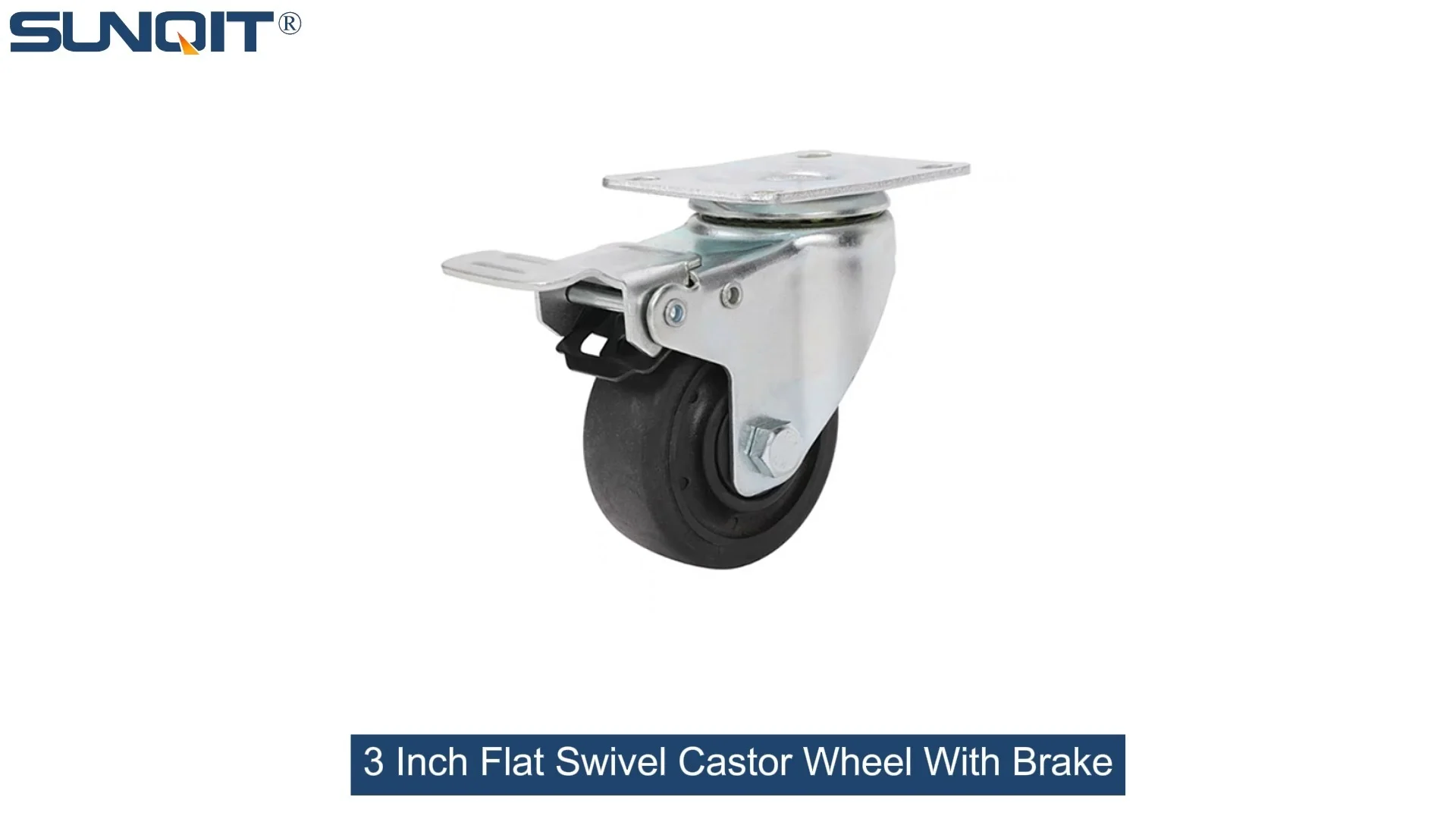
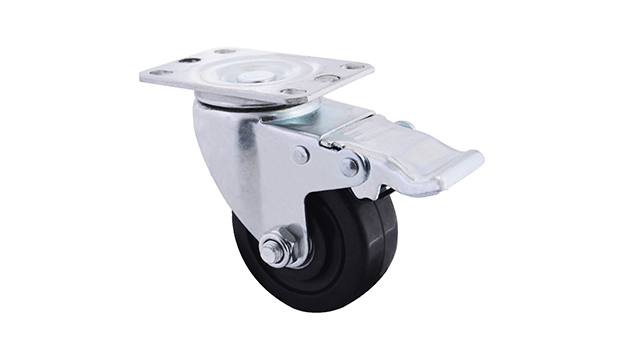
Chair Casters Ball Bearing Wheels Rubber Base with brake design. Resistant to abrasion, impact and corrosion. Heavy payload can hold 70Kgs per pcs,which can make it works at a stable and smooth status.
In the bustling world of workshops, factories, and even offices, the ability to move equipment smoothly and safely can make or break daily operations. Think about the last time you tried to shift a heavy workbench across a warehouse floor, or reposition a material rack to streamline a production line. The difference between frustration and efficiency often comes down to one small but mighty component: the caster wheel. Among the various types of caster wheels available, the flat swivel castor wheel with brake stands out for its unique blend of mobility, stability, and control. Whether you're setting up a lean manufacturing system, equipping a workshop with flexible workstations, or simply need reliable movement for heavy loads, understanding its swivel range—and how it works—is key to making the most of this tool. In this article, we'll break down everything you need to know about the swivel range of flat swivel castor wheels with brakes, from its mechanics to real-world benefits, and why it matters for your workspace.
What Exactly Is a Flat Swivel Castor Wheel with Brake?
Before diving into swivel ranges, let's start with the basics: what makes a flat swivel castor wheel with brake different from other caster wheels? At its core, this type of caster is designed to combine three critical functions: smooth rotation, stable mounting, and on-demand stopping power. Let's break down its key components:
1. The "Flat" Mounting Plate
The term "flat" here refers to the mounting plate—the part that attaches the caster to your equipment (like a workbench, trolley, or material rack). Unlike some casters with curved or angled plates, a flat mounting plate sits flush against the bottom of the equipment, distributing weight evenly and reducing the risk of wobbling. This flat design is especially important for stability, especially when the equipment is loaded with heavy items. Most mounting plates are made of durable steel or aluminum, ensuring they can handle the stress of frequent movement.
2. The Swivel Mechanism
The "swivel" in the name is where the magic happens. Unlike fixed casters, which only roll forward and backward, swivel casters can rotate horizontally—often a full 360 degrees. This rotation is made possible by a swivel head, which sits between the mounting plate and the wheel. Inside the swivel head, you'll find a raceway (a grooved track) and ball bearings that allow the caster to pivot smoothly. The quality of these bearings directly impacts how easily the caster swivels; high-grade steel bearings, for example, reduce friction and ensure consistent movement even under heavy loads.
3. The Wheel Itself
Of course, no caster is complete without the wheel. Caster wheels come in a variety of materials, including rubber, polyurethane, nylon, and steel, each suited to different floor types and load capacities. For example, rubber wheels are gentle on hardwood or tile floors, while polyurethane wheels offer a balance of durability and shock absorption—ideal for uneven factory floors. The wheel size also matters: larger wheels (4-6 inches) roll more easily over debris, while smaller wheels (2-3 inches) are better for tight spaces.
4. The Brake System
The "with brake" part is non-negotiable for safety and control. Most flat swivel casters with brakes use a foot-operated lever that, when pressed, locks either the wheel (to prevent rolling) or both the wheel and swivel head (to prevent both rolling and rotation). Some brakes even have a "total lock" feature, which is crucial when you need the equipment to stay completely stationary—like during assembly work on a workbench or when loading/unloading materials.
5. Caster Accessories: The Unsung Heroes
While the main components get the spotlight, caster accessories play a vital role in performance. These include washers to reduce friction between the swivel head and mounting plate, locknuts to secure the wheel axle, and dust covers to keep debris out of the swivel mechanism. Even small accessories like these can extend the life of your caster, ensuring it swivels smoothly for years.
The Swivel Range: What It Means and Why It Matters
Now, let's focus on the star of the show: the swivel range. Simply put, the swivel range is the maximum degree to which the caster can rotate horizontally. For most flat swivel castor wheels with brakes, this range is a full 360 degrees—but not all swivel ranges are created equal. Some casters might have a limited range (e.g., 270 degrees) due to design constraints, while others offer continuous 360-degree rotation. So, why does this matter?
Maneuverability in Tight Spaces
A full 360-degree swivel range turns even bulky equipment into a nimble tool. Imagine a loaded material rack in a warehouse: with fixed casters, you'd need to push it straight back, then sideways, then straight again to get it around a corner. With a 360-degree swivel caster, you can pivot the rack in place, reducing the turning radius and making it easy to navigate narrow aisles or around obstacles. This isn't just about saving time—it's about reducing the risk of collisions and worker strain.
Efficiency in Lean Systems
In lean system environments, where efficiency and waste reduction are priorities, a full swivel range is a game-changer. Lean manufacturing relies on "flow"—the smooth movement of materials and work-in-progress through the production line. A workbench on 360-degree swivel casters can be quickly repositioned to align with a conveyor belt, or a trolley can be spun around to unload materials directly into a machine. Without that flexibility, teams might waste time rearranging equipment, disrupting the flow and increasing lead times.
Adapting to Dynamic Workspaces
Modern workspaces are rarely static. A workshop might reconfigure its layout weekly to accommodate new projects, or a warehouse might shift storage zones based on seasonal demand. With a flat swivel castor wheel with brake, your equipment adapts with you. Need to move a workbench from one corner to another? Swivel it, roll it, lock the brake, and you're ready to go. No disassembly, no heavy lifting—just quick, efficient reconfiguration.
How Does 360-Degree Swivel Actually Work?
You might be wondering: What allows a caster to spin a full 360 degrees without getting stuck? The answer lies in the swivel head's design. Let's take a closer look at the mechanics:
The Raceway and Ball Bearings
At the heart of the swivel mechanism is the raceway—a circular track inside the swivel head. Steel balls (or sometimes rollers) sit inside this track, acting as the point of contact between the stationary mounting plate and the rotating wheel assembly. As you push or pull the equipment, the balls roll along the raceway, allowing the wheel to pivot freely. High-quality casters use precision-machined raceways and hardened steel balls to minimize friction, ensuring smooth rotation even under heavy loads.
The Swivel Stop (or Lack Thereof)
To achieve 360 degrees, most swivel casters omit a "swivel stop"—a physical barrier that would limit rotation. Instead, the raceway is continuous, allowing the balls to loop around indefinitely. Some casters do include a stop for safety (e.g., to prevent the swivel head from spinning while the brake is engaged), but these are usually adjustable or can be removed if full rotation is needed.
Load Distribution
Even with a well-designed raceway, a caster won't swivel smoothly if the load isn't distributed evenly. That's why the flat mounting plate is so important: it ensures the weight of the equipment is spread across the entire swivel head, preventing uneven pressure on the ball bearings. If the load is off-center, the caster might bind or swivel sluggishly—so always mount casters symmetrically on your equipment (e.g., four casters, one at each corner) for best results.

Factors That Affect Swivel Range and Smoothness
Not all 360-degree swivel casters perform the same. Several factors can impact how well a caster swivels, from the environment to maintenance habits. Let's break them down:
1. Load Capacity
Every caster has a maximum load capacity (e.g., 500 lbs per caster). Exceeding this capacity strains the swivel mechanism, causing the ball bearings to wear down faster and the raceway to warp. Over time, this can reduce the swivel range or make rotation jerky. Always check the load rating before purchasing—remember, if your equipment weighs 1,000 lbs, you'll need four casters each rated for at least 250 lbs (plus a safety margin).
2. Floor Conditions
Rough, uneven floors or debris (like loose screws, gravel, or oil spills) can hinder swivel movement. Even a small pebble stuck in the swivel head can cause the caster to pivot unevenly. That's why polyurethane or rubber wheels are better for rough floors—they absorb shocks and roll over small obstacles more easily—while keeping floors clean (sweeping, mopping) helps maintain smooth swivel action.
3. Lubrication
Like any moving part, the swivel mechanism needs lubrication to reduce friction. Without it, the ball bearings and raceway can grind against each other, leading to rust and stiffness. Most manufacturers recommend lubricating the swivel head every 3-6 months (more often in dusty or humid environments) with a high-quality grease or oil. A quick spray of lubricant can make a world of difference in swivel smoothness.
4. Caster Accessories and Wear
Over time, caster accessories like washers, locknuts, or axle pins can loosen or wear out. A loose locknut, for example, might cause the wheel to wobble, which in turn affects swivel alignment. Regularly inspecting and tightening these accessories ensures the caster stays stable and the swivel range remains consistent. If parts are worn (e.g., cracked bearings), replacing them promptly prevents further damage.

Swivel Castors vs. Fixed Castors: When to Choose Which
While 360-degree swivel casters are versatile, there are times when fixed casters (which only roll forward/backward) might be a better fit. Let's compare the two to help you decide:
| Feature | Flat Swivel Castor Wheel with Brake (360°) | Fixed Castor |
|---|---|---|
| Swivel Range | 360 degrees (full rotation) | 0 degrees (only forward/backward) |
| Maneuverability | High—ideal for tight spaces and obstacles | Low—best for straight-line movement |
| Stability | Good (with brake engaged); may wobble slightly when unlocked | Excellent (no swivel movement to cause instability) |
| Best For | Workbenches, trolleys, material racks in dynamic/lean environments | Heavy machinery, stationary storage racks, straight conveyor lines |
| Cost | Slightly higher (due to swivel mechanism) | Lower (simpler design) |
Pro tip: For maximum flexibility, many setups use a mix of swivel and fixed casters. For example, a trolley might have two swivel casters with brakes at the front and two fixed casters at the back. This combination allows easy steering (thanks to the swivel casters) while maintaining straight-line stability when moving forward.
Maintaining Your Flat Swivel Castor Wheel with Brake: Tips for Longevity
To keep your swivel casters performing at their best—and to preserve that full 360-degree range—regular maintenance is key. Here's a simple routine to follow:
1. Clean the Swivel Head and Wheels
Dust, dirt, and debris are the biggest enemies of smooth swivel movement. At least once a month, wipe down the swivel head with a dry cloth to remove dust, and use a brush to clean out any debris from the raceway. For the wheels, check for stuck-on grime (like oil or grease) and wipe them with a damp cloth. If you're in a particularly dusty environment (e.g., a woodworking shop), consider using compressed air to blow out hard-to-reach areas.
2. Lubricate the Swivel Mechanism
As mentioned earlier, lubrication is critical. Use a lithium-based grease or light machine oil (check the manufacturer's recommendations) and apply a small amount to the swivel head's raceway and ball bearings. Avoid over-lubricating, as excess grease can attract more dirt. For the wheel axles, a drop of oil every few months will keep them rolling smoothly.
3. Inspect and Tighten Accessories
Loose caster accessories (like bolts, locknuts, or washers) can cause wobbling or uneven swivel. Every 2-3 months, use a wrench to tighten any loose fasteners. Also, check the brake lever: if it's sticking or not fully engaging, adjust the tension or clean the mechanism with a degreaser. A brake that doesn't lock properly is a safety hazard—don't ignore it!
4. replace Worn Parts Promptly
Even with good maintenance, parts will wear out over time. Signs of wear include: stiff swivel movement, a wobbly wheel, or a brake that slips. Common replacement parts include ball bearings, axles, and brake pads. Most caster suppliers offer replacement parts, so you won't need to buy a whole new caster—just swap out the worn component.
Real-World Stories: How Swivel Castors Improve Workflow
To bring this all to life, let's look at a few examples of how flat swivel castor wheels with brakes have made a difference in real workplaces:
Case Study 1: A Small Electronics Assembly Workshop
A small electronics company was struggling with slow assembly times. Their workbenches were fixed to the floor, so workers had to walk back and forth between the bench, parts bin, and testing station—wasting up to 2 hours a day. After installing workbenches with flat swivel castor wheels with brakes, they reconfigured the layout: each workbench could now roll directly to the parts bin, then to the testing station, reducing walking time by 75%. The 360-degree swivel made it easy to align the bench with the conveyor belt, and the brake kept it steady during assembly. Within a month, production output increased by 15%.
Case Study 2: A Warehouse Material Handling Team
A warehouse team was using fixed-caster trolleys to move boxes from the receiving dock to storage. The trolleys were hard to maneuver around pallets and other obstacles, leading to frequent delays and occasional spills. Switching to trolleys with 360-degree swivel casters with brakes changed everything. Workers could now pivot the trolleys in place, navigate tight aisles, and lock the brakes while loading/unloading. As one team member put it: "It's like going from a shopping cart with a stuck wheel to a brand-new one—everything just flows better."
Final Thoughts: Why Swivel Range Matters for Your Workspace
The swivel range of a flat swivel castor wheel with brake might seem like a small detail, but it has a big impact on how your workspace functions. A full 360-degree range turns heavy, bulky equipment into tools that adapt to your needs—saving time, reducing strain, and boosting efficiency. Whether you're running a lean system , managing a warehouse, or setting up a flexible workshop, choosing the right caster with the right swivel range is an investment in productivity and safety.
So, the next time you're shopping for casters, remember: it's not just about rolling—it's about rolling smart. Look for a flat swivel castor wheel with a reliable brake, a full 360-degree swivel range, and quality components (like durable bearings and caster accessories ). With the right casters under your equipment, you'll wonder how you ever worked without them.