- Company Articles
- Products and Technology
- Product knowledge
- 38 Aluminum Roller Track Black ESD: Common Myths vs. Facts

38 Aluminum Roller Track Black ESD: Common Myths vs. Facts
Related Product
38 Aluminum Roller Track Black ESD
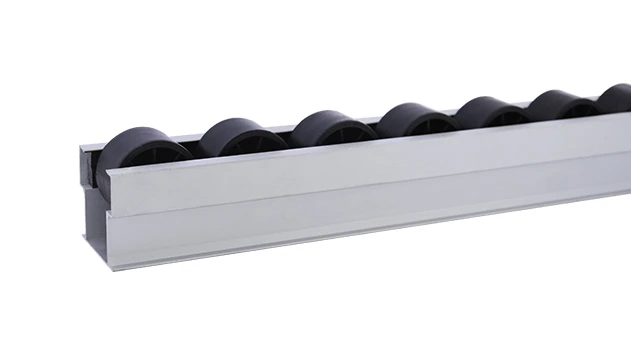
Durable and smooth-running modular roller rails. The system is fully assembled. The roller rail profile contains plastic rollers mounted on steel axles. Aluminum frame with plastic wheel make it anti corrosion,and material convey more smooth.
If you've ever stepped into a modern manufacturing facility—whether it's assembling smartphones, packing medical devices, or organizing warehouse inventory—you've probably seen roller tracks in action. But when it comes to the 38 Aluminum Roller Track Black ESD, there's a lot of confusion floating around. Is it only for fancy industries? Does the ESD coating wear off too fast? Can it fit into your existing setup without breaking the bank? Let's cut through the noise and separate the myths from the hard facts.
First, let's get clear on what this track is: It's a 38mm-wide aluminum roller track with a black electrostatic discharge (ESD) coating, designed to safely transport parts while preventing static electricity from damaging sensitive components like circuit boards or medical sensors. It's a staple in lean manufacturing environments, but many teams hold onto outdated beliefs that keep them from leveraging its full potential.
Myth 1: ESD Roller Tracks Are Only for High-End, Niche Industries
The Myth
"We don't need ESD protection—our products aren't that sensitive. This track is just for aerospace or military use."
The Fact
Static damage isn't limited to high-tech aerospace parts. Even consumer electronics like smartphones, tablets, or wireless earbuds are vulnerable to electrostatic discharge. A single static spark (invisible to the naked eye) can ruin a circuit board, leading to costly reworks or product returns.
The 38 Aluminum Roller Track Black ESD is widely used in everyday industries like 3C assembly, medical device manufacturing, and even automotive parts production. For example, a mid-sized 3C factory in Shenzhen uses this track to move smartphone components from the soldering station to the testing area—cutting static-related defects by 40% in just three months.
Moreover, it's an integral part of lean pipe systems that help streamline workflows across all manufacturing sectors, not just niche ones.
Myth 2: The Black ESD Coating Wears Off Quickly, Making It a Poor Investment
The Myth
"The ESD coating will scratch off after a few months of use, so we'll have to replace the track constantly."
The Fact
Quality matters here. The 38 Aluminum Roller Track Black ESD uses a durable, epoxy-based ESD coating that's applied through an electrostatic spray process. This coating bonds tightly to the aluminum surface, resisting scratches from regular use (like moving plastic bins or metal parts).
To back this up, let's look at data from a long-term user: A medical device manufacturer has been using these tracks for over two years in their packaging line. They report that less than 5% of their tracks show any sign of coating wear—and even those still maintain their ESD properties (measured at 10^6 to 10^9 ohms, which meets industry standards).
Proper maintenance helps too: Avoid using abrasive cleaners or sharp tools on the track surface. Wiping it down with a soft, lint-free cloth and a mild detergent is enough to keep it in top shape.

Myth3: It's Not Compatible With Other Lean System Components
The Myth
"We already have a lean setup with workbenches and flow racks—this track won't fit in with our existing gear."
The Fact
Flexibility is at the core of lean manufacturing, and this track is designed to play well with others. It's fully compatible with a wide range of lean system components, including:
- Lean pipe workbenches (like Workbench E from our product line)
- Flow racks for parts storage and picking
- Aluminum profile accessories such as connectors, brackets, and end caps
- ESD workstations where static control is critical
For example, you can attach this track to a lean pipe workbench to create a gravity-fed parts feeder. Or, integrate it into a flow rack to move bins of components from one station to the next without manual lifting. The track's standard mounting holes align with most lean system brackets, so you don't need to buy special adapters.
| Existing Component | How to Integrate | Benefit |
|---|---|---|
| Lean Pipe Workbench | Mount using aluminum profile brackets to side/front | Gravity-fed parts delivery, reducing reach time |
| Flow Rack | replace non-ESD tracks in rack lanes | Static-safe storage & retrieval of sensitive parts |
| ESD Workstation | Add as an extension for component transport | Seamless, static-free workflow between stations |

Myth4: Customizing the Track Is Too Expensive and Time-Consuming
The Myth
"If we need a specific length or configuration, it'll cost a fortune and take weeks to get."
The Fact
Customization is easier and more affordable than you think—especially when you work with a supplier that specializes in lean solutions. The 38 Aluminum Roller Track Black ESD can be cut to any length (from 50cm to 3 meters) without compromising its ESD properties. Plus, there are a variety of end caps, connectors, and brackets available to adjust its angle or mounting position.
Let's take an example: A consumer electronics factory needed a 1.2-meter track with a 15-degree incline to fit into their tight assembly line space. Their supplier delivered the custom track in 3 business days, at a cost that was only 10% higher than the standard length. The factory was able to install it themselves using existing aluminum profile accessories, saving even more time.
Another benefit: Since the track is part of a lean system, you can reconfigure it later if your workflow changes. For instance, if you need to move the track to a different station, you can simply unmount it and reattach it—no need to buy a new one. This reusability makes it a cost-effective long-term investment.
Myth5: It Can't Handle Heavy Loads—Only Light Parts
The Myth
"This track is only good for small, light parts—we need something stronger for our heavy components."
The Fact
Don't let its sleek design fool you. The 38 Aluminum Roller Track Black ESD is built to handle substantial loads. The aluminum extrusion has a thick wall (1.5mm) that provides excellent structural rigidity. When installed properly (with supports every 60cm), it can carry up to 80kg per meter of track.
Let's put this into perspective: A bin of smartphone batteries weighs about 15kg. You can place up to 5 such bins on a 1-meter track without any issues. For heavier loads (like medical device housings weighing 20kg each), you can add extra supports every 40cm to increase the load capacity to 100kg per meter.
A automotive parts manufacturer uses this track to move engine sensors (each weighing 18kg) from the testing station to the packaging area. They report no bending or warping of the track even after 6 months of daily use. This proves that the track is more than capable of handling heavy loads in real-world manufacturing settings.
How to Choose the Right Track for Your Facility
Now that we've busted the myths, let's talk about how to pick the perfect track for your needs. Here are the key factors to consider:
1. Load Requirement
Calculate the maximum weight of parts/bins you'll move. If over 80kg/m, add extra supports or opt for a thicker wall version.
2. Compatibility
Check if mounting holes align with your current lean system components (workbenches, flow racks). Ask for adapters if needed.
3. ESD Sensitivity
Ensure the track's resistance (10^6-10^9 ohms) meets your industry standards for sensitive products.
4. Length & Incline
Measure your space for length. For gravity flow, incline should be 5-15 degrees (too steep = fast parts; too shallow = no movement).
5. Maintenance Needs
If your facility has dust/debris, choose tracks with sealed rollers to prevent clogging (this track has sealed bearings).
Case Study: 3C Assembly Line Efficiency Boost
A Shenzhen-based 3C factory faced two main issues:
- Static defects: 12% of circuit boards damaged during assembly.
- Slow workflow: Workers wasted 15 mins/hour carrying component bins.
They implemented a lean solution including this track:
- Installed tracks from flow rack storage to each ESD workstation.
- Used aluminum profile accessories to adjust incline to 10 degrees.
- Replaced non-ESD bins with ESD-safe ones fitting the track.
Results:
- Static defects dropped to 3% (75% reduction).
- Productivity increased by 20% (no more bin carrying).
- Saved $50k+ in rework costs in 6 months.
The factory manager said: "This track changed our workflow for the better. It's a key part of our lean system that helps us produce higher quality products faster."
Conclusion: Why This Track Is a Must-Have
The 38 Aluminum Roller Track Black ESD is a versatile, cost-effective tool for lean manufacturing. By busting these myths, we hope you see its true value:
- Suitable for wide industries (not just niche).
- Durable ESD coating (long-lasting).
- Seamless integration with lean components.
- Affordable, quick customization.
- Handles heavy loads without bending.
Whether you're in 3C assembly, medical devices, or automotive production, this track reduces defects, improves productivity, and saves money. It's a small investment with big returns—especially as part of a comprehensive lean solution.
Don't let myths hold you back. Try this track and see how it transforms your workflow.