- Company Articles
- Products and Technology
- Product knowledge
- 38 Aluminum Roller Track Black ESD for Food Packaging? Debunking Misconceptions

38 Aluminum Roller Track Black ESD for Food Packaging? Debunking Misconceptions
Related Product
38 Aluminum Roller Track Black ESD
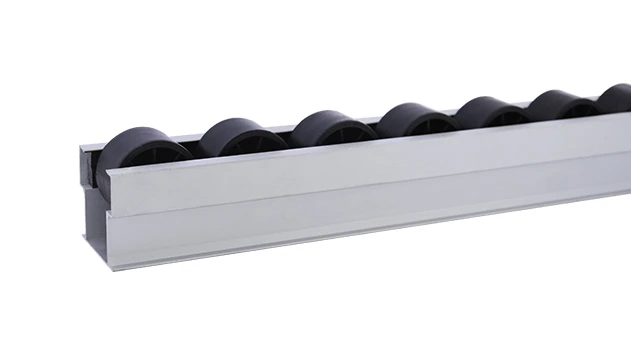
Durable and smooth-running modular roller rails. The system is fully assembled. The roller rail profile contains plastic rollers mounted on steel axles. Aluminum frame with plastic wheel make it anti corrosion,and material convey more smooth.
Introduction
When you think of ESD (Electrostatic Discharge) equipment, your first thought might be electronics manufacturing—places where static can fry circuit boards or damage sensitive components. But lately, more food packaging businesses are looking at 38 Aluminum Roller Track Black ESD as a potential addition to their lines. Is this a smart move, or are there hidden pitfalls? Let's dive into the common misconceptions surrounding this product and see if it's really a fit for food packaging.
First, let's get clear on what 38 Aluminum Roller Track Black ESD actually is. It's a type of conveyor component made from aluminum, with a black ESD coating designed to dissipate static electricity. The "38" refers to its diameter (38mm), making it sturdy enough for various loads but still lightweight. It's part of a lean system that emphasizes flexibility and reusability, which are core values for many modern manufacturing setups.
Misconception 1: ESD Materials Are Not Food-Safe
One of the biggest worries food businesses have is whether ESD materials meet food safety standards. After all, anything that touches or comes near food needs to be non-toxic and free from harmful chemicals. The idea that ESD coatings might be unsafe for food contact is a common myth, but it's not always true.
Quality 38 Aluminum Roller Track Black ESD products, like those from reputable lean pipe suppliers, use coatings that are compliant with food safety regulations. For example, some coatings are FDA-approved for indirect food contact, meaning they don't leach any substances that could contaminate food. The key here is to look for certifications—if a supplier can provide documentation that their ESD coating meets standards like FDA 21 CFR Part 177 or EU 10/2011, then it's safe to use in food packaging environments.
It's important to note that not all ESD materials are created equal. Cheaper, uncertified products might cut corners, but when you choose a reliable supplier (like those offering lean pipe solutions), you can trust that their ESD roller tracks are designed with food safety in mind. So, the first misconception is debunked: ESD materials can be food-safe, as long as they're properly certified.

Misconception 2: Aluminum Roller Tracks Lack Flexibility for Food Packaging Lines
Food packaging lines often need to adapt quickly—whether it's changing packaging sizes, switching between products, or adjusting the flow of materials. Many people think aluminum roller tracks are rigid and hard to modify, but that's not the case with 38 Aluminum Roller Track Black ESD.
This roller track is part of a lean system, which is all about flexibility. Lean systems use modular components that can be easily rearranged, added to, or modified without major overhauls. For example, you can combine this roller track with flow rack components to create a custom conveyor setup that fits your specific packaging needs. If you need to change the direction of your line or add a new section, the aluminum roller tracks can be disconnected and reconfigured in no time.
Let's take an example: A snack food company might need to switch from packaging small bags to larger boxes. With a lean system using 38 Aluminum Roller Track Black ESD, they can adjust the spacing between rollers, add or remove sections, or even change the angle of the track to accommodate the new packaging size. This flexibility saves time and money compared to fixed, non-modular conveyor systems. So, the idea that aluminum roller tracks are inflexible is a myth—when part of a lean solution, they're highly adaptable.

Misconception 3: Black ESD Coatings Pose Contamination Risks
The black color of the ESD coating might make some people think it's made with harmful dyes or chemicals that could rub off onto food or packaging. But again, this is a misconception if you're using a quality product.
The black ESD coating on these roller tracks is typically a type of epoxy or polyurethane that's designed to be durable and non-leaching. It's applied in a way that creates a smooth, even surface that won't flake or chip easily. Reputable suppliers test their coatings to ensure they don't release any substances that could contaminate food. For instance, the coating might undergo migration tests to check if any chemicals transfer to food simulant materials—if it passes these tests, it's safe to use.
Another point to consider: The black color is not just for aesthetics. It helps hide minor scratches or wear, which is useful in busy food packaging lines where equipment gets a lot of use. This doesn't mean the coating is less safe; it's just a practical choice. So, don't let the black color fool you—when properly manufactured, the ESD coating is safe and won't contaminate your food products.
Misconception 4: This Roller Track Is Only Suitable for Electronics Manufacturing
It's true that ESD equipment is widely used in electronics, but that doesn't mean it's limited to that industry. Static electricity can be a problem in food packaging too. For example, static can attract dust or debris to packaging materials, which is a big no-no in food safety. It can also cause packaging films to stick together, slowing down production lines or leading to errors.
38 Aluminum Roller Track Black ESD solves these issues by dissipating static electricity as products move along the track. This keeps packaging materials clean and prevents them from sticking, leading to a smoother, more efficient line. Let's take a concrete example: A company that packages dry cereals might use plastic bags that are prone to static. When these bags move along a non-ESD roller track, static can make them cling to the rollers or each other, causing jams. But with an ESD roller track, the static is dissipated, so the bags move freely without issues.
Additionally, the aluminum construction makes this roller track durable enough to handle the demands of food packaging. It's resistant to corrosion (especially if the coating is good) and easy to clean, which is essential in environments where hygiene is a top priority. So, this roller track isn't just for electronics—it's a valuable tool for food packaging too.
Misconception 5: ESD Equipment Increases Costs Unnecessarily in Food Packaging
Some businesses hesitate to invest in ESD equipment because they think it's an extra cost that doesn't provide enough return. But let's do the math: How much does a production line jam cost you? Or a batch of products contaminated by dust due to static? Or packaging materials wasted because they stick together?
38 Aluminum Roller Track Black ESD can actually save you money in the long run. By reducing jams and downtime, you increase productivity. By preventing dust contamination, you reduce the number of products that need to be discarded. And since it's part of a lean system, the roller track is reusable—if you rearrange your line, you can take the track apart and use the components elsewhere, instead of buying new equipment.
Let's consider a scenario: A bakery uses plastic packaging for its bread. Without ESD rollers, static causes the plastic bags to stick to each other, leading to 10 minutes of downtime every hour as workers unjam the line. Over a month, that's 40 hours of lost production (assuming 8-hour shifts, 20 days a month). If each hour of production is worth $100, that's $4000 lost each month. Investing in ESD roller tracks could eliminate that downtime, paying for itself in just a few months.
Moreover, many suppliers offer wholesale options for lean pipe and accessories, including this roller track. Buying in bulk can reduce the upfront cost even more. So, the idea that ESD equipment is a waste of money is a myth—it's an investment that pays off in efficiency and reduced waste.
Why 38 Aluminum Roller Track Black ESD Is a Good Fit for Food Packaging
Now that we've debunked the main misconceptions, let's recap the benefits of using this roller track in food packaging:
- Static Dissipation: Prevents dust attraction and packaging sticking, improving line efficiency.
- Food Safety Compliance: Certified coatings ensure no contamination risks.
- Flexibility: Part of a lean system, so it's easy to adjust and reconfigure.
- Durability: Aluminum construction is sturdy and easy to clean.
- Cost-Effective: Reduces downtime and waste, leading to long-term savings.
To make the most of this product, it's important to work with a reliable supplier that offers quality lean pipe solutions. Look for suppliers who can provide certifications for food safety and have experience working with food packaging businesses. They can help you design a custom setup that meets your specific needs, whether you're looking for a simple conveyor line or a full lean workstation.
38 Aluminum Roller Track Black ESD vs. Non-ESD Roller Tracks for Food Packaging
| Feature | 38 Aluminum Roller Track Black ESD | Standard Non-ESD Aluminum Roller Track |
|---|---|---|
| Static Control | Dissipates static, prevents dust and sticking | No static control, risk of dust attraction and jams |
| Food Safety Compliance | Certified coatings (FDA, EU standards) | May not have food-safe certifications |
| Flexibility | Part of lean system, easy to reconfigure | May be less modular (depends on design) |
| Durability | Sturdy aluminum with scratch-resistant coating | Sturdy but no ESD coating |
| Cost Efficiency | Higher upfront cost but saves on downtime/waste | Lower upfront cost but higher long-term costs from issues |
Deep Dive: How ESD Works in Food Packaging
To fully understand why ESD roller tracks are beneficial, let's take a deeper look at how static affects food packaging. Static electricity is generated when two materials rub against each other—like packaging film moving along a roller track. This static can cause several problems:
- Dust Attraction: Static charges attract tiny particles of dust and debris, which can contaminate food products. Even if the dust isn't harmful, it can make products look unappealing to consumers.
- Packaging Sticking: Static can make plastic bags or films stick together, leading to jams in the packaging line. This slows down production and increases the risk of damaged packaging.
- Equipment Damage: While less common in food packaging, static can sometimes damage sensitive sensors or electronic components in the packaging machinery.
ESD roller tracks solve these problems by providing a path for static electricity to flow away from the product and into the ground. The black coating on the roller track is conductive, so when a static-charged packaging material touches it, the charge is dissipated quickly. This keeps the packaging clean and prevents sticking, leading to a more efficient line.
Another thing to note is that ESD roller tracks are not just for direct food contact. Even if the roller track doesn't touch the food itself (e.g., it's used to move outer packaging), static can still be a problem. For example, if outer boxes are charged with static, they might attract dust that can then transfer to the inner packaging. So, using ESD roller tracks throughout the line is a good practice for overall hygiene.
Tips for Choosing the Right Supplier for 38 Aluminum Roller Track Black ESD
When selecting a supplier for your ESD roller track, here are some key factors to consider:
- Certifications: Ask for proof of food safety certifications (FDA, EU 10/2011) and ESD performance (like ANSI/ESD S20.20).
- Experience: Look for suppliers who have worked with food packaging businesses before. They'll understand your unique needs and challenges.
- Customization: Can the supplier design a custom setup for your line? Lean systems are all about customization, so this is important.
- Wholesale Options: If you need a large quantity, check if the supplier offers wholesale prices for lean pipe and accessories. This can save you money.
- Support: Does the supplier provide after-sales support? This includes installation help, maintenance tips, and replacement parts.
By taking these factors into account, you can find a supplier that will help you get the most out of your 38 Aluminum Roller Track Black ESD investment.
Case Study: How a Snack Company Improved Efficiency with 38 Aluminum Roller Track Black ESD
Let's look at a real-world example of how this roller track helped a food business. A mid-sized snack company was struggling with static-related issues on their packaging line. Their plastic bags were sticking together, causing jams that led to 15 minutes of downtime every hour. This was costing them thousands of dollars in lost production each month.
They decided to switch to 38 Aluminum Roller Track Black ESD from a reputable lean solution supplier. The supplier designed a custom conveyor line using the ESD roller tracks, flow rack components, and a lean workstation for packaging.
After installing the new system, the company saw a significant improvement: downtime due to jams dropped by 90%, and production efficiency increased by 12%. The static-related dust issues also decreased, leading to cleaner packaging and fewer customer complaints. The investment paid for itself in just three months, and the company was able to expand their product line thanks to the increased efficiency.
This case study shows that 38 Aluminum Roller Track Black ESD can have a tangible impact on food packaging businesses. It's not just a theoretical benefit—it's a practical solution that delivers real results.
FAQs About 38 Aluminum Roller Track Black ESD for Food Packaging
Q: Can 38 Aluminum Roller Track Black ESD be used with wet food products?
A: Yes, as long as the coating is water-resistant. Most quality ESD coatings are designed to withstand moisture, but it's important to check with the supplier. Additionally, aluminum is resistant to corrosion, so it's a good choice for wet environments.
Q: How often do I need to clean the roller track?
A: The frequency depends on your production environment. In food packaging, it's recommended to clean the roller track daily to maintain hygiene. The smooth coating makes it easy to wipe down with a damp cloth or mild cleaner.
Q: Is the ESD coating permanent?
A: The coating is durable and long-lasting, but it can wear down over time with heavy use. Most suppliers offer replacement parts or recoating services if needed. Regular maintenance (like cleaning and lubrication) can extend the life of the coating.
Q: Can I use this roller track with a flow rack?
A: Absolutely! This roller track is compatible with flow rack components, making it easy to create a gravity-fed system for packaging materials. This is a common setup in lean workstations for food packaging.
Q: What is the load capacity of 38 Aluminum Roller Track Black ESD?
A: The load capacity varies depending on the design, but most 38mm aluminum roller tracks can handle loads of up to 50kg per meter. For heavier loads, you can use additional supports or thicker aluminum profiles.
Final Thoughts
38 Aluminum Roller Track Black ESD is not just for electronics—it's a versatile, safe, and cost-effective option for food packaging lines. The key is to choose a quality product from a reputable supplier and ensure it meets food safety standards. By debunking these misconceptions, we hope more food businesses will consider this roller track as a way to improve their packaging processes.
Whether you're dealing with snacks, baked goods, or frozen foods, static can be a hidden enemy. Investing in ESD equipment like this roller track can help you overcome that enemy and run a smoother, more efficient operation. So, next time you're looking to upgrade your food packaging line, don't dismiss 38 Aluminum Roller Track Black ESD—give it a closer look.