- Company Articles
- Products and Technology
- Product knowledge
- 38 Aluminum Roller Track Black ESD: Future Trends in ESD Material Handling

38 Aluminum Roller Track Black ESD: Future Trends in ESD Material Handling
Related Product
38 Aluminum Roller Track Black ESD
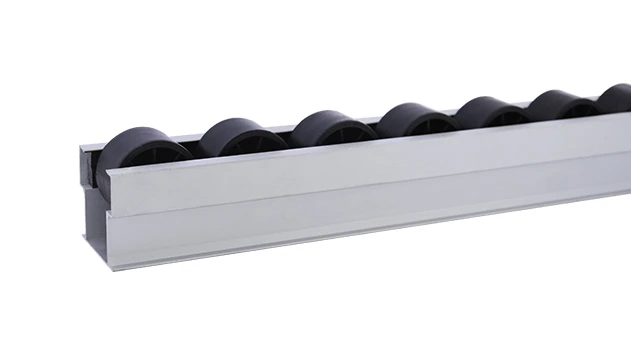
Durable and smooth-running modular roller rails. The system is fully assembled. The roller rail profile contains plastic rollers mounted on steel axles. Aluminum frame with plastic wheel make it anti corrosion,and material convey more smooth.
38 Aluminum Roller Track Black ESD: Future Trends in ESD Material Handling
The Silent Threat in Modern Manufacturing: Static Electricity
If you've ever stood on a 3C assembly line watching workers handle delicate PCBs, or walked through a medical device plant where tiny sensors are assembled into life-saving equipment, you know how easy it is to overlook the invisible force that can derail production—static electricity. A single static discharge, often too small to feel, can fry a smartphone chip, render a glucose monitor useless, or even damage a car's electronic control unit. For manufacturers, this isn't just a minor inconvenience; it's a costly risk that eats into profits and delays deliveries. That's why ESD (Electrostatic Discharge) material handling has evolved from a niche concern to a core pillar of modern production. And leading this evolution is a product that's redefining flexibility and protection: the 38 Aluminum Roller Track Black ESD.
But what exactly is this roller track, and why is it becoming the go-to choice for lean system designers across industries? Let's dive deep into its features, applications, and the trends it's driving in ESD material handling.
Unpacking the 38 Aluminum Roller Track Black ESD: Features That Matter
At first glance, the 38 Aluminum Roller Track Black ESD looks like a simple piece of equipment—aluminum rails with black rollers spaced evenly along their length. But beneath the surface, it's packed with design choices that address the most pressing needs of modern manufacturers:
1. ESD Protection You Can Trust
The black coating isn't just for aesthetics. It's a specialized ESD-resistant layer that dissipates static charge before it can harm sensitive components. Tests show that the track's surface resistance falls between 10^6 and 10^9 ohms—perfect for meeting international ESD standards like ANSI/ESD S20.20 and IEC 61340-5-1. This means you can move PCBs, medical sensors, or semiconductor parts without worrying about static damage.
2. Durable Aluminum Construction
Made from high-grade 6063 aluminum alloy, this roller track is built to last. It's resistant to corrosion, scratches, and wear—even in harsh manufacturing environments. Unlike plastic roller tracks that crack or warp over time, the aluminum version can handle loads up to 50 kg per meter (depending on configuration) and maintain its shape for years. And since aluminum is 100% recyclable, it's a sustainable choice for companies looking to reduce their carbon footprint.
3. Modularity for Lean Workflows
The biggest advantage of this roller track is its compatibility with lean pipe systems. It uses standard roller track connectors and internal rotary aluminum joints to link to other components like lean pipe workbenches, flow racks, and conveyors. This means you can build a fully customized material handling system that adapts to your production line's changing needs. For example, if you need to add a new workstation to your 3C assembly line, you can simply attach the roller track to a lean pipe workbench and adjust the flow of components—no need to invest in a new conveyor system.
4. Smooth, Low-Friction Rollers
The rollers are made from high-quality plastic with a low-friction coating, ensuring that components glide smoothly along the track without jostling or getting stuck. This reduces the risk of damage to delicate parts and improves the overall efficiency of your line. Plus, the rollers are easy to replace if they wear out—another nod to the lean principle of continuous improvement.
Why ESD Material Handling Is More Important Than Ever
The demand for ESD material handling has skyrocketed in recent years, and for good reason. Let's look at the numbers: according to the Electrostatic Discharge Association (ESDA), static-related failures cost the global electronics industry over $30 billion annually. That's a staggering figure, and it's only growing as components get smaller and more sensitive.
Take the 3C industry, for example. A modern smartphone has over 1,000 tiny components—each of which is vulnerable to static. A single static discharge can damage a CPU or memory chip, leading to a defective product that has to be scrapped. For a manufacturer producing 1 million phones a year, even a 0.1% failure rate translates to 1,000 wasted units and thousands of dollars in losses.
The medical device industry faces similar challenges. Medical sensors, insulin pumps, and pacemakers rely on microelectronics that are extremely sensitive to static. A static discharge can cause a sensor to give incorrect readings, which could have life-threatening consequences for patients. That's why regulatory bodies like the FDA require medical device manufacturers to use ESD-compliant material handling systems.
But ESD material handling isn't just about avoiding losses. It's also about improving efficiency. When you use ESD-compliant roller tracks, you reduce the time spent inspecting and reworking defective parts. This frees up your team to focus on more value-added tasks—like optimizing production workflows or developing new products.
Key Trends Shaping ESD Material Handling (And How This Roller Track Fits In)
1. Integration With Lean Systems
Lean manufacturing is all about eliminating waste and improving efficiency. The 38 Aluminum Roller Track Black ESD is designed to support this philosophy. Unlike rigid conveyor systems that are hard to reconfigure, this roller track can be adjusted in minutes to fit new production lines or workflows. For example, a car parts manufacturer in Guangzhou recently used this roller track to reduce changeover time between product models from 2 hours to 30 minutes. That's a 75% improvement—all thanks to the track's modular design.
Another example: a 3C assembly plant in Shenzhen replaced its old plastic conveyor system with this aluminum roller track and lean pipe workbenches. The result? A 20% reduction in material handling time and a 15% drop in static-related failures. The plant also saved money by reusing existing components instead of buying new ones.
2. Custom Lean Solutions for Niche Industries
Every industry has unique needs, and a one-size-fits-all approach to material handling doesn't work. That's why more manufacturers are turning to custom lean solutions. The 38 Aluminum Roller Track Black ESD is perfect for this, as it can be tailored to fit specific applications.
For instance, a medical device manufacturer in Shanghai needed a roller track that could handle tiny sensors without damaging them. The supplier customized the track with smaller rollers and a lower load capacity (20 kg per meter) to meet their needs. The result? A 90% reduction in sensor damage during transport.
Another example: a warehousing company in Beijing needed ESD-compliant flow racks for storing sensitive electronics. They used the 38 Aluminum Roller Track Black ESD to build flow racks that allow for easy picking and packing while protecting components from static. The racks are now used to store everything from laptop batteries to smartphone screens.
3. Sustainability and Circular Economy
Sustainability is no longer a buzzword—it's a business imperative. Consumers and regulators are demanding that companies reduce their environmental impact, and the 38 Aluminum Roller Track Black ESD helps in several ways:
- **Recyclability**: Aluminum is 100% recyclable, so when the track reaches the end of its life, it can be melted down and reused to make new products.
- **Reusability**: The modular design means you can reuse parts in different configurations instead of throwing them away. For example, if you no longer need a roller track for your assembly line, you can disassemble it and use the parts to build a flow rack.
- **Waste Reduction**: By reducing static-related failures, the track helps cut down on scrap and waste. This not only saves money but also reduces the amount of material that ends up in landfills.
4. Smart ESD Material Handling
The future of ESD material handling is smart. Manufacturers are starting to integrate IoT sensors into their roller tracks to monitor static levels, track component flow, and identify bottlenecks. For example, a sensor attached to the 38 Aluminum Roller Track Black ESD can alert workers if the static level exceeds safe limits, allowing them to take corrective action before damage occurs.
Another trend is the use of data analytics to optimize material handling workflows. By tracking how components move along the track, manufacturers can identify areas where efficiency can be improved. For instance, if a certain section of the track is causing bottlenecks, they can adjust the layout or add more rollers to speed up component flow.
Comparing ESD Roller Tracks: Which One Is Right for You?
| Feature | 38 Aluminum Roller Track Black ESD | Non-ESD Aluminum Roller Track | Plastic ESD Roller Track | Stainless Steel ESD Roller Track |
|---|---|---|---|---|
| ESD Protection | Yes (10^6-10^9 Ω) | No | Yes (10^5-10^8 Ω) | Yes (10^4-10^7 Ω) |
| Material | 6063 Aluminum Alloy | 6063 Aluminum Alloy | ABS Plastic | 304 Stainless Steel |
| Load Capacity (per meter) | Up to 50 kg | Up to 60 kg | Up to 20 kg | Up to 80 kg |
| Durability | High (corrosion-resistant) | High | Low (prone to cracking) | Very High |
| Modularity | Excellent (lean system compatible) | Excellent | Limited | Good |
| Recyclability | 100% Recyclable | 100% Recyclable | Low (depends on plastic type) | 100% Recyclable |
| Cost | Medium | Medium | Low | High |
| Best For | 3C assembly, medical devices, sensitive electronics | General manufacturing, non-sensitive components | Lightweight, low-volume applications | Heavy-duty, high-temperature environments |
Real-World Applications of 38 Aluminum Roller Track Black ESD
Case Study 1: 3C Assembly Line Optimization
A leading smartphone manufacturer in Shenzhen was facing two major problems: static-related failures (1.2% of their products) and slow changeover times between models (2 hours). They decided to replace their old plastic conveyor system with the 38 Aluminum Roller Track Black ESD and lean pipe workbenches.
The results were impressive: static-related failures dropped to 0.1%, and changeover times were reduced to 30 minutes. The manufacturer also saved over $500,000 a year in scrap costs and increased production efficiency by 15%. The modular design of the roller track allowed them to easily adjust their line for new smartphone models, which was critical in a fast-paced industry.
Case Study 2: Medical Device Manufacturing
A medical device company in Guangzhou produces insulin pumps and glucose monitors. They were struggling with static damage to their sensors (5% failure rate). They switched to the 38 Aluminum Roller Track Black ESD for their assembly line.
After the switch, the failure rate dropped to 0.2%. The company also noticed that their workers were more efficient, as the smooth rollers made it easier to handle delicate sensors. The ESD coating ensured that all components met FDA standards, which helped them expand their market share in North America.
Case Study 3: Warehousing and Logistics
A logistics company in Beijing specializes in storing and shipping sensitive electronics. They needed ESD-compliant flow racks to protect their inventory from static damage. They used the 38 Aluminum Roller Track Black ESD to build custom flow racks.
The flow racks allowed for easy picking and packing, and the ESD protection kept their inventory safe. The company reported a 95% reduction in static-related damage to their products, which led to higher customer satisfaction and repeat business.
How to Choose the Right ESD Roller Track Supplier
Not all ESD roller track suppliers are created equal. To get the most out of your investment, you need a supplier that understands both ESD protection and lean manufacturing. Here are some key factors to consider:
1. **Product Quality**: Look for a supplier that uses high-grade materials and tests their products for ESD compliance. Ask for certificates like ANSI/ESD S20.20 or IEC 61340-5-1 to ensure the product meets international standards.
2. **Customization Capabilities**: A good supplier should be able to tailor solutions to your specific needs. Whether you need a custom length roller track or a unique configuration, they should be able to deliver.
3. **Lean Expertise**: Since ESD material handling is often part of a larger lean system, your supplier should have a deep understanding of lean principles. They should be able to help you design a system that reduces waste and improves efficiency.
4. **After-Sales Support**: Choose a supplier that offers excellent after-sales support. This includes warranty coverage, replacement parts, and technical assistance. You don't want to be left stranded if something goes wrong with your roller track.
5. **Sustainability**: If sustainability is important to your company, look for a supplier that uses recyclable materials and has eco-friendly manufacturing practices. This will help you reduce your carbon footprint and meet your sustainability goals.
Future Outlook: What's Next for ESD Material Handling?
The future of ESD material handling is bright, and the 38 Aluminum Roller Track Black ESD is well-positioned to lead the way. Here are some trends we can expect to see in the coming years:
1. **Increased Adoption of Smart Technologies**: IoT sensors and data analytics will become more common in ESD material handling systems. This will allow manufacturers to monitor static levels in real time and make data-driven decisions to optimize their workflows.
2. **Greater Focus on Circular Economy**: Manufacturers will increasingly turn to reusable and recyclable materials like aluminum to reduce their environmental impact. The modular design of the 38 Aluminum Roller Track Black ESD makes it perfect for this trend.
3. **Expansion to New Industries**: As more industries adopt ESD protection (like aerospace and automotive), the demand for ESD roller tracks will grow. The 38 Aluminum Roller Track Black ESD is versatile enough to be used in these new industries.
4. **Improved ESD Coating Technologies**: New coating technologies will make ESD protection more effective and durable. We can expect to see coatings that last longer and provide better static dissipation.
Final Thoughts
The 38 Aluminum Roller Track Black ESD is more than just a material handling product—it's a solution that addresses the most pressing challenges in modern manufacturing: static damage, inefficiency, and sustainability. Its modular design, durable construction, and ESD protection make it a must-have for any manufacturer looking to improve their production line.
Whether you're in the 3C industry, medical device manufacturing, or warehousing, this roller track can help you reduce waste, improve efficiency, and protect your sensitive components. And with the right supplier, you can customize it to fit your specific needs.
As we move into the future, ESD material handling will become even more important. The 38 Aluminum Roller Track Black ESD is ready to meet these challenges and help manufacturers stay ahead of the curve.