- Company Articles
- Products and Technology
- Installation And Maintenance
- 38 Aluminum Roller Track Black ESD: Installation Mistakes to Avoid

38 Aluminum Roller Track Black ESD: Installation Mistakes to Avoid
Related Product
38 Aluminum Roller Track Black ESD
Durable and smooth-running modular roller rails. The system is fully assembled. The roller rail profile contains plastic rollers mounted on steel axles. Aluminum frame with plastic wheel make it anti corrosion,and material convey more smooth.
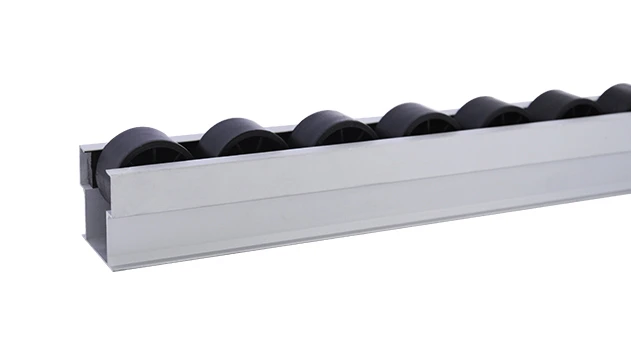
In the fast-paced world of lean manufacturing, every component needs to work seamlessly to keep operations running smoothly. The 38 Aluminum Roller Track Black ESD is a cornerstone of many flow racks, conveyors, and ESD workstations—especially in industries like 3C assembly and medical device production where static control is non-negotiable. But even the most reliable components can fall short if installed incorrectly. Let's explore the most common installation pitfalls and how to avoid them, ensuring your lean system delivers maximum efficiency and protection.
Mistake 1: Skipping Proper ESD Grounding
The "ESD" label on this roller track isn't just a marketing buzzword—it's a critical feature designed to protect sensitive electronic parts from static discharge. One of the biggest errors installers make is ignoring or cutting corners on ESD grounding.
Why this happens: Many assume aluminum's conductive properties will automatically dissipate static, so they skip connecting the track to a grounded system. Others use non-ESD connectors that break the grounding path.
Consequences: Static buildup on the track surface can damage microchips, circuit boards, or other delicate components, leading to product defects, increased waste, and costly rework. In extreme cases, static discharge can even pose safety risks in environments with flammable materials.
How to avoid it: Use ESD-compliant connectors (like the 90° aluminum crossing joint) to link the track to a grounded frame or workstation. Test the track's surface resistance with a static meter to ensure it falls within the 10^6–10^9 ohm range. Ensure all adjacent flow racks and conveyors are also grounded to create a continuous ESD-protected zone.
Mistake 2: Misaligning Roller Tracks
Roller tracks depend on precise alignment to move products smoothly. Even a tiny misalignment can cause items to jam, tilt, or travel unevenly.
Why this happens: Rushing installation without using level tools is common. Installers might eyeball alignment instead of using a spirit level or laser tool, leading to tracks that are slightly tilted or not parallel.
Consequences: Misaligned tracks disrupt production flow, causing products to get stuck mid-transit. This leads to downtime, frustrated workers, and potential damage to both products and the track itself.
How to avoid it: Use a spirit level to ensure tracks are horizontal. For parallel tracks (like in flow racks), measure distances at multiple points to guarantee consistency. Use shims if needed to adjust height. Tighten connectors firmly but not excessively to maintain alignment.

Mistake 3: Overloading Beyond Capacity
Every roller track has a weight limit, and exceeding it is a surefire way to shorten its lifespan.
Why this happens: Installers often underestimate product weights or try to save space by stacking more items than recommended. They might assume thicker aluminum tracks can handle extra weight without checking specs.
Consequences: Overloading causes tracks to bend, warp, or break. Rollers wear out faster, and connectors loosen under pressure, leading to costly replacements and production delays.
How to avoid it: Check the product datasheet for the track's maximum weight capacity. Calculate average product weights and stay well below the limit. For heavier items, use support brackets (like the parallel fixation aluminum pipe joint) to distribute weight evenly.

Mistake 4: Using Wrong Joints or Loose Connections
Joints connecting track sections are the system's backbone. Using incorrect joints or not securing them properly leads to instability and failure.
Why this happens: Installers might use generic joints instead of those designed for 38mm aluminum tracks. Or they might not tighten bolts enough, thinking "hand-tight" is sufficient.
Consequences: Loose joints cause tracks to wobble, leading to product jams or detachment from the frame. Wrong joints create weak connections that can't withstand continuous use.
How to avoid it: Use track-specific joints like the parallel aluminum joint a or b. Follow manufacturer torque specs when tightening bolts—over-tightening strips threads, while under-tightening leads to loose connections. Use lock washers to prevent bolt loosening from vibration.
Mistake 5: Neglecting Post-Installation Maintenance
Installation doesn't end when the track is operational. Failing to maintain it regularly leads to premature wear.
Why this happens: Maintenance takes a backseat to daily production tasks. Installers assume the track is "set it and forget it."
Consequences: Dust, debris, and lubricant buildup cause rollers to stick. Loose bolts and worn connectors go unnoticed until they fail, leading to decreased performance and downtime.
How to avoid it: Create a maintenance schedule: clean tracks weekly with a soft brush, lubricate rollers monthly with non-conductive lubricant, and inspect joints quarterly for tightness. replace worn parts promptly.
Quick Reference: Correct vs. Incorrect Practices
| Mistake | Incorrect Practice | Correct Practice |
|---|---|---|
| ESD Grounding | Skipping grounding or using non-ESD connectors | Use ESD connectors and test resistance regularly |
| Alignment | Eyeballing without tools | Use level tools and laser alignment |
| Overloading | Exceeding weight capacity | Check specs and use support brackets |
| Joint Connections | Using wrong joints or loose bolts | Use track-specific joints and tighten to torque specs |
| Maintenance | No regular cleaning/inspection | Schedule weekly cleaning and monthly checks |
Best Practices for Successful Installation
- Prep First: Inspect all components (tracks, joints, connectors) for damage before starting. Read the installation manual thoroughly.
- Use Right Tools: Invest in quality level tools, torque wrenches, and static meters for precise installation.
- Train Your Team: Ensure installers understand ESD principles and proper lean system installation techniques.
- Document Everything: Keep records of installation dates, grounding tests, and maintenance schedules to track system performance.
Conclusion
The 38 Aluminum Roller Track Black ESD is a key component of any effective lean solution, helping streamline operations and protect sensitive products. By avoiding these common installation mistakes—skipping ESD grounding, misaligning tracks, overloading, using wrong joints, and neglecting maintenance—you can ensure your track delivers optimal performance for years.
Whether setting up a new flow rack, conveyor system, or ESD workstation, taking time to install correctly pays off in increased efficiency, reduced waste, and fewer production disruptions. A well-installed system is the foundation of a successful lean manufacturing operation.