- Company Articles
- Products and Technology
- Installation And Maintenance
- 38 Aluminum Roller Track Black ESD Maintenance Tips: Prolonging Service Life

38 Aluminum Roller Track Black ESD Maintenance Tips: Prolonging Service Life
Related Product
38 Aluminum Roller Track Black ESD
Durable and smooth-running modular roller rails. The system is fully assembled. The roller rail profile contains plastic rollers mounted on steel axles. Aluminum frame with plastic wheel make it anti corrosion,and material convey more smooth.
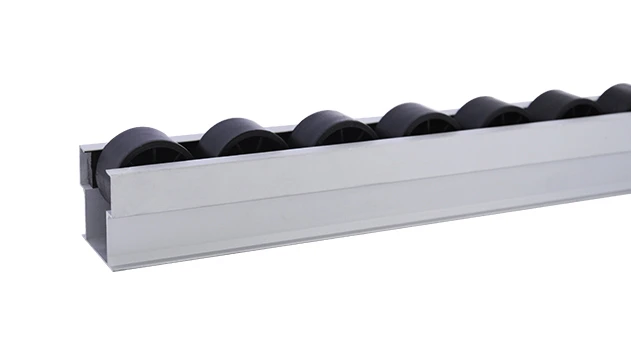
If you've ever stood by a production line—whether it's assembling 3C devices or packaging medical equipment—you know the sinking feeling when a key component like the 38 Aluminum Roller Track Black ESD hits a snag. A single stuck roller can bring a flow rack (keyword) to a halt, back up an ESD workstation, and turn a smooth shift into a scramble to fix things. But here's the truth: most of these issues aren't accidents. They're the result of skipping regular maintenance. This guide will walk you through every step to keep your track running like new, aligning with the lean system (keyword) principles of cutting waste and boosting efficiency.
1. Pre-Maintenance Prep: Get Set Up for Success
Before you touch a single roller, you need to gather the right tools and follow safety rules. Cutting corners here can lead to mistakes or even injuries. Let's get started:
Essential Tools:
- Soft-bristled brush or lint-free cloth: For gentle cleaning that won't scratch the ESD coating.
- 70% isopropyl alcohol: ESD-safe cleaner (skip harsh chemicals—they eat away at the coating).
- Torque wrench: To tighten bolts to exact specs (check your supplier's manual for numbers).
- Dry, oil-free compressed air: For blowing debris out of tight spots between rollers.
- ESD wrist strap: To protect sensitive parts from static damage while you work.
- Screwdriver set: For removing roller brackets and small components.
- Level: To check if the track is straight and aligned.
- ESD tester: To verify the track's grounding works correctly.
Safety Rules to Follow:
- Always wear an ESD wrist strap connected to a grounded surface—static can ruin both the track's coating and your products.
- If the track is part of a conveyor (keyword) system, turn off the power first. You don't want it moving while you're working on it.
- Clear the track of all products before starting—no one wants a box of circuit boards falling off mid-maintenance.
- Lift the track properly if you need to move it—don't drag it (this scratches the coating and bends the frame).
2. Daily Maintenance: Quick Checks to Keep Things Smooth
Daily maintenance takes 5-10 minutes per track, but it's the best way to catch small issues before they blow up. Do these tasks at the start or end of each shift:
- Visual Inspection: Walk along the track and look for bent rollers, loose brackets, or cracks in the aluminum frame. Note any problems immediately.
- Surface Wipe-Down: Use a lint-free cloth to remove dust and small debris. Focus on the gaps between rollers—this is where dirt builds up most.
- Roller Test: Roll a test product (like the ones you use daily) along the track. It should glide smoothly without sticking or veering off. If it doesn't, mark the spot for later.
- ESD Continuity Check: Use your ESD tester to make sure the track is grounded. Touch one probe to the track and the other to a grounded surface. The reading should be between 10^6 and 10^9 ohms (the ESD-safe range). If not, the track isn't discharging static properly.

3. Weekly Maintenance: Deep Clean & Tighten Up
Weekly maintenance is more detailed than daily checks. It takes 15-20 minutes and helps you find issues that aren't obvious at first glance:
- Compressed Air Clean: Blow debris out of the track's nooks and crannies with dry compressed air. Hold the nozzle 6 inches away to avoid damaging rollers.
- Tighten Connections: Use your torque wrench to tighten all roller track connectors (keyword) and bolts. Vibration from daily use loosens these over time—tightening them prevents misalignment.
- Lubricate Rollers: Put a tiny drop of silicone lubricant on each roller bearing. Silicone is ESD-safe and doesn't attract dust like oil. Wipe off excess to avoid buildup.
- Check ESD Coating: Look for scratches or peeling on the black coating. Even small scratches reduce the track's ability to handle static. Touch up with ESD-safe paint if needed (ask your supplier for the right type).

4. Monthly Maintenance: Take It Apart & Inspect
Monthly maintenance takes 30-40 minutes and involves taking parts of the track apart to clean and inspect them:
- Remove & Clean Rollers: Use a screwdriver to take out the rollers. Wipe each one with isopropyl alcohol to remove dirt and old lubricant. replace any rollers that are worn or loose.
- Check Frame Alignment: Place a level on the track. It should be perfectly straight—any tilt causes products to stick or fall off. Adjust the feet or brackets to fix alignment.
- Load Capacity Test: Put a product at the track's maximum weight limit on it. It should roll smoothly without bending the frame. If not, the track is damaged and needs repair.
- Inspect Grounding Wires: Look at the wires connecting the track to the ground. If they're frayed or loose, replace them right away—without proper grounding, the track is useless for ESD protection.
5. Quarterly Maintenance: replace Parts & Adjust the System
Quarterly maintenance is the most thorough. It takes an hour and involves replacing worn parts and adjusting the system for better performance:
- replace Worn Components: Check for worn rollers, guide rails, or brackets. If a plastic roller track guide rail is cracked, replace it—this prevents products from veering off. Use genuine parts from your lean pipe supplier (keyword) to ensure quality.
- Adjust System Tension: If the track is part of a conveyor, adjust the belt or chain tension. For standalone tracks, adjust roller spacing to make sure products roll smoothly.
- System Audit: Step back and look at how the track fits into your lean system. Is there a way to improve its placement to reduce waste? For example, if products get stuck at a certain point, maybe the track needs a slight angle adjustment. This is part of continuous improvement—key to lean operations.
6. Troubleshooting Common Issues: Fix It Fast
Even with regular maintenance, problems can happen. Here's how to fix the most common ones:
| Problem | Possible Causes | Solutions |
|---|---|---|
| Rollers are stuck | Debris between rollers; dry bearings; loose brackets | Blow debris with compressed air; lubricate bearings; tighten brackets |
| ESD test fails | Scratched coating; broken grounding wire; dirty surface | Touch up coating; replace wire; clean with isopropyl alcohol |
| Products veer off track | Misaligned frame; worn guide rails; uneven rollers | Level the frame; replace guide rails; adjust roller height |
| Track is noisy | Dry bearings; loose rollers; misaligned frame | Lubricate bearings; tighten rollers; adjust frame |
| Loose brackets | Vibration; over-tightening; worn bolts | Retighten with torque wrench; replace bolts if stripped |
7. Maintenance Schedule: Stay On Top of It
To make it easy to remember, here's a schedule you can follow:
| Frequency | Tasks | Time Needed | Tools |
|---|---|---|---|
| Daily | Visual check, wipe-down, roller test, ESD check | 5-10 mins | Lint-free cloth, ESD tester, test product |
| Weekly | Compressed air clean, tighten connections, lubricate rollers, check coating | 15-20 mins | Compressed air, torque wrench, silicone lubricant |
| Monthly | Remove/clean rollers, alignment check, load test, grounding wire check | 30-40 mins | Screwdriver, isopropyl alcohol, level |
| Quarterly | replace parts, adjust tension, system audit | 60 mins | Replacement parts, level, audit checklist |
8. Best Practices for Long Life
Beyond regular maintenance, these tips will help your track last longer:
- Train Your Team: Teach operators to do daily checks and report issues. This empowers them to take ownership of the equipment.
- Store Parts Properly: Keep extra tracks or parts in a dry, dust-free area. Don't stack heavy items on them—they'll bend.
- Avoid Overloading: Never put products heavier than the track's limit on it. Overloading damages the frame and rollers.
- Work with Your Supplier: Your lean pipe supplier (keyword) can help with maintenance questions or replacement parts. Don't hesitate to reach out.
9. Conclusion: Maintenance Is an Investment
Taking care of your 38 Aluminum Roller Track Black ESD isn't a chore—it's an investment in your production line's efficiency. By following these tips, you'll reduce downtime, improve product quality, and extend the track's life. Whether you're using it in a flow rack for 3C assembly or an ESD workstation for medical devices, these steps will keep your lean system (keyword) running at its best.
So grab your tools, put on your ESD wrist strap, and get started. Your track (and your team) will thank you.