- Company Articles
- Products and Technology
- Product knowledge
- 38 Aluminum Roller Track Black ESD vs. Non-ESD: Cost Impact Analysis

38 Aluminum Roller Track Black ESD vs. Non-ESD: Cost Impact Analysis
Related Product
38 Aluminum Roller Track Black ESD
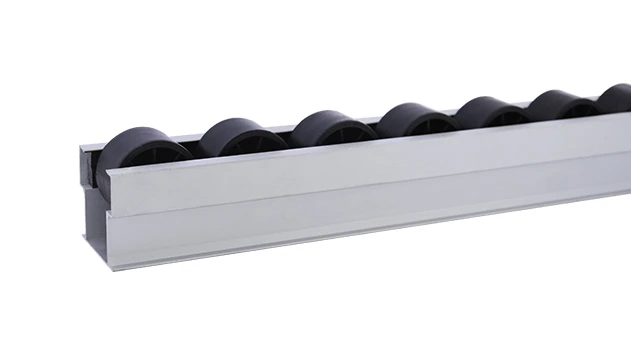
Durable and smooth-running modular roller rails. The system is fully assembled. The roller rail profile contains plastic rollers mounted on steel axles. Aluminum frame with plastic wheel make it anti corrosion,and material convey more smooth.
38 Aluminum Roller Track Black ESD vs. Non-ESD: Cost Impact Analysis
1. Introduction to Roller Tracks in Lean Systems
Roller tracks are the unsung heroes of efficient material handling in modern manufacturing and logistics. They form the backbone of flow racks, conveyors, and lean pipe workbenches, enabling smooth movement of parts and products across assembly lines and warehouses. Choosing the right type of roller track isn't just about picking a size or color—it's about aligning the track's properties with your operational needs to balance performance and cost. This analysis dives deep into the cost implications of selecting between the 38mm Black Aluminum Roller Track ESD and Non-ESD versions, two popular options from leading lean solution providers.
2. Understanding ESD and Its Importance
Electrostatic Discharge (ESD) occurs when static electricity builds up on a surface and suddenly releases, often without visible signs. In industries like 3C assembly, medical device manufacturing, or electronics production, even a small ESD event (as low as 50 volts) can damage sensitive components such as microchips, circuit boards, or sensors. According to the ESD Association, static damage costs the electronics industry billions of dollars annually. ESD-protective roller tracks are designed to dissipate static electricity safely, preventing these costly incidents. Non-ESD roller tracks, on the other hand, lack this anti-static property and are suitable for applications where static sensitivity isn't a concern, such as storing non-electronic automotive parts or plastic packaging materials.
3. Detailed Comparison of 38mm Black Aluminum Roller Tracks (ESD vs Non-ESD)
To make an informed decision, let's compare the key features of the ESD and Non-ESD versions of the 38mm Black Aluminum Roller Track:
| Feature | 38 Aluminum Roller Track Black ESD | 38 Aluminum Roller Track Black Non-ESD |
|---|---|---|
| Material Composition | Aluminum alloy base with anti-static black coating containing conductive additives | Aluminum alloy base with standard black coating (no conductive additives) |
| Surface Resistance | 10⁶–10⁹ ohms (compliant with ANSI/ESD S20.20 standards) | ≥10¹² ohms (non-conductive, no static dissipation) |
| ESD Performance | Dissipates static charge to ground via mounting system, eliminating component damage risk | Retains static charge; high risk of ESD events in sensitive environments |
| Load Capacity | Up to 50 kg/m (varies by roller spacing and mounting configuration) | Up to 50 kg/m (same structural capacity as ESD version) |
| Typical Applications | 3C assembly lines, medical device manufacturing, electronics packaging, semiconductor facilities | General warehouses, non-sensitive material handling, automotive parts storage, plastic component distribution |
| Initial Wholesale Cost (per meter) | 15–25% higher than Non-ESD (due to specialized coating and compliance testing) | Lower (standard coating without ESD treatment) |
3.1 Material and Coating Differences
The core difference between the two tracks lies in their surface treatment. The ESD version uses a specialized anti-static coating that contains conductive carbon or metallic particles. This coating allows static charge to flow from the surface to the aluminum base, which is then grounded through the roller track's mounting system (e.g., aluminum profile frames). The Non-ESD version uses a standard black powder coating that does not have these conductive properties, making it unsuitable for environments where static control is necessary. Both coatings are durable and resistant to wear, but the ESD coating requires additional quality control steps to ensure consistent performance.
3.2 Performance in Real-World Scenarios
In an ESD-sensitive environment like a smartphone assembly line, using Non-ESD roller tracks could lead to frequent static damage. For example, a single microchip damaged by static might cost $5, but if 1% of 10,000 units are affected daily, that's $500 in losses per day. Over a year, this adds up to $182,500—far exceeding the initial cost difference between ESD and Non-ESD tracks. Conversely, in a warehouse storing plastic containers or metal parts that aren't static-sensitive, Non-ESD tracks perform just as well as ESD tracks without the extra cost. It's important to note that ESD tracks can be used in non-ESD areas, but Non-ESD tracks should never be used in ESD-sensitive areas due to the risk of damage.
4. Cost Impact Analysis: Initial vs Long-Term Costs
When evaluating cost, it's critical to look beyond the initial purchase price and consider the total cost of ownership (TCO). Let's break down the costs:
4.1 Initial Purchase Cost
The ESD version of the 38mm roller track typically costs 15–25% more than the Non-ESD version. For example, if the Non-ESD track is priced at $10 per meter wholesale, the ESD version might cost $12–$12.50 per meter. For a manufacturer purchasing 1000 meters, this translates to an additional $2000–$2500 upfront. However, this premium is justified in ESD-sensitive applications where the risk of damage is high. Bulk wholesale orders can help reduce this initial cost burden, as lean system suppliers often offer volume discounts for large purchases.
4.2 Long-Term Operational Costs
Long-term costs are where the true impact of choosing the wrong track becomes evident. Here are key factors to consider:
- Product Defects: As mentioned earlier, static damage can lead to high defect rates. Even a 0.5% defect rate in a high-volume production line can result in significant losses. For example, a medical device manufacturer using Non-ESD tracks might experience a recall due to static-damaged sensors, leading to legal costs and reputation damage.
- Downtime: Investigating and resolving ESD-related issues can halt production lines, leading to lost productivity. For a line producing 100 units per hour with a $10 profit per unit, a 2-hour downtime costs $2000. Over time, these small downtime events can add up to substantial losses.
- Maintenance: ESD tracks require periodic testing to ensure their anti-static properties remain effective. This testing is relatively low-cost (typically $50–$100 per year for a 100-meter line) and can be done with a simple ESD meter. Our team can provide guidance on how to perform these tests if needed. Non-ESD tracks have no such testing requirements, but they may require more frequent cleaning if dust builds up on the surface.
- Replacement Costs: Both tracks have similar lifespans (5–7 years under normal use). However, if Non-ESD tracks are used in an ESD environment and cause damage, they may need to be replaced earlier, adding to costs. ESD tracks, when used correctly, can last the full lifespan without additional replacement costs.
4.3 Total Cost of Ownership (TCO) Calculation
Let's calculate TCO for a 1000-meter track installation over 5 years:
| Cost Component | ESD Track (1000m) | Non-ESD Track (1000m) |
|---|---|---|
| Initial Wholesale Cost | $12,000 ($12/m) | $10,000 ($10/m) |
| Maintenance (Testing) | $500 (5 years × $100/year) | $0 |
| Defect Costs (Assuming 0.5% defect rate in Non-ESD scenario) | $0 (no static damage) | $91,250 (5 years × $18,250/year) |
| Downtime Costs (Assuming 2 hours/month in Non-ESD scenario) | $0 | $12,000 (5 years × 12 months × $200/hour) |
| Replacement Costs | $0 (5-year lifespan) | $0 (5-year lifespan) |
| Total TCO | $12,500 | $113,250 |
This calculation clearly shows that the ESD track has a much lower TCO in ESD-sensitive applications, even with the higher initial cost. For non-sensitive applications, the Non-ESD track is the more cost-effective choice.
5. Real-World Applications and Case Scenarios
Let's look at two case scenarios to illustrate the cost impact:
5.1 Case 1: 3C Assembly Line
A smartphone manufacturer uses 500 meters of roller tracks in their assembly line. Initially, they chose Non-ESD tracks to save costs. However, they noticed a 0.8% defect rate due to static damage, resulting in $292,000 in annual losses. After switching to ESD tracks, the defect rate dropped to 0%, and the additional $1000 upfront cost was recovered in just 1.2 months. Over 5 years, they saved $1.45 million.
5.2 Case 2: General Warehouse
A logistics company uses 2000 meters of roller tracks in their warehouse to store non-sensitive metal parts. They chose Non-ESD tracks, saving $5000 upfront. Since there's no risk of static damage, they have no additional costs, making Non-ESD the optimal choice. The company also benefits from wholesale pricing, reducing their initial investment further.
6. How Our Lean Solutions Support Your Roller Track Needs
As a leading lean system supplier, we offer both ESD and Non-ESD versions of the 38mm Black Aluminum Roller Track. Our products are designed to integrate seamlessly into flow racks, conveyors, and lean pipe workbenches, providing flexible and scalable solutions for your material handling needs. Here's how we can help:
- Wholesale Pricing: We offer competitive wholesale pricing for bulk orders, reducing your initial cost burden. Whether you need 100 meters or 10,000 meters, our volume discounts make it easier to invest in the right track for your needs.
- Customization: Our team can design custom flow racks or conveyor systems using these roller tracks, tailored to your specific application. For example, Material Rack B (3 row and 3 floor) uses roller tracks to enable smooth material flow, and Workbench E can be equipped with roller tracks for easy part access.
- Lean Expertise: Our solutions emphasize reusability and continuous improvement. If your needs change, you can repurpose our roller tracks (note: ESD tracks can be used in non-ESD areas, but Non-ESD tracks should not be used in ESD-sensitive areas). This flexibility helps reduce long-term costs and supports sustainable manufacturing practices.
- Quality Assurance: All our ESD tracks are tested to meet international ESD standards (ANSI/ESD S20.20), ensuring reliable performance. We also provide documentation to help you maintain compliance with industry regulations.
- Accessories: We offer a variety of accessories, like roller track connectors and caster wheels, to help you build a complete material handling system. Our team can assist you in selecting the right accessories to maximize the efficiency of your roller tracks.
7. Conclusion and Recommendations
Choosing between ESD and Non-ESD roller tracks depends on your application. Here are our recommendations:
- Choose ESD Tracks If: You operate in an ESD-sensitive industry (3C, medical, electronics) or handle static-sensitive components. The higher initial cost is offset by lower long-term defect and downtime costs. Our wholesale pricing makes this investment more accessible for bulk buyers.
- Choose Non-ESD Tracks If: You handle non-sensitive materials (metal parts, plastic containers) in general warehouses or non-ESD production lines. This option provides cost savings without compromising performance.
- Consult with Experts: If you're unsure about whether you need ESD or Non-ESD tracks, our team of lean experts can assess your application and provide personalized recommendations. We can help you calculate the TCO for both options to make an informed decision.
Ultimately, the right choice balances your immediate budget constraints with long-term operational risks. By partnering with a trusted lean solution provider, you can ensure you get the best value for your investment. Our roller tracks are designed to support your lean manufacturing goals, whether you're looking to improve material flow, reduce waste, or enhance product quality.