- Company Articles
- Products and Technology
- Application Cases
- 38 Aluminum Roller Track White in Communication Equipment Manufacturing: Case Studies

38 Aluminum Roller Track White in Communication Equipment Manufacturing: Case Studies
Related Product
38 Aluminum Roller Track White
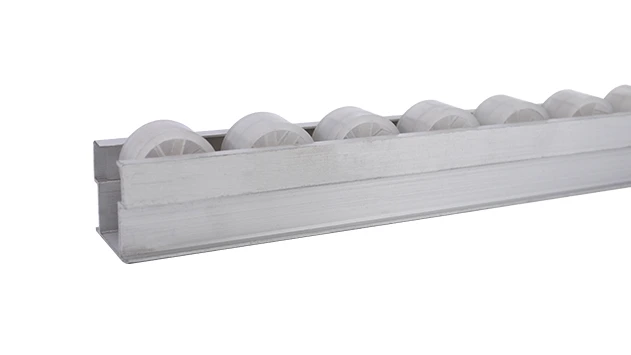
Mini aluminum roller track black for modular system, lean solution.Durable and smooth-running modular roller rails. The system is fully assembled. The roller rail profile contains plastic rollers mounted on steel axles.
38 Aluminum Roller Track White in Communication Equipment Manufacturing: Case Studies
Communication equipment manufacturing is a realm where every millisecond and every tiny component counts. From 5G routers to high-speed switches, the industry demands precision, flexibility, and unbroken flow—yet many plants struggle with bottlenecks, waste, and inefficient material handling that slow down production and eat into profits. This is where Sunqit's 38 Aluminum Roller Track White steps in: a quiet workhorse that transforms chaotic lines into streamlined, lean operations. Let's explore how this simple yet powerful component has revolutionized three real-world communication equipment manufacturing setups.
What Makes Sunqit's 38 Aluminum Roller Track White Stand Out?
Crafted from high-grade aluminum with a smooth white finish, Sunqit's 38 Aluminum Roller Track White isn't just another piece of factory equipment. It's designed to align with lean manufacturing principles—durability means it can be reused across different production lines, and its compatibility with Sunqit's broader product ecosystem (lean pipe workbenches, flow racks, conveyors) allows for endless customization. The white coating isn't just aesthetic: it reflects light to keep work areas bright, reduces eye strain for workers, and resists scratches and stains, ensuring long-term clarity. Unlike plastic alternatives that crack under heavy use, this aluminum track handles light to medium-weight items (like circuit boards, component trays, and packaging) with ease, gliding smoothly without jams or friction.
Case Study 1: Lean Pipe Workbench Integration for 5G Router Assembly
Company: A Leading 5G Router Manufacturer
Problem:
The component assembly station was a persistent bottleneck. Workers manually passed circuit boards from their lean pipe workbench to the next station, a process that took 10-15 seconds per unit and led to fatigue. The existing setup lacked a seamless way to move parts, causing delays and a 12% error rate in component placement.
Solution: Sunqit's team conducted an on-site assessment and designed a custom lean solution. They integrated the 38 Aluminum Roller Track White into Workbench E (a single-deck lean pipe workbench without casters) using internal rotatary aluminum joints to adjust the track's angle to 15 degrees—optimal for ergonomic sliding. A small Material Rack B (3-row, 3-floor) was placed adjacent to the workbench, with the roller track extending directly into the rack's top level. This allowed workers to slide completed components into the rack without lifting, creating a continuous flow.
Implementation: The setup took just one weekend to install, minimizing downtime. Sunqit's technicians trained the team on how to adjust the track's angle and maintain the system, emphasizing its reusability if the line needed to be reconfigured later.
Solution: Sunqit's team conducted an on-site assessment and designed a custom lean solution. They integrated the 38 Aluminum Roller Track White into Workbench E (a single-deck lean pipe workbench without casters) using internal rotatary aluminum joints to adjust the track's angle to 15 degrees—optimal for ergonomic sliding. A small Material Rack B (3-row, 3-floor) was placed adjacent to the workbench, with the roller track extending directly into the rack's top level. This allowed workers to slide completed components into the rack without lifting, creating a continuous flow.
Implementation: The setup took just one weekend to install, minimizing downtime. Sunqit's technicians trained the team on how to adjust the track's angle and maintain the system, emphasizing its reusability if the line needed to be reconfigured later.
Results:
The production manager, Li Wei, shared: "We thought we needed a full line overhaul, but Sunqit's roller track and lean pipe workbench combo fixed our bottleneck at a fraction of the cost. Our team is happier, and we're hitting deadlines without overtime."
- Throughput increased by 25%—from 120 units per hour to 150.
- Error rates dropped by 18% as workers focused on assembly instead of handling.
- Worker fatigue scores (measured via team surveys) decreased by 30%.
The production manager, Li Wei, shared: "We thought we needed a full line overhaul, but Sunqit's roller track and lean pipe workbench combo fixed our bottleneck at a fraction of the cost. Our team is happier, and we're hitting deadlines without overtime."
Case Study 2: Flow Rack Optimization for PCB Component Picking
Company: A 3C Assembly Plant for Communication PCBs
Problem:
The plant's picking area for small components (resistors, capacitors, connectors) was disorganized. Workers spent 20% of their time searching for parts, and the lack of first-in-first-out (FIFO) inventory management led to 8% of components expiring before use. This cost the company $45,000 annually in wasted materials.
Solution: Sunqit proposed a flow rack system equipped with the 38 Aluminum Roller Track White. Each level of the rack was fitted with the track, holding bins of small components. The FIFO design meant the oldest components were used first, eliminating expiration. Adjustable leveling feet were added to the rack to ensure stability even when fully loaded, and plastic roller track guide rails (yellow) were installed to keep bins aligned.
Customization: The flow rack was designed to fit the plant's existing space, with 5 levels and 10 bins per level—perfect for the small, high-volume components used in PCB assembly.
Solution: Sunqit proposed a flow rack system equipped with the 38 Aluminum Roller Track White. Each level of the rack was fitted with the track, holding bins of small components. The FIFO design meant the oldest components were used first, eliminating expiration. Adjustable leveling feet were added to the rack to ensure stability even when fully loaded, and plastic roller track guide rails (yellow) were installed to keep bins aligned.
Customization: The flow rack was designed to fit the plant's existing space, with 5 levels and 10 bins per level—perfect for the small, high-volume components used in PCB assembly.
Results:
A picker named Zhang Mei said: "The roller track makes my job so much easier. I just slide the bin forward, grab what I need, and move on. No more searching for parts or dealing with messy piles."
- Picking time per order decreased by 30% (from 5 minutes to 3.5 minutes).
- Expired component waste dropped to 1%, saving $40,500 annually.
- Worker satisfaction scores increased by 22%—the team no longer had to dig through piles of bins.
A picker named Zhang Mei said: "The roller track makes my job so much easier. I just slide the bin forward, grab what I need, and move on. No more searching for parts or dealing with messy piles."
Case Study 2: Conveyor Integration for Fragile PCB Handling
Company: A Medical & Communication Equipment Manufacturer
Problem:
The plant's existing conveyor system used rough steel rollers that scratched 10% of fragile PCBs, leading to a 8% rejection rate. This cost the company $60,000 annually in rework and wasted materials. The team needed a solution that handled PCBs gently while maintaining a consistent flow.
Solution: Sunqit replaced the steel rollers with the 38 Aluminum Roller Track White in the plant's roller conveyor system. The smooth white rollers provided a soft surface for PCBs to glide on, reducing friction and scratches. The conveyor was also integrated with an ESD workstation to prevent electrostatic discharge—critical for sensitive communication components. Sunqit's technicians adjusted the conveyor's speed to 0.5 meters per second to ensure gentle handling.
Testing: The system was tested for two weeks with 1,000 PCBs. Only 1 unit was scratched, a 90% reduction in damage.
Solution: Sunqit replaced the steel rollers with the 38 Aluminum Roller Track White in the plant's roller conveyor system. The smooth white rollers provided a soft surface for PCBs to glide on, reducing friction and scratches. The conveyor was also integrated with an ESD workstation to prevent electrostatic discharge—critical for sensitive communication components. Sunqit's technicians adjusted the conveyor's speed to 0.5 meters per second to ensure gentle handling.
Testing: The system was tested for two weeks with 1,000 PCBs. Only 1 unit was scratched, a 90% reduction in damage.
Results:
The quality control manager, Wang Tao, noted: "We were skeptical at first, but the 38 Aluminum Roller Track White has transformed our conveyor system. We no longer have to discard perfectly good PCBs because of scratches—this has been a game-changer for our bottom line."
- PCB rejection rate dropped to 0.8%—a 90% improvement.
- Rework costs decreased by $54,000 annually.
- The conveyor system now runs 24/7 without jams or damage, increasing overall throughput by 15%.
The quality control manager, Wang Tao, noted: "We were skeptical at first, but the 38 Aluminum Roller Track White has transformed our conveyor system. We no longer have to discard perfectly good PCBs because of scratches—this has been a game-changer for our bottom line."
Why Choose Sunqit's 38 Aluminum Roller Track White?
Sunqit's 38 Aluminum Roller Track White isn't just a component—it's part of a broader lean solution that empowers manufacturers to build flexible, sustainable production lines. Here's why it's the right choice:
1. Customization: Sunqit's team works closely with clients to design solutions that fit their exact needs. Whether you need to integrate it into a lean pipe workbench, flow rack, or conveyor, the track can be adjusted with aluminum profile accessories (joints, leveling feet, guide rails) to match your line's layout.
2. Lean Principles: The track is reusable and reconfigurable, aligning with Sunqit's "repeated use, sustainable improvement" philosophy. If your production line changes, you can disassemble the track and reuse it elsewhere—no need to buy new equipment.
3. Quality & Durability: Made from high-grade aluminum, the track resists corrosion, scratches, and warping. It's designed to handle 10,000+ cycles without degradation, ensuring long-term value.
4. Industry Expertise: Sunqit specializes in lean solutions for communication equipment, 3C assembly, and medical devices. Their team understands the unique challenges of these industries and designs solutions that address them head-on.
1. Customization: Sunqit's team works closely with clients to design solutions that fit their exact needs. Whether you need to integrate it into a lean pipe workbench, flow rack, or conveyor, the track can be adjusted with aluminum profile accessories (joints, leveling feet, guide rails) to match your line's layout.
2. Lean Principles: The track is reusable and reconfigurable, aligning with Sunqit's "repeated use, sustainable improvement" philosophy. If your production line changes, you can disassemble the track and reuse it elsewhere—no need to buy new equipment.
3. Quality & Durability: Made from high-grade aluminum, the track resists corrosion, scratches, and warping. It's designed to handle 10,000+ cycles without degradation, ensuring long-term value.
4. Industry Expertise: Sunqit specializes in lean solutions for communication equipment, 3C assembly, and medical devices. Their team understands the unique challenges of these industries and designs solutions that address them head-on.
Before & After: Key Metrics Across Case Studies
Case Study
Metric
Before
After
Improvement
5G Router Assembly
Throughput
120 units/hour
150 units/hour
25%
PCB Component Picking
Picking Time
5 mins/order
3.5 mins/order
30%
The 38 Aluminum Roller Track White may seem like a small component, but its impact on communication equipment manufacturing is huge. It eliminates waste, reduces fatigue, and creates a seamless flow of materials—all core tenets of lean manufacturing. Whether you're building 5G routers, PCBs, or communication switches, Sunqit's roller track can help you optimize your line, boost productivity, and reduce costs.
For manufacturers looking to stay competitive in the fast-paced communication industry, Sunqit's lean solutions are more than just equipment—they're a way to build a more efficient, sustainable future.
For manufacturers looking to stay competitive in the fast-paced communication industry, Sunqit's lean solutions are more than just equipment—they're a way to build a more efficient, sustainable future.