- Company Articles
- Products and Technology
- Procurement Guidelines
- 38 Aluminum Roller Track White: Key Considerations Before Purchase

38 Aluminum Roller Track White: Key Considerations Before Purchase
Related Product
38 Aluminum Roller Track White
Mini aluminum roller track black for modular system, lean solution.Durable and smooth-running modular roller rails. The system is fully assembled. The roller rail profile contains plastic rollers mounted on steel axles.
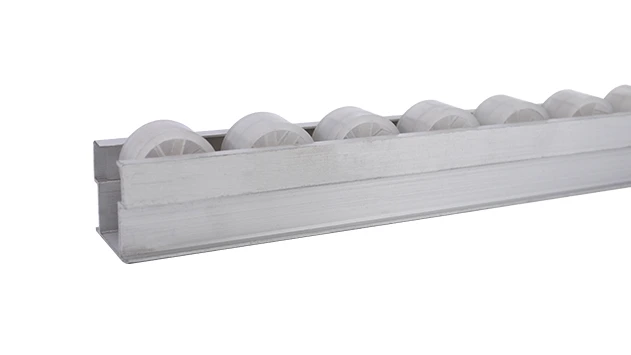
Introduction to 38 Aluminum Roller Track White
When setting up or upgrading your production line, every component plays a critical role in operational efficiency. The 38 Aluminum Roller Track White is a small but essential part that can significantly impact how smoothly materials move through your workflow. Whether integrated into a flow rack, a lean pipe workbench, or an ESD workstation, choosing the right roller track ensures friction-free movement, reduces downtime, and maintains consistent productivity. This article explores key factors to consider before buying this component, helping you make an informed decision that aligns with your operational needs.
1. Material Quality: The Foundation of Durability
The 38 Aluminum Roller Track White is crafted from aluminum, but not all aluminum profiles are equal. Extruded aluminum (like 6063-T5 grade) is superior to cast alternatives because the extrusion process creates uniform, defect-free profiles with enhanced strength and corrosion resistance. This makes the track durable and less prone to bending under pressure.
Rollers are another critical element. Nylon rollers offer better wear resistance and lower friction than plastic ones, making them ideal for high-traffic areas. They also operate quietly, improving workplace comfort. The white powder coating on the track isn't just aesthetic—it protects against scratches and simplifies cleaning, essential for maintaining hygiene in manufacturing environments.
Aluminum profile accessories (end caps, connectors) should match the track's quality. Loose or low-quality accessories can cause shifts, leading to jams or accidents. Always verify that accessories are made from the same high-grade aluminum as the track.

2. Compatibility with Existing Systems
Compatibility is vital to avoid costly modifications. For flow racks, the track must fit slot dimensions without adjustments. In lean pipe workbenches, it should attach easily using compatible clamps or brackets. Test the track with your materials—small components need closer roller spacing (~30mm) to prevent falling, while larger items can use wider spacing (~40mm).
If using the track in an ESD workstation, ensure it doesn't interfere with static protection. While the white track may not be ESD-rated, pairing it with ESD mats or conductive rollers can maintain a safe environment for sensitive electronics.

3. Load Capacity: Ensuring Safe Operation
Load capacity is determined by roller strength and density. For example, 10 nylon rollers/meter (5kg each) support 50kg/meter. Always calculate your needs: if moving 20kg boxes covering 0.5m of track, you need 40kg/meter capacity. Manufacturers should provide clear specifications—never overload the track, as this causes deformation or roller failure.
Inspect tracks regularly for wear. Signs like bent profiles or cracked rollers indicate replacement is needed to prevent accidents and downtime.
4. ESD Protection for Sensitive Environments
ESD (Electrostatic Discharge) damages electronic components by transferring static electricity. In industries like 3C assembly or medical device manufacturing, ESD protection is mandatory. While the white track may not be ESD-rated, ask suppliers for conductive roller options or anti-static coatings. Pairing with ESD mats or wrist straps ensures full protection.
Static buildup on non-ESD rollers can ruin expensive components. Always confirm ESD compatibility if working with sensitive items—this small investment prevents costly losses.
5. Installation & Maintenance Ease
Easy installation reduces downtime. Look for tracks with pre-drilled holes or compatible brackets. Basic tools (wrenches, screwdrivers) should suffice. Maintenance involves regular cleaning (wipe with a damp cloth) and lubrication (use silicone-based lubricants for nylon rollers).
replace individual rollers instead of entire tracks to save costs. High-quality tracks allow roller removal without disassembly, simplifying repairs.
6. Customization Options
Customization enhances utility. Ask suppliers for cut-to-size tracks, side guides (preventing material slippage), or different roller materials. Color options (beyond white) help organize workflows—yellow for high-priority lines, grey for storage areas.
Side guides are particularly useful for irregularly shaped items, ensuring they move straight along the track. This small addition can significantly improve efficiency.
7. Choosing a Reliable Lean Pipe Supplier
A trusted lean pipe supplier offers quality products, warranty, and after-sales support. Check reviews, ask for references, and verify industry experience. Suppliers should provide technical assistance for installation or customization.
Warranty coverage (1-2 years) indicates confidence in product durability. Avoid cheap alternatives—they often lack quality control and lead to frequent replacements.
8. Cost-Effectiveness & Long-Term Value
While initial cost matters, long-term value is key. High-quality tracks last 5+ years, while cheap options fail in 1-2 years. Calculate total cost of ownership: durable tracks reduce replacement frequency and downtime, saving money over time.
Consider bulk purchases for cost savings—many suppliers offer discounts for large orders, ideal for production line expansions.
| Factor | Key Questions |
|---|---|
| Material Quality | Is it extruded aluminum? Are rollers nylon? |
| Compatibility | Fits flow rack/lean pipe workbench? |
| Load Capacity | Meets my weight requirements? |
| ESD Protection | Suitable for sensitive environments? |
| Supplier Reliability | Offers warranty/after-sales support? |
9. Conclusion
The 38 Aluminum Roller Track White is a small but impactful component. Prioritize material quality, compatibility, load capacity, ESD protection, and supplier reliability. By making an informed choice, you ensure smooth operations, reduce downtime, and maximize productivity. Invest in high-quality tracks—they pay off in long-term efficiency and cost savings.
Final Recommendations
1. Test the track with your materials before bulk purchase.
2. Choose nylon rollers for durability and quiet operation.
3. Verify ESD compatibility if working with electronics.
4. Partner with suppliers offering warranty and technical support.
5. Regularly inspect and maintain tracks to extend lifespan.