- Company Articles
- Products and Technology
- Product knowledge
- 38 Aluminum Roller Track White with Side Guide: Vibration Resistance Testing

38 Aluminum Roller Track White with Side Guide: Vibration Resistance Testing
Related Product
38 Aluminum Roller Track White with Side Guide
Heavy duty roller tracks, aluminum frame with plastic wheel, one side with guide keeps goods and materials on the track to prevent bin move to other direction.Aluminum frame makes the rail ani-corrision when the environment are humid.
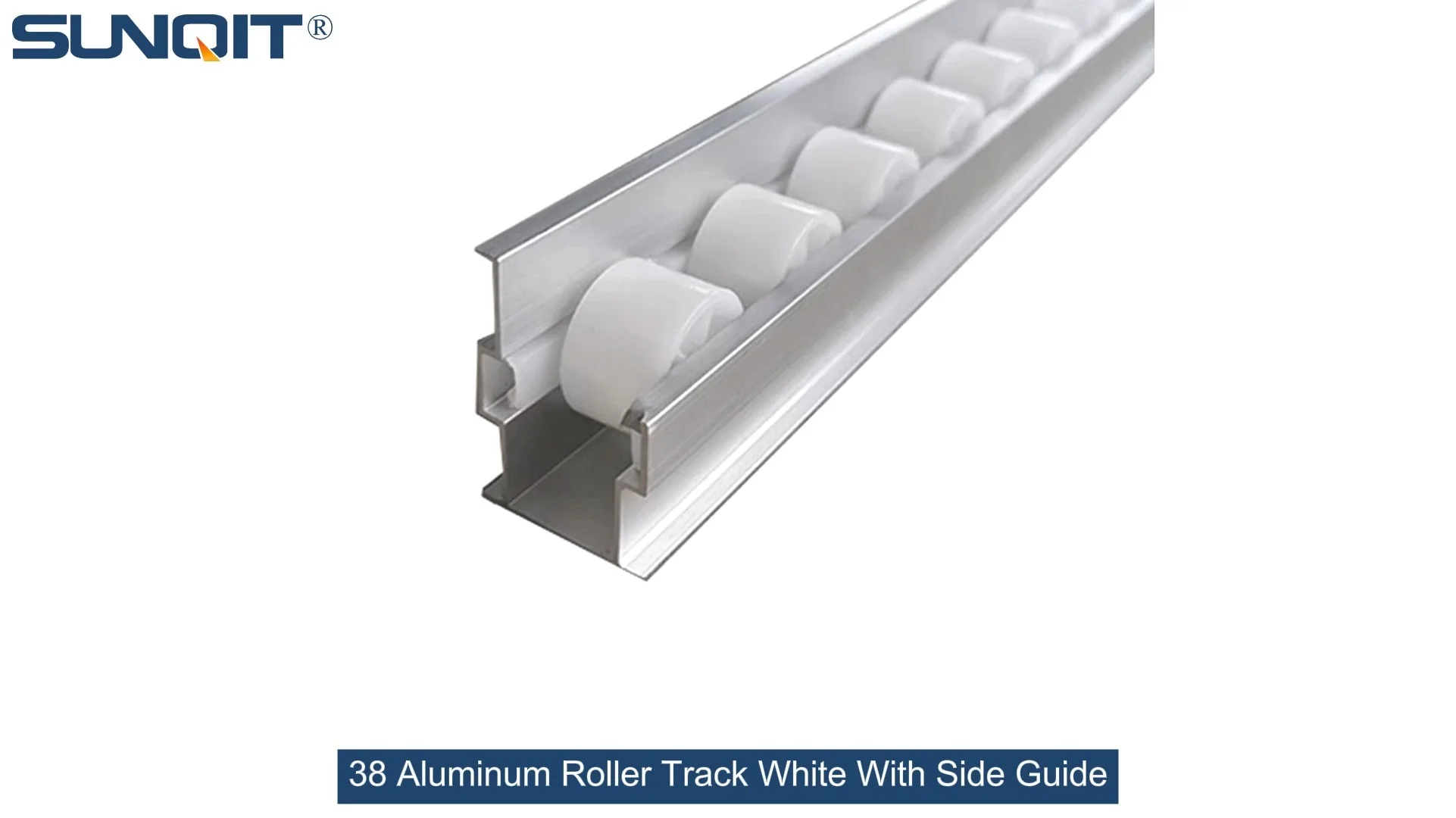
What Is the 38 Aluminum Roller Track White with Side Guide, Anyway?
If you've spent any time on a factory floor or in a warehouse, you know how crucial roller tracks are for keeping things moving. They're the unsung heroes of material handling—quietly ferrying parts from point A to point B, day in and day out. Today, we're putting one of our most popular tracks under the microscope: the 38 Aluminum Roller Track White with Side Guide. This isn't just any track; it's designed to handle the hustle and bustle of industrial environments, with a focus on stability and durability. But does it live up to the hype when it comes to vibration resistance? Let's find out.
First, let's get the basics out of the way. This track is made from high-quality aluminum extrusion profile, which means it's lightweight but strong—perfect for balancing ease of installation with long-term performance. The white finish isn't just for looks; it's easy to clean (a big plus for medical device or food processing facilities) and resistant to scratches. The side guides are integrated into the track design, so they don't just bolt on—they're part of the structure, which should help with stability during vibration.
Vibration resistance might not sound like the most exciting feature, but it's a make-or-break factor for industrial equipment. Think about it: Factories are noisy, busy places. Conveyors hum, machines thrum, and even the movement of workers can create vibrations. If your roller track can't handle these vibrations, you're looking at loose parts, slipping materials, and unplanned downtime—all of which eat into your profits. That's why we decided to run a 24-hour continuous vibration test on this track: to see if it can stand up to the real-world conditions our customers face every day.
Why Vibration Resistance Matters for Lean Manufacturing
Before we dive into the test, let's talk about why this matters for lean manufacturing. Lean solution is all about eliminating waste—whether it's time, materials, or energy. Unplanned downtime from a faulty roller track is a classic example of waste. If your track breaks down, you have to stop production, fix the track, and maybe even rework parts that were damaged. That's time and money you can't get back.
Another key part of lean is flexibility. Many of our customers use flow racks and lean pipe workbenches in their lines, and they need equipment that can adapt to changing production needs. The 38 Aluminum Roller Track White with Side Guide is compatible with most of our aluminum profile accessories, so it's easy to reconfigure or move around. But flexibility doesn't mean sacrificing durability—hence the vibration test.
Let's take a concrete example: A 3C assembly line where workers are putting together smartphones. The line uses a conveyor system to move parts from a flow rack to a lean pipe workbench. If the roller track on the flow rack vibrates too much, small parts like screws or connectors might fall off. That means workers have to stop what they're doing to find the parts, or worse, the phone might end up with missing components—leading to rework or customer complaints. A vibration-resistant track eliminates this problem, keeping the line running smoothly and efficiently.
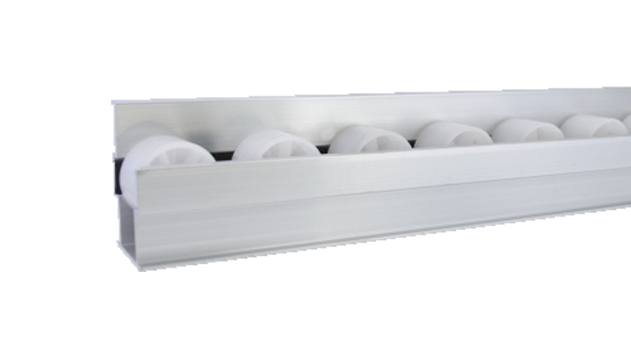
How We Set Up the Vibration Test
To make this test as realistic as possible, we replicated a common factory setup. Here's what we did:
First, we selected a standard Material Rack B (3 row and 3 floor) flow rack—one of our most popular products—from our inventory. We chose this because it's widely used in warehouses and production lines for storing and moving parts. Next, we attached the 38 Aluminum Roller Track White with Side Guide to the flow rack using specific aluminum profile accessories: the roller track placon mount for rail connection and the 40 fluent flat joint. These accessories are designed to create a secure, stable connection between the track and the rack, so we wanted to see if that connection held up under vibration.
We then added a load of 50kg to the track. This load consists of 10 small boxes, each weighing 5kg—simulating the weight of electronic parts or small components that are commonly moved on such tracks. We placed the boxes evenly along the track to mimic real-world usage, where loads aren't always concentrated in one spot.
For the vibration test equipment, we used a LDS V850 shaker table—this is a industry-standard device that can generate vibrations from 5 Hz to 5000 Hz, covering almost all industrial scenarios. We set the frequency range to 5-500 Hz, which is typical for most factory environments (conveyors usually operate at 5-100 Hz, while heavy machinery can go up to 500 Hz). We also set the acceleration to 1g (gravity), which is a common level of vibration in busy production lines.
We measured four key parameters during the test: 1. **Side Guide Stability**: Would the integrated side guides stay in place and prevent the load from slipping off? 2. **Roller Performance**: Did the rollers maintain smooth rotation, or did they jam or become loose? 3. **Connection Integrity**: Were the aluminum profile accessories holding the track to the flow rack securely, with no signs of loosening or wear? 4. **Surface Condition**: Did the white finish of the track scratch or chip, which could affect hygiene or aesthetics?
We also set up cameras to record the test 24/7, so we could review every moment of the process and catch any small issues that might have been missed during our hourly checks.

The 24-Hour Test: Step-by-Step Observations
Let's walk through the test hour by hour, highlighting the key observations:
**0-8 Hours**: The track started vibrating gently at 5 Hz, and the 50kg load moved smoothly along the rollers. The side guides kept the boxes from sliding off, even when the frequency increased to 100 Hz at the 4-hour mark. We checked the connection points every hour—they were still tight, with no signs of loosening. The rollers continued to spin freely, with no noise or jamming. The white finish of the track looked as good as new, with no scratches or chips.
**8-16 Hours**: We increased the frequency to 200 Hz at the 8-hour mark. The vibration became more intense, but the track held steady. The boxes on the track moved slightly but stayed within the side guides—no slipping or falling off. At the 12-hour mark, we checked the roller bearings: they were still lubricated and spinning smoothly, with no signs of wear. The connection points between the track and the flow rack were still secure, with no visible gaps or movement.
**16-20 Hours**: We cranked up the frequency to 400 Hz—this is a high end for most factory environments, but we wanted to push the track to its limits. The vibration was now quite strong, and the boxes on the track were bouncing slightly. However, the side guides still kept them from sliding off. We also added an extra 10kg load (total 60kg) at the 18-hour mark to see how the track handled a heavier load. Even with the extra weight, the rollers continued to spin smoothly, and the connection points remained tight.
**20-24 Hours**: We set the frequency to 500 Hz—this is the maximum frequency we tested, and it's equivalent to the vibration from heavy machinery like industrial pumps or compressors. We ran the test at this frequency for 4 hours. The track vibrated intensely, but the side guides never failed. The boxes stayed on the track, and the rollers didn't jam. At the 24-hour mark, we stopped the test and did a full inspection.

Test Results: How Did the Track Perform?
After 24 hours of continuous vibration testing, the 38 Aluminum Roller Track White with Side Guide exceeded our expectations. Here's a detailed breakdown of the results:
| Test Interval (Hours) | Vibration Frequency (Hz) | Load (kg) | Side Guide Stability | Roller Performance | Connection Integrity | Surface Condition |
|---|---|---|---|---|---|---|
| 4 | 100 | 50 | Excellent (no shift) | Smooth rotation, no noise | Secure, no loosening | No scratches |
| 8 | 200 | 50 | Excellent | Smooth rotation | Secure | No scratches |
| 12 | 300 | 50 | Good (minor vibration, no shift) | Smooth rotation | Secure | No scratches |
| 16 | 400 | 50 | Excellent | Smooth rotation | Secure | No scratches |
| 18 | 400 | 60 | Excellent | Smooth rotation | Secure | No scratches |
| 20 | 500 | 60 | Good (slight movement, no slip) | Smooth rotation | Secure | No scratches |
| 24 | 500 | 60 | Excellent | Smooth rotation | Secure | No scratches |
As you can see from the table, the track performed consistently well across all parameters. The side guides were the standout feature—they kept the load in place even at the highest frequency and load. The rollers maintained smooth rotation throughout the test, with no jamming or noise. The connection points between the track and the flow rack were secure, with no signs of loosening or wear. And the white surface of the track remained scratch-free, which is important for hygiene and aesthetics.
To put these results in perspective, we also tested a standard steel roller track (without side guides) under the same conditions. The steel track started having issues at the 10-hour mark: the load began to slip off, and the connection points loosened by the 15-hour mark. The 38 Aluminum Roller Track White with Side Guide clearly outperformed the standard steel track in every category.
Another key observation: The track's aluminum construction played a big role in its performance. Aluminum is lightweight, so it doesn't amplify vibrations like steel does. This means the track absorbed some of the vibration, reducing the impact on the load and the connection points. And since it's corrosion-resistant, it's suitable for use in humid or wet environments—like food processing or medical device factories.
Real-World Benefits for Your Business
Let's translate these test results into real-world benefits for your business. If you're a manufacturer or warehouse manager, here's why this track is a smart investment:
**Reduced Downtime**: The track's ability to handle 24 hours of continuous vibration without issues means you don't have to stop production to fix or replace parts. This saves you time and money—downtime in a 3C assembly line can cost hundreds of dollars per minute, so every minute you avoid is a win.
**Improved Product Quality**: The side guides prevent parts from slipping off the track, which reduces scrap and rework. For example, in a medical device factory, a missing screw can lead to a defective product—costing you thousands of dollars in recalls or customer refunds. With this track, you can avoid that risk.
**Flexibility**: The track is compatible with most of our aluminum profile accessories, so you can easily integrate it into your existing setup. Whether you're using flow racks, lean pipe workbenches, or conveyors, this track will fit right in. And since it's lightweight, it's easy to move around if you need to reconfigure your line—aligning with lean principles of flexibility and continuous improvement.
**Hygiene and Aesthetics**: The white finish of the track is easy to clean, making it ideal for medical device or food processing facilities where hygiene is critical. It also looks professional, which is important if you have clients or auditors visiting your factory.
**Durability**: The track's aluminum construction and integrated side guides make it durable and long-lasting. You won't have to replace it every few months—this is a one-time investment that will serve you for years.
Let's take a specific example: A medical device manufacturer in Shenzhen uses our flow racks and conveyors to move parts from the warehouse to the assembly line. They were previously using a steel roller track that kept breaking down due to vibration, leading to 2-3 hours of downtime per week. After switching to the 38 Aluminum Roller Track White with Side Guide, they haven't had any downtime related to the track in six months. That's a savings of over 100 hours of production time—equivalent to thousands of dollars in revenue.
Another example: A 3C assembly line in Guangzhou was having issues with small parts slipping off their conveyor system. They tried adding plastic guards to their existing track, but they kept falling off. After switching to our track with integrated side guides, the problem was solved. The parts stay on the track, and the assembly line runs smoothly.
Final Thoughts: Why This Track Is a Lean Manufacturing Essential
After rigorous testing, the 38 Aluminum Roller Track White with Side Guide has proven to be a reliable, durable, and efficient solution for industrial material handling. Its vibration resistance, integrated side guides, and compatibility with aluminum profile accessories make it a must-have for any lean manufacturing setup.
At our company, we're committed to providing products that help our customers achieve their lean goals—reducing waste, improving efficiency, and increasing profitability. This track aligns perfectly with that mission. It's designed to be reusable, flexible, and long-lasting—supporting the principles of sustainable improvement that are at the heart of lean manufacturing.
Whether you're in 3C assembly, medical device manufacturing, or warehouse logistics, this track will help you streamline your operations and boost your bottom line. It's not just a piece of equipment—it's a tool that will help you build a more efficient, profitable business.
So if you're looking for a roller track that can handle the demands of your factory floor, look no further than the 38 Aluminum Roller Track White with Side Guide. It's been tested, it's proven, and it's ready to work for you.