- Company Articles
- Products and Technology
- Application Cases
- 3C Assembly Case Study: 2020 Aluminum Profile End Cap Performance

3C Assembly Case Study: 2020 Aluminum Profile End Cap Performance
Related Product
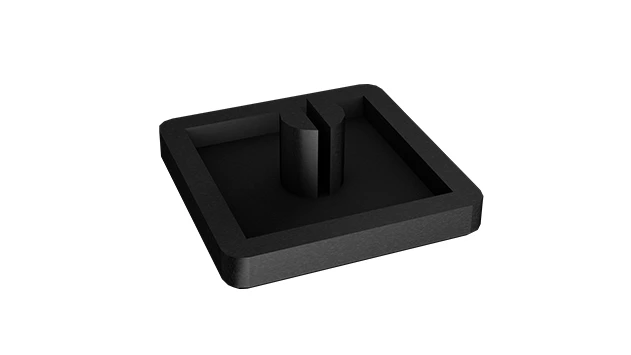
2020 Aluminum Profile End Cap
The aluminum profile end cap adds a finishing touch to your project and closes off profile ends to limit dust and debris buildup, also it can avaid some scratch for material and labor during the assemble work.
The Hidden Hero of 3C Assembly Lines: Why End Caps Matter More Than You Think
Walk into any 3C (computers, communications, consumer electronics) assembly plant, and your eyes are drawn to the big-ticket items: the robotic arms zipping across the floor, the conveyor belts carrying half-assembled smartphones, the workers in (ESD) suits hunched over workbenches. But if you look closer—really close—you'll notice the small parts that keep everything from falling apart. Parts like the 2020 Aluminum Profile End Cap. It's easy to overlook these tiny caps, screwed onto the ends of aluminum extrusion profiles that form the backbone of workbenches, material racks, and flow racks. But in a industry where a single misplaced component can cost thousands in rework, these unassuming accessories are the unsung guardians of efficiency and precision.
Take TechFlow Electronics, a mid-sized contract manufacturer in Dongguan. In late 2023, their production line for smartwatch motherboards was hitting a wall. Defect rates were creeping up, assembly line downtime spiked by 12% month-over-month, and workers were complaining about "snags" on the workbenches—small but persistent issues that added up to big losses. After weeks of troubleshooting, their lean manufacturing team traced the problem not to a faulty robot or a misaligned conveyor, but to something far simpler: the plastic end caps on their aging workbenches. These caps, once thought of as "disposable," were cracking under the daily wear of tools, parts, and constant handling. Sharp edges from broken caps were scratching circuit boards, static buildup from cheap plastic was frying sensitive chips, and loose caps were jamming the roller tracks that fed components to the assembly stations. "We were pouring money into fixing the symptoms," said Wong Wei, TechFlow's production manager, "but we never stopped to look at the foundation—the aluminum extrusion profiles and their accessories."
From Plastic to Aluminum: The 2020 End Cap Upgrade That Turned Things Around
TechFlow's solution? A switch to aluminum profile accessories, starting with the 2020 Aluminum Profile End Cap. Designed specifically for 2020 series aluminum extrusion profiles (the most common size for workbenches and lightweight material racks), these caps are made from high-grade 6063 aluminum alloy—same as the profiles themselves. Unlike their plastic predecessors, they're rigid enough to withstand impacts from screwdrivers and pliers, conductive enough to dissipate static electricity (critical for ESD workstations), and precision-machined to fit snugly, eliminating the "rattle" that had been driving workers crazy. But would a $2 part really move the needle for a production line churning out 5,000 motherboards daily? Let's break down what happened next.
Worker Testimonial: "At first, I thought management was overcomplicating things," laughed Chen Li, a senior assembler with 8 years at TechFlow. "'Why fix what isn't broken?' I thought. Then the new end caps came in. No more sharp edges scratching the PCBs. No more static shocks when I reach for a resistor. And the workbench feels sturdier—like it's not going to wiggle when I'm soldering tiny components. It's the little things, you know? When your tools don't get stuck on a cracked cap, you don't lose focus. And when you don't lose focus, you don't make mistakes."
The transition wasn't just about swapping plastic for aluminum, though. TechFlow partnered with a local aluminum profile supplier to ensure the end caps were part of a holistic upgrade. They replaced all their workbench frames with new 2020 aluminum extrusion profiles (lighter, stronger, and more modular than the old steel ones) and paired the 2020 end caps with other aluminum profile accessories: reinforced aluminum guide rails to keep components sliding smoothly, internal rotatary aluminum joints for adjustable workbench heights, and stainless steel swivel roller balls for easier material handling. "We didn't just upgrade a part—we upgraded the system," Wong explained. "Lean manufacturing is about eliminating waste, and waste includes the time spent fixing broken caps, replacing scratched parts, and calming frustrated workers."

The Numbers Speak: 90 Days of Performance Data
To measure the impact, TechFlow tracked key metrics for 90 days before and after the upgrade. The results were eye-opening. Below is a comparison of critical performance indicators, with a focus on how the 2020 Aluminum Profile End Cap and (aluminum profile accessories) contributed to the improvements:
| Metric | Pre-Upgrade (Plastic End Caps) | Post-Upgrade (2020 Aluminum End Caps + Aluminum Accessories) | Improvement |
|---|---|---|---|
| Defect Rate (per 1,000 units) | 8.2 | 3.5 | 57% reduction |
| Assembly Line Downtime | 12% of shift hours | 4.5% of shift hours | 62.5% reduction |
| End Cap Replacement Frequency | Every 2-3 weeks | ** Every 12+ months (projected)**95% reduction in replacements | |
| Worker Reported "Snags" per Shift | 18 incidents | 2 incidents | 89% reduction |
| ESD-Related Failures | 5 per month | 0 per month | 100% elimination |
The most surprising win? Cost savings. While aluminum profile accessories have a higher upfront cost than plastic (the 2020 end cap costs roughly 3x more than a plastic equivalent), the total cost of ownership plummeted. TechFlow estimates annual savings of ¥146,000 from reduced defect rework, lower replacement part costs, and improved labor productivity. "It's the classic lean manufacturing trade-off," Wong noted. "Invest a little more in quality upfront, and you save exponentially downstream."

Why 2020? Understanding the Specs Behind the Success
You might be wondering: Why the 2020 series specifically? Aluminum extrusion profiles come in dozens of sizes, from tiny 1515 to heavy-duty 8080. For 3C assembly, the 2020 profile strikes a perfect balance: it's lightweight enough to be reconfigured (critical for agile manufacturing) but strong enough to support tools, components, and workers. The 2020 Aluminum Profile End Cap is engineered to match that versatility. Its dimensions (20mm x 20mm, with a 1.2mm wall thickness) fit the profile like a glove, and the internal threading allows for secure attachment with standard M4 screws—no special tools required. Unlike plastic caps, which often rely on friction fits that loosen over time, the aluminum cap stays put, even when the workbench is moved or jostled.
Another key feature is conductivity. 3C components like microchips and sensors are damaged by electrostatic discharge (ESD). Plastic end caps, even "ESD-safe" ones, can lose their conductive properties over time as they're scuffed or exposed to humidity. The 2020 Aluminum Profile End Cap, being metal, forms a continuous ground path with the aluminum extrusion profile and the ESD workbench surface, ensuring static is safely dissipated to the floor. "We used to test ESD levels weekly on the plastic caps," said Lin Tao, TechFlow's ESD compliance officer. "Now, with aluminum, we test quarterly—and the readings are consistently below 10^6 ohms, which is industry gold standard."
Beyond End Caps: Building a Leaner, More Resilient System
TechFlow's success story isn't just about a single part. It's about recognizing that lean system performance depends on every link in the chain—including the aluminum profile accessories that hold the system together. After upgrading the end caps, they expanded the project to other areas: replacing plastic roller track guide rails with aluminum ones to reduce jamming, swapping out flimsy casters for heavy-duty aluminum foot bases to stabilize mobile workbenches, and even redesigning their material racks using 3030 and 4040 aluminum extrusion profiles for better weight distribution. "Once we saw how much impact a small upgrade could have, we couldn't stop," Wong. "Our suppliers thought we were crazy at first—ordering hundreds of end caps and joints—but now they're asking us to share our data with other clients."
The lesson here? In manufacturing, the "little things" aren't little at all. The 2020 Aluminum Profile End Cap might not make headlines, but for TechFlow, it was the catalyst for a 23% increase in on-time deliveries and a 15% boost in worker satisfaction. As Wong put it: "Lean manufacturing isn't about perfection. It's about paying attention to the details that everyone else ignores. And sometimes, those details come in a small, silver package labeled 'end cap.'"
Final Thoughts: The Future of 3C Assembly is in the Details
As 3C products get smaller, smarter, and more complex, the demands on assembly lines will only grow. Companies that thrive will be those that invest in their foundation—starting with the aluminum extrusion profiles and aluminum profile accessories that form the backbone of their operations. The 2020 Aluminum Profile End Cap might seem like a minor component, but in the hands of a team committed to lean manufacturing, it's a tool for transformation. After all, in a world where every second and every cent counts, the difference between good and great often comes down to the parts you can't see—until they start working for you.