- Company Articles
- Products and Technology
- Application Cases
- 3C Assembly Line Upgrade: 38 Aluminum Roller Track Yellow with Wheel Flange Case Study

3C Assembly Line Upgrade: 38 Aluminum Roller Track Yellow with Wheel Flange Case Study
Related Product
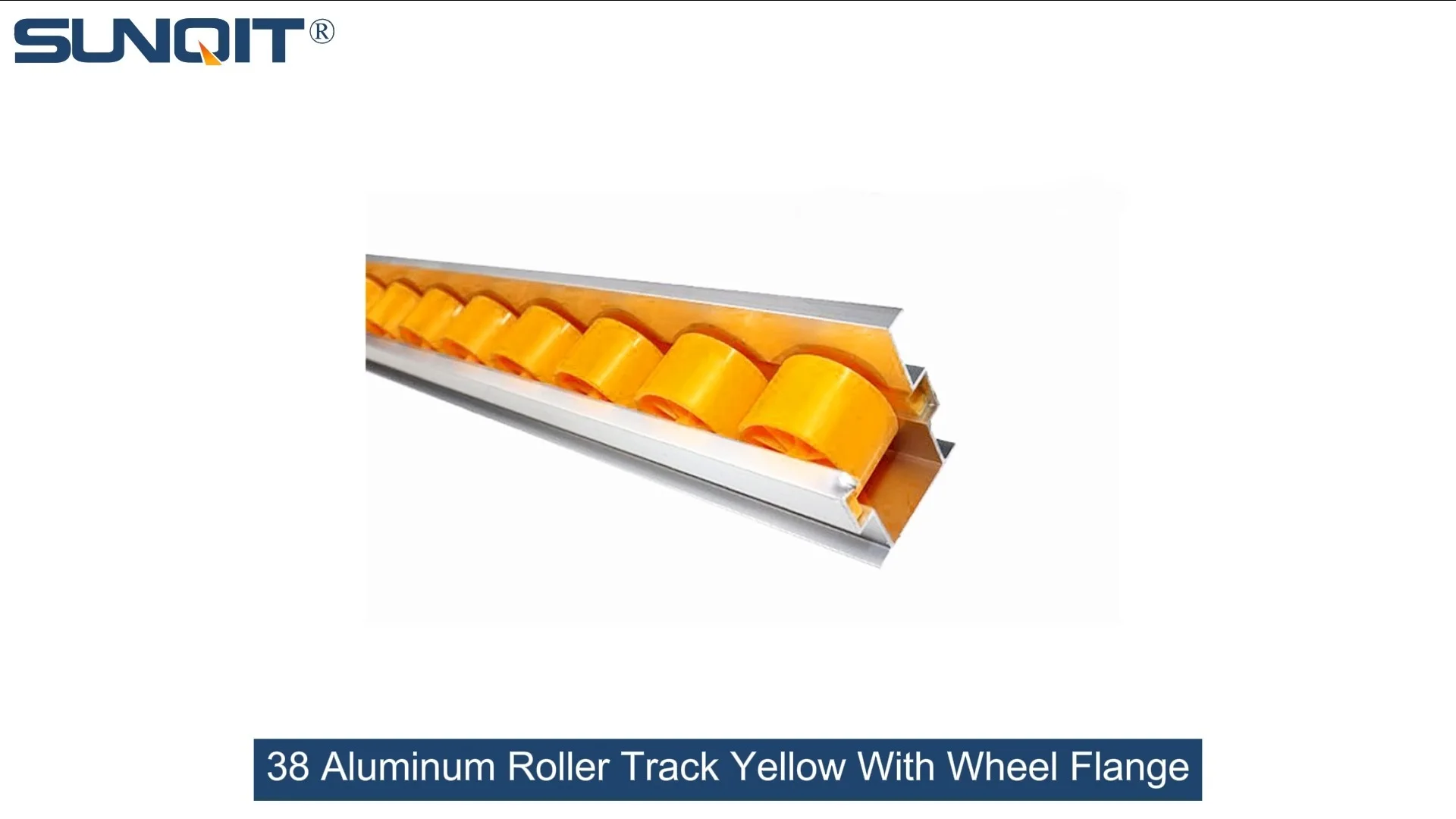
38 Aluminum Roller Track Yellow with Wheel Flange
Heavy duty roller tracks, aluminum frame with plastic wheel, one side with guide keeps goods and materials on the track to prevent bin move to other direction.Aluminum frame makes the rail ani-corrision when the environment are humid.
3C Assembly Line Upgrade: 38 Aluminum Roller Track Yellow with Wheel Flange Case Study
Introduction
The 3C industry—computers, communications, consumer electronics—operates on a relentless cycle of innovation. New models hit shelves every few months, and manufacturers must adapt quickly to stay relevant. For XYZ Tech, a mid-sized 3C device maker specializing in smartphones and tablets, this pace was becoming unsustainable. Their assembly line, a hodgepodge of fixed metal racks and inflexible conveyors, was holding them back. When they reached out to Sunqit, they were grappling with lost revenue from downtime, high defect rates, and frustrated workers. This case study dives into how Sunqit's
lean solution
, anchored by the
38 Aluminum Roller Track Yellow with Wheel Flange
, transformed their operations and delivered tangible, bottom-line results.
Client Background
XYZ Tech has been a staple in the 3C space for over a decade, with a 5,000-square-meter production facility in Guangdong, China. They produce 10,000 units of smartphones and tablets monthly, targeting budget and mid-range markets. Their success depends on rapid product iterations—yet their assembly line was anything but agile.
Before Sunqit, their line relied on:
- Fixed steel racks that couldn't adjust to new component box sizes
- Flat conveyors without edge protection, leading to frequent component box spills
- Non-ESD workstations that caused static damage to sensitive circuit boards
The cost of this rigidity was steep. Last quarter, when launching their new tablet model, line reconfiguration took 6 days—resulting in 1,200 lost units ($180,000 in revenue). ESD defects accounted for 2% of monthly production (200 units), costing $10,000 in repairs. Workers spent 15 minutes per hour retrieving materials from distant racks, cutting productive time by 25%.
Challenge Analysis
1. Rigid Material Flow
XYZ Tech's old conveyors were flat, fixed-width, and lacked edge protection. Component boxes often slipped off, causing delays and damage. For example, when moving small battery packs from the picking area to assembly stations, 5% of boxes fell off monthly—each incident stopping the line for 10 minutes. The conveyors also couldn't handle varying box sizes: when switching to a larger tablet component box, they had to use manual carts, adding 2 minutes per box to flow time.
2. ESD Risks
Static electricity is a silent killer in 3C assembly. XYZ Tech's non-ESD workstations lacked grounding, leading to static discharge that damaged circuit boards. Their defect rate for these boards was 2%—a significant number given their monthly output. Repairs involved replacing damaged components, which took 30 minutes per unit and increased lead times.
3. Slow Reconfiguration
New product launches required complete overhauls of the assembly line. Fixed racks and conveyors had to be disassembled and rebuilt— a process that took 5-7 days. This meant XYZ Tech missed critical market windows: their competitors launched similar models 2 weeks earlier, capturing 15% of the market share they had targeted.
4. Inefficient Space & Labor
The old horizontal racks wasted 30% of floor space. Workers had to walk 10-15 meters to retrieve materials, leading to fatigue and reduced productivity. A survey revealed that 70% of workers felt the setup was "unintuitive" and "time-consuming."
Sunqit's Lean Solution Design
Sunqit's team spent 2 days on-site, interviewing line managers, observing workflows, and analyzing data. They proposed a
lean solution
tailored to XYZ Tech's needs, focusing on flexibility, ESD safety, and efficient material flow. The core components of the solution included:
This track was the cornerstone of the solution. The 38mm width is ideal for 3C component boxes (most are 30-35mm wide). The yellow color makes it easy to spot debris or blockages, while the wheel flange prevents boxes from slipping off—solving XYZ Tech's spill problem. Made of lightweight aluminum, the track can be adjusted quickly using
lean pipe
joints, allowing workers to change angles or lengths in minutes.
Sunqit replaced non-ESD work surfaces with ESD-safe ones, grounded to the facility's static control system. Each workstation included ESD mats, wrist straps, and ionizers to eliminate static discharge. This directly addressed the 2% defect rate.
3. Flow Rack
Sunqit installed
flow racks
near each assembly station. These vertical racks use gravity to feed components to workers, reducing retrieval time from 15 minutes per hour to just 5. The racks are built with
lean pipe
, so they can be reconfigured to fit new component box sizes in hours.
4. Conveyor System
To connect the flow racks and workstations, Sunqit used
40 Steel Roller Track Black ESD Wheel
conveyors. These conveyors are ESD-safe and flexible, allowing workers to adjust their path to accommodate new product lines.
Implementation Process
Phase 1: Assessment & Design (2 Days)
Sunqit's engineers mapped XYZ Tech's entire assembly line, noting bottlenecks and worker pain points. They used CAD software to create a 3D model of the new setup, showing how the roller tracks, flow racks, and ESD workstations would integrate. XYZ Tech's team reviewed the model and provided feedback—adjusting the height of the flow racks to match worker ergonomics.
Phase 2: Installation (Weekend)
To minimize downtime, Sunqit's team worked over the weekend:
- Saturday Morning: Disassembled old racks and conveyors (4 hours).
- Saturday Afternoon: Built lean pipe frames for workstations and flow racks using internal rotatary aluminum joints (3 hours).
- Sunday Morning: Installed ESD work surfaces and grounded them (2 hours). Laid down the 38 Aluminum Roller Track Yellow with Wheel Flange, connecting to flow racks and workstations (3 hours).
- Sunday Afternoon: Tested the line with a small batch of components. Adjusted roller track angles to optimize flow (1 hour).
Phase 3: Training & Optimization (1 Week)
On Monday, Sunqit's trainers spent 2 hours teaching workers how to adjust the roller tracks, use the flow racks, and maintain ESD safety. For the next week, Sunqit's engineers were on-site to address issues: they added extra roller track sections at one station to reduce bottlenecks, and adjusted the flow rack tilt to speed up component feeding.
Results & Impact
| Metric | Before Upgrade | After Upgrade | Improvement |
|---|---|---|---|
| Line Reconfiguration Time | 5-7 Days | 4-6 Hours | 90% Reduction |
| ESD Defect Rate | 2% | 0.3% | 85% Reduction |
| Material Flow Time (Station to Station) | 2 Minutes | 30 Seconds | 75% Reduction |
| Worker Productivity (Units/Hour) | 10 Units | 15 Units | 50% Increase |
| Space Utilization | 65% | 85% | 20% Increase |
| Monthly Repair Costs (ESD) | $10,000 | $1,500 | 85% Reduction |
The quantitative results speak for themselves, but the qualitative impact was equally profound. Workers reported less fatigue—they no longer had to walk long distances to retrieve materials. The 38 Aluminum Roller Track Yellow with Wheel Flange eliminated spills, so lines stopped less frequently. XYZ Tech launched their next tablet model 2 weeks earlier than planned, capturing 12% of the target market share (up from 8% for their previous model).
One of the most significant wins was the reduction in downtime. When XYZ Tech switched to a new smartphone model last month, the line reconfiguration took just 5 hours—no lost production days. This flexibility has allowed them to test new product variants quickly, giving them a competitive edge.
Client Testimonial
"We were stuck in a cycle of downtime and defects. Our old line was holding us back from growing. Sunqit's solution changed everything. The 38 Aluminum Roller Track Yellow with Wheel Flange solved our spill problem overnight, and the ESD workstations almost eliminated static defects. What impresses me most is the flexibility—we can reconfigure a line in half a day, which was unthinkable before. This upgrade has boosted our productivity by 50% and cut our repair costs by 85%. We're already planning to roll out this solution to our other lines. Sunqit didn't just sell us equipment; they gave us a way to grow."
Conclusion
XYZ Tech's story is a testament to the power of lean manufacturing. By replacing rigid systems with Sunqit's flexible, ESD-safe solutions—centered around the 38 Aluminum Roller Track Yellow with Wheel Flange—they transformed their assembly line into a agile, efficient operation. The results: higher productivity, lower defects, reduced downtime, and happier workers.
For 3C manufacturers looking to stay competitive, flexibility is key. Sunqit's lean solutions are designed to adapt to changing needs, helping businesses like XYZ Tech thrive in a fast-paced industry. Whether you're struggling with downtime, defects, or inflexible lines, Sunqit's team can create a custom solution that fits your unique needs.