- Company Articles
- Products and Technology
- Product knowledge
- 3C Assembly Lines: Benefits of Suction Cup Anti-Slip Foot Adjusters

3C Assembly Lines: Benefits of Suction Cup Anti-Slip Foot Adjusters
Related Product
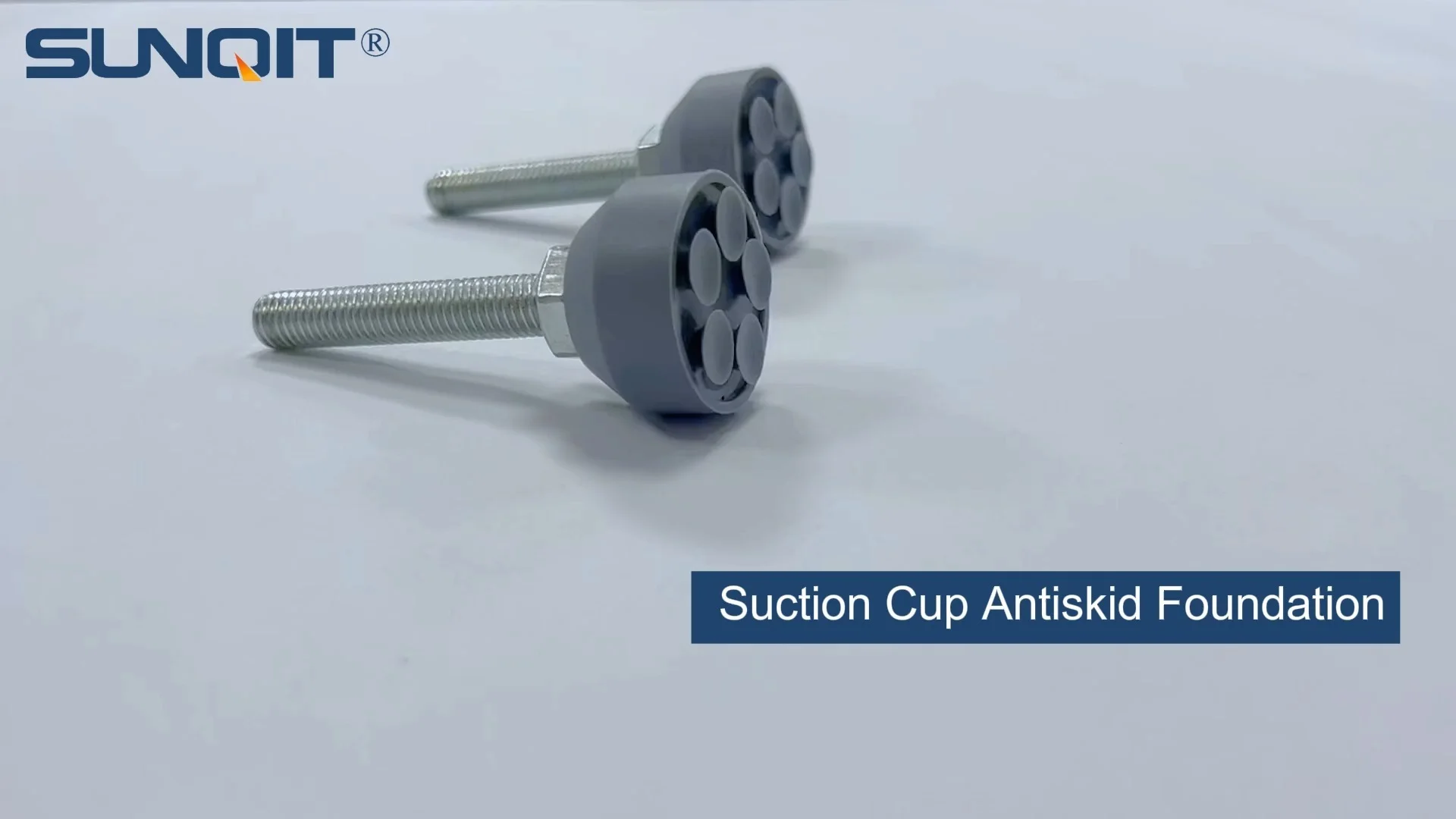
Suction Cup Anti-slip Foot Adjuster
D=35mm suction cup anti-slip foot adjusterï¼screw M10*55ï¼with a blot, used for workbench, flowrack pipe contact with groud.
In the fast-paced world of 3C manufacturing—where smartphones, laptops, and consumer electronics come to life—every second counts. Assembly lines hum with precision, workers move with practiced efficiency, and machines whir to place tiny components with millimeter-perfect accuracy. But behind this seamless dance of productivity lies a silent challenge that can throw even the best-laid plans off track: stability. When workbenches wobble, conveyor belts shift, or material racks slide, the result isn't just a momentary pause—it's missed deadlines, increased defects, and even safety risks. That's where one unsung hero steps in: the suction cup anti-slip foot adjuster. Let's dive into why this small but mighty component is becoming a game-changer for 3C assembly lines, and how it pairs with staples like lean pipe workbenches and aluminum profiles to create a smoother, more reliable workflow.
The Hidden Cost of Unstable Equipment in 3C Assembly
3C assembly isn't just about speed—it's about precision. Think about the process of installing a microchip into a smartphone motherboard: a fraction of a millimeter off, and the device won't power on. Now, imagine that the workbench holding that motherboard shifts slightly mid-operation because the floor is uneven, or a sudden vibration from a nearby conveyor loosens its grip. That tiny slip could mean a defective unit, wasted materials, and hours of rework. But instability isn't just a quality issue; it's a productivity killer.
On a typical 3C line, workers rely on steady surfaces for everything from soldering delicate wires to testing finished products. When a workbench rocks, they slow down, second-guessing their movements to avoid mistakes. Over a full shift, those micro-pauses add up—costing lines dozens of units in lost output. And let's not forget safety: a sliding material rack loaded with heavy components could topple, risking injury to workers or damage to expensive equipment. Traditional solutions, like rubber feet or basic leveling pads, often fall short here. Rubber wears down over time, losing grip on smooth factory floors, while basic pads struggle to compensate for the slight dips and slopes that form on even the most well-maintained production floors.
What Are Suction Cup Anti-Slip Foot Adjusters?
At first glance, suction cup anti-slip foot adjusters might look like just another piece of hardware—but they're engineered to solve the specific stability challenges of 3C assembly. Picture a sturdy, durable base (often made of high-grade rubber or reinforced plastic) topped with a suction cup mechanism, connected to an adjustable threaded rod. The magic happens when you press the foot down: the suction cup creates a vacuum seal with the floor, locking the equipment in place. Meanwhile, the threaded rod lets you (fine-tune) the height, ensuring the workbench or rack sits perfectly level, even if the floor isn't.
Unlike traditional rubber feet, which rely on friction alone, these adjusters use both suction and friction to create a grip that's hard to break. They're designed to work on the smooth, non-porous floors common in 3C factories—concrete, tile, or epoxy—and can handle heavy loads without losing their seal. And because they're adjustable, you can tweak them to compensate for everything from minor floor unevenness to the slight settling that happens when equipment is moved or reconfigured (a frequent occurrence in lean manufacturing setups).

5 Key Benefits for 3C Assembly Lines
Now, let's break down why these adjusters are becoming a must-have for 3C manufacturers. We'll focus on the benefits that directly impact day-to-day operations, from reducing defects to keeping workers safe.
1. Unmatched Stability for Precision Work
3C components are tiny, and their assembly requires steady hands and steady surfaces. A workbench equipped with suction cup anti-slip foot adjusters doesn't just "stay put"—it stays locked . The suction cup creates a seal that resists both lateral movement (sliding) and vertical vibration (shaking). This is a game-changer for tasks like:
- Soldering: A stable workbench ensures the soldering iron doesn't jump, preventing cold joints or damaged circuit boards.
- Component Placement: Automated pick-and-place machines rely on fixed coordinates; a slipping workbench throws off their accuracy, leading to misaligned parts.
- Quality Testing: When testing touchscreens or camera modules, even a small wobble can cause false readings, leading to unnecessary rejections.
One manufacturer we spoke with (who produces smartwatch displays) reported a 12% drop in defects after retrofitting their assembly workbenches with these adjusters. "Before, we'd have screens that failed calibration because the test fixture shifted mid-test," said their production manager. "Now, the fixture stays rock-solid, and we're saving hours on rework."
2. Adaptability to Imperfect Floors
Let's be real: No factory floor is perfectly flat. Over time, concrete cracks, tiles shift, and heavy equipment leaves indentations. Traditional leveling feet can help, but they often require manual adjustment with a wrench, and they don't always grip well on uneven surfaces. Suction cup anti-slip foot adjusters solve both problems.
The adjustable threaded rod lets workers raise or lower each foot by fractions of an inch, ensuring the workbench or rack sits level even if the floor dips. And because the suction cup conforms slightly to the floor's surface, it maintains grip even on minor imperfections. This adaptability is especially valuable in 3C plants, where lines are often reconfigured to accommodate new product models. When you move a lean pipe workbench from one corner of the factory to another, you don't have to spend 20 minutes fiddling with feet—just set it down, press the suction cups into place, and the height. Done.
3. Vibration Dampening for Delicate Components
3C assembly lines are noisy places. Conveyors rattle, robots whir, and tools buzz—all creating vibrations that travel through the floor and into workbenches. For delicate components like microprocessors or camera sensors, these vibrations can be disastrous. A tiny shake while applying adhesive, for example, might create air bubbles that weaken the bond, leading to component failure down the line.
Suction cup anti-slip foot adjusters don't just stop sliding—they absorb vibration. The flexible suction cup material acts like a shock absorber, dampening the energy that would otherwise travel up into the workbench. This is a subtle but critical benefit. One electronics manufacturer noted that after switching to these adjusters, they saw a 7% reduction in "no-fault-found" returns—products that passed QA on the line but failed in customer hands, likely due to micro-damage from vibrations during assembly.
4. Safety That Protects Workers and Products
Safety is non-negotiable in any factory, but 3C plants face unique risks. Workers handle sharp tools, heavy equipment, and sensitive components—all while moving quickly to meet tight deadlines. A slipping workbench or material rack isn't just a productivity issue; it's a hazard. If a rack loaded with aluminum profile parts tips over, it could crush feet or damage expensive components. If a workbench slides into a conveyor, it could jam the line or injure a worker trying to stop it.
Suction cup anti-slip foot adjusters add a layer of safety by keeping equipment anchored. The vacuum seal ensures that even if someone bumps into a rack or a tool rolls off a workbench, the base stays put. And because they're easy to inspect (just check that the suction cup is still sealed), workers can quickly spot if a foot needs re-pressing or replacement. This peace of mind lets teams focus on their tasks without worrying about equipment shifting unexpectedly.
5. Compatibility with Lean Manufacturing Systems
Many 3C manufacturers have adopted lean manufacturing principles, using tools like lean pipe workbenches, aluminum profiles, and roller tracks to create flexible, efficient lines. The goal is to minimize waste, reduce setup time, and adapt quickly to changing demand. Suction cup anti-slip foot adjusters fit seamlessly into this ethos.
Lean pipe workbenches, for example, are designed to be modular—easy to assemble, disassemble, and reconfigure. Adding these adjusters doesn't complicate that process; they screw into standard mounting points, so you can swap out feet or adjust heights without special tools. Similarly, aluminum profile racks, which are lightweight but strong, benefit from the stability these adjusters provide, ensuring they can hold heavy loads without tipping. Even roller tracks, which move components along the line, rely on stable supports to prevent jams—suction cup feet keep the track aligned, so parts glide smoothly from station to station.

Traditional Feet vs. Suction Cup Anti-Slip Foot Adjusters: A Comparison
| Feature | Traditional Rubber Feet | Suction Cup Anti-Slip Foot Adjusters |
|---|---|---|
| Stability | Relies on friction; grip weakens over time as rubber wears. | Uses suction + friction; stronger, longer-lasting grip on smooth floors. |
| Adaptability to Uneven Floors | Basic height adjustment; may still rock on dips. | Precision height adjustment + suction cup conforms to minor imperfections. |
| Vibration Dampening | Minimal; hard rubber transfers vibration. | Excellent; flexible suction cup absorbs shock. |
| Safety | Moderate; can slip on wet or oily floors. | High; vacuum seal resists slipping even in messy conditions. |
| Compatibility with Lean Systems | Limited; may require custom mounting for lean pipe workbenches. | High; fits standard mounting points on lean pipe, aluminum profiles, etc. |

Choosing the Right Suction Cup Anti-Slip Foot Adjusters for Your Line
Not all suction cup anti-slip foot adjusters are created equal. To get the most benefit, you'll need to consider a few key factors:
- Load Capacity: Check the weight rating. A workbench holding heavy testing equipment will need a higher capacity than a lightweight assembly station.
- Floor Type: Suction cups work best on non-porous floors (concrete, tile, epoxy). If your factory has porous floors (like wood or unfinished concrete), look for models with a textured suction cup for better grip.
- Adjustment Range: How much height adjustment do you need? Measure the maximum floor unevenness in your facility to ensure the adjusters can compensate.
- Durability: 3C plants often use oils, solvents, or cleaning agents. Choose adjusters with chemical-resistant suction cups to prevent degradation.
- Ease of Use: Look for models that don't require tools to adjust—twist-to-raise/lower designs save time during setup and reconfiguration.
Real-World Impact: A Day in the Life of a 3C Line with Suction Cup Adjusters
Let's walk through a hypothetical (but realistic) day at a smartphone assembly plant to see these adjusters in action. It's 8 AM, and Line 5 is gearing up to produce 5,000 units of the latest model. The line includes lean pipe workbenches for component sorting, aluminum profile racks for storing screens, and roller tracks that carry motherboards from soldering to testing.
At Station 3, Maria is tasked with placing camera modules onto motherboards. Her workbench, fitted with suction cup anti-slip foot adjusters, sits rock-solid. Even when the nearby conveyor rumbles to life, the bench doesn't vibrate—so Maria can align the module with pinpoint accuracy. By 10 AM, she's ahead of her quota, with zero misaligned parts.
Down the line, Juan is loading screens onto the roller track. The track's supports use suction cup feet, keeping it perfectly level. Screens glide smoothly without jamming, so Juan doesn't have to stop to free stuck parts. Meanwhile, in the testing area, Li adjusts the height of her workbench (using the adjusters' threaded rod) to match her seated position, reducing strain on her back. The suction cups keep the bench from sliding as she connects test cables—no more fumbling with a wobbly surface.
By the end of the shift, Line 5 has hit 5,200 units—200 over target—with a defect rate of just 0.3% (down from 0.8% before the adjusters). The team heads home knowing they've not only met their goals but done so safely and with less stress. That's the difference stability makes.
Conclusion: Small Adjustments, Big Results
In the high-stakes world of 3C assembly, where every component, second, and centimeter matters, stability isn't a luxury—it's a necessity. Suction cup anti-slip foot adjusters may seem like small components, but their impact is huge: reducing defects, boosting productivity, enhancing safety, and fitting seamlessly into lean manufacturing systems. Whether paired with lean pipe workbenches, aluminum profiles, or roller tracks, these adjusters turn unstable equipment into reliable assets that support your team's best work.
So, the next time you walk through your assembly line, take a look at the feet of your workbenches and racks. Are they just "good enough," or could they be holding your team back? Investing in suction cup anti-slip foot adjusters isn't just about upgrading hardware—it's about upgrading your line's performance, one stable step at a time.