- Company Articles
- Products and Technology
- Application Cases
- 3C Assembly Lines: Five Way Straight Lean Pipe Joint Use Cases & Benefits

3C Assembly Lines: Five Way Straight Lean Pipe Joint Use Cases & Benefits
Related Product
Five Way Straight Lean Pipe Joint
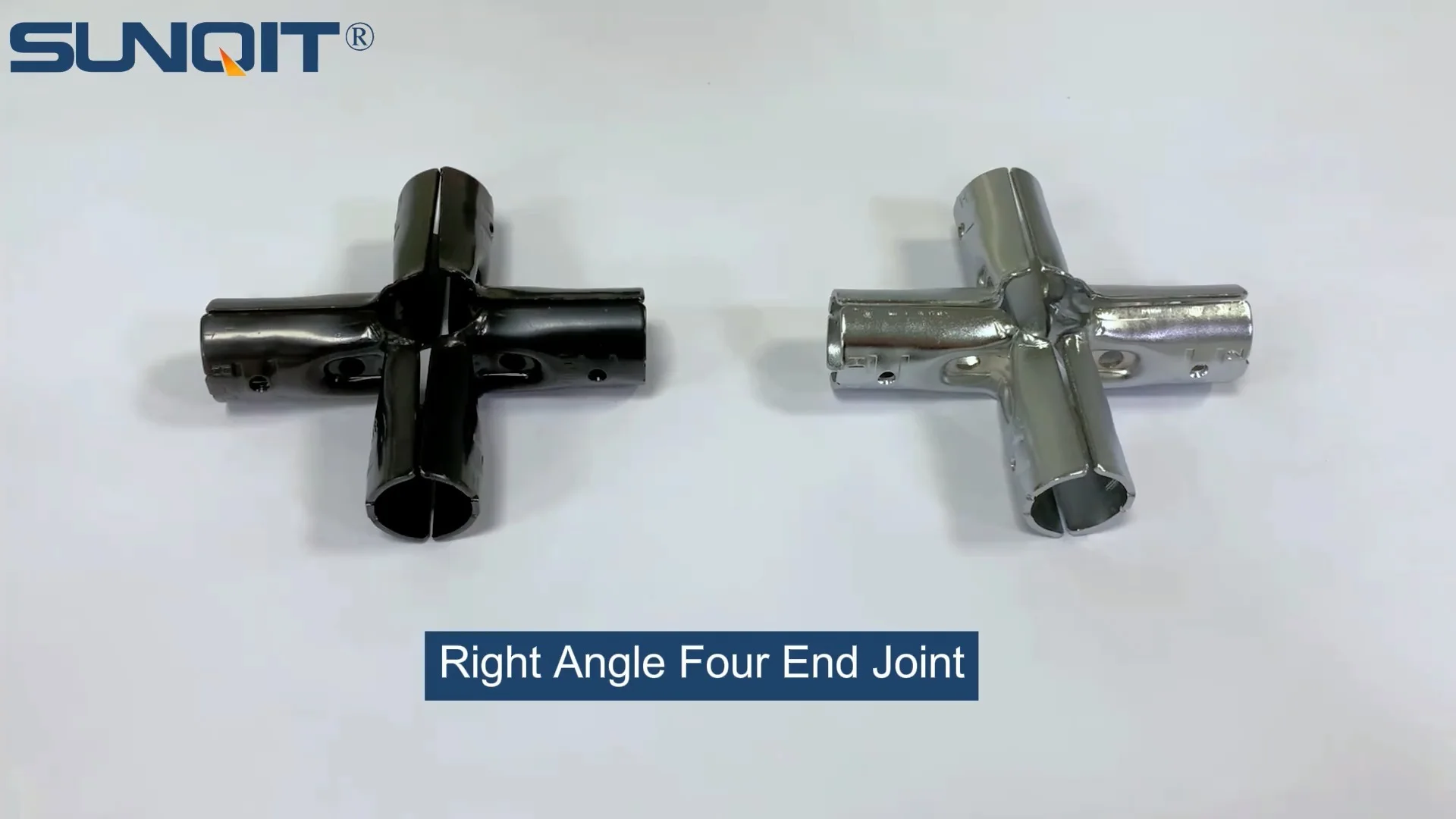
Five way straight lean pipe joint, for 5 pcs 28mm lean pipe connect in straight angle,which used widely in workbench, flow rack, hand trolley frame connection.
In the fast-paced world of 3C manufacturing—where smartphones, laptops, and consumer electronics fly off production lines at breakneck speeds—efficiency isn't just a buzzword. It's the difference between meeting tight launch deadlines and watching competitors race ahead. But here's the thing: 3C assembly lines are notoriously tricky. They demand precision for tiny components, flexibility to switch between product models, and safety to protect sensitive electronics from static damage. Enter lean manufacturing, and more specifically, the unsung hero of modular assembly: the five way straight lean pipe joint. This unassuming component might look simple, but it's quietly revolutionizing how 3C factories build, adapt, and thrive. Let's dive into how it works, where it shines, and why it's become a must-have for modern assembly lines.
The 3C Assembly Challenge: Why "One-Size-Fits-All" Doesn't Cut It
Walk into any 3C manufacturing plant, and you'll see a symphony of motion: robotic arms placing microchips, workers testing circuit boards, and conveyor belts ferrying half-assembled devices. But behind the scenes, there's a constant battle: change . A new smartphone model with a slimmer design? The assembly line needs to adjust. A sudden surge in demand for wireless earbuds? Workstations must scale up. And let's not forget static electricity—one wrong spark can fry a $500 PCB, turning a potential profit into a costly loss.
Traditional assembly setups often fall short here. Welded steel racks, fixed workbenches, and rigid conveyor systems are sturdy, but they're also inflexible . Reconfiguring them to fit a new product can take days (or weeks) and require specialized tools—time that 3C manufacturers can't afford to waste. Plus, adding electrostatic discharge (ESD) protection? That usually means retrofitting, which adds cost and complexity. So, what's the alternative?
Lean Systems in 3C: The Foundation of Modern Assembly
Lean manufacturing, with its focus on eliminating waste and maximizing flexibility, has become the backbone of 3C production. At the heart of lean systems are modular components—think lean pipes, joints, and accessories—that let factories build, break down, and rebuild assembly structures in hours, not days. And among these components, the five way straight lean pipe joint stands out as a multitasker, enabling factories to create everything from workbenches to material racks with minimal hassle.

Meet the Star: What Is a Five Way Straight Lean Pipe Joint?
Let's start with the basics. A five way straight lean pipe joint is a connector designed to link lean pipes (hollow tubes made of steel, aluminum, or stainless steel) at multiple angles—typically four directions horizontally and one vertically. Picture a central hub with five ports, each accepting a lean pipe, allowing you to build structures that branch out in different directions. It's like a building block for adults, but instead of Legos, you're constructing assembly lines that can handle thousands of products per day.
Most five way joints are made from durable materials like die-cast aluminum or zinc-plated steel, ensuring they can withstand the wear and tear of a busy factory floor. Some even come with ESD-safe coatings, making them ideal for handling static-sensitive components like microchips or LCD screens. And the best part? They're tool-free. No welding, no drilling—just slide the pipe into the joint, tighten a set screw, and you're done. This simplicity is a game-changer for 3C plants where every minute of downtime costs money.

Use Cases: How Five Way Joints Transform 3C Assembly Lines
Now, let's get practical. How exactly do 3C factories use these joints? Let's walk through three real-world scenarios where the five way straight lean pipe joint proves its worth.
1. ESD Workstations for Sensitive Component Handling
Smartphone PCBs are delicate. Even a small static charge can render a $200 board useless. That's why ESD workstations—tables with static-dissipative surfaces and grounded frames—are non-negotiable in 3C assembly. But building a custom ESD workstation that fits your team's workflow? Traditionally, that meant hiring a metalworker to weld a steel frame, which was expensive and hard to modify.
Enter the five way joint. With a few aluminum lean pipes and five way joints, factories can build ESD workstations tailored to their needs in under an hour. For example, a workstation for PCB testing might have a flat surface (using aluminum honeycomb panels for lightness and durability) supported by vertical pipes connected via five way joints. On one side, you could add a shelf for test equipment; on the other, a bin for tools—all by attaching extra pipes to the joint's horizontal ports. Need to lower the shelf height? Loosen the set screws, adjust the pipes, and retighten. It's that easy.
Take a hypothetical example: A factory in Guangzhou assembling smartwatches needed to add 10 new ESD workstations for a rush order. Using five way joints and aluminum lean pipes, their maintenance team built all 10 in a single shift, complete with built-in cable management (via extra pipes attached to the joints) and ESD mats. When the order ended, they disassembled the workstations and reused the pipes and joints to build a material rack—no waste, no extra cost.
2. Flow Racks for Streamlined Material Delivery
In 3C assembly, time is money—and nothing wastes time like workers walking back and forth to fetch parts. Flow racks (also called gravity racks) solve this by using roller track to let materials "flow" from the back to the front, so the next set of components is always within arm's reach. But building a flow rack that fits your specific parts (say, small screws one shelf, larger battery packs another) requires precise spacing between shelves.
Five way joints make this a breeze. Imagine a vertical frame built with lean pipes and five way joints. Each joint acts as a shelf support: attach a horizontal pipe to the joint's side port, add a roller track on top, and you've got a shelf. Need three shelves? Add three joints, spaced 18 inches apart. Need to adjust the height later? Just move the joints up or down the vertical pipe. No tools, no hassle.
A laptop factory in Vietnam recently used this setup to build a flow rack for keyboard assemblies. They added five way joints every 12 inches on the vertical pipes, allowing them to create 10 shelves—each holding a different keyboard model. When a new keyboard design came in, they simply repositioned the joints to make space, avoiding the cost of buying a whole new rack.
3. Turnover Trolleys for Flexible Material Transport
Not all materials stay on the assembly line—some need to move. Turnover trolleys (mobile carts) are essential for ferrying components from the warehouse to the line, or finished products to quality control. But standard trolleys are one-size-fits-all, and if your components are too big (or too small), they either waste space or risk damage.
Five way joints let factories build custom turnover trolleys in minutes. For example, a tablet assembly line might need a trolley to carry LCD screens—fragile, flat, and 10 inches wide. Using five way joints, they can build a frame with vertical pipes, then attach horizontal pipes at the top and bottom to create a "cage" that holds the screens upright. Add caster wheels to the bottom, and you've got a trolley that's sturdy, mobile, and perfectly sized for the job.
What if next month they start making larger tablets? No problem—loosen the joints, add longer pipes, and the trolley adjusts. This flexibility is why five way joints have become a staple in factories that produce multiple product models.

The Benefits: Why 3C Factories Can't Live Without Them
By now, you might be thinking, "Okay, five way joints sound useful—but are they worth the investment?" Let's break down the benefits, from cost savings to safety, that make them a no-brainer for 3C manufacturers.
1. Modularity: Build, Break, Rebuild—Repeat
Traditional assembly structures are permanent. Once you weld a steel rack, it's stuck that way forever. If your product line changes, you either live with inefficiency or pay to scrap the old rack and build a new one. Five way joints eliminate this problem. Since they're tool-free and reusable, you can disassemble a workstation in 30 minutes and turn it into a flow rack by reconfiguring the pipes and joints. This modularity cuts down on waste and ensures your factory can adapt to new products or demand spikes without major overhauls.
2. Cost Savings: Lower Upfront and Long-Term Costs
Welding a custom steel workstation can cost $500 or more, and that's before adding ESD features. Five way joints and lean pipes? A basic ESD workstation setup costs around $200—half the price. And since the components are reusable, you'll save even more over time. A factory in China reported saving 40% on assembly structure costs after switching to lean pipe systems with five way joints, simply by reusing old components for new projects.
3. ESD Compliance: Protect Sensitive Components
As we mentioned earlier, static is the enemy of 3C electronics. Many five way joints come with ESD-safe coatings (like nickel-plated steel or conductive plastic) that dissipate static charges, preventing them from building up on the structure. When paired with ESD lean pipes and workbench surfaces, they create a fully grounded system that keeps components safe. This isn't just a nice-to-have—it's a requirement for factories that want to avoid costly defects.
4. Safety: Sturdy and Stable, Even Under Pressure
Factory floors are busy, and assembly structures need to handle heavy loads. Five way joints are designed to hold lean pipes securely, with set screws that lock pipes in place to prevent slipping. Most can support up to 500 pounds per joint, making them strong enough for shelves full of batteries or toolboxes. Plus, since there are no sharp edges (unlike welded steel), they reduce the risk of cuts or scrapes—always a win for worker safety.
Traditional vs. Lean: A Comparison Table
| Feature | Traditional Fixed Assembly Structures | Lean Pipe Systems with Five Way Joints |
|---|---|---|
| Setup Time | 2–5 days (welding, drilling, painting) | 2–4 hours (tool-free assembly) |
| Reconfiguration Ease | Nearly impossible; requires cutting/welding | Easy—loosen screws, reposition pipes, retighten |
| Cost (Initial) | $500–$1,000+ per workstation | $150–$300 per workstation |
| Long-Term Cost | High (scrap old structures when obsolete) | Low (reuse components for new setups) |
| ESD Compatibility | Hard to add (requires retrofitting) | Built-in (ESD-safe joints, pipes, and surfaces) |
| Weight Capacity | High (but fixed) | High (up to 500 lbs per joint, adjustable) |
The Future of 3C Assembly: Why Lean Components Matter More Than Ever
3C manufacturing isn't slowing down. Product cycles are getting shorter—today's smartphone is outdated in 6 months—and consumers demand more customization than ever. To keep up, factories need to be agile, and agile factories need flexible tools. The five way straight lean pipe joint isn't just a connector; it's a symbol of that agility. It lets factories adapt, innovate, and stay competitive in a market where change is the only constant.
So, whether you're building an ESD workstation for microchips, a flow rack for batteries, or a turnover trolley for finished products, don't sleep on the five way joint. It's small, it's simple, and it just might be the key to making your 3C assembly line faster, cheaper, and ready for whatever the future throws at it.