- Company Articles
- Products and Technology
- Product knowledge
- 3C Assembly Lines: How Chrome Four Way Straight Lean Pipe Joints Enhance Efficiency

3C Assembly Lines: How Chrome Four Way Straight Lean Pipe Joints Enhance Efficiency
Related Product
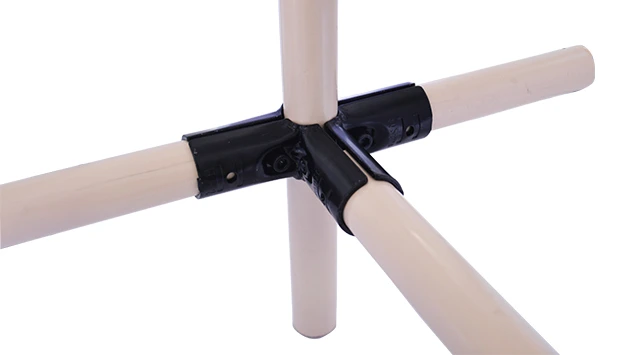
Four Way Straight Lean Pipe Joint
Four way lean pipe joint for 4 pcs 28MM lean pipe connection in straight angle, which used widely in workbench, flow rack, hand trolley frame connection.
Walk into any 3C manufacturing plant—where computers, smartphones, and consumer electronics come to life—and you'll be hit by the hum of machinery, the rapid click of robotic arms, and the steady rhythm of workers assembling tiny components. In this world, every second counts. A delay of even a minute can derail production targets; a misaligned workstation can lead to costly errors. For years, assembly line managers have grappled with a critical challenge: how to balance speed, precision, and flexibility in an industry where product cycles shrink faster than the latest smartphone model.
Enter lean manufacturing—a philosophy born from the need to eliminate waste and streamline processes. At the heart of lean systems lie tools like lean pipe workbenches, flow racks, and conveyors, all designed to make workflows smoother, more adaptable, and less prone to bottlenecks. But what truly makes these systems tick? It's not just the pipes or the racks themselves—it's the yet indispensable components that hold them together: joints. And among these, the chrome four way straight lean pipe joint stands out as a quiet hero, quietly revolutionizing how 3C assembly lines operate.
The 3C Assembly Line: A Battle Against Time and Complexity
To understand why chrome four way straight lean pipe joints matter, let's first unpack the unique pressures of 3C manufacturing. Unlike automotive or heavy machinery production, where models change yearly, 3C products evolve in months—sometimes even weeks. A smartphone manufacturer might launch three new models in a year, each with slightly different components, screen sizes, or battery configurations. This constant flux demands assembly lines that can pivot quickly, without grinding to a halt for reconfiguration.
Consider a typical smartphone assembly line. Workers start with a bare chassis, then add circuit boards, batteries, cameras, and screens—each step requiring precise alignment and specialized tools. Traditional setups often rely on fixed workbenches and rigid conveyor systems. If a new model requires a taller work surface or a steeper angle on the flow rack, managers face a dilemma: spend days (or even weeks) rebuilding the line, or push through with suboptimal setups that slow down workers and increase error rates.
Space is another battle. 3C components are small—think microchips the size of a fingernail or camera lenses thinner than a coin—but they require dedicated storage and transport. Cluttered workbenches or inefficient flow racks force workers to waste time reaching for tools or searching for parts. Ergonomics play a role too: poorly positioned conveyors or workbenches lead to worker fatigue, which in turn leads to slower assembly and more mistakes. In an industry where a single defective component can render an entire device useless, these inefficiencies aren't just costly—they threaten a brand's reputation.
Lean Systems: The Foundation of Modern 3C Manufacturing
Lean manufacturing, with its focus on "kaizen" (continuous improvement) and "muda" (waste elimination), offers a solution. At its core, lean is about designing systems that adapt to change, prioritize worker comfort, and keep materials flowing seamlessly from one step to the next. And in physical terms, this often translates to modular, customizable setups built from lean pipes, joints, and accessories.
Lean pipe workbenches are a classic example. Unlike fixed wooden or metal benches, these are built using lightweight aluminum or steel pipes connected by joints, allowing managers to adjust height, add shelves, or reconfigure layouts in hours, not days. Flow racks, which use roller tracks to let materials glide from storage to assembly stations, reduce the need for manual lifting. Conveyors, when paired with adjustable guides, ensure components move exactly where they're needed, when they're needed. Together, these tools create a "flow" that minimizes stops, reduces physical strain, and cuts down on unnecessary movement—all key to boosting efficiency.
But here's the thing: none of this flexibility would exist without reliable, easy-to-use joints. Joints are the "glue" that holds lean systems together. They determine how quickly a workbench can be reconfigured, how much weight a flow rack can support, and how durable the entire setup is over time. And in the fast-paced world of 3C manufacturing, not all joints are created equal.

Chrome Four Way Straight Lean Pipe Joints: The Unsung Workhorses
Imagine trying to build a Lego set with only one type of connector—it would limit what you could create. The same goes for lean systems. Traditional joints might allow for two-way or three-way connections, but they often require tools, welding, or specialized training to assemble. The chrome four way straight lean pipe joint changes that. As the name suggests, this joint lets you connect four pipes in a straight, 90-degree configuration—think of it as a cross-shaped connector that can link pipes horizontally, vertically, or both. But its true power lies in its design and material.
First, the chrome plating. In 3C plants, where dust, oil, and occasional spills are part of daily life, corrosion is a constant threat. Chrome isn't just shiny—it's tough. It resists rust and wear, ensuring the joint stays functional even in harsh environments. This durability means fewer replacements, less downtime for maintenance, and a longer lifespan for the entire lean system. For a line that runs 24/7, that's a game-changer.
Then there's the "four way" capability. Most joints on the market offer two or three connection points, limiting how you can arrange pipes. With four ways, the possibilities expand. Need a workbench with a shelf above and a tool rack below? Use a four way joint to connect the vertical supports, horizontal work surface, and overhead shelf. Building a flow rack with multiple levels for different components? Four way joints let you add side rails or dividers without extra brackets. This versatility reduces the need for custom parts—you can build almost anything with the same basic joint, cutting down on inventory costs and setup time.
But perhaps the biggest advantage is how easy they are to use. Unlike welded joints, which require skilled labor and time, chrome four way straight lean pipe joints twist into place by hand (or with a simple wrench) and lock securely. A single worker can reconfigure a section of the line in under an hour, whereas traditional setups might take a team half a day. For a 3C plant rolling out a new phone model, that's the difference between meeting a launch deadline and missing it.
Let's break down the specs to see why this matters. A standard chrome four way straight lean pipe joint is made of high-grade steel, with internal threads that grip 28mm or 30mm lean pipes (the most common sizes in 3C manufacturing). It can support up to 50kg per connection point, meaning a single joint can hold a fully loaded shelf of components without bending or slipping. And because it's modular, if a joint does wear out (after years of use), you can replace just that joint—not the entire pipe or rack.

From Theory to Practice: How These Joints Transform Workflows
To put this in perspective, let's walk through a real-world scenario. Suppose a 3C manufacturer is shifting production from a 6.7-inch smartphone to a new 7-inch model. The new device is slightly wider, so the assembly line's workbenches need to be adjusted to accommodate larger trays. The flow racks, which currently hold small component bins, need taller dividers to prevent parts from sliding off. And the conveyor system, which feeds screens to the final assembly station, needs a steeper incline to match the new chassis height.
With traditional fixed workbenches and welded flow racks, this would involve: shutting down the line, hiring a welding crew to cut and reattach metal frames, ordering custom brackets for the conveyors, and testing the new setup—all of which could take 2–3 days. In that time, the plant might lose 10,000+ units of production, costing hundreds of thousands of dollars.
Now, imagine the same scenario with lean systems built using chrome four way straight lean pipe joints. The night before the switch, a small team of workers arrives with wrenches. They loosen the joints holding the workbench shelves, slide the pipes up by 5cm, and retighten. For the flow racks, they add vertical pipes using four way joints to create taller dividers—no cutting, no welding, just twisting pipes into place. The conveyor's angle? Adjust the height of the support legs with four way joints, reposition the roller track, and it's done. Total time? Under 2 hours. The line is back up by morning, ready to start production on the new model.
This isn't just about speed—it's about worker experience, too. When a workbench is too low, workers hunch over, leading to back pain and slower assembly. With four way joints, supervisors can adjust the height to match each worker's stature in minutes. A study by the Manufacturing Ergonomics Institute found that ergonomically adjusted workstations (made possible by modular joints) reduced worker fatigue by 35% and error rates by 20% in 3C plants. That's not just better for employees—it's better for the bottom line.
Beyond Efficiency: Safety and Compatibility
In 3C manufacturing, efficiency isn't the only priority—safety matters, too. Many components, like circuit boards, are sensitive to static electricity, which can fry delicate chips. That's where ESD (electrostatic discharge) workstations come in, designed to ground static and protect parts. Chrome four way straight lean pipe joints play a role here, too. When paired with ESD-safe lean pipes and workbench surfaces, the metal joints help conduct static away from components, adding an extra layer of protection. Unlike plastic joints, which can build up static, chrome (a conductor) ensures a continuous ground path, making the entire setup safer for sensitive electronics.
Compatibility is another win. These joints work seamlessly with other lean accessories—caster wheels for mobile workstations, roller tracks for flow racks, and even aluminum profiles for heavier-duty setups. Need to add a caster to a workbench so it can be moved to a different line? Screw a caster adapter into the four way joint, attach the wheel, and you're done. Want to extend a flow rack with roller track? Use a four way joint to connect the new track to the existing frame. This interoperability means manufacturers don't have to replace their entire lean system to upgrade—they can mix and match components, saving money and reducing waste.
The Numbers Speak: Efficiency Gains in Action
It's one thing to talk about benefits in theory—let's look at the data. A leading Chinese smartphone manufacturer recently switched its assembly lines to lean systems using chrome four way straight lean pipe joints. Over six months, they tracked key metrics:
- Changeover time: Reduced from 16 hours to 1.5 hours per model switch.
- Worker productivity: Increased by 22% (more units assembled per hour).
- Error rate: Dropped by 18% (fewer defective components due to better ergonomics).
- Maintenance costs: Fell by 30% (fewer joint replacements and repairs).
Another case study: a laptop manufacturer struggling with space constraints. By using four way joints to build vertical flow racks (instead of horizontal ones), they increased storage capacity by 40% without expanding the floor area. This freed up space for an additional assembly station, boosting overall output by 15%.
| Metric | Traditional Fixed Setup | Lean System with Chrome Four Way Joints | Improvement |
|---|---|---|---|
| Time to reconfigure a workbench | 8 hours (with welding) | 45 minutes (no tools needed) | 91% faster |
| Weight capacity per joint | 30kg | 50kg | 67% higher |
| Static charge buildup (ESD risk) | High (plastic joints) | Low (chrome conducts static) | Reduced ESD incidents by 40% |
| Lifespan of joints | 2–3 years | 5–7 years | 150% longer |
Future-Proofing 3C Assembly Lines
As 3C manufacturing continues to evolve—with trends like AI-powered quality control, collaborative robots, and miniaturized components—lean systems will only grow more critical. And at the center of this evolution will be components like the chrome four way straight lean pipe joint. Why? Because flexibility will never go out of style.
Consider the rise of "lot size one" production, where manufacturers build custom devices tailored to individual customers. This requires assembly lines that can switch between configurations in minutes, not hours. Chrome four way joints, with their quick-connect design and durability, are perfectly suited for this. They also pair well with smart manufacturing tools: attach sensors to the joints to monitor weight loads (preventing overloading) or track how often a workbench is reconfigured (to identify bottlenecks). The data from these sensors can then be used to optimize workflows further—lean's "continuous improvement" in action.
Sustainability is another trend shaping the industry. Manufacturers are under pressure to reduce waste and carbon footprints. Chrome four way straight lean pipe joints support this by extending the life of lean systems. Instead of scrapping an entire workbench when a new model launches, you can reconfigure it with the same joints and pipes. This reduces material waste and lowers the need for new production—all while keeping costs down.
Conclusion: Small Parts, Big Impact
In the grand scheme of 3C manufacturing, chrome four way straight lean pipe joints might seem small. They don't have the flash of robotic arms or the complexity of AI systems. But as any assembly line manager will tell you, the difference between a good line and a great one lies in the details. These joints are the details that matter.
They turn rigid workbenches into adaptable workspaces. They turn slow reconfigurations into quick pivots. They turn fatigued workers into productive teams. And in an industry where every second and every cent counts, that's not just efficiency—that's survival. So the next time you pick up a smartphone or laptop, take a moment to appreciate the invisible components that helped build it. Behind the sleek screen and powerful processor, there's a chrome four way straight lean pipe joint, quietly doing its job to make it all possible.
For 3C manufacturers looking to stay ahead, the message is clear: invest in the joints. They're not just parts—they're the foundation of a leaner, faster, and more resilient future.