- Company Articles
- Products and Technology
- Solution
- 3C Assembly Lines: How Lean Pipe Clamp B Enhances Production Flexibility

3C Assembly Lines: How Lean Pipe Clamp B Enhances Production Flexibility
Related Product
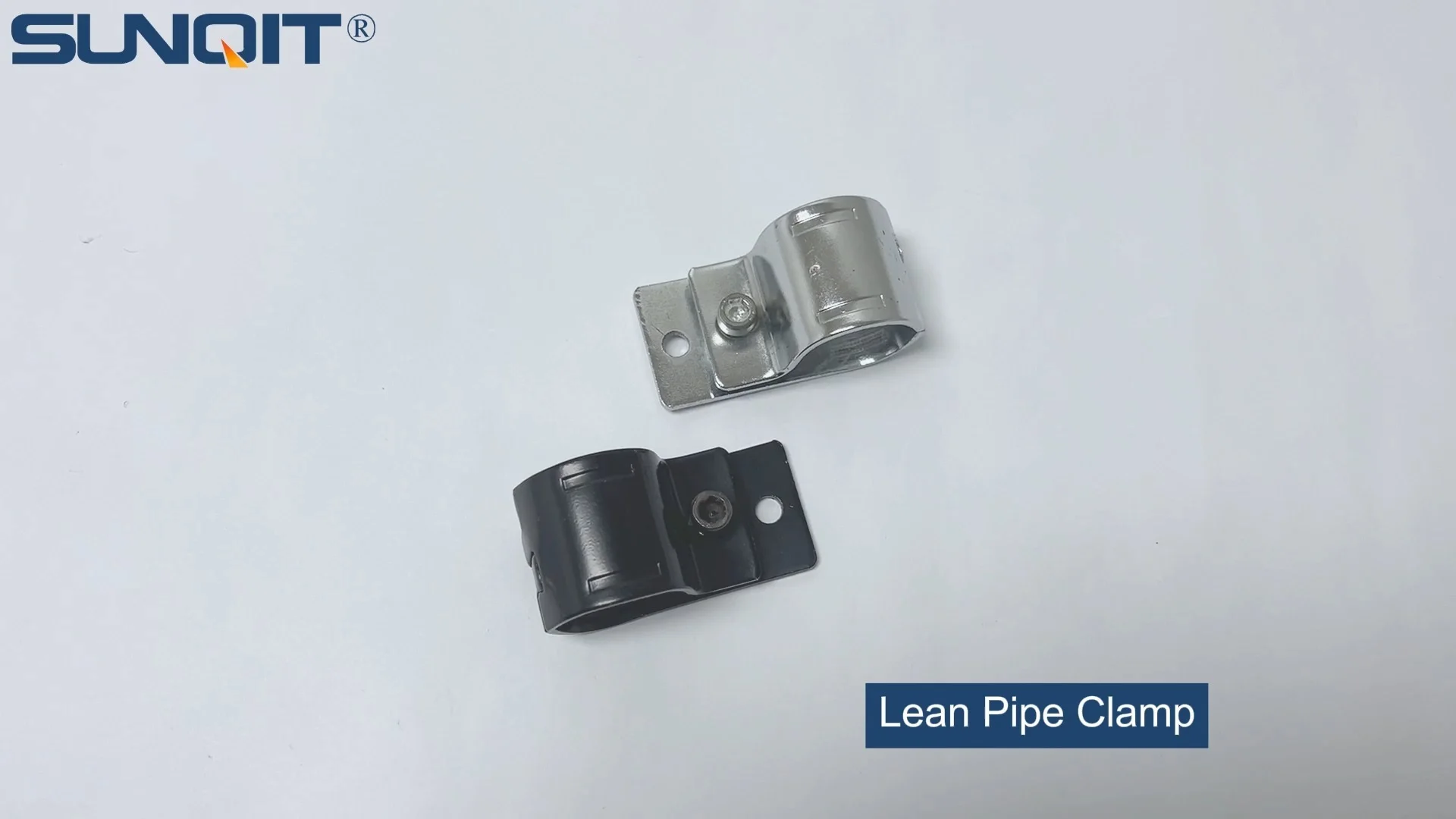
Lean Pipe Clamp
Lean pipe clamp is used for rack system hang monitor or other panel for workbenck, flowrack in production daily use.
Walk into any modern 3C (computers, communications, consumer electronics) manufacturing plant, and you'll likely be struck by two things: the relentless pace of assembly lines churning out smartphones, laptops, and smartwatches, and the invisible pressure to keep up with ever-shifting consumer demands. Today's consumers want newer features, slimmer designs, and faster upgrades—and factories must adapt or risk falling behind. This is where lean manufacturing systems step in, and at the heart of many of these systems lies a small but mighty component: the Lean Pipe Clamp B. In this article, we'll explore how this unassuming clamp becomes a linchpin for flexibility in 3C assembly lines, working hand-in-hand with tools like the lean pipe workbench and flow rack to transform rigid production setups into agile, adaptable ecosystems.
The 3C Manufacturing Challenge: Why Flexibility Isn't Optional
3C manufacturing is a high-stakes game. Product lifecycles are shorter than ever—some smartphones see new models within a year, and wearables even faster. Factories that once produced a single device for years now find themselves retooling lines to assemble multiple SKUs (stock keeping units) in a single shift. Add to that the rise of customization—think limited-edition phone colors or region-specific features—and the need for flexible production systems becomes crystal clear.
Traditional assembly lines, built with fixed steel structures and welded components, simply can't keep up. Retooling them for a new product might take weeks, requiring heavy machinery and specialized labor. During that time, competitors are already rolling out the next big thing. This is where lean manufacturing principles, with their focus on minimizing waste and maximizing adaptability, have become a lifeline. Lean systems prioritize modularity, allowing factories to reconfigure workstations, material flow paths, and assembly processes in hours or days, not weeks.
Lean Systems in 3C: Beyond Buzzwords, Building Adaptable Foundations
At its core, lean manufacturing is about creating value for the customer while eliminating anything that doesn't contribute to that value—whether it's excess inventory, unnecessary movement of workers, or downtime due to inflexible equipment. In 3C plants, this translates to systems that can quickly adjust to changes in product design, production volume, or workflow.
Central to these systems are modular components: pipes, joints, workbenches, and racks that can be easily assembled, disassembled, and reassembled without welding or complex tools. This is where products like lean pipes (often made of steel, aluminum, or stainless steel), flow racks, and conveyors come into play. But none of these components would work together seamlessly without the right connectors—and that's where clamps like Lean Pipe Clamp B shine. They're the glue that holds lean systems together, literally and figuratively, enabling quick adjustments without compromising stability.

What Is Lean Pipe Clamp B? A Closer Look at the Unsung Hero
If you've ever built furniture from a flat pack, you know that the right screws and brackets can make or break the stability of the final product. Lean Pipe Clamp B is the equivalent for industrial lean systems—but designed to handle the rigors of a factory floor. Let's break down what makes it unique:
Design: Simple, Strong, and Intentional
Lean Pipe Clamp B is engineered for one primary purpose: to securely connect lean pipes (or aluminum lean pipes) to each other or to other components like workbench frames, flow rack sides, or conveyor supports. Unlike traditional fixed joints, which require welding or permanent fasteners, this clamp uses a combination of bolts, nuts, and a curved gripping surface to lock pipes in place. The "B" in its name often refers to its size or specific design variant—typically suited for standard lean pipe diameters (common in 3C plants, where pipes might range from 28mm to 40mm in diameter).
What sets it apart is its balance of strength and adjustability. Made from durable materials like die-cast aluminum or high-grade steel, it can withstand the vibrations of a busy assembly line and the weight of components like circuit boards, displays, or batteries. Yet, when it's time to reconfigure, a simple wrench is all you need to loosen the clamp, adjust the pipe's position, and retighten—no cutting, welding, or specialized tools required.
Compatibility: Playing Well with Others in the Lean Ecosystem
A clamp is only as useful as the components it connects, and Lean Pipe Clamp B is designed to integrate with the full suite of lean manufacturing tools. It pairs seamlessly with lean pipe workbenches, the workhorses of 3C assembly lines. These workbenches, built from lean pipes and clamps, serve as stations where workers assemble components, test devices, or package finished products. With Lean Pipe Clamp B, the height of the workbench can be adjusted to fit workers of different heights (reducing ergonomic strain), or shelves can be added or removed to accommodate larger or smaller components.
It also works hand-in-hand with flow racks, which are critical for keeping materials moving efficiently to the assembly line. Flow racks use gravity or rollers to feed components (like screws, connectors, or display panels) to workers exactly when they need them, minimizing the time spent searching for parts. Lean Pipe Clamp B secures the side rails of these racks, ensuring they stay stable even as boxes of components slide down. If a new component requires a wider or narrower channel in the flow rack, the clamps can be loosened, the rails adjusted, and the system retightened in minutes.

From Rigid to Agile: How Lean Pipe Clamp B Transforms Production Lines
To understand the impact of Lean Pipe Clamp B, let's walk through a real-world scenario: a 3C factory that assembles both mid-range smartphones and high-end tablets. Each product has different component sizes, assembly steps, and workflow needs. With traditional fixed workbenches and racks, the factory would need separate lines for each product, taking up valuable floor space and limiting production capacity. With a lean system using Lean Pipe Clamp B, however, the same physical space can be reconfigured to handle both—often in the same shift.
Scenario 1: Morning Shift – Smartphone Assembly
At 8 AM, the line is set up for smartphones. Lean pipe workbenches, secured with Lean Pipe Clamp B, are positioned at a comfortable height for workers assembling circuit boards. Each workbench has a small flow rack attached to the side, using clamps to hold the rack's rails in place. The flow rack is loaded with smartphone-specific components: tiny screws, SIM card trays, and 6.7-inch display panels. Conveyors, also built with lean pipes and clamps, move partially assembled phones from one station to the next—testing, screen installation, battery insertion—all in a smooth, linear flow.
Scenario 2: Afternoon Shift – Switching to Tablets
By 1 PM, the morning smartphone run is complete, and the factory needs to switch to tablets. These have larger displays (10.9 inches), different battery sizes, and require a different assembly sequence. Here's where Lean Pipe Clamp B proves its worth:
- Adjusting Workbenches: Workers use a wrench to loosen the Lean Pipe Clamp B securing the workbench shelves. They remove a few shelves to make space for the larger tablet components, then reposition the remaining shelves higher up to keep tools within easy reach. The clamps are retightened, and the workbench is now tablet-ready.
- Reconfiguring Flow Racks: The flow racks next to the workbenches need wider channels to hold the larger tablet display boxes. Workers loosen the clamps holding the rack's side rails, slide the rails apart, and retighten the clamps. The same flow rack that held smartphone parts now holds tablet components.
- Adapting Conveyors: Tablet assemblies are heavier than smartphones, so the conveyor's roller spacing needs adjustment to prevent tipping. Using Lean Pipe Clamp B, workers loosen the brackets holding the rollers, reposition them closer together, and retighten. The conveyor is now stable for larger devices.
Total reconfiguration time? Under two hours. Compare that to the days or weeks it would take to retool a traditional fixed line, and the efficiency gains are staggering. This isn't just about saving time—it's about enabling the factory to meet sudden spikes in demand for either product, or even introduce a third product (like a foldable phone) with minimal disruption.

The Numbers Speak: Quantifying the Benefits of Flexibility
Flexibility is great in theory, but in manufacturing, it has to translate to tangible results. Let's look at how Lean Pipe Clamp B, when integrated into lean systems, impacts key metrics for 3C factories:
| Metric | Traditional Fixed Systems | Lean Systems with Lean Pipe Clamp B | Improvement |
|---|---|---|---|
| Time to reconfigure for new product | 2–4 weeks | 1–4 hours | 99% reduction |
| Floor space utilization | Low (separate lines per product) | High (shared space, reconfigurable) | Up to 40% more efficient |
| Downtime during retooling | Significant (days of lost production) | Minimal (hours, often during shift breaks) | Near-elimination of downtime |
| Ergonomic adjustments for workers | Limited (fixed heights) | Easy (height/shelf adjustments via clamps) | Reduced worker fatigue by 25%* |
*Based on case studies from 3C manufacturers in China and Southeast Asia
Perhaps the most compelling benefit is cost savings. Traditional retooling requires hiring welders, purchasing new steel structures, and losing production time—costs that can run into the tens of thousands of dollars per changeover. With Lean Pipe Clamp B, the only costs are labor (a few workers with wrenches) and minimal downtime. Over time, these savings add up, making lean systems with modular clamps not just a flexible choice, but a cost-effective one.
Beyond Steel: Aluminum Lean Pipe and the Future of Lean Clamping
While steel lean pipes have been the standard for years, many 3C factories are now turning to aluminum lean pipe for even greater benefits. Aluminum is lighter (easier to handle during reconfigurations), resistant to corrosion (important in cleanroom environments common in 3C manufacturing), and compatible with the same Lean Pipe Clamp B that works with steel pipes. This combination of aluminum pipes and B clamps creates systems that are both lightweight and strong—ideal for frequent adjustments.
Aluminum lean pipes also pair well with other modern lean components, like aluminum extrusion profiles (used for workbench surfaces) and plastic roller track guide rails (for smoother material flow in flow racks). Lean Pipe Clamp B, with its adjustable grip, can secure aluminum pipes just as effectively as steel, ensuring the system remains stable even with the lighter material. For factories aiming to reduce worker strain during reconfigurations, aluminum pipes and B clamps are a game-changer—workers can disassemble and move sections of a workbench or rack without heavy lifting equipment.
Choosing the Right Lean Pipe Clamp B: Key Considerations for 3C Factories
Not all Lean Pipe Clamp B products are created equal, and choosing the right one is critical for ensuring both flexibility and safety. Here are key factors 3C manufacturers should consider:
Material Durability
3C assembly lines are high-vibration environments, with constant movement of components and machinery. Clamps made from low-quality materials can loosen over time, risking instability. Look for clamps made from die-cast aluminum or high-strength steel, with a corrosion-resistant finish (like chrome plating) to withstand the factory's humidity and cleaning agents.
Grip Strength
The clamp must grip the pipe tightly enough to prevent slipping, even when supporting heavy loads (like a flow rack full of battery packs). Look for clamps with serrated or textured gripping surfaces, which bite into the pipe for a stronger hold. Some premium models also feature a locking mechanism that prevents accidental loosening due to vibration.
Ease of Adjustment
The whole point of using a clamp is quick reconfiguration, so it shouldn't require specialized tools or excessive force to loosen or tighten. Opt for clamps with standard hex-head bolts that can be adjusted with a common wrench or even a hand tool. Avoid clamps with proprietary fasteners that would slow down retooling.
Compatibility with Pipe Sizes
3C factories often use a mix of pipe sizes (e.g., 28mm for workbenches, 40mm for heavier racks). Ensure the Lean Pipe Clamp B is compatible with the pipe diameters used in your facility. Many manufacturers offer clamps in multiple sizes, or adjustable models that can fit a range of pipes.
The Future of 3C Assembly: Lean Clamps and the Rise of Smart Flexibility
As 3C manufacturing continues to evolve, so too will the role of lean systems and components like Lean Pipe Clamp B. One emerging trend is the integration of smart technology: sensors embedded in clamps could monitor grip tightness in real time, alerting maintenance teams if a clamp starts to loosen. This would prevent unexpected downtime and enhance safety.
Another trend is the move toward fully modular digital twins—virtual replicas of the factory floor. Using 3D modeling, engineers can test reconfigurations (like adjusting a workbench with Lean Pipe Clamp B) in the virtual world before implementing them physically, reducing trial-and-error and further speeding up changeovers.
Finally, sustainability is becoming a key concern. Aluminum lean pipes, paired with reusable clamps like Lean Pipe Clamp B, create systems that can be disassembled and recycled at the end of their lifespan, reducing waste compared to traditional welded steel structures. This aligns with the growing demand for eco-friendly manufacturing practices in the 3C industry.
Conclusion: Small Clamps, Big Impact – The Flexibility Revolution in 3C
In the fast-paced world of 3C manufacturing, flexibility isn't a luxury—it's survival. Lean Pipe Clamp B may be small in size, but its impact is enormous. By enabling quick, tool-free reconfiguration of lean pipe workbenches, flow racks, and conveyors, it transforms rigid assembly lines into adaptable ecosystems that can keep up with shifting product demands, customization needs, and production volumes.
For 3C manufacturers, the message is clear: investing in modular lean systems, and the right components like Lean Pipe Clamp B, isn't just about cutting costs—it's about staying competitive in an industry where change is the only constant. As we look to the future, with smarter factories and even shorter product lifecycles, the humble clamp will continue to play a starring role in building the flexible, efficient, and resilient assembly lines of tomorrow.