- Company Articles
- Products and Technology
- Product knowledge
- 3C Assembly Lines: Lean Pipe Clamp Chrome Applications and Best Practices

3C Assembly Lines: Lean Pipe Clamp Chrome Applications and Best Practices
Related Product
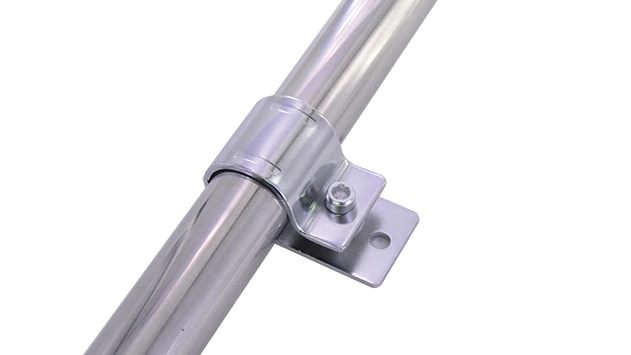
Lean Pipe Clamp Chrome
Lean pipe clamp is used for rack system hang monitor or other panel for workbenck, flowrack in production daily use.
Enhancing Efficiency, Flexibility, and Precision in Fast-Paced Electronics Manufacturing
The 3C Assembly Line Landscape: Speed, Precision, and the Pressure to Perform
Walk into any modern 3C (computers, communications, consumer electronics) manufacturing facility, and you'll be met with a symphony of motion: robotic arms placing microchips, operators assembling tiny circuit boards, and conveyor belts carrying half-finished smartphones toward final testing. In this world, where product lifecycles shrink from years to months (and sometimes weeks), efficiency isn't just a goal—it's survival. A single bottleneck in the assembly line can delay shipments of a hot-selling laptop. Wasted space on the factory floor might mean missing production targets for a new smartphone model. And with components as small as 0.1mm in size, even the tiniest disruption—like a misplaced tool or a misaligned workbench—can lead to costly defects.
3C manufacturers face unique challenges: high-mix, low-volume production runs (to keep up with ever-changing consumer preferences), strict ESD (electrostatic discharge) requirements (to protect sensitive electronics from static damage), and the need for rapid reconfiguration (to switch between product models). Traditional rigid assembly systems—fixed metal workbenches, inflexible conveyor lines—often fall short here. They're expensive to modify, slow to adapt, and prone to creating "dead zones" where materials sit idle, eating into profit margins.
Enter lean manufacturing. For decades, lean principles have helped factories trim waste, streamline workflows, and boost productivity. But in 3C manufacturing, lean isn't just about cutting costs—it's about building systems that can keep up with innovation. And at the heart of these systems lies a surprisingly simple yet powerful component: the lean pipe system. Today, we're zeroing in on one of its most critical parts: the lean pipe clamp chrome. This unassuming piece of hardware might not grab headlines, but it's the silent workhorse that holds lean assembly lines together—literally and figuratively.
Lean Principles in 3C Manufacturing: Why "Less" Becomes "More"
Before diving into the specifics of lean pipe clamp chrome, let's ground ourselves in why lean matters for 3C. At its core, lean manufacturing is about maximizing value while minimizing waste—or, as Toyota (the pioneer of lean) puts it, "doing more with less." In 3C terms, "value" means getting a high-quality product from design to customer as quickly as possible. "Waste" (or muda in Japanese) comes in many forms: overproduction (making more parts than needed), waiting (operators idling while materials arrive), unnecessary motion (reaching across a cluttered workbench), defects (scrapped circuit boards), and unused talent (ignoring operator feedback on workflow improvements).
In 3C plants, these wastes add up fast. Consider a typical smartphone assembly line: Each device has over 1,000 components, from resistors to cameras. If a workbench isn't ergonomically designed, operators might twist their wrists 500 times a day to reach tools—leading to fatigue and errors. If material racks are placed 10 feet away from the assembly station, operators spend 2 hours daily walking back and forth—time that could be spent building products. And if a conveyor line can't adjust to a new phone model's slightly larger battery, the entire line might need a week of retooling, costing thousands in lost production.
Lean solves these issues by focusing on three pillars: flow (ensuring materials and products move smoothly through the line), flexibility (adapting quickly to changes), and employee empowerment (giving operators the tools to improve their own workspaces). And lean pipe systems—with their modular design and customizable components—are the perfect enablers of these pillars. They're like the Lego blocks of manufacturing: simple, versatile, and infinitely reconfigurable. And holding those blocks together? That's where lean pipe clamp chrome shines.

The Backbone of Lean Assembly: Lean Pipe Systems Explained
Lean pipe systems (also called "flexible pipe systems" or "Kanban systems") are built around a simple concept: lightweight, durable pipes connected by modular joints and clamps. Unlike traditional metal structures, they're designed to be assembled, disassembled, and reconfigured with minimal tools—no welding, no drilling, no permanent modifications. This modularity makes them ideal for 3C manufacturing, where production lines need to shift from assembling smartwatches to tablets in a matter of days.
At first glance, a lean pipe system might look basic: pipes (usually aluminum, stainless steel, or PE-coated steel), joints (plastic, metal, or chrome-plated), and clamps. But it's the combination of these components that creates a system greater than the sum of its parts. Need a workbench that's 2 inches taller for taller operators? Swap out the pipe lengths. Want to add a shelf for new tools? Attach a few joints and clamps. Need to move the entire workstation to a new part of the factory? Disassemble it in an hour, move it, and rebuild it.
Key Components of a Lean Pipe System
- Pipes: The foundation of the system. Materials include aluminum (lightweight, corrosion-resistant), stainless steel (strong, ideal for cleanrooms), and PE-coated steel (affordable, anti-slip). Diameters typically range from 28mm to 40mm.
- Joints: Connect pipes at angles (90°, 45°, 135°) or straight lines. Made from plastic (cost-effective, lightweight) or metal (durable, heavy-duty).
- Clamps: Secure pipes to joints, shelves, or other components. They ensure stability while allowing for quick adjustments. And among clamps, lean pipe clamp chrome stands out for its strength and longevity.
- Accessories: Roller tracks (for flow racks), casters (for mobile workstations), ESD mats (for sensitive electronics), and tool holders (for organization).
In 3C facilities, these systems power everything from workbenches and material racks to conveyor lines and turnover trolleys. And while each component plays a role, the clamp is the unsung hero. It's the part that keeps the system stable during operation, allows for (fine adjustments) when processes change, and ensures the entire structure can handle the daily wear and tear of a busy factory. Among clamps, lean pipe clamp chrome is the top choice for high-demand environments—and for good reason.
Lean Pipe Clamp Chrome: Design, Functionality, and Why It's a Game-Changer
Lean pipe clamp chrome isn't just a clamp with a shiny finish—it's a precision-engineered component built for the rigors of 3C manufacturing. Let's break down what makes it unique.
Design and Material: Built to Last in Tough Environments
Most lean pipe clamps are made from plastic or basic steel, but lean pipe clamp chrome takes durability up a notch. It starts with a high-grade steel core (often carbon steel) for strength, then undergoes a chrome-plating process. Chrome plating adds a thin layer of chromium to the surface, creating a barrier that resists corrosion, rust, and scratches. In 3C factories—where humidity, oils from machinery, and occasional spills are common—this corrosion resistance is critical. A plastic clamp might degrade after a year of exposure; a chrome-plated clamp can last 5+ years with minimal maintenance.
The design is equally thoughtful. Lean pipe clamp chrome typically features a "saddle" shape that wraps around the pipe, distributing pressure evenly to prevent dents or damage. A locking mechanism—usually a hex bolt or lever—tightens the clamp securely, but can be loosened with a wrench or even by hand (for quick adjustments). This balance of security and flexibility is key: You don't want the clamp slipping during operation, but you also don't want to spend 20 minutes retooling when you need to raise a shelf by an inch.
Functionality: More Than Just a "Holder"
In practice, lean pipe clamp chrome does more than just hold pipes together. It enables:
- Quick Reconfiguration: Loosen the bolt, adjust the pipe angle or position, retighten—done. This is a lifesaver during product changeovers. For example, when switching from assembling a 6-inch smartphone to a 7-inch phablet, operators can raise the workbench shelf by 5cm in minutes using chrome clamps.
- Heavy-Duty Support: Chrome clamps handle more weight than plastic alternatives. A single clamp can support up to 50kg (depending on pipe material), making them ideal for workbenches with heavy tools or flow racks loaded with components.
- Compatibility: They work with all standard lean pipe materials—aluminum, stainless steel, PE-coated steel. This versatility means factories can mix and match pipe types without changing clamps.
- Cleanliness: Chrome's smooth, non-porous surface is easy to wipe down, making it suitable for ESD-controlled areas where dust and debris can damage electronics. Unlike painted clamps, chrome doesn't chip, so it won't shed particles into the air.
Why Chrome? Comparing Clamp Materials
To understand why lean pipe clamp chrome is worth the investment, let's compare it to other common clamp materials:
| Clamp Type | Durability | Weight Capacity | ESD Compatibility | Best For |
|---|---|---|---|---|
| Plastic | Low (prone to cracking, UV damage) | Up to 20kg | Yes (static-dissipative options) | Light-duty, temporary setups |
| Basic Steel | Medium (rusts without coating) | Up to 40kg | No (unless painted) | Indoor, dry environments |
| Lean Pipe Clamp Chrome | High (corrosion-resistant, scratch-proof) | Up to 50kg+ | Yes (with ESD grounding kits) | Heavy-duty, wet/humid, ESD-sensitive areas |
Table 1: Comparison of common lean pipe clamp materials for 3C manufacturing
Real-World Applications: How Lean Pipe Clamp Chrome Transforms 3C Assembly
Now that we understand what lean pipe clamp chrome is, let's look at how it's used in 3C facilities. From workbenches to flow racks, these clamps turn ordinary structures into high-performance tools that drive efficiency.
1. Lean Pipe Workbenches: Ergonomic, Customizable, and Built to Last
Workbenches are the heart of 3C assembly—this is where operators spend 8+ hours a day soldering, testing, and assembling components. A poorly designed workbench leads to fatigue, errors, and wasted motion. Lean pipe workbenches, held together with lean pipe clamp chrome, solve these issues by putting customization in the hands of operators.
Imagine a smartphone assembly workbench. Using aluminum pipes and chrome clamps, the bench can be configured with:
- Adjustable height (80cm to 100cm) to suit operators of different heights—no more stooping or stretching.
- Upper shelves (secured with chrome clamps) for tools and component bins, positioned at eye level to reduce neck strain.
- Under-shelf roller tracks (connected via clamps) for sliding bins of screws, adhesives, or PCBs—keeping materials within arm's reach.
- ESD mats on the work surface, grounded through the steel pipes and clamps to protect sensitive chips from static.
When the factory switches to a new phone model with larger batteries, operators can loosen the chrome clamps, raise the upper shelf by 3cm, and re-tighten—all in 15 minutes. No need for a new workbench; just a quick reconfiguration.
2. Flow Racks: Streamlining Material Flow with Gravity and Chrome Clamps
In 3C manufacturing, materials (chips, screens, batteries) need to flow to the assembly line exactly when they're needed—no earlier, no later. This is where flow racks (or gravity racks) come in. They use inclined roller tracks to let materials slide from the back (storage) to the front (picking) by gravity, following the "first in, first out" (FIFO) principle.
Lean pipe clamp chrome is critical here for two reasons: securing the roller tracks to the rack frame and adjusting the incline. For example, a flow rack for laptop batteries might have 3 rows and 3 floors (material rack b, in industry terms). Each row's roller track is mounted to aluminum pipes using chrome clamps, which can be angled slightly (1-3°) to control how fast the batteries slide. Too steep, and batteries might crash into each other; too flat, and they won't move. Chrome clamps let operators fine-tune the angle until the flow is just right.
Plus, when a new battery size is introduced (thicker or heavier), the roller tracks can be swapped out in minutes—just loosen the clamps, remove the old track, install the new one, and retighten. This flexibility ensures the flow rack never becomes obsolete.
3. Conveyors: Smooth Movement for Fragile Components
Conveyors are the arteries of the assembly line, moving PCBs, subassemblies, and finished products between stations. In 3C, conveyors must be gentle (to avoid damaging fragile screens), precise (to align components for robotic pick-and-place), and adjustable (to handle different product sizes).
Lean pipe conveyors—built with aluminum pipes, roller tracks, and lean pipe clamp chrome—meet all these needs. The clamps secure the roller tracks to the conveyor frame, ensuring they stay aligned even when a robotic arm places a 500g motherboard on the track. They also allow for easy width adjustments: Loosen the clamps, slide the tracks inward or outward, and retighten to fit a new product (e.g., from a 14-inch laptop to a 12-inch tablet). Chrome clamps' corrosion resistance is especially valuable here, as conveyors are often near cleaning stations or humid areas (common in 3C facilities to control static).
4. ESD Workstations: Protecting Sensitive Electronics
ESD damage is a silent killer in 3C manufacturing. A single static discharge (as small as 3000V) can fry a smartphone's CPU, leading to dead devices and costly rework. ESD workstations are designed to prevent this by grounding operators and materials, and lean pipe systems with chrome clamps are ideal for building them.
An ESD workstation might include a steel frame (grounded via a wire), an ESD mat on the work surface, and grounded tool holders—all connected with lean pipe clamp chrome. The chrome clamps ensure a continuous ground path: electricity flows from the operator (via wrist strap) to the mat, through the steel pipes, and into the ground. Unlike plastic clamps (which can interrupt the ground path), chrome clamps conduct electricity, making them a safe choice for ESD-sensitive areas.
Best Practices for Using Lean Pipe Clamp Chrome in 3C Facilities
To get the most out of lean pipe clamp chrome, follow these best practices:
1. Choose the Right Clamp for the Job
Not all chrome clamps are created equal. Consider load capacity (heavier tools need stronger clamps), pipe diameter (match the clamp to your pipe size), and environment (indoor vs. outdoor, humid vs. dry). For most 3C applications, a standard 28mm chrome clamp with a hex bolt locking mechanism works well.
2. Torque Clamps Properly
Over-tightening can strip the bolt or damage the pipe; under-tightening leads to slipping. Follow the manufacturer's torque guidelines (usually 20-30 Nm for standard clamps). Use a torque wrench for consistency, especially in critical areas like conveyor tracks.
3. Inspect Regularly
Even the best clamps loosen over time from vibration. Schedule weekly inspections: check for loose bolts, rust (unlikely with chrome, but possible if the plating is scratched), and bent components. Tighten or replace clamps as needed—preventing a small issue now avoids a collapsed shelf later.
4. Train Operators on Adjustments
Operators are the first to notice when a workbench or rack needs adjustment. Train them to safely loosen and retighten chrome clamps using basic tools. Empowering operators to make small changes (like raising a shelf) reduces downtime and fosters a culture of continuous improvement.
5. Partner with a Reputable Lean Pipe Supplier
Not all lean pipe suppliers offer the same quality. Look for suppliers who specialize in 3C manufacturing—they'll understand your ESD needs, space constraints, and fast-paced environment. A good supplier can also help design custom systems (e.g., a flow rack with specific incline angles) and provide technical support when you need to reconfigure your line.
Conclusion: Lean Pipe Clamp Chrome—Small Component, Big Impact
In the high-stakes world of 3C manufacturing, success hinges on the details. A faster conveyor, a more ergonomic workbench, a more flexible flow rack—these small improvements add up to big gains in productivity, quality, and profitability. And at the center of these improvements is lean pipe clamp chrome: a durable, flexible, and reliable component that turns modular pipe systems into powerful tools for lean manufacturing.
Whether you're building a workbench for smartphone assembly, a flow rack for laptop batteries, or an ESD workstation for sensitive chips, lean pipe clamp chrome delivers the strength, longevity, and adjustability you need. It's not just a clamp—it's a partner in continuous improvement, helping your facility adapt, grow, and stay ahead in the fast-changing world of 3C electronics.
So the next time you walk through a 3C assembly line, take a closer look at those unassuming metal clamps holding everything together. Chances are, they're lean pipe clamp chrome—and they're working harder than you think to keep the world's favorite devices rolling off the line.