- Company Articles
- Products and Technology
- Product knowledge
- 3C Assembly Lines: Three Way Lean Pipe Joint Applications & Efficiency

3C Assembly Lines: Three Way Lean Pipe Joint Applications & Efficiency
Related Product
Three Way Lean Pipe Joint
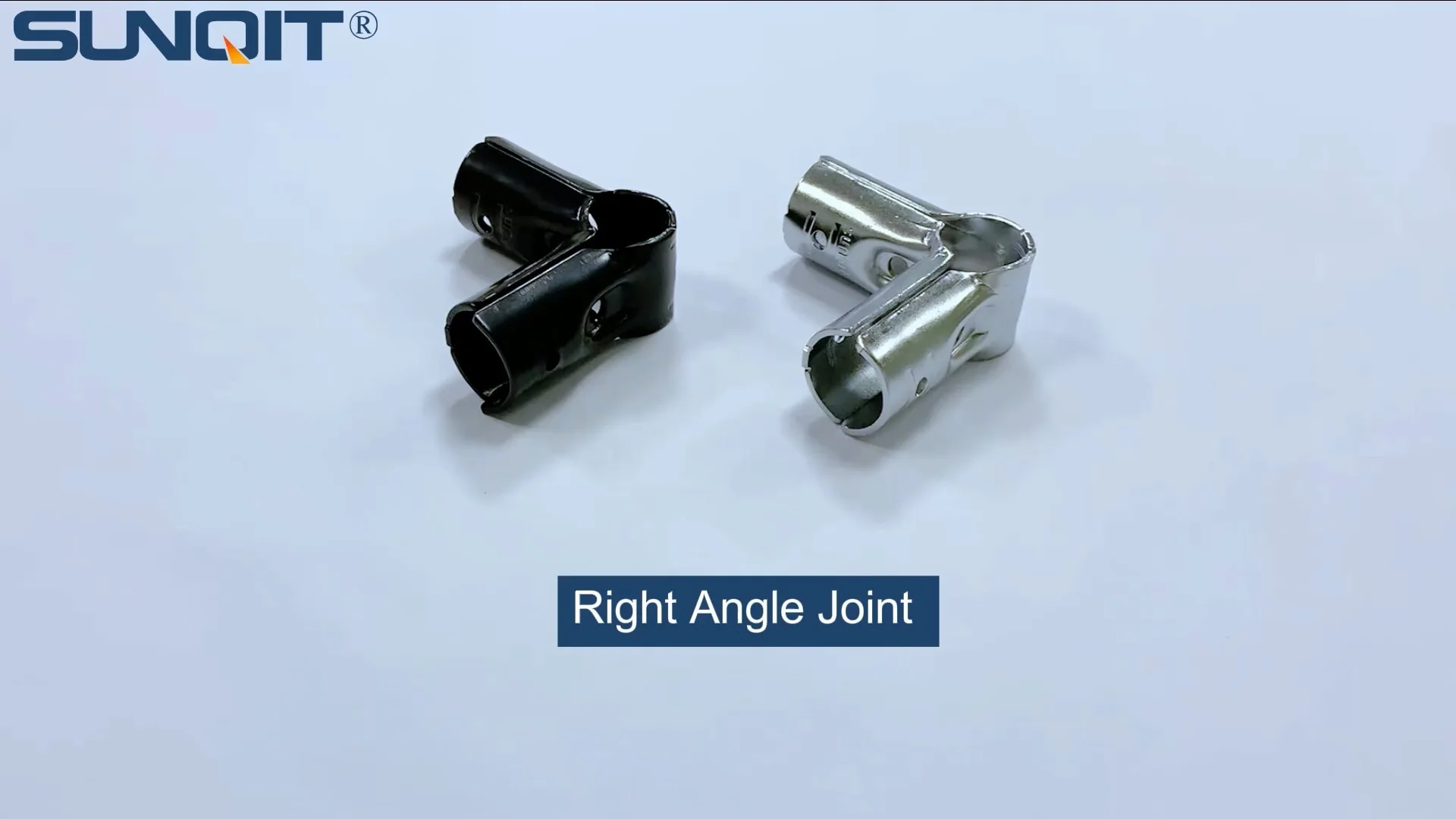
Three way lean pipe joint for 3 pcs 28MM lean pipe connection in straight angle, which used widely in workbench, flow rack, hand trolley frame connection.
In the fast-paced world of 3C manufacturing—where smartphones, laptops, and wearables fly off production lines at breakneck speeds—every second counts. A single bottleneck, a clunky workstation, or a misaligned material flow can throw off deadlines, hike costs, and compromise the precision that defines this industry. That's where lean systems step in, acting as the invisible backbone that keeps operations smooth, flexible, and human-centric. At the heart of these systems lies a small but mighty component: the three way lean pipe joint. It's not just a piece of hardware; it's the unsung hero that turns rigid production lines into adaptable ecosystems, empowering teams to work smarter, not harder.
Walk into any cutting-edge 3C facility today, and you'll notice a shift from static, one-size-fits-all setups to dynamic workspaces that evolve with product demands. Phones get slimmer, laptops lighter, and components tinier—so why should assembly lines stay stuck in the past? Lean pipe systems, with their modular design and three way joints, answer this call by letting manufacturers build, reconfigure, and scale workbenches, flow racks, and conveyors on the fly. Let's dive into how these unassuming joints are reshaping 3C assembly lines, one connection at a time.
The Role of Lean Systems in 3C Manufacturing
3C manufacturing isn't just about making products—it's about balancing speed, precision, and adaptability. Traditional production lines, with their fixed metal frames and welded structures, struggle to keep up. When a new model launches, retooling can take weeks, tying up resources and delaying time-to-market. Enter lean systems: a philosophy turned toolkit that prioritizes waste reduction, flexibility, and employee well-being. At its core, lean manufacturing is about creating value for both the customer and the team on the floor.
In 3C plants, where product lifecycles are shorter than ever, lean systems shine. They're built on the idea that nothing should be permanent. Need to adjust a workbench height for taller operators? Swap out a section of a flow rack to accommodate a new component size? Reroute a conveyor to reduce material handling? All of this becomes possible with modular components like lean pipes, joints, and accessories. And among these components, the three way lean pipe joint stands out as a linchpin, enabling multi-directional connections that turn simple pipes into complex, functional structures.
Three Way Lean Pipe Joints: Design & Functionality
At first glance, a three way lean pipe joint might look like a humble plastic or metal connector—but its design is a masterclass in engineering simplicity. Shaped like a T or a Y, it allows three lean pipes to intersect at a single point, creating stable, load-bearing structures that can be disassembled and reassembled in minutes. Unlike traditional welding or bolting, which requires specialized tools and permanent changes, these joints twist or clamp into place, making adjustments accessible to anyone on the production floor, from line supervisors to seasoned technicians.
Materials matter here, too. Many three way joints are made from durable plastics or aluminum, chosen for their lightweight strength and resistance to wear—critical in 3C environments where constant movement and heavy use are the norm. Some even come with ESD (Electrostatic Discharge) coatings, a non-negotiable feature when handling sensitive electronics like circuit boards or microchips. This attention to detail isn't just about longevity; it's about ensuring that every component in the line works in harmony to protect both products and people.
But what truly sets these joints apart is their versatility. A single joint can be part of a lean pipe workbench in the morning, repurposed into a flow rack by afternoon, and reconfigured into a mobile trolley by the end of the day. This flexibility is a game-changer for 3C manufacturers, who often juggle multiple product lines and rapid design changes. No more waiting for custom metal fabrication or expensive overhauls—just a few twists, and the line adapts.

Applications in 3C Assembly Lines: Where Three Way Joints Make the Difference
To understand the impact of three way lean pipe joints, let's step onto a typical 3C assembly floor and follow the journey of a smartphone from component to finished product. At every stage, these joints play a quiet but critical role in keeping the process efficient and adaptable.
1. Lean Pipe Workbenches: The Heart of Assembly
The assembly line starts at the lean pipe workbench—a custom-built station where technicians carefully fit screens, batteries, and motherboards into phone casings. Here, three way joints are everywhere: supporting the work surface, holding tool organizers, and suspending overhead lighting or ESD wristband hooks. What makes these workbenches special is their ergonomic flexibility. Using three way joints, supervisors can adjust the height of the bench to suit each technician's posture, swap out a wooden top for an anti-static mat, or add side shelves for extra tools—all without disrupting the workflow.
Take Maria, a veteran technician with 10 years of experience. "Before we switched to lean pipe workbenches, I was hunched over a fixed-height table for 8 hours a day," she says. "Now, if my back starts to ache, I can loosen the joints and raise the surface in 2 minutes. It's not just better for me—it means I can focus on being precise, not being uncomfortable." For 3C manufacturers, this translates to fewer errors, lower turnover, and happier teams—all of which boost productivity.
2. Flow Racks: Keeping Materials Moving
Just a few feet from the workbenches, flow racks stocked with components—screws, SIM card trays, charging ports—feed the assembly line. These racks use gravity to slide materials forward as they're needed, ensuring technicians never have to reach or bend to grab parts. Three way joints form the backbone of these racks, supporting the roller tracks and dividing shelves into neat, product-specific sections. When a new phone model with a different port size comes in, the team can quickly reposition the joints to adjust shelf heights or add extra lanes, eliminating downtime.
Jake, a material handler, recalls the days before lean flow racks: "We used to stack component bins on metal shelves, and every time a bin ran empty, I'd have to climb a ladder to get a new one. Now, with the flow rack, bins glide right to the front, and if we need to add a lane for a new part, I just twist a few three way joints and it's done. I can restock three racks in the time it used to take me to do one." This efficiency isn't just about speed—it's about reducing the risk of dropped components or misplaced parts, which can derail an entire production run.
3. Conveyors: Bridging the Gaps
Once the phone is assembled, it moves to testing stations via conveyor systems—another area where three way lean pipe joints shine. Unlike bulky, fixed conveyors, lean pipe conveyors are lightweight and modular, using joints to connect roller tracks and adjust angles. For example, if a test station needs to be moved 6 feet to the left, the team can disassemble the conveyor, reposition the joints, and have it up and running in under an hour. This agility is crucial in 3C manufacturing, where line layouts often change to accommodate new testing equipment or higher production volumes.
"Last month, we had to add a new camera-testing station overnight," says Raj, the production manager. "With our old steel conveyors, that would have meant shutting down the line for a week. With lean pipe conveyors and three way joints? We had the new section built by morning, and production didn't skip a beat."
4. ESD Workstations: Protecting Sensitive Electronics
Perhaps nowhere is the precision of three way lean pipe joints more critical than at ESD workstations, where static electricity can fry delicate microchips in an instant. These workstations are wrapped in conductive materials, from the lean pipes to the joints themselves, creating a grounded system that dissipates static. Three way joints here aren't just structural—they're part of the safety net. By ensuring pipes connect securely, they prevent gaps in the ESD shield, keeping products safe from costly damage.
Lisa, who oversees quality control, explains: "A single static discharge can ruin a $200 motherboard. With our ESD workstations, every joint is checked daily to make sure the grounding is intact. The fact that we can still reconfigure the station—add a shelf, adjust the height—without breaking that shield? That's the magic of these joints. They keep us safe and flexible at the same time."

The Benefits: Why 3C Manufacturers Can't Afford to Ignore Lean Pipe Systems
The applications are clear, but what do three way lean pipe joints mean for the bottom line? Let's break down the benefits that make them indispensable in 3C manufacturing:
| Benefit | Impact on 3C Lines |
|---|---|
| Reduced Setup Time | New lines or reconfigurations take hours, not weeks. A typical 3C manufacturer reports cutting line setup time by 70% after switching to lean pipe systems. |
| Lower Costs | No need for custom metal fabrication or expensive tools. Lean pipe joints and accessories cost a fraction of traditional materials, with a lifespan of 5+ years. |
| Improved Ergonomics | Adjustable workbenches and flow racks reduce worker fatigue, lowering injury rates by up to 40% in some 3C facilities. |
| ESD Compliance | ESD-coated joints and pipes protect sensitive electronics, cutting defect rates by 25% for microchip handling. |
| Sustainability | Modular components are reusable and recyclable, aligning with 3C brands' goals to reduce waste and carbon footprints. |
These numbers tell a story of efficiency, but the human impact is just as significant. When teams feel empowered to adjust their workspace, when downtime is minimized, and when products move smoothly from start to finish, morale soars. And in an industry as competitive as 3C, a motivated, efficient team is often the difference between leading the market and falling behind.

Choosing the Right Partner: The Importance of a Reliable Lean Pipe Supplier
Of course, none of this is possible without high-quality components—and that starts with choosing the right lean pipe supplier. In 3C manufacturing, where precision is non-negotiable, a flimsy joint or subpar pipe can lead to wobbly workbenches, jammed conveyors, or even product damage. That's why smart manufacturers prioritize suppliers who offer not just parts, but expertise.
A good supplier understands the unique needs of 3C lines: the demand for ESD protection, the need for quick delivery of replacement parts, and the importance of customization. They'll work with you to design workbenches or flow racks tailored to your product specs, not just sell you off-the-shelf components. And when issues arise—like a joint that wears out faster than expected—they'll stand behind their products with responsive support.
"We've tried cheap joints from overseas before," admits Raj, the production manager. "They saved us a few dollars upfront, but they cracked under the weight of our flow racks, and we had to shut down the line to replace them. Now, we partner with a local supplier who visits our facility quarterly to check on wear and suggest upgrades. It's an investment, but it pays off in reliability."
Future Trends: Where Lean Pipe Systems and 3C Manufacturing Go Next
As 3C products continue to shrink in size and grow in complexity—think foldable phones, AR glasses, and AI-powered wearables—lean pipe systems will evolve right alongside them. We're already seeing trends like smart joints with built-in sensors that alert teams when a connection loosens, or aluminum lean pipes that are lighter and more durable than traditional steel. Some manufacturers are even experimenting with 3D-printed joints, customized to fit unique product shapes.
But perhaps the biggest trend is the integration of lean systems with automation. Imagine a lean pipe conveyor that communicates with robotic arms, adjusting its speed based on how quickly the arm assembles components. Or a workbench with joints that automatically raise or lower based on a technician's biometric data, ensuring optimal ergonomics all day long. These innovations aren't science fiction—they're already being tested in forward-thinking 3C plants.
At the center of it all? The humble three way lean pipe joint, evolving from a simple connector to a smart, adaptable link in the chain of manufacturing progress. It's a reminder that in the world of high-tech 3C production, sometimes the most powerful innovations are the ones that keep things simple, flexible, and human-focused.
Conclusion: More Than Just Joints—Building the Future of 3C Manufacturing
Three way lean pipe joints may be small, but their impact on 3C assembly lines is enormous. They're the reason a production line can pivot from assembling a budget phone to a flagship model in a day. They're why technicians like Maria can work comfortably, reducing errors and boosting morale. And they're the foundation of lean systems that help 3C manufacturers stay competitive in a world where change is the only constant.
As we look to the future, one thing is clear: the success of 3C manufacturing won't just depend on faster processors or sleeker designs. It will depend on the systems that bring those products to life—systems built on flexibility, efficiency, and respect for the people who build them. And at the heart of those systems will be the three way lean pipe joint: a quiet innovator, connecting pipes, processes, and people in ways that make the impossible possible, one assembly line at a time.