- Company Articles
- Products and Technology
- Product knowledge
- 3C Assembly Lines: Why 4040D EU Standard Aluminum Profiles Are Ideal

3C Assembly Lines: Why 4040D EU Standard Aluminum Profiles Are Ideal
Related Product
4040D EU Standard Aluminum Profile
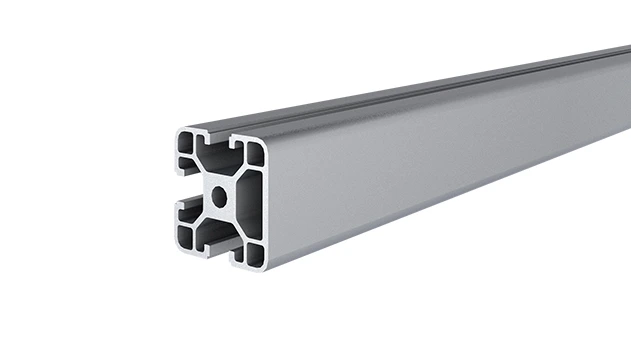
4040D is a 4.00x4.00 CM fractional 40 series square extrusion T-slot profile with two side open T-slots, two side with closed face, each side with 4.00cm face. The profile has align-a-grooves to assist in aligning connecting profiles.
Walk into any 3C manufacturing plant—where smartphones, laptops, and wearables come to life—and you'll feel the buzz of precision and speed. Every second counts here. A delay in one assembly station can ripple through the entire line, slowing down production of devices that millions of people are eager to get their hands on. But here's the thing: many of these plants are still relying on rigid, one-size-fits-all workstations and racks that were built for yesterday's products. When a new model launches with a slimmer design or a different component layout, those fixed setups become obstacles, not assets. That's where the 4040D EU Standard Aluminum Profile steps in. It's not just a piece of metal; it's a solution to the chaos of modern 3C manufacturing. Let's dive into why this unassuming aluminum extrusion has become the backbone of efficient, adaptable assembly lines.
The 3C Manufacturing Challenge: Why Rigidity Kills Productivity
3C products—computers, communications, and consumer electronics—evolve at a breakneck pace. A smartphone model might be updated twice a year, each time with new internal components, slimmer frames, or redesigned screens. For assembly lines, this means constant change. Yet, many facilities still use workbenches made of wood or welded steel, material racks that can't be adjusted, and conveyor systems that take weeks to reconfigure.
Picture this: A plant starts production on a new tablet. The old workbench, built for a bulkier model, is too high for operators to comfortably reach the assembly tray. The material rack, with fixed shelves, can't accommodate the new smaller component bins. The result? Operators strain their shoulders, waste time hunting for parts, and the line falls behind schedule. By the time the team modifies the setup (hiring welders or buying new racks), the next product iteration is already on the horizon. It's a cycle of inefficiency that eats into profits and innovation.
The core problem?
Rigid infrastructure can't keep up with flexible demand. 3C manufacturing needs tools that adapt as quickly as the products themselves. And that's exactly what the 4040D EU Standard Aluminum Profile delivers.
What Makes 4040D Profiles Different? The Basics of Aluminum Extrusion
Let's start with the basics: What is a 4040D EU Standard Aluminum Profile? At its core, it's an aluminum extrusion—meaning it's shaped by forcing molten aluminum through a die to create a consistent cross-section. The "4040" refers to its dimensions: 40mm by 40mm, a square profile that strikes the perfect balance between strength and versatility. The "D" denotes its specific design under EU standards, with precision-engineered T-slots along all four sides. These slots are the secret sauce: they let you attach accessories—brackets, shelves, lights, even small conveyor sections—without drilling or welding.
Unlike welded steel, which is heavy and permanent, or plastic, which lacks strength, aluminum brings together the best of both worlds: lightweight yet durable, strong enough to support heavy tools but easy enough for two people to carry and reconfigure. And because it's an extrusion, each 4040D profile is identical, ensuring consistency across the entire line. No more "this shelf is a little higher than that one" headaches.

Design Flexibility: Build What You Need, When You Need It
The most obvious advantage of 4040D profiles is their flexibility. With the right aluminum profile accessories—joints, brackets, end caps, and hinges—you can build almost anything, and rebuild it just as easily. Let's take a workbench, a staple of any assembly line. With 4040D, you're not stuck with a fixed height or width. Need to lower the surface by 10cm for a new ergonomic study? Loosen the bolts on the height-adjustable feet, slide the profiles, and retighten. Adding a shelf for tools? Snap a bracket into the T-slot, slide it to the perfect position, and lock it in place. It's like building with industrial-grade Legos, but for grown-ups who need their creations to withstand daily use.
This flexibility shines when launching new products. Imagine you're tasked with setting up a temporary line for a limited-edition smartwatch. With 4040D profiles, you can assemble a mini workbench, a small parts rack, and a manual conveyor in hours—not days. Use internal straight aluminum joints to connect the profiles at 90-degree angles, add a lightweight aluminum honeycomb panel for the work surface, and attach casters to make the whole setup mobile. When the project ends, disassemble it, pack the profiles away, and reuse them for the next big thing. No waste, no storage headaches, just pure adaptability.
Durability That Stands Up to 3C's Toughest Environments
Flexibility doesn't mean sacrificing strength. 3C assembly lines are tough places: tools get dropped, parts are moved constantly, and cleaning crews use industrial-grade disinfectants. The 4040D profile is built to handle this abuse. Aluminum's natural corrosion resistance means it won't rust, even in humid environments or when exposed to cleaning chemicals. Its 40x40mm cross-section provides rigidity, with a load capacity of up to 200kg per meter—more than enough to support heavy assembly tools, stacks of component trays, or even small automated machines.
Compare this to wooden workbenches, which warp over time and absorb spills, or mild steel racks that rust if not painted regularly. A 4040D setup can last 10+ years with minimal maintenance—just a quick wipe-down to remove dust. And when parts do wear out (like a worn caster wheel or a damaged bracket), aluminum profile accessories are cheap and easy to replace. No need to replace the entire workbench—just swap the part and get back to production.
Lean System Integration: Waste Less, Produce More
Lean manufacturing isn't just a buzzword in 3C—it's a survival strategy. The goal is to eliminate waste: wasted time, wasted motion, wasted space. 4040D profiles are lean by design. Let's break down how they support key lean principles:
- 5S Organization: T-slots let you attach tool holders, label holders, and bin organizers directly to workbenches and racks. Everything has a place, reducing "search waste" (time spent looking for tools or parts).
- U-Shaped Workstations: 4040D's modularity makes it easy to build U-shaped lines, where operators have all materials and tools within arm's reach, minimizing motion waste.
- Quick Changeovers: When switching between product models, reconfiguring a 4040D workbench takes minutes, not days. This reduces "setup waste" and keeps the line running.
- Visual Management: Attach whiteboards, LED lights, or status indicators to the profiles to keep everyone on the same page—no more confusion about production targets or quality checks.
Real Example:
A major 3C manufacturer in China switched its battery assembly line to 4040D profiles and saw a 15% reduction in changeover time between models. By reconfiguring workbenches and material racks in hours instead of days, they increased annual production capacity by 8%, all without adding new floor space.
Aluminum Profile Accessories: The Unsung Heroes of Adaptability
A 4040D profile is only as good as the accessories that bring it to life. Luckily, the ecosystem of aluminum profile accessories is vast and purpose-built for 3C needs. Let's call out a few must-haves:
Joints and Connectors:
Internal rotatary aluminum joints let you pivot profiles 180 degrees, perfect for building angled workbenches or adjustable material chutes. 90-degree crossing joints let you stack profiles vertically without blocking T-slots, maximizing space.
Leveling Feet and Casters:
Adjustable leveling feet keep workbenches stable on uneven factory floors, while heavy-duty casters (with brakes!) turn static setups into mobile workstations. Need to move a workbench to a new line? Just unlock the brakes and roll—no forklift required.
Work Surface Panels:
Aluminum honeycomb panels are lightweight but strong, ideal for workbenches. For ESD (electrostatic discharge) sensitive environments (like semiconductor assembly), there are ESD-safe panels that dissipate static, protecting delicate components.
Roller Tracks and Guides:
Plastic roller track guide rails (yellow or grey, depending on your line's color coding) snap into T-slots to create mini conveyors for parts. Imagine a workbench where finished subassemblies glide along a roller track directly to the next station—no more carrying trays by hand.
The best part? These accessories are designed to work together seamlessly. A roller track placon mount (used to attach tracks to profiles) fits into the same T-slot as a tool holder bracket. There's no guesswork—just pick the parts you need and assemble.
Comparing Profiles: Why 4040D Beats the Rest for 3C
Aluminum profiles come in all shapes and sizes: 2020 (20x20mm), 3030 (30x30mm), 4080 (40x80mm), and more. So why is 4040D the go-to for 3C assembly? Let's break it down with a quick comparison:
For 3C assembly, 4040D hits the sweet spot. It's strong enough to support tools and components but lightweight enough to reconfigure easily. Its 40mm width provides ample T-slot space for multiple accessories (think: a tool holder, a lamp, and a roller track on the same profile), something narrower profiles can't match. And because it's a standard size, suppliers stock it widely, so you won't wait weeks for delivery when you need to expand a line.
Real-World Impact: How 4040D Transformed a Phone Assembly Line
Let's put this all into context with a real-world example (based on common client stories from aluminum profile suppliers). A mid-sized 3C manufacturer was struggling with its smartphone assembly line. Their (tòngdiǎn—pain points) were clear:
- Changeover time between models was 8 hours, causing production gaps.
- Workbenches were too low for taller operators, leading to ergonomic complaints.
- Material racks were fixed, so parts were stored 10+ meters from the line, wasting time.
The solution? A complete overhaul with 4040D profiles and accessories. Here's what happened:
Day 1-2:
Install modular workbenches with adjustable height legs. Operators could now set their stations to their ideal height (10cm-15cm adjustments) in 5 minutes.
Day 3-4:
Build mobile material racks (on casters) with adjustable shelves. Each rack was customized to hold the specific parts for the current model, positioned 2 meters from the line.
Day 5:
Add roller tracks to workbenches, connecting stations so subassemblies flowed automatically.
The results? Changeover time dropped to 2 hours (a 75% reduction), operator complaints about ergonomics vanished, and material handling time decreased by 30%. Within 3 months, the plant recouped the investment in profiles and accessories through increased productivity.
The Future of 3C Manufacturing: Why 4040D Will Only Grow in Importance
As 3C products get smaller, smarter, and more complex, assembly lines will need to become even more adaptable. Think about the rise of custom electronics—consumers wanting personalized phone cases or modular laptops. Mass production is giving way to mass customization, and rigid infrastructure can't keep up. 4040D profiles, with their ability to be reconfigured in hours, are perfectly suited for this shift.
Plus, sustainability is no longer optional. Aluminum is 100% recyclable, and 4040D profiles (being modular) reduce waste from constant replacements. Unlike wooden workbenches that end up in landfills or welded steel that's hard to recycle, 4040D setups can be disassembled and reused indefinitely. It's good for the planet and good for the bottom line.
Final Thoughts: More Than a Profile—A Mindset Shift
At the end of the day, the 4040D EU Standard Aluminum Profile isn't just a piece of metal. It's a mindset shift from "build it once and hope for the best" to "build it to change." In 3C manufacturing, where change is the only constant, that's invaluable. It lets plants stay agile, reduce waste, and keep up with the products that define our digital lives. So the next time you unbox a new smartphone or laptop, take a moment to appreciate the unsung hero behind its assembly: the humble 4040D profile, quietly adapting to make it all possible.