- Company Articles
- Products and Technology
- Technology Sharing
- 3C Assembly Optimization: How Aluminum Guide Rail B Improves Workflow Efficiency

3C Assembly Optimization: How Aluminum Guide Rail B Improves Workflow Efficiency
Related Product
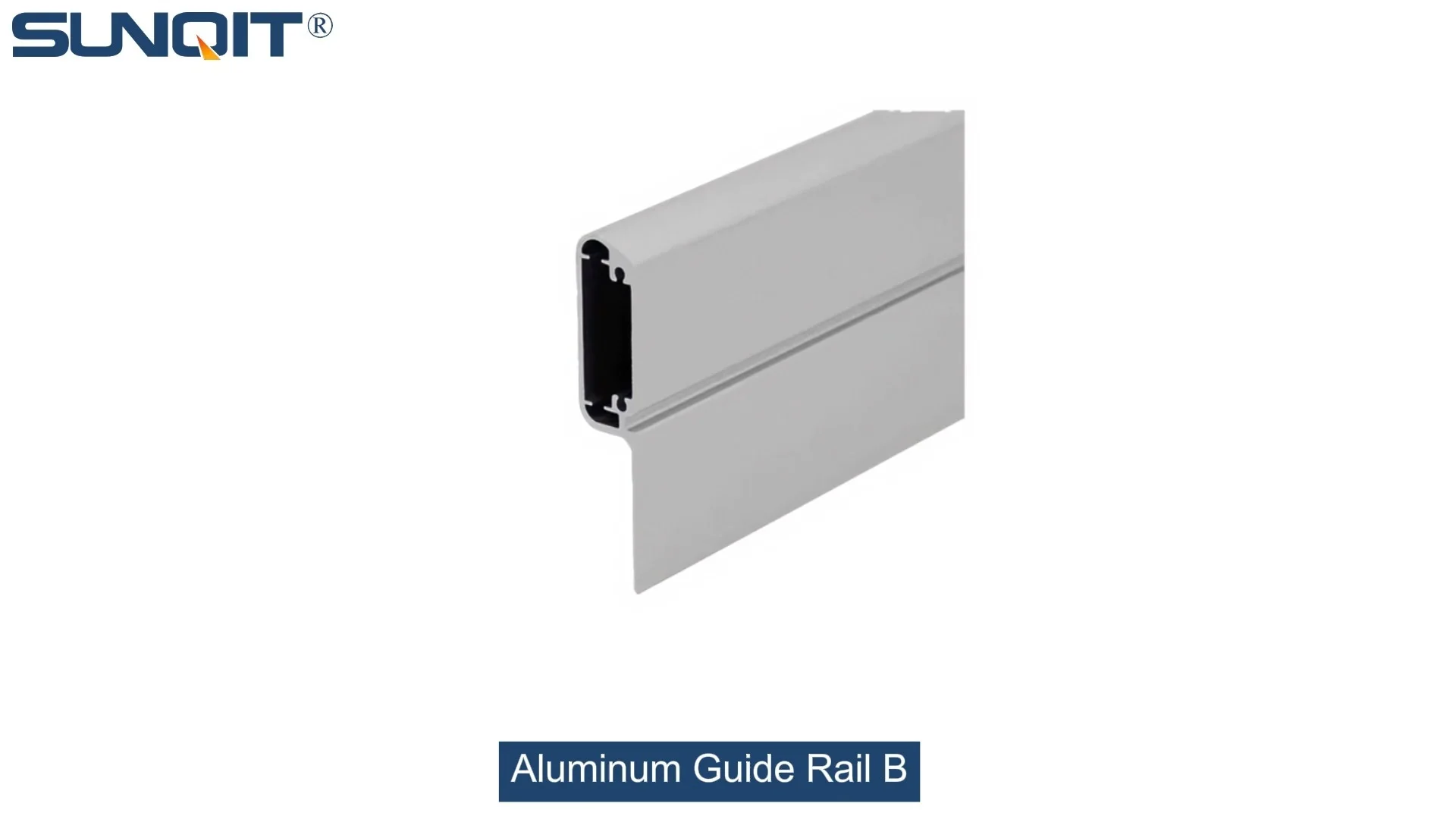
Aluminum Guide Rail B
The aluminum guide rails hold the transport goods securely on the roller track. For installation, the guide rails are simply pushed over the roller tracks.To protect sensitive products.
Streamlining production lines for the fast-paced world of consumer electronics manufacturing
The Challenges of Modern 3C Assembly
In the bustling world of 3C (Computer, Communication, Consumer Electronics) manufacturing, every second counts. Assembly lines hum with the rhythm of precision—smartphones, laptops, and wearable devices taking shape through countless small, intricate steps. But here's the reality: many production floors still grapple with inefficiencies that slow down this rhythm. Imagine a worker reaching for a component, only to find the material rack isn't aligned with the assembly station. Or a conveyor belt that jams because the guide rails can't handle the weight of delicate parts. These small hiccups add up, eating into production time and increasing the risk of errors.
3C products are evolving faster than ever. New models launch quarterly, each with unique components and assembly requirements. This constant change demands flexibility—production lines that can adapt quickly without sacrificing speed or accuracy. Traditional fixed equipment often falls short here. Rigid workbenches, static material racks, and one-size-fits-all conveyor systems struggle to keep up with product switches, leading to costly downtime and missed deadlines.
The core challenge? Balancing three critical needs: speed to meet tight market deadlines, flexibility to adapt to product changes, and precision to ensure product quality. This is where lean manufacturing principles step in—and at the heart of that lean transformation lies the right equipment.
Aluminum Guide Rail B: A Game-Changer for Workflow Smoothness
Enter Aluminum Guide Rail B—more than just a piece of metal, but a silent partner in optimizing 3C assembly lines. What makes it stand out? Let's break it down with a real-world scenario. Picture a typical 3C assembly station where workers assemble circuit boards. The station uses a lean pipe workbench, and beside it, a flow rack holds small electronic components. The connection between the flow rack and the workbench relies on guide rails to slide materials seamlessly. With traditional steel rails, friction is a constant issue; plastic parts might stick, or metal components could scratch the rails over time. But with Aluminum Guide Rail B, that changes.
Aluminum Guide Rail B is engineered for smoothness. Its surface is treated to reduce friction, so even lightweight components glide across without hesitation. The aluminum material itself is lightweight yet durable—strong enough to support daily use but easy to adjust when production needs shift. Unlike fixed steel rails, which require welding or heavy tools to reposition, Aluminum Guide Rail B connects with simple, tool-free joints. This means when a new product requires the flow rack to be moved 10 inches closer to the workbench, a team can adjust the rails in minutes, not hours.
But it's not just about smooth movement. In 3C manufacturing, static electricity is a hidden enemy. A tiny electrostatic discharge (ESD) can damage sensitive microchips, rendering an entire device defective. Aluminum Guide Rail B addresses this too—when paired with an ESD workbench or ESD workstation, it integrates into a grounded system, dissipating static charges before they reach the products. For workers handling delicate components, this isn't just a feature; it's peace of mind.

Key Components: Building a Lean Ecosystem Around Aluminum Guide Rail B
Aluminum Guide Rail B doesn't work alone. It's part of a larger lean system designed to transform 3C assembly lines from rigid setups into adaptable, efficient ecosystems. Let's explore how it pairs with other essential components to create a workflow that clicks.
1. Lean Pipe Workbench: The Heart of the Assembly Station
A lean pipe workbench isn't just a table—it's a customizable hub where assembly happens. When combined with Aluminum Guide Rail B, it becomes even more powerful. Imagine a workbench tailored for smartphone assembly: the surface is height-adjustable to reduce worker fatigue, and Aluminum Guide Rail B lines the edges, connecting to nearby flow racks. Components slide directly from the rack to the workbench, eliminating the need for workers to bend or reach. The rails also keep tools and small parts organized, with attachments like cup holders and document trays snapping into place the rail—no drilling or permanent fixtures required.
For example, Workbench E (a single-deck model without casters) paired with Aluminum Guide Rail B becomes a stable, flexible station. If the assembly process changes—say, a new phone model requires additional testing steps—the rails can be reconfigured to add a small conveyor section, linking the workbench to a testing station. This adaptability means the same workbench serves multiple product lines, reducing the need for expensive new equipment.
2. Flow Rack: Keeping Materials Moving, Always
Material handling is the backbone of 3C assembly. A flow rack loaded with circuit boards, batteries, or screens needs to deliver parts to workers exactly when they're needed. Aluminum Guide Rail B is the secret to making this "just-in-time" delivery possible. Traditional flow racks often use basic rollers, but when combined with Aluminum Guide Rail B, the rollers align perfectly, ensuring a consistent, gravity-driven flow. No more parts getting stuck halfway down the rack, forcing workers to pause and free them.
Take Material Rack B (3 row and 3 floor), a popular choice for 3C facilities. Equipped with Aluminum Guide Rail B, each shelf's rails can be adjusted to match the size of the components—narrow rails for small screws and connectors, wider rails for larger battery packs. This customization reduces jams and ensures parts arrive at the pick point smoothly, cutting down on the time workers spend waiting or searching for materials.
3. Conveyor: Bridging Gaps in the Production Line
Between workbenches and flow racks, conveyors keep the assembly line moving. But in 3C manufacturing, conveyors can't be one-speed-fits-all. Some sections need to move slowly for precise assembly, others quickly to transport finished subassemblies to the next station. Aluminum Guide Rail B integrates with conveyors to provide this versatility. For instance, a roller conveyor using Aluminum Guide Rail B can have variable speed zones—slowing down as parts approach an ESD workstation for quality checks, then speeding up to move completed units to packaging.
What about maintenance? In busy 3C plants, conveyor downtime is costly. Aluminum Guide Rail B's modular design makes repairs a breeze. If a section of rail gets damaged, it can be swapped out individually without disassembling the entire conveyor. For plant managers, this means less downtime and more consistent production flow.
| Component | How Aluminum Guide Rail B Enhances It | Impact on 3C Assembly Efficiency |
|---|---|---|
| Lean Pipe Workbench | Tool-free rail adjustments; ESD compatibility; smooth material transfer to/from the bench | Reduced worker movement by 20-30%; faster adaptation to new product layouts |
| Flow Rack | Low-friction sliding; customizable rail width for different component sizes | 50% fewer material jams; 15% faster part retrieval time |
| Conveyor | Variable speed alignment; easy rail replacement for maintenance | 8% increase in line throughput; 40% reduction in conveyor downtime |

Beyond the Rails: Custom Lean Solutions for 3C's Unique Needs
Every 3C manufacturer is different. A factory assembling smartwatches has different needs than one producing laptops, and even within the same plant, assembly lines for high-end devices vs. budget models require distinct setups. This is where off-the-shelf solutions fall short—and why custom lean solutions matter. Aluminum Guide Rail B is a cornerstone of these solutions, but the magic lies in how it's integrated into a system tailored to a plant's specific challenges.
Consider a case study: a 3C assembler producing wireless earbuds. The assembly process involves tiny batteries, microphones, and charging ports—parts so small they're easy to misplace. The client needed a system that could: (1) keep parts organized at each station, (2) reduce the distance workers reached for components, and (3) minimize static damage. The solution? A custom lean system combining Aluminum Guide Rail B with a mini aluminum roller track (yellow) for small parts, paired with an ESD workstation and a compact flow rack. The rails were positioned to deliver parts directly to the worker's dominant hand side, cutting down on movement. The ESD integration ensured static-sensitive parts stayed protected, and the modular design allowed the client to add more stations as production scaled up.
Another example: a manufacturer shifting from mass-produced smartphones to made-to-order models (e.g., custom color options, storage capacities). This required assembly lines that could switch between configurations daily. Using Aluminum Guide Rail B, lean pipe workbenches, and adjustable conveyors, the plant created "cells" that could be reconfigured in under an hour. A morning shift assembling 128GB black phones could be followed by an afternoon shift assembling 256GB blue phones—no production gaps, no wasted time.
The lean promise? "Reusable, sustainable, and always improving." Aluminum Guide Rail B embodies this by being 100% reusable—when a line is reconfigured, the rails can be disassembled and repurposed elsewhere. This not only reduces waste but also lowers long-term costs, making it a smart investment for manufacturers looking to stay competitive.

Why Aluminum Guide Rail B Stands Out in a Crowded Market
Walk into any industrial supply catalog, and you'll find dozens of guide rails. So what makes Aluminum Guide Rail B different? It's the attention to the details that matter in 3C assembly.
- Lightweight yet tough: Aluminum's strength-to-weight ratio means the rails are easy to handle during installation or reconfiguration, but durable enough to withstand the daily wear of a busy production line.
- Corrosion resistance: 3C assembly floors are often kept clean with regular wiping or mild chemicals. Aluminum Guide Rail B resists rust and corrosion, maintaining its smooth surface even after years of use.
- Precision engineering: The rails are extruded to tight tolerances, ensuring a perfect fit with lean pipe joints, roller tracks, and conveyor components. No gaps, no wobbles—just consistent performance.
- Cost-effective in the long run: While initial costs might be slightly higher than basic steel rails, the reusability, low maintenance, and efficiency gains mean Aluminum Guide Rail B pays for itself within months.
For 3C manufacturers, this isn't just about buying a product—it's about investing in a workflow that grows with them. As product cycles shorten and consumer demands rise, having equipment that can keep up isn't a luxury; it's a necessity.
Final Thoughts: From Chaos to Coordination
3C assembly doesn't have to be a battle against inefficiency. With the right tools—Aluminum Guide Rail B at the center, supported by lean pipe workbenches, flow racks, and conveyors—production lines can transform from clunky, static setups into dynamic, adaptable systems. It's about more than moving parts faster; it's about creating a workspace where workers feel supported, where change is met with flexibility, and where every second is used wisely.
At the end of the day, the goal is simple: get quality products out the door on time, without sacrificing the well-being of the people making them. Aluminum Guide Rail B isn't just a rail—it's a step toward that goal. For 3C manufacturers ready to leave the inefficiencies of the past behind, it's time to see how this small but mighty component can make a big difference in their workflow.