- Company Articles
- Products and Technology
- Product knowledge
- 3C Assembly Workbenches: How Lean Pipe Fixed Clamps Improve Stability

3C Assembly Workbenches: How Lean Pipe Fixed Clamps Improve Stability
Related Product
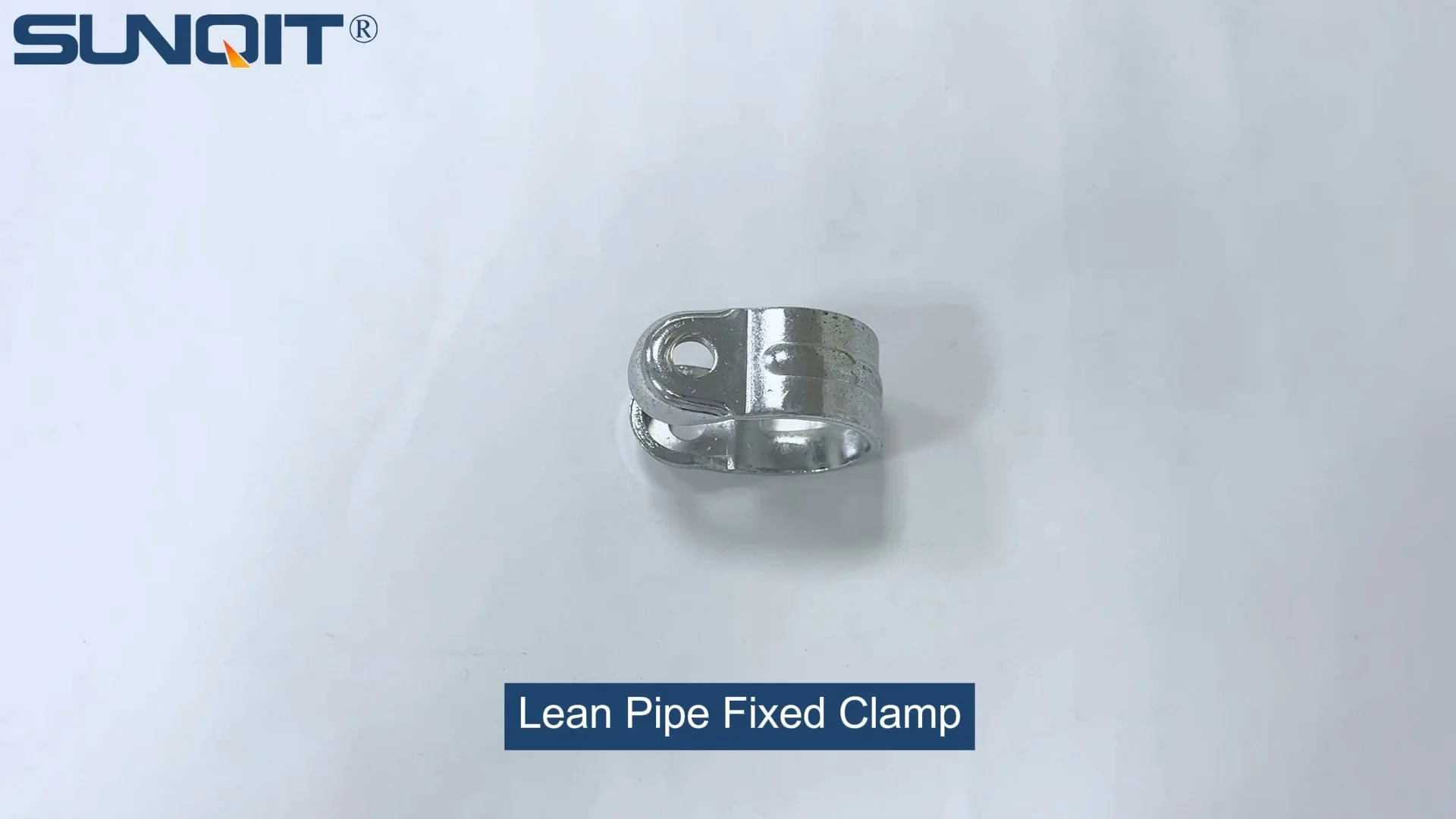
Lean Pipe Fixed Clamp
Lean pipe fixed clamp is used for pipe connector fixing the correct position during workbench flow rack hand trolley assemble work.
In the fast-paced world of 3C manufacturing—where smartphones, laptops, and wearables come to life—every second counts. But behind the speed and precision of assembly lines lies an unsung hero: the workbench. It's not just a table; it's the command center where technicians handle delicate microchips, align tiny camera lenses, and solder intricate circuits. For these tasks, "good enough" stability simply won't cut it. A wobbly workbench can mean misaligned components, damaged parts, or worse—costly rework and delayed production. Today, we're diving into how one critical component, the lean pipe fixed clamp, transforms ordinary workbenches into pillars of reliability for 3C assembly lines.
The Unique Challenges of 3C Assembly: Why Stability Isn't Optional
3C products are marvels of miniaturization. A single smartphone might contain over 1,000 components, many smaller than a grain of rice. Assembling these requires steady hands, precise tools, and—above all—a stable surface. Imagine a technician trying to solder a 0.5mm connector onto a circuit board while the workbench vibrates slightly with every nearby machine. Or a worker aligning a touchscreen module, only for the bench to shift, resulting in a misfit that renders the display useless. These scenarios aren't just hypothetical; they're daily risks in factories without stable workbenches.
Add to this the sensitivity of electronics to electrostatic discharge (ESD). Many 3C components, like semiconductors, can be permanently damaged by static electricity. ESD workbenches are designed to dissipate static, but even the best ESD surface is ineffective if the bench itself moves. A shifting workbench might cause a technician's wrist to brush against a component, transferring static and ruining hours of work. Stability here isn't just about precision—it's about protecting valuable parts.
Repetitive tasks compound the problem. 3C assembly lines thrive on consistency: the same motion, repeated hundreds of times a day. A wobbly workbench forces technicians to overcompensate, straining muscles and increasing fatigue. Over time, this leads to slower work, more errors, and higher turnover. In short, stability isn't a luxury in 3C manufacturing—it's the foundation of quality, efficiency, and worker well-being.
Lean Pipe Workbenches: Flexibility Meets Functionality
Enter the lean pipe workbench—a staple in modern manufacturing. Built from modular aluminum lean pipe and connectors, these workbenches are designed for adaptability. Unlike rigid, one-size-fits-all benches, they can be customized to fit specific tasks: adjusted in height, fitted with tool holders, or modified to include storage racks. This flexibility is a game-changer for 3C lines, where production needs shift with new product launches (think: a taller bench for assembling tablets vs. a lower one for smartwatches).
But here's the catch: flexibility often comes at the cost of stability. Traditional modular systems, like those using plastic connectors or loose bolts, can loosen over time, especially under the constant vibration of factory floors. A workbench that starts stable might wobble after weeks of use, as connections shift or wear. This is where the lean pipe fixed clamp steps in. It's the critical link that turns a flexible frame into a rock-solid structure.
Lean Pipe Fixed Clamps: The Unsung Heroes of Stability
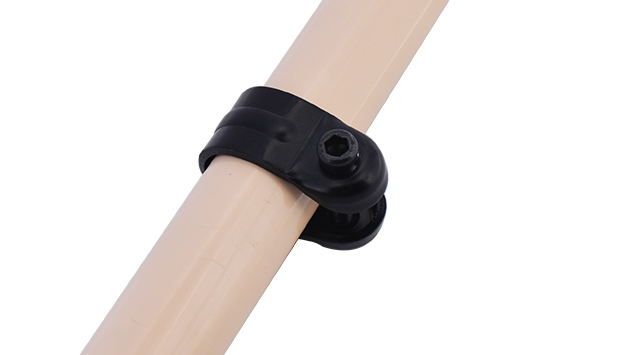
At first glance, a lean pipe fixed clamp might seem simple: a small metal component that fastens two pieces of aluminum lean pipe together. But its design is anything but basic. These clamps are engineered to create a tight, vibration-resistant connection that holds firm even under heavy loads and constant use. Let's break down what makes them special.
Design That Prioritizes Grip
Most lean pipe fixed clamps feature a two-piece design: a base that wraps around the pipe and a top plate that secures with screws or bolts. The inner surface is often textured or lined with rubber to increase friction, ensuring the clamp doesn't slip. When tightened, the clamp compresses the aluminum lean pipe slightly, creating a snug fit that resists twisting or pulling. Unlike plastic snap-fit connectors, which can degrade over time, metal fixed clamps maintain their grip even after years of use.
Material matters too. Many clamps are made from galvanized steel or aluminum, chosen for their strength and resistance to corrosion. In 3C factories, where humidity and cleaning agents are common, corrosion resistance ensures the clamp won't weaken—keeping the workbench stable for the long haul.

How Fixed Clamps Improve Stability: Four Key Mechanisms
Stability isn't just about "feeling solid"—it's about measurable performance. Lean pipe fixed clamps enhance stability in four critical ways, directly addressing the challenges of 3C assembly.
1. Eliminating "Play" in Connections
"Play" is the small, unwanted movement between connected parts. In workbenches with loose connectors, pipes might shift by a millimeter or two when bumped. In 3C assembly, a millimeter is all it takes to misalign a component. Fixed clamps eliminate play by creating a rigid bond between pipes. When properly installed, the connection feels seamless—as if the pipes and clamps are a single piece of metal. This rigidity ensures the workbench surface stays flat and steady, even when tools are dropped or parts are placed with force.
2. Resisting Vibration Fatigue
Factory floors are never silent. Conveyor belts hum, machines thump, and forklifts rumble by. All this vibration can loosen weaker connectors over time, turning a stable workbench into a wobbly one. Fixed clamps are designed to "lock in" tension. The screws or bolts used to tighten them are often self-locking, meaning they resist loosening under vibration. Some clamps even use nylon inserts in the threads, which create friction and prevent backsliding. This vibration resistance ensures the workbench stays tight, shift after shift.
3. Distributing Loads Evenly
A typical 3C workbench might hold tools, bins of parts, and a half-assembled product—easily 50kg or more. Without proper load distribution, weight can concentrate on weak points, bending pipes or cracking connectors. Fixed clamps spread weight across the entire frame. By securing pipes at multiple points, they ensure no single joint bears too much load. For example, a shelf holding heavy component bins will transfer weight through clamps to the vertical pipes, then to the floor—instead of sagging in the middle. This even distribution prevents warping and keeps the workbench level, critical for tasks like soldering or adhesive application where a tilted surface spells disaster.
4. Balancing Adjustability and Stability
One of the biggest advantages of lean pipe workbenches is their adjustability. Need to raise the surface by 10cm for taller technicians? Swap out a pipe for a longer one. Fixed clamps make this adjustability possible without sacrificing stability. Unlike welded connections (which are permanent), clamps can be loosened, repositioned, and retightened—all while maintaining their grip. This means factories can reconfigure workbenches for new products without buying entirely new setups. For 3C manufacturers, where product cycles are short, this flexibility is invaluable. And because the clamps lock tight after adjustment, the workbench remains stable in its new configuration.
Stability Comparison: Fixed Clamps vs. Common Alternatives
To truly appreciate fixed clamps, it helps to see how they stack up against other connection methods. The table below compares lean pipe fixed clamps to two common alternatives: traditional bolted joints and plastic snap-fit connectors.
| Feature | Lean Pipe Fixed Clamps | Traditional Bolted Joints | Plastic Snap-Fit Connectors |
|---|---|---|---|
| Resistance to Play | Excellent (no detectable movement) | Good (but loosens over time) | Poor (notable play after 1 month of use) |
| Vibration Resistance | High (self-locking design) | Medium (requires periodic retightening) | Low (prone to cracking under vibration) |
| Max Load Capacity | Up to 150kg per joint | Up to 200kg (but bolts may shear) | Up to 30kg (risk of breaking) |
| ESD Compatibility | Yes (available in conductive materials) | Yes (steel bolts dissipate static) | No (plastic insulates static) |
As the table shows, fixed clamps strike a balance that's ideal for 3C assembly: the stability of bolted joints, with the flexibility and ESD compatibility modern lines need. They outperform plastic connectors by a wide margin, making them the clear choice for high-precision work.

Beyond Stability: How Fixed Clamps Boost 3C Workflows
While stability is their primary job, lean pipe fixed clamps offer additional benefits that streamline 3C assembly—making them a smart investment beyond just "keeping things steady."
Faster Setup and Reconfiguration
3C manufacturers rarely stick to one product for long. A factory might assemble smartwatches in Q1, then switch to wireless earbuds in Q2. This requires workbenches that can be reconfigured quickly. Fixed clamps speed up this process. Unlike welded joints, which require cutting and rewelding, or bolted joints that need tools to loosen, many fixed clamps can be adjusted with a simple hex key. A team can reconfigure a workbench in under an hour, minimizing downtime between product runs.
ESD Safety, Built In
As mentioned earlier, ESD protection is critical for 3C components. Many fixed clamps are available in conductive materials, like aluminum or ESD-safe steel. These clamps don't just secure pipes—they create a path for static electricity to flow from the workbench surface to the ground. When paired with an ESD workbench top and anti-static flooring, they form a complete ESD protection system. This peace of mind lets technicians focus on assembly, not worrying about accidental static damage.
Durability That Reduces Maintenance
3C factories run 24/7, and maintenance windows are rare. Fixed clamps are built to last, withstanding the wear and tear of daily use. Their metal construction resists scratches, impacts, and chemical spills (common in factories using cleaning agents). Unlike plastic connectors, which degrade in sunlight or high temperatures, metal clamps maintain their integrity for years. This durability means fewer replacements, less downtime, and lower long-term costs—a win for busy production managers.
Real-World Impact: A Day in the Life of a Stable 3C Workbench
To see fixed clamps in action, let's walk through a typical shift at a smartphone assembly plant using lean pipe workbenches with fixed clamps.
At 8:00 AM, Maria arrives at her workstation. She's assembling camera modules, a task that requires aligning a 5mm lens with a sensor smaller than a fingernail. Her workbench, built from aluminum lean pipe and secured with fixed clamps, feels rock-solid. She places her tools on the surface—a precision screwdriver, tweezers, and a bin of tiny screws—and none of them wobble. As she picks up a lens, she doesn't hesitate; she knows the bench won't shift mid-alignment.
By 10:00 AM, the line is in full swing. A nearby conveyor belt rumbles, but Maria's workbench doesn't vibrate. The fixed clamps have locked the frame tight, absorbing the noise and movement. She's already assembled 50 modules—on track to hit her quota—with zero rejections. In the past, with a wobblier bench, she'd average 3-5 misalignments per hour. Today, she's perfect.
At lunch, a maintenance team stops by to reconfigure the bench next to Maria's for a new tablet model. They loosen the fixed clamps with a hex key, adjust the height, and retighten. Fifteen minutes later, the bench is ready—no welding, no delays. When production resumes, the new setup is just as stable as the old one.
By the end of the shift, Maria has assembled 200 flawless camera modules. Her hands aren't fatigued, and she's in a good mood—thanks in part to a workbench that didn't fight her all day. Multiply this across 50 workstations, and the impact is clear: fixed clamps don't just improve stability—they boost morale, quality, and output.
Choosing the Right Fixed Clamps for Your 3C Workbench
Not all fixed clamps are created equal. To maximize stability in 3C assembly, look for these key features when selecting clamps:
Material: Aluminum or Steel?
Aluminum clamps are lightweight and corrosion-resistant, making them ideal for cleanrooms or humid environments. Steel clamps are stronger, better for heavy-load applications (like workbenches holding large equipment). For most 3C tasks, aluminum clamps paired with aluminum lean pipe strike the best balance of weight and strength.
ESD Rating
Look for clamps labeled "ESD-safe" or with a surface resistance of 10^6 to 10^9 ohms. These will dissipate static, protecting sensitive components.
Locking Mechanism
Self-locking screws or bolts are a must for vibration resistance. Avoid clamps with simple friction fits; they'll loosen over time.
Compatibility with Your Lean Pipe
Clamps come in sizes to fit different pipe diameters (common sizes are 28mm and 30mm for lean pipe). Ensure the clamp matches your pipe size to avoid gaps or slippage.
Conclusion: Stability as a Competitive Edge
In the high-stakes world of 3C manufacturing, where margins are tight and innovation never stops, every detail counts. Lean pipe workbenches have revolutionized flexibility, but their true potential is unlocked by the humble fixed clamp. By eliminating play, resisting vibration, distributing loads, and enabling quick reconfigurations, these clamps turn workbenches into reliable partners in production.
Stability isn't just about avoiding mistakes—it's about creating the conditions for excellence. A stable workbench lets technicians work faster, with more confidence, and with fewer injuries. It protects valuable components, reduces rework, and keeps lines running smoothly. In short, it's a competitive edge.
So the next time you pick up a smartphone or tablet, take a moment to appreciate the unseen heroes behind it: the lean pipe fixed clamps, quietly holding everything together. In the race to build better, faster, and smarter 3C products, stability isn't just a foundation—it's the finish line.