- Company Articles
- Products and Technology
- Product knowledge
- 3C Assembly Workbenches: Why Aluminum Honeycomb Panels Improve Operational Efficiency

3C Assembly Workbenches: Why Aluminum Honeycomb Panels Improve Operational Efficiency
Related Product
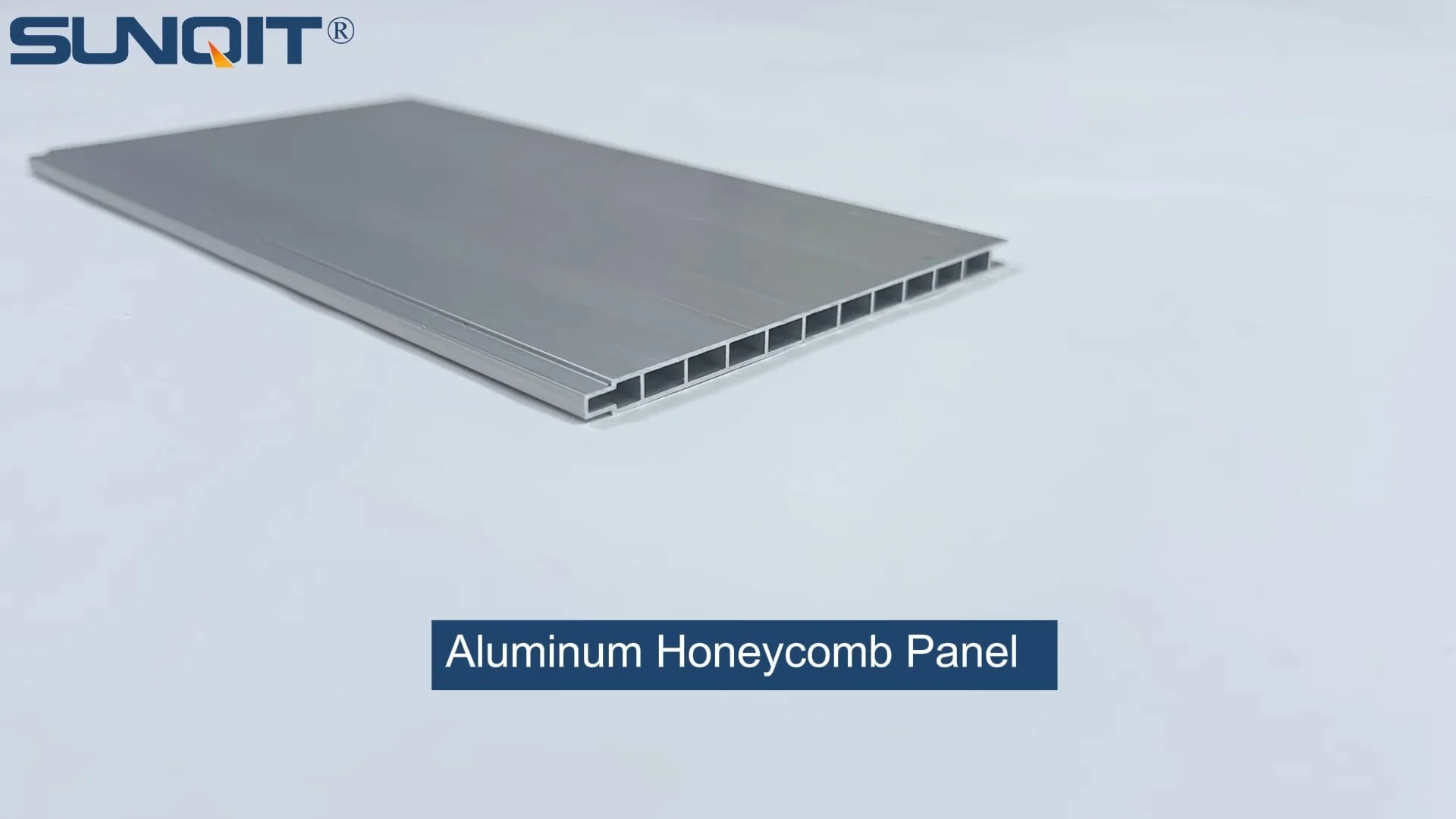
Aluminum Honeycomb Panel
Aluminum honeycomb panel used as table top, side wall, it is connected one pcs by one pcs from the side slot to make a full pieces.This panel width 105mm, 55mm, 35mm are optional for slection.
Walk into any 3C manufacturing plant—whether it's churning out the latest smartphones, sleek laptops, or high-precision cameras—and you'll notice one piece of equipment that ties the entire operation together: the assembly workbench. It's where technicians spend hours meticulously fitting tiny components, where quality checks happen, and where the final product takes shape. But not all workbenches are created equal. In an industry where every second counts and precision is non-negotiable, the right workbench isn't just a table—it's a silent partner in driving efficiency, reducing errors, and keeping production lines moving. That's where aluminum honeycomb panels come in. Over the past decade, these innovative panels have quietly revolutionized 3C assembly workbenches, solving long-standing pain points and becoming a cornerstone of modern lean manufacturing systems. But why exactly are they so transformative? Let's dive in.
The 3C Manufacturing Grind: Why Workbenches Can't Afford to Be "Just Good Enough"
To understand why aluminum honeycomb panels matter, let's first talk about what 3C manufacturing demands. 3C products—computers, communications, and consumer electronics—are marvels of miniaturization. A single smartphone might contain over 1,000 components, many smaller than a grain of rice. Assembling these requires steady hands, sharp eyes, and a workspace that doesn't introduce new problems. Traditional workbenches, though functional, often fall short in key areas:
- Weight vs. strength: Steel workbenches are tough but heavy, making them a nightmare to reposition when production lines need to adapt—say, switching from assembling a budget phone to a flagship model. Wood or particleboard benches are lighter but warp, scratch, or absorb moisture, leading to uneven surfaces that throw off precision.
- ESD risks: Static electricity is the silent killer of 3C components. A tiny spark—imperceptible to humans—can fry a $50 microchip in milliseconds. Many traditional workbenches (looking at you, plastic or untreated wood) don't dissipate static, turning the bench itself into a hazard zone.
- Fatigue and ergonomics: Technicians lean, reach, and hunch over workbenches for 8+ hours daily. A bench that's too high, too low, or lacks a smooth, supportive surface leads to sore backs, strained eyes, and slower work—all dragging down productivity.
- Waste in lean systems: Lean manufacturing thrives on eliminating waste—whether it's time, materials, or space. Clunky workbenches that don't integrate with conveyor systems, tool holders, or material racks create bottlenecks. If a technician has to walk 10 extra steps to grab a part because the bench can't support a nearby flow rack, that's waste adding up.
Enter aluminum honeycomb panels. Designed to address exactly these pain points, they're not just a material upgrade—they're a reimagining of what a workbench can do. Let's unpack what makes them tick.
Aluminum Honeycomb Panels 101: The Science of "Strong, Light, and Smart"
At first glance, an aluminum honeycomb panel looks like any other flat surface. But peek under the hood (or rather, between the layers), and you'll see why it's a engineering marvel. Imagine a sheet of aluminum with a hidden core structured like a beehive—hexagonal cells stacked tightly together. This "honeycomb" is sandwiched between two thin, high-strength aluminum skins. The result? A panel that's light enough to lift with one hand but strong enough to support heavy machinery.
Here's why the honeycomb structure works: those hexagonal cells distribute weight evenly across the entire panel. It's the same principle that makes beehives strong enough to hold thousands of bees and pounds of honey, yet light enough to hang from tree branches. In manufacturing terms, this translates to a workbench top that can handle 500+ kg of weight per square meter without bending, but weighs 30-50% less than a solid steel or aluminum top of the same size.
But the magic doesn't stop at strength and weight. Manufacturers add specialized coatings to the aluminum skins—like conductive ESD coatings or scratch-resistant finishes—to tailor the panels to 3C's unique needs. Some even integrate cable management channels directly into the honeycomb core, turning the bench top into a neat, clutter-free workspace. It's this combination of form and function that makes aluminum honeycomb panels a game-changer.

5 Ways Aluminum Honeycomb Panels Supercharge Operational Efficiency
Let's get specific: how do these panels actually improve day-to-day operations on the factory floor? Here are five key benefits that directly impact the bottom line.
1. Lightweight Design = Faster Line Reconfigurations (Lean System Win)
In lean manufacturing, flexibility is everything. A factory might need to retool a line for a new product model in hours, not days. Heavy steel workbenches require forklifts or teams of workers to move—eating up precious time. Aluminum honeycomb workbenches, by contrast, are light enough for two people to carry or roll (when paired with quality casters). This agility cuts reconfiguration time by 40-60% in most cases, keeping production on track even during rapid changes.
Take a mid-sized 3C plant in Dongguan I visited last year: they switched 20 workbenches to aluminum honeycomb panels and reported slashing line changeover time from 4 hours to 1.5 hours. "We used to need a forklift and three guys just to shift one bench," the production manager told me. "Now, two technicians can reposition a whole section in 20 minutes. It's like night and day."
2. Built-In ESD Protection = Fewer Costly Failures
Remember that static electricity problem? Aluminum honeycomb panels solve it at the source. Most are treated with a conductive coating (usually carbon-based) that turns the entire bench surface into a static-dissipative layer. When grounded properly (via a simple wire to the factory floor), the bench pulls static away from components and harmlessly into the earth.
The numbers speak for themselves: A study by the China Electronics Manufacturing Association found that factories using ESD-compliant aluminum honeycomb workbenches saw a 70% reduction in ESD-related component failures compared to those using uncoated wood or plastic benches. For a plant assembling 10,000 smartphones monthly, that's potentially $35,000+ saved per year in avoided scrap and rework.
3. Strength Without the Bulk = More Space, Less Fatigue
Aluminum honeycomb panels are deceptively strong. Thanks to that hexagonal core, they can support heavy tools, material bins, or even small assembly machines without flexing. This means you can mount accessories directly to the bench—like tool rails, LED task lights, or aluminum profile brackets for holding instruction manuals—without worrying about the surface warping.
But here's the ergonomic bonus: the lightweight design lets manufacturers adjust bench height easily (many models come with adjustable legs) to fit technicians of different heights. A panel that's 30mm thick offers the same strength as a 50mm solid aluminum panel but weighs half as much, making height adjustments a one-person job. The result? Happier, less fatigued workers who stay focused longer. One factory in Suzhou tracked worker productivity after switching and found a 12% increase in units assembled per hour—attributed, in part, to reduced physical strain.
4. Thermal and Acoustic Insulation = Calmer, More Precise Workspaces
3C assembly rooms are noisy places: conveyor belts hum, air conditioners roar, and tools click and whir. Aluminum honeycomb panels act as natural sound dampeners—the honeycomb core traps and muffles noise, reducing ambient sound by 10-15 dB compared to steel or wood. That might not sound like much, but it's enough to lower stress levels and help technicians focus on tiny, delicate tasks.
They also insulate against temperature fluctuations. In factories with spotty AC, a steel bench might get scorching hot or icy cold, making components expand/contract slightly (bad for precision). Aluminum honeycomb panels keep the surface temperature stable, ensuring components stay within ideal operating conditions.
5. Customization = No More "Making Do"
Every 3C assembly line is unique. A camera module line needs tiny, precise work areas; a laptop line needs space for larger chassis. Aluminum honeycomb panels are endlessly customizable: they can be cut to any size, drilled for cable pass-throughs, or even shaped with curves (for circular assembly stations). Want a bench with a built-in groove for routing cables? Done. Need a cutout to fit a specific testing machine? No problem.
This flexibility means factories don't have to "make do" with off-the-shelf benches. A Shenzhen-based manufacturer of smartwatches, for example, worked with a supplier to design custom aluminum honeycomb workbenches with angled surfaces (15 degrees) to reduce neck strain during micro-soldering. Within three months, technician error rates on those lines dropped by 18%.

How Do They Stack Up? A Material Comparison
Still not convinced aluminum honeycomb panels are worth the switch? Let's put them head-to-head with common workbench materials. The table below breaks down key factors 3C manufacturers care about most:
| Material | Weight (per sq.m) | Static Dissipation | Weight Capacity | Ergonomic Flexibility | Expected Lifespan | Cost (per sq.m) |
|---|---|---|---|---|---|---|
| Particleboard (Traditional) | 25-30 kg | None (high risk) | 100-150 kg | Low (fixed height, warps easily) | 1-2 years | $30-$50 |
| Solid Steel | 45-55 kg | Poor (needs coating) | 500+ kg | Low (heavy, hard to adjust) | 5-7 years | $150-$200 |
| Standard Aluminum (Solid) | 35-40 kg | Good (conductive, needs grounding) | 300-400 kg | Medium (adjustable but still heavy) | 7-10 years | $120-$180 |
| Aluminum Honeycomb Panel | 12-18 kg | Excellent (coated, grounded) | 400-500 kg | High (lightweight, custom shapes/sizes) | 10-15 years | $180-$250 |
Yes, aluminum honeycomb panels cost more upfront than particleboard or even solid aluminum. But factor in the longer lifespan (10-15 years vs. 1-2 for particleboard), lower failure rates, and productivity gains, and the ROI usually kicks in within 8-12 months for most 3C plants.
Beyond the Bench: Integrating with Lean Systems and ESD Workstations
Aluminum honeycomb workbenches don't exist in a vacuum—they're part of a larger ecosystem. Two areas where they shine brightest are lean manufacturing systems and ESD workstations.
Lean Systems: The "Flow" Factor
Lean manufacturing is all about creating smooth, continuous flow—of materials, people, and information. Aluminum honeycomb workbenches play into this beautifully. Their lightweight design makes them easy to pair with flow racks, conveyors, and turnover trolleys, keeping materials right at the technician's fingertips. For example, a bench can be positioned between two roller tracks: one feeding in unassembled components, the other carrying finished parts to testing. No more wasted steps.
They also support 5S principles (Sort, Set in Order, Shine, Standardize, Sustain). A clutter-free, customizable bench surface makes it easy to "set in order" tools and materials (via aluminum profile accessories like tool hooks or bins), "shine" (wipe clean in seconds), and "standardize" layouts across lines—all reducing variation and errors.
ESD Workstations: The Full Package
An ESD workstation isn't just a bench—it's a complete static-safe zone, including wrist straps, grounded flooring, and ESD-safe tools. Aluminum honeycomb panels are the ideal foundation here because they integrate seamlessly with these systems. The conductive surface works with wrist straps to create a closed loop: static from the technician flows through the strap, into the bench, and safely to ground. No gaps, no weak points.
Many suppliers even offer pre-built ESD workstations with aluminum honeycomb tops, integrated grounding ports, and ESD-safe lighting—turnkey solutions that meet strict ANSI/ESD S20.20 standards. For factories chasing certifications (like ISO 13485 for medical devices), this compliance is non-negotiable.
The Bottom Line: Why Aluminum Honeycomb Panels Are Worth the Investment
At the end of the day, 3C manufacturing is a high-stakes game. Margins are tight, competition is fierce, and every second of downtime or defective component hurts. Aluminum honeycomb workbenches aren't a luxury—they're a strategic investment in efficiency, quality, and worker well-being.
Think about it: faster line changes, fewer ESD failures, happier technicians, less waste, and a bench that lasts 10+ years. When you add it all up, the question isn't "Can we afford to switch?"—it's "Can we afford not to?"
So the next time you pick up your smartphone, take a moment to appreciate the unsung hero behind its assembly: the humble workbench, now smarter, lighter, and stronger than ever—thanks to aluminum honeycomb panels.