- Company Articles
- Products and Technology
- Product knowledge
- 3C Assembly Workstations: Flat Swivel Castor Wheel with Brake for Precision & Stability

3C Assembly Workstations: Flat Swivel Castor Wheel with Brake for Precision & Stability
Related Product
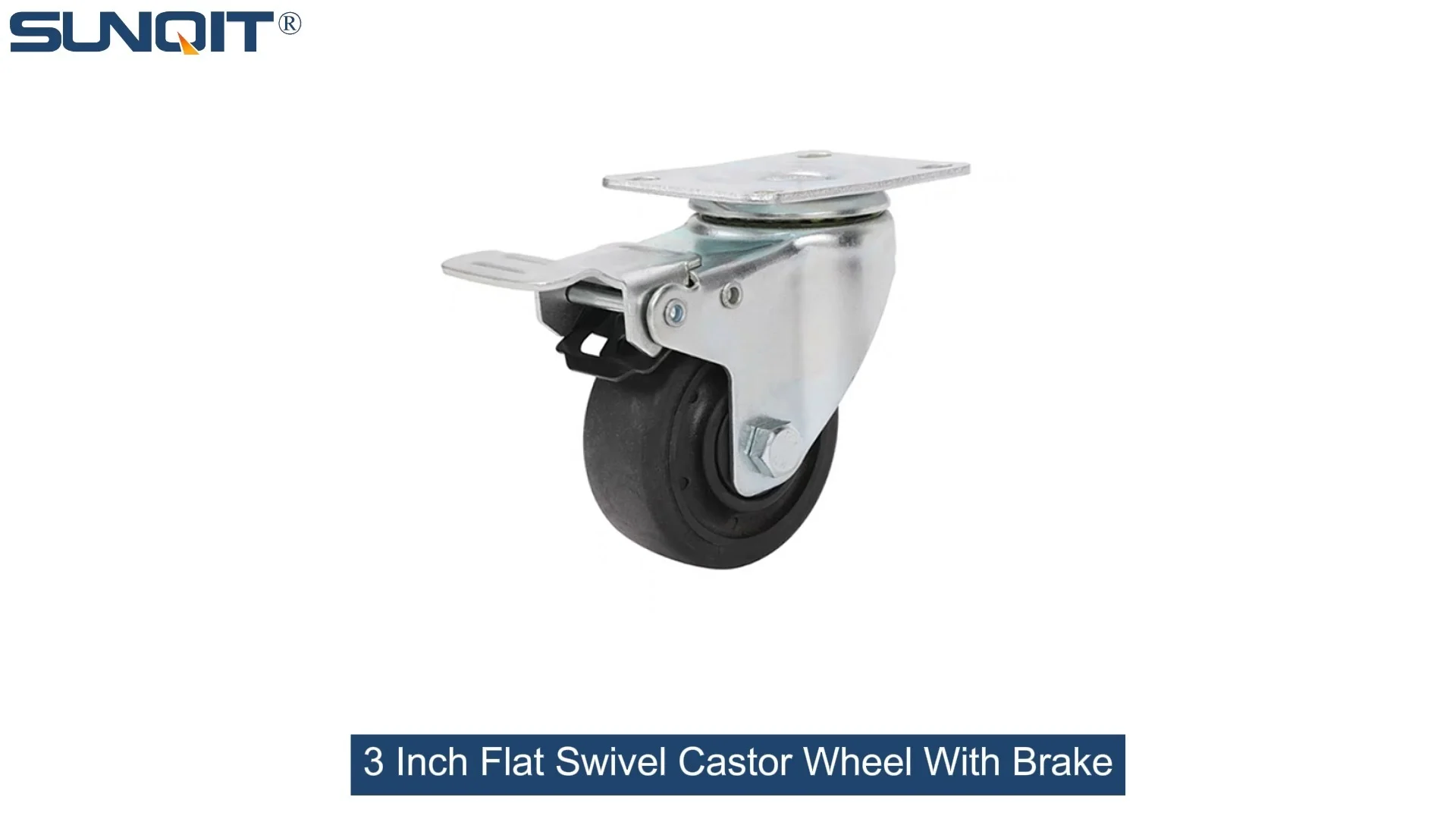
Flat Swivel Castor Wheel With Brake
Chair Casters Ball Bearing Wheels Rubber Base with brake design. Resistant to abrasion, impact and corrosion. Heavy payload can hold 70Kgs per pcs,which can make it works at a stable and smooth status.
The Demanding World of 3C Assembly: Where Precision Meets Motion
In the fast-paced realm of 3C (Computer, Communication, Consumer Electronics) manufacturing, every second counts. From assembling tiny smartphone components no larger than a fingernail to testing intricate laptop motherboards, the industry thrives on two non-negotiable pillars: precision and efficiency . Yet, these pillars often stand in tension with another critical need: flexibility . Production lines shift daily to accommodate new models, seasonal demands, or design tweaks. Workers move between stations, materials flow from storage to assembly, and workstations themselves must adapt—sometimes hourly—to keep up with the rhythm of innovation.
At the heart of this dynamic ecosystem lies the
This is where the humble yet transformative
Why Mobility Matters: The Case for Movable Workstations
Traditional assembly lines were static by design. Conveyors moved products, but workstations stayed put, anchored to the floor with bolts. For mass production of a single product, this worked. But 3C manufacturing is the opposite: it's high-mix, low-volume, or high-mix, high-volume—think 10+ smartphone models rolling off the same line in a week. Static workstations simply can't keep up.
Consider a typical scenario: A factory receives a rush order for a new tablet model. The assembly line for smartphones needs to be reconfigured to accommodate larger screens and different battery compartments. Workers need to shift their
Mobility also enhances ergonomics. In 3C assembly, operators often work in teams: one person places chips, another solders, a third inspects. A workstation that can glide to a colleague's side reduces unnecessary walking, cutting fatigue and boosting collaboration. It also allows for quick adjustments to operator height or position, reducing strain during repetitive tasks. And let's not forget cleaning and maintenance: moving workstations aside makes it easier to sanitize floors, repair underfloor utilities, or access hard-to-reach areas—critical in facilities where cleanliness directly impacts product quality.
But here's the paradox: the same mobility that solves these problems can create new ones. A workstation that rolls too freely might drift during use, causing parts to slide off the bench or tools to misalign. On an ESD-sensitive line, even a tiny shift could disrupt static control measures, risking damage to electrostatic discharge (ESD)-sensitive components. And in high-traffic areas, an unbraked workstation might collide with
The solution? A castor wheel that offers the best of both worlds: smooth, effortless movement when needed, and rock-solid stability when it's time to work. Enter the
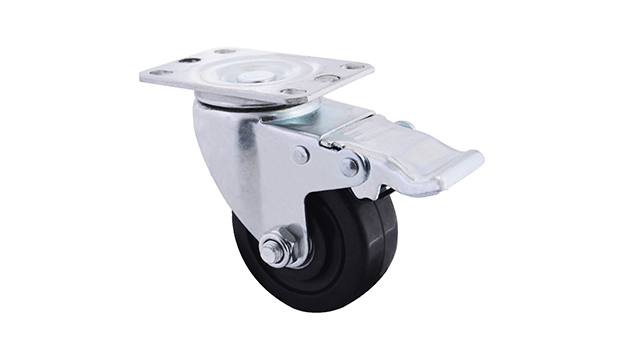
Flat Swivel Castor Wheel with Brake: Engineering the Perfect Balance
Not all castor wheels are created equal. Standard fixed castors lock into place, limiting maneuverability. Swivel castors without brakes spin freely, making precise positioning a nightmare. Heavy-duty industrial castors are overkill for the lightweight yet delicate needs of 3C workstations. The
Key Features That Set It Apart
-
360° Swivel Mechanism with Precision Bearings:
Unlike rigid castors, these wheels pivot smoothly on ball bearings, allowing the workstation to glide in any direction—even tight corners between
roller track lanes. This is critical for navigating crowded assembly floors where space is at a premium. - Foot-Operated Brake System: The brake isn't an afterthought; it's a robust, one-touch mechanism. A simple tap with the operator's foot engages a dual-lock system: one that locks the wheel rotation (preventing rolling) and another that locks the swivel (preventing the wheel from turning). This "double brake" ensures the workstation stays exactly where it's placed, even on slightly uneven floors common in older factories.
-
Polyurethane (PU) Wheel Material:
For 3C applications, wheel material is non-negotiable. PU wheels offer three key benefits: they're non-marking (so they won't scuff factory floors), shock-absorbent (reducing vibration that could disrupt precision work), and ESD-compatible (when formulated with conductive additives). This makes them ideal for
ESD workstation environments, where static control is paramount. -
Flat Mounting Plate:
The "flat" in the name refers to the castor's mounting plate, which sits flush against the workstation's base. This low-profile design lowers the workstation's center of gravity, reducing the risk of tipping—even when loaded with heavy tools or stacked materials. It also ensures compatibility with modular
aluminum profile frames, which are lightweight yet strong enough to support 300+ kg loads.
| Castor Type | Load Capacity (Per Wheel) | Brake Type | Wheel Material | Best For |
|---|---|---|---|---|
| Flat Swivel with Brake | 150–300 kg | Dual-lock (wheel + swivel) | Conductive PU | ESD workstations, lean pipe workbenches, precision assembly |
| Standard Swivel (No Brake) | 100–250 kg | None | Rubber/PU | Lightweight trolleys, non-critical storage |
| Rigid Fixed Castor | 200–400 kg | Optional wheel lock only | Steel/Polyolefin | Heavy machinery, straight-line movement |
Real-World Performance: A Day in the Life
Let's walk through a typical 8-hour shift on a 3C assembly line using
7:00 AM:
The morning shift starts. Operators unlock their workstations with a quick tap of the brake pedal. They glide their
10:30 AM:
A design change for the new smartwatch model requires reconfiguring the line. Workers unlock their workstations, push them aside in seconds, and rearrange the
2:00 PM: Quality control flags a minor alignment issue on Station 5. The supervisor rolls a mobile inspection cart—fitted with the same flat swivel castors—right up to the workstation. The cart locks into place, and the inspector works side-by-side with the operator, no need to move the product or disrupt the line.
5:00 PM:
End-of-shift cleaning. Workers unlock all workstations, roll them to the perimeter, and the janitorial team sanitizes the floors and
This isn't just efficiency—it's agility. And agility, in 3C manufacturing, is the difference between meeting a launch deadline and missing it.

Beyond the Wheel: Pairing with Aluminum Profile and ESD Workstations
A great castor wheel is only as good as the workstation it supports. For 3C assembly, that means pairing the
Aluminum Profile: Lightweight Strength for Movable Workstations
Traditional workstations are often built with steel, which is strong but heavy. Add steel frames to heavy castors, and you've got a workstation that's hard to move—defeating the purpose of mobility.
Aluminum also offers modular flexibility. Profiles come in standard sizes (like 20×20mm or 40×40mm) with T-slots that accept accessories—shelves, tool holders, ESD mats—without drilling or welding. When paired with flat swivel castors, this modularity becomes supercharged: need a new shelf? Add it in minutes. Need to reposition the workstation? Unlock the castors and go. It's lean manufacturing in action—minimizing waste (time, labor, materials) while maximizing adaptability.
ESD Workstation: Protecting Sensitive Components, Even on the Move
3C components—chips, microprocessors, LCD screens—are (extremely sensitive to static electricity). A single electrostatic discharge can fry a $500 chip, making ESD protection non-negotiable.
Conductive PU wheels in
Roller Track: Completing the Material Flow Puzzle
Movable workstations are most effective when they're part of a larger, connected system. That's where
Imagine a line where

Choosing the Right Supplier: What to Look For
With so many options on the market, selecting the right
- ESD Certification: For 3C applications, ensure castors, workbench mats, and aluminum profiles meet ANSI/ESD S20.20 standards. This guarantees they'll dissipate static charge safely, protecting sensitive components.
- Load Testing: Ask for load capacity data—both per castor and per workstation. A good supplier will provide test reports showing how their castors perform under maximum load, including brake durability (how many times the brake can engage/disengage before wear).
-
Modularity:
Look for suppliers that offer a full ecosystem: castors, aluminum profiles,
lean pipe workbench kits, and roller track systems. Mixing and matching brands can lead to compatibility issues (e.g., castor mounting plates that don't fit profile frames). - Customization: 3C manufacturing is rarely one-size-fits-all. A supplier that offers custom castor sizes, brake types, or profile lengths will help you tailor solutions to your specific line needs.
- After-Sales Support: Castors wear out; profiles get damaged. Choose a supplier with a responsive support team and easy access to replacement parts. Downtime waiting for a new brake pad is downtime you can't afford.
Remember: the cheapest option isn't always the best. A castor that fails after 6 months will cost more in replacements and downtime than a slightly pricier, higher-quality model that lasts 5+ years. Invest in reliability—your assembly line will thank you.
Conclusion: The Small Wheel Driving Big Change
In the high-stakes world of 3C assembly, success hinges on the details. A misaligned component, a delayed material delivery, or a workstation that won't stay put can derail an entire production run. The
When paired with
So the next time you walk an assembly floor, take a closer look at those workstations. The ones driving productivity, innovation, and success? Chances are, they're sitting on a set of flat swivel castors with brakes—quietly, steadily, and brilliantly balancing motion and precision. In 3C manufacturing, that's not just a wheel. It's a revolution.