- Company Articles
- Products and Technology
- Product knowledge
- 3C Electronics Assembly: Using Lean Pipe Clamp B Chrome for Workbench Frames

3C Electronics Assembly: Using Lean Pipe Clamp B Chrome for Workbench Frames
Related Product
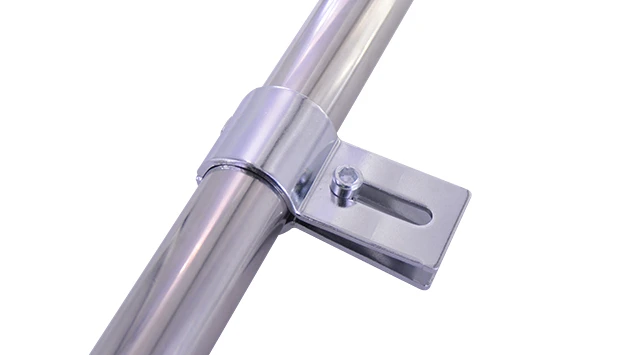
Lean Pipe Clamp B Chrome
Lean pipe clamp is used for turnover trolley, workbench, flowrack adjust the frame or fix some accessory.
Walk into any 3C electronics manufacturing plant—where smartphones, laptops, and smartwatches come to life—and you'll notice a symphony of precision. Tiny chips no bigger than a fingernail, delicate wiring as thin as thread, and screens that shatter at the slightest misstep: this is the world of 3C assembly, where even a millimeter of error can derail an entire production run. But behind the scenes of this high-stakes dance lies an unsung hero: the workbench frame. It's not just a table; it's the backbone of efficiency, flexibility, and safety. And in today's fast-paced manufacturing landscape, one component stands out for making these frames smarter, sturdier, and more adaptable than ever: the Lean Pipe Clamp B Chrome.
In this article, we'll dive into why 3C assembly lines are rethinking their workbench designs, the critical role of lean manufacturing principles in this shift, and how the Lean Pipe Clamp B Chrome is becoming a game-changer for teams aiming to balance precision with productivity. We'll also explore its integration with tools like Lean Pipe Workbenches, Aluminum Profiles, and Roller Tracks, and why even small components like clamps can make a big difference in reducing waste, cutting downtime, and keeping sensitive electronics safe from static damage.
The Hidden Challenges of 3C Assembly Lines
To understand why workbench frames matter, let's start with the chaos of 3C manufacturing. Unlike automotive or appliance production, where parts are large and processes are standardized for years, 3C products evolve at lightning speed. A smartphone model might be updated every 6–12 months, each with new components, tighter tolerances, and unique assembly steps. This constant change leaves manufacturers grappling with three big headaches:
1. Rigid Workspaces Can't Keep Up
Traditional workbenches—often made of fixed wood or welded steel—are built for stability, not change. When a new product line requires a taller surface, extra shelving, or a different layout, teams are stuck: modifying these benches means hiring welders, buying new materials, or wasting hours with makeshift adjustments. "We used to spend two days reconfiguring a line for a new tablet model," says Maria, a production supervisor at a major electronics plant in Shenzhen. "By the time we finished, the prototype had already changed again."
2. Static Electricity: The Silent Saboteur
3C components like microchips and circuit boards are (ESD) . Even a small static charge—generated by friction between clothing and a workbench—can fry a $50 chip in milliseconds. ESD Workstations are designed to mitigate this, but their effectiveness depends on every part of the setup, including the frame. If the frame isn't grounded or uses non-conductive materials, static can build up, turning a perfectly assembled device into a dud during testing.
3. Material Flow Bottlenecks
Assembly lines thrive on smooth material flow. Parts need to move from storage to workbench, then to testing, without getting stuck or damaged. When workbenches are misaligned or lack integrated Roller Tracks, technicians waste time walking to fetch components or untangling jams. "Our old setup had parts stacked on shelves 10 feet from the bench," Maria recalls. "Technicians were taking 200 extra steps a day just to grab screws or connectors. That adds up to hours of lost productivity each week."
Lean Manufacturing: The Antidote to Chaos
Enter lean manufacturing—a philosophy built on eliminating waste (muda) and maximizing value. For 3C plants, lean isn't just a buzzword; it's a survival strategy. At its core, lean asks: How can we make only what's needed, when it's needed, with the least effort? For workbench frames, this translates to three key principles:
- Modularity: Frames that can be adjusted, extended, or reconfigured in minutes, not days.
- Durability: Components that withstand daily use but don't weigh down the line with unnecessary bulk.
- Integration: Frames that work seamlessly with tools, storage, and material handling systems (like Roller Tracks) to keep workflows smooth.
This is where lean pipe systems shine. Made from lightweight yet strong materials like aluminum or steel, these systems use pipes and joints to create customizable structures—think of them as industrial Legos for adults. And at the heart of these systems are the connectors: the joints and clamps that hold everything together. Among these, the Lean Pipe Clamp B Chrome has emerged as a favorite for 3C assembly lines, and for good reason.
Meet the Lean Pipe Clamp B Chrome: Small Part, Big Impact
At first glance, a clamp might seem trivial. But in a lean pipe system, it's the difference between a wobbly workbench that shifts mid-assembly and a rock-solid setup that stays precise for years. The Lean Pipe Clamp B Chrome is designed to address the unique needs of 3C manufacturing, with features that solve the very challenges we've discussed.
What Is It, Exactly?
The Lean Pipe Clamp B Chrome is a metal connector used to join lean pipes (typically 28mm or 30mm in diameter) at 90-degree angles, forming the corners and supports of workbench frames. Unlike basic plastic clamps or uncoated steel joints, it's made from high-grade steel with a chrome-plated finish. This isn't just for looks—chrome plating adds a layer of corrosion resistance, making the clamp ideal for cleanrooms or humid environments (common in electronics plants) where rust could contaminate parts.
Why Chrome? Why Not Plastic or Uncoated Steel?
To understand the appeal, let's compare the Lean Pipe Clamp B Chrome to other common options:
| Clamp Type | Material | Load Capacity | Corrosion Resistance | Best For |
|---|---|---|---|---|
| Lean Pipe Clamp B Chrome | Chrome-plated steel | Up to 150kg per joint | High (resists moisture, oils) | Heavy-duty workbenches, ESD-sensitive areas |
| Plastic Clamp | Nylon or PP | Up to 50kg per joint | Medium (prone to cracking over time) | Lightweight shelving, temporary setups |
| Uncoated Steel Clamp | Mild steel | Up to 200kg per joint | Low (rusts in humid environments) | Outdoor or non-sensitive industrial use |
For 3C assembly, the Chrome B Clamp hits the sweet spot. Its 150kg load capacity easily supports heavy tools, ESD mats, and stacks of components, while the chrome finish ensures it won't rust or degrade in cleanrooms. And unlike plastic, it won't warp under heat from soldering irons or friction from daily adjustments.
Key Features That Make It a 3C Favorite
Beyond material and load capacity, the Lean Pipe Clamp B Chrome has a few design tricks that set it apart. Let's break them down:
1. Tool-Free Adjustments (Mostly)
Remember Maria's frustration with reconfiguring lines? The Chrome B Clamp solves this with a simple yet genius design: a split-body construction that tightens using a hex key (or sometimes a Phillips screwdriver). Unlike welded joints, which require cutting and re-welding to adjust, these clamps can be loosened, repositioned, and retightened in under a minute. "We once had to lower a workbench by 10cm for a new batch of smaller phones," Maria says. "With the Chrome B Clamps, two technicians did it in 20 minutes. Before, we would've needed a day."
2. Precision Alignment
In 3C assembly, even a 1mm misalignment can throw off a entire production step. The Chrome B Clamp features a recessed groove that locks onto the lean pipe, preventing slippage. This ensures that shelves, Roller Tracks, and tool holders stay exactly where they're placed, reducing errors during assembly. "We use laser levels to set up our lines," explains Raj, a process engineer at a laptop manufacturer. "With these clamps, the frame stays aligned for months—no more tweaking mid-shift."
3. Compatibility with Aluminum Profiles
While lean pipes are the star of the show, many 3C plants pair them with Aluminum Profiles for added versatility. Aluminum Profiles—extruded metal beams with T-slots—are perfect for mounting accessories like LED lights, ESD wristband holders, or small parts bins. The Chrome B Clamp plays well with these profiles, thanks to its adjustable design. By adding a simple adapter plate, teams can attach the clamp directly to the profile, creating hybrid frames that combine the flexibility of pipes with the rigidity of profiles.
"We use Aluminum Profiles for the workbench top frame and lean pipes for the legs," Raj adds. "The Chrome B Clamps let us connect them seamlessly, so we get the best of both: a flat, stable surface for assembly and adjustable legs to fit different technician heights."
Building a Better Workbench: Clamps + Lean Pipe Workbench + Roller Track
A clamp alone doesn't make a workbench—but when paired with a Lean Pipe Workbench and Roller Track, it becomes part of a system that transforms how 3C teams operate. Let's walk through how these components come together:
Step 1: The Frame (Clamps + Lean Pipes)
The base of any Lean Pipe Workbench is its frame, built using 28mm lean pipes and Chrome B Clamps. Technicians start by cutting pipes to length (standard heights range from 75cm to 90cm, but adjustable legs are common). They then use the clamps to join the pipes into a rectangular frame, adding cross-braces for stability. The result? A lightweight but sturdy structure that can support 200–300kg—enough for a work surface, tools, and a day's worth of components.
Step 2: The Work Surface (Aluminum Profile or ESD Laminate)
On top of the frame goes the work surface. For ESD-sensitive tasks (like handling circuit boards), teams use ESD laminate—a conductive material that grounds static charges. For heavier use, Aluminum Profiles create a rigid base, with a plywood or metal top. The Chrome B Clamps secure the surface to the frame, ensuring it doesn't shift during use.
Step 3: Material Flow with Roller Track
No workbench is complete without a way to move parts in and out. Roller Track—rows of small wheels mounted on a frame—lets components glide from one station to the next, reducing the need for technicians to lift or carry heavy bins. The Chrome B Clamp is critical here, too: it's used to mount the Roller Track to the workbench frame, ensuring it's aligned with adjacent stations. "We installed Roller Tracks on the back of each workbench," Maria says. "Now, when a technician finishes assembling a motherboard, they just push the bin along the track to the testing station. No more walking, no more dropped parts."
The key here is precision. If the Roller Track is even slightly misaligned, bins can get stuck, causing delays. The Chrome B Clamp's locking mechanism keeps the track steady, even when bins are loaded with 10kg of parts. "We've had Roller Tracks in the past, but they'd loosen over time," Maria adds. "With these clamps, they stay put for months."
ESD Workstation Compatibility: Keeping Static at Bay
We've touched on ESD briefly, but it's worth diving deeper—because in 3C assembly, static damage isn't just a risk; it's a daily threat. An ESD Workstation isn't just a table with a mat; it's a complete system designed to channel static charges safely to the ground. This includes:
- An ESD mat on the work surface
- Grounding cords for tools and wristbands
- A conductive frame to ensure the entire setup is grounded
Here's where the Chrome B Clamp's material matters. Since it's made of steel, it conducts electricity—meaning it can be grounded along with the rest of the frame. By connecting the clamp to a grounding wire (via a small bolt hole in the clamp body), teams ensure that any static charge on the workbench flows through the clamp, down the lean pipe legs, and into the factory floor's grounding system.
"We test our ESD stations weekly with a meter," Maria explains. "Before switching to these clamps, we'd have stations fail because the old plastic clamps insulated the frame. Now, with the Chrome B Clamps, every station passes—no more mysterious chip failures from static."
Case Study: How One Plant Cut Setup Time by 70% with Chrome B Clamps
To see the impact of these clamps in action, let's look at a real-world example. A mid-sized electronics manufacturer in Dongguan, China, was struggling to keep up with demand for smartwatches. Their old assembly line used fixed steel workbenches, and reconfiguring for new models took 8 hours—time they couldn't afford with tight deadlines.
The Problem
The team needed to:
- Reduce setup time for new product lines
- Improve ESD protection to cut chip waste
- Add Roller Tracks to streamline material flow
The Solution
They replaced 10 fixed workbenches with Lean Pipe Workbenches using Lean Pipe Clamp B Chrome, Aluminum Profiles for the tops, and Roller Tracks along the back edge. The results were striking:
- Setup time dropped from 8 hours to 2 hours per line, thanks to tool-free adjustments with the clamps.
- ESD-related defects fell by 45% , as the grounded steel clamps eliminated static buildup.
- Technician productivity rose by 15% , since they spent less time fetching parts (Roller Tracks delivered components directly to the bench).
"The clamps were the unsung heroes here," says the plant manager. "We thought the Roller Tracks would be the big change, but being able to reconfigure the frame in minutes—without welders or new materials—made all the difference. We've since rolled out these workbenches to three more lines."
Looking Ahead: The Future of Lean Pipe Systems in 3C
As 3C products get smaller, smarter, and more complex, the demand for flexible, precise workspaces will only grow. Lean pipe systems, and components like the Lean Pipe Clamp B Chrome, are poised to play a bigger role, thanks to trends like:
1. Automation Integration
More 3C plants are adding collaborative robots ("cobots") to assembly lines. These small, mobile robots work alongside humans, handling repetitive tasks like screw driving or part placement. Lean pipe frames, with their adjustable clamps, are ideal for mounting cobot arms at the perfect height and angle. "We're already seeing customers use Chrome B Clamps to attach cobot bases to workbenches," notes a supplier rep. "The clamps let them reposition the robot in minutes if the task changes."
2. Sustainability
Manufacturers are under pressure to reduce waste, and lean pipe systems deliver here too. Unlike fixed steel benches, which end up in landfills when outdated, lean pipes and clamps are reusable. "We've had customers return 5-year-old clamps, clean them up, and reuse them on new lines," the rep adds. Chrome plating also extends lifespan, reducing the need for replacements.
3. Customization for Micro-Assembly
As components shrink—think 5G antennas or micro-LED screens—workbenches need to get more precise. Future lean pipe systems may integrate features like built-in LED magnification or vacuum chucks (to hold tiny parts), all supported by clamps that can handle smaller, more specialized pipes. The Chrome B Clamp's durable design makes it a candidate for these next-gen setups.
Why the Right Clamp Matters
In the high-stakes world of 3C electronics assembly, success hinges on the details. A misaligned Roller Track, a static charge, or a wobbly workbench can mean the difference between meeting a deadline and losing a client. The Lean Pipe Clamp B Chrome may be small, but it's a detail that solves big problems: rigidity for precision, adjustability for change, and durability for the long haul.
Whether you're building a new ESD Workstation, upgrading an old assembly line, or just looking to cut setup time, don't overlook the power of a well-designed clamp. As Maria puts it: "We used to think of workbenches as just tables. Now? They're the heart of our line. And the Chrome B Clamp? It's the heartbeat."