- Company Articles
- Products and Technology
- Application Cases
- 3C Electronics Factory Success: Lean Pipe Clamp Chrome Implementation Results

3C Electronics Factory Success: Lean Pipe Clamp Chrome Implementation Results
Related Product
Lean Pipe Clamp Chrome
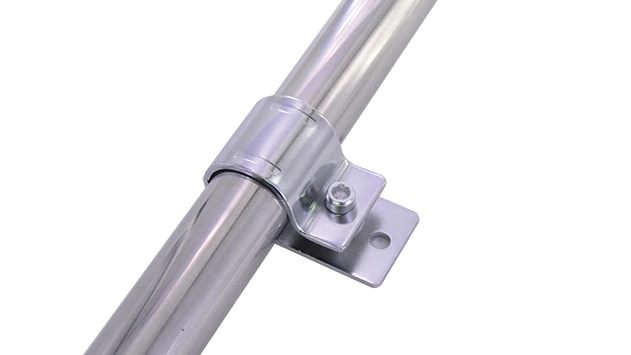
Lean pipe clamp is used for rack system hang monitor or other panel for workbenck, flowrack in production daily use.
The Factory Before: Chaos in the Details
Two years ago, I visited a mid-sized 3C electronics factory in Dongguan. From the outside, it looked like any other busy manufacturing hub—trucks idling at the loading dock, workers in uniform hurrying through the gates. But inside the production hall, the reality was messier than the hum of machinery suggested.
Walk down the assembly line, and you'd find workers stretching across wobbly wooden tables to grab capacitors from disorganized bins. A few feet away, a pile of circuit boards sat on the floor, waiting to be moved to the next station. Near the testing area, an ESD workstation (a critical tool for handling sensitive electronics) looked more like a afterthought—its mat was frayed, and the grounding wire dangled loose. "We lose at least two boards a week to static," the production manager, Mr. Li, told me with a sigh. "And don't even get me started on the workbenches. They're so rickety, we had to replace three last month alone."
The numbers backed up his frustration. Production targets were missed 12% of the time. Employee overtime averaged 15 hours per week. And the defect rate hovered at 3.2%, well above the industry average of 1.8%. The root cause? A workflow that fought against the workers, not for them. "We need something that bends to how we work, not the other way around," Mr. Li said, staring at a stack of backlogged orders.
The Turning Point: Discovering Lean Solutions
Six months later, I received a call from Mr. Li. "You have to come see this," he said, excitement cracking through his voice. "We're a different factory now." Intrigued, I made the trip back—and what I saw was a transformation. The same assembly line, but unrecognizable. Workers moved with purpose, not panic. Parts flowed smoothly along metal tracks. And those wobbly tables? Replaced by sleek, sturdy workbenches with shiny, silver joints that caught the light.
"Lean pipe clamp chrome," Mr. Li said, tapping one of those joints. "That's the secret. We partnered with a local lean pipe supplier who showed us how these little components could fix our biggest problems."
Lean pipe clamp chrome—small, metallic connectors designed to join aluminum or steel pipes—might not sound revolutionary. But in a factory where flexibility and durability matter most, they're game-changers. Unlike traditional welded frames, these clamps let you assemble, disassemble, and reconfigure workbenches, racks, and stations in hours, not days. And the chrome plating? "Corrosion resistance," Mr. Li explained. "Our old steel joints rusted within months. These? They still look brand-new after a year."
But it wasn't just the clamps. The supplier had recommended a full suite of lean tools: lean pipe workbenches (sturdier than wood, adjustable in height), flow racks (to move parts without lifting), and upgraded ESD workstations (with fresh mats and reliable grounding). Together, they formed a system that adapted to the factory's needs—no more forcing square pegs into round holes.

Choosing the Right Tools: Why Lean Pipe Clamp Chrome Stood Out
The decision to go with lean pipe clamp chrome wasn't random. Mr. Li's team spent weeks researching options. They considered plastic joints (too flimsy for heavy components), welded steel frames (impossible to reconfigure), and even aluminum profile systems (expensive and overkill for their needs). "We needed something strong, cheap, and easy to adjust," Mr. Li said. "The lean pipe clamp chrome checked all three boxes."
Let's break down the key picks:
- Lean Pipe Workbenches: Built with aluminum pipes and lean pipe clamp chrome joints, these replaced the wooden tables. They're height-adjustable (so workers of different statures can stay comfortable), and the chrome clamps ensure the pipes stay tight, even with daily use. "No more wobbling," one assembler, Xiao Mei, told me. "I can focus on soldering, not steadying the board."
- Flow Racks: Installed along the assembly line, these racks use roller tracks and lean pipe clamp chrome to keep parts moving. Instead of bending to grab bins from the floor, workers now have components glide to them at waist height. "Saved me at least 10 minutes an hour," said Zhang Wei, who assembles camera modules. "That adds up to a full day off overtime every week."
- Upgraded ESD Workstations: The new stations feature thick, anti-fatigue mats, grounded wrist straps, and a frame built with (you guessed it) lean pipe clamp chrome. "We haven't had a single static-related defect in six months," Mr. Li said, tapping the ESD meter proudly. "That alone paid for the investment."
The supplier played a crucial role here, too. "They didn't just sell us parts—they sent an engineer to map our workflow," Mr. Li explained. "He suggested we angle the flow racks at 5 degrees to let gravity do the work. Simple, but we never would've thought of it."
Implementation: Bumps, But No Roadblocks
Switching to lean tools isn't without growing pains. The first week, workers grumbled about the "new toys." "Why fix what isn't broken?" one veteran assembler muttered. The team had to adjust to the tighter, more organized layout—no more leaving tools on the floor "for later." And the initial setup took two days of downtime, which meant pushing back deadlines.
But Mr. Li's team turned resistance into buy-in. They held a workshop where the supplier demonstrated how to adjust the lean pipe clamp chrome joints in 30 seconds flat. "I showed them: loosen this screw, rotate the pipe, tighten it back. Now they're reconfiguring their own workbenches when they need extra space," Mr. Li said. They also created a "suggestion box" for improvements, and the first idea—adding cup holders to the workbenches—was implemented within a week. "Ownership matters," Mr. Li. "If they feel like the system is theirs, they'll make it work."
By the end of the first month, the grumbling had faded. "I can't believe we worked the old way," Xiao Mei told me, as she slid a circuit board into a testing slot on her new ESD workstation. "This feels… professional."
The Results: Numbers That Tell the Story
A year after implementation, the data speaks for itself. Let's compare the factory's key metrics before and after adopting lean pipe clamp chrome and related tools:
| Metric | Before Implementation | After Implementation | Improvement |
|---|---|---|---|
| Average Production Time per Unit | 42 minutes | 31 minutes | 26% faster |
| Weekly ESD Incidents | 2.1 | 0 | 100% reduction |
| Employee Overtime Hours | 15 hours/week | 4 hours/week | 73% reduction |
| Defect Rate (per 1000 units) | 32 | 14 | 56% improvement |
| Workbench Replacement Cost | ¥3,000/quarter | ¥0 (no replacements needed) | 100% savings |
Mr. Li summed it up: "We're hitting 98% of our production targets now. The defect rate is down to 1.4%, which is better than the industry average. And the best part? The team's morale. They used to dread coming in—now they're proud to show off the line to visitors."
The Human Side: Workers Speak Up
"Before, my back hurt so bad I had to take painkillers every night. Now the workbench is at the right height, and parts come to me. I haven't missed a day of work in six months." — Wang Hui, 52, motherboard assembly
"The ESD workstation used to scare me. I'd second-guess every move, worried I'd fry a board. Now? I trust it. That confidence makes me faster and more careful." — Liu Jia, 28, quality testing
"We used to spend 20 minutes every morning just organizing tools. Now the lean pipe racks have a spot for everything. It's like having a personal assistant." — Zhao Xin, 35, tool room manager
Beyond the Line: Scaling the Success
The factory didn't stop at the assembly line. They've since expanded lean pipe clamp chrome solutions to the warehouse, where flow racks now manage inventory, cutting picking time by 40%. The shipping department uses custom turnover trolleys built with the same system, making loading faster and safer. "We're even using the clamps to build temporary workstations when we get rush orders," Mr. Li said. "Set one up in 20 minutes—no tools needed."
They've also started partnering with their lean pipe supplier to test new components, like aluminum profile accessories for heavier-duty workbenches. "The supplier isn't just a vendor—they're a partner," Mr. Li said. "When we needed a longer roller track for the flow racks, they designed a custom length in a week."
The Takeaway: Small Tools, Big Impact
What's the lesson here? It's easy to get caught up in big-ticket solutions—automated robots, AI-driven systems—but sometimes the most powerful changes come from the details. A clamp that holds a pipe steady. A workbench that adjusts to a worker's height. A flow rack that turns bending into reaching.
Mr. Li put it best: "We used to think of 'lean' as some fancy management term. Now I know it's just about respect—for your workers, for your products, for the process. When you give people tools that work with them, not against them, they don't just meet targets—they exceed them."
As I left the factory that day, I passed a group of new hires being trained on the lean pipe workbench. One of them ran a hand over the chrome clamp, grinning. "This feels solid," he said. In that moment, I realized: that's the sound of a factory—and a team—built to last.