- Company Articles
- Products and Technology
- Application Cases
- 3C Industry Case Study: 4040E EU Standard Aluminum Profile in Smartphone Assembly Lines

3C Industry Case Study: 4040E EU Standard Aluminum Profile in Smartphone Assembly Lines
Related Product
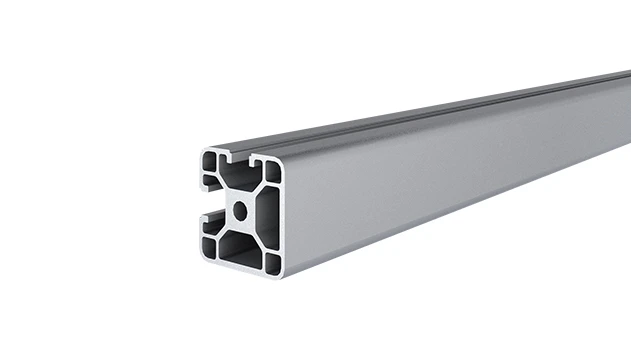
4040E EU Standard Aluminum Profile
4040E is a 4.00x4.00 CM fractional 40 series square extrusion T-slot profile with two side open T-slots, two side with closed face, each side with 4.00cm face. The profile has align-a-grooves to assist in aligning connecting profiles.
The Pressure of Precision: Challenges in Modern Smartphone Assembly
In the fast-paced world of 3C manufacturing—where "3C" stands for computers, communications, and consumer electronics—smartphone production is a high-stakes game of speed, precision, and adaptability. Every year, brands release new models with sleeker designs, more complex components, and tighter tolerances, leaving assembly lines scrambling to keep up. For one mid-sized smartphone manufacturer based in Southern China, this scramble had become a daily reality. Let's call them "TechFlow"—a company producing 1.2 million devices monthly but struggling with a critical bottleneck: their rigid, outdated assembly infrastructure.
TechFlow's old assembly line was a patchwork of fixed steel workbenches, bulky wooden racks, and inflexible conveyor systems. When a new smartphone model rolled out—with different component sizes, assembly steps, or ergonomic requirements—reconfiguring the line took days. Workers wasted time walking to distant material storage areas, and the rigid workbenches offered no adjustability, leading to fatigue and occasional errors. "We were spending 15% of our production time just on line changeovers," recalls Li Wei, TechFlow's Production Manager. "And with new models launching every 6–8 months, that downtime was eating into our margins."
The challenges weren't just about speed. As smartphones grow more sophisticated, so do their sensitivity to electrostatic discharge (ESD). TechFlow's old workbenches lacked proper ESD protection, leading to occasional component failures. Worse, the fixed setup made it hard to implement lean manufacturing principles—there was no easy way to optimize material flow, reduce waste, or adapt to small-batch runs for prototype testing. "We needed a system that could grow with us, not hold us back," Li explains. "Something modular, durable, and designed for the way we actually work."
The Turning Point: Discovering 4040E EU Standard Aluminum Profile
TechFlow's search for a solution led them to a lean system supplier specializing in industrial aluminum solutions. During a factory visit, they encountered something that would redefine their assembly line: the 4040E EU standard aluminum profile. At first glance, it looked like a simple metal extrusion—40mm by 40mm in cross-section, with a smooth, silver finish—but its potential was anything but simple. "The supplier explained that this wasn't just a 'pipe'—it was a building block," Li says. "A modular system that could be configured into workbenches, racks, flow lines, or almost anything else, using off-the-shelf aluminum profile accessories."
So, what makes the 4040E profile stand out? For starters, it's an aluminum extrusion profile, meaning it's formed by forcing heated aluminum through a die to create a consistent, high-strength shape. Unlike steel, it's lightweight (about 1/3 the weight of steel for the same strength), making it easy to reconfigure without heavy machinery. Its EU standard dimensions ensure compatibility with a vast range of aluminum profile accessories—joints, brackets, end caps, and even ESD-compatible components. "The key is the T-slot design," explains Zhang Hua, an engineer from the lean system supplier. "Those slots run along the length of the profile, letting you attach accessories with just a bolt and nut. No welding, no drilling—you can build, modify, or tear down a structure in hours, not days."
For TechFlow, the 4040E profile checked every box: flexibility to adapt to new models, durability to handle daily wear, and modularity to support lean manufacturing goals. But they needed proof it could work in their specific environment. So, they partnered with the lean system supplier to run a pilot project: reconfiguring one assembly line for their best-selling smartphone model using 4040E profiles. The goal? To measure improvements in changeover time, worker productivity, and overall production assemble efficiency.

From Blueprint to Build: Designing a Custom Lean Workspace
The first step was to rethink the assembly line from the ground up. TechFlow and their supplier started with the workbench—the heart of any assembly process. Traditional steel workbenches at TechFlow were fixed at 80cm height, with no storage, and weighed over 150kg. The new design? A modular workbench built entirely from 4040E profiles, with adjustable height (from 75cm to 90cm), integrated tool rails, and under-shelf storage for components. "We used internal rotary aluminum joints to connect the profiles," Zhang notes. "These joints let workers adjust the bench height with a hex key—no tools required. For taller operators, we raised it; for shorter ones, we lowered it. Ergonomics went from an afterthought to a priority."
But the workbench was just the start. To optimize material flow—a cornerstone of lean manufacturing—the team added flow racks adjacent to each workbench. These racks, also built with 4040E profiles, used roller tracks (another aluminum profile accessory) to let components glide smoothly to workers, eliminating the need for constant trips to storage. "Before, a worker might walk 10 meters to grab a battery module," Li says. "Now, the battery slides right to their bench. It sounds small, but multiplied across 50 workers per shift, that's hours of saved time daily."
The modularity of the 4040E system also solved TechFlow's changeover headache. Instead of rebuilding workbenches from scratch for new models, the team could simply reposition the aluminum profiles using quick-connect joints. For example, when a new smartphone required a larger screen assembly area, they added an extension to the workbench in 20 minutes by attaching two extra 4040E sections and a plywood top. "We even color-coded profiles for different assembly steps—blue for screen mounting, green for motherboard installation," Li adds. "Workers could visually track the process, reducing errors by 8%."
Old vs. New: A Side-by-Side Comparison
After three months of testing the pilot line, TechFlow compiled data comparing the traditional setup to the 4040E aluminum profile system. The results were striking. Below is a breakdown of key metrics:
| Aspect | Traditional Steel Setup | 4040E Aluminum Profile Setup | Improvement |
|---|---|---|---|
| Line Changeover Time | 48 hours for new model | 6 hours for new model | 87.5% reduction |
| Worker Movement per Shift | 1.2 km average per worker | 0.4 km average per worker | 66% reduction in unnecessary movement |
| Ergonomic Complaints | 12 per month | 2 per month | 83% reduction |
| Assembly Error Rate | 2.1% | 0.9% | 57% reduction |
| Cost of Reconfiguration (Annual) | $45,000 (steel welding, new benches) | $8,000 (aluminum profile accessories, labor) | 82% cost savings |
Perhaps the most surprising result? Durability. "We were worried aluminum might bend or wear out faster than steel," Li admits. "But the 4040E profile is made from 6063-T5 aluminum alloy—strong enough to support 150kg per shelf. After a year, there's zero visible deformation, even with daily use." The profiles also resist corrosion, a plus in TechFlow's humid factory environment, and their smooth surface makes cleaning easy—critical for maintaining ESD safety standards.
Scaling Up: From Pilot to Full Production Line
Encouraged by the pilot results, TechFlow decided to roll out the 4040E system across all five of their assembly lines. The transition took six weeks, with the lean system supplier providing on-site training for maintenance staff. "The key was phasing it in," Li explains. "We started with Line 3, then moved to Line 1 after workers there saw the benefits. By the end, operators were asking when their lines would get the upgrade."
One unexpected advantage emerged during the rollout: customization. TechFlow's R&D team often needs to build small batches of prototype devices for testing. With the old setup, this meant cobbling together makeshift workspaces. Now, they use leftover 4040E profiles and aluminum profile accessories to build temporary assembly stations in hours. "Last month, we needed to test a new camera module design," says Chen Jie, a senior R&D engineer. "We built a mini-workbench in 45 minutes, ran 50 prototypes, then disassembled it and reused the profiles elsewhere. That kind of agility was unthinkable before."
The supplier also helped TechFlow standardize their inventory of aluminum profile accessories. Instead of stocking dozens of custom steel brackets, they now keep a few core components—4040E profiles, internal rotary joints, roller tracks, and end caps—that can be mixed and matched. "Our parts inventory shrank by 40%," Li notes. "No more ordering custom steel parts and waiting weeks for delivery. We have everything we need on-site."
The Bottom Line: Results After 12 Months
A year after fully implementing the 4040E system, TechFlow's metrics tell a clear story: production assemble efficiency is up 22%, changeover time is down 87%, and worker satisfaction scores have risen by 35% (measured via quarterly surveys). Most importantly, monthly output has increased from 1.2 million to 1.5 million devices—all without adding extra shifts or workers. "We're producing more with the same team, and they're less stressed," Li says. "That's the lean dream, right?"
Cost savings have also been significant. While the initial investment in 4040E profiles and accessories was higher than buying standard steel workbenches, the payback period was just 7 months. "The annual savings from reduced changeover time, lower error rates, and inventory cuts add up to around $320,000," Li calculates. "And since the profiles are reusable, we'll keep saving for years."
"Before, our assembly line felt like a straightjacket. Now, it feels like a tool that adapts to us. That's the difference with 4040E." — Li Wei, Production Manager, TechFlow
Why 4040E? The EU Standard Advantage
TechFlow's success raises a question: Why the 4040E EU standard aluminum profile specifically? While there are many aluminum profiles on the market, the EU standard (EN 10056) ensures strict tolerances, consistent quality, and compatibility across suppliers. The "4040" refers to the profile's cross-section (40mm x 40mm), while "E" denotes its slot configuration—two T-slots on each side, ideal for mounting accessories. This standardization meant TechFlow could source profiles from multiple suppliers if needed, avoiding vendor lock-in.
Another key factor is sustainability. Aluminum is 100% recyclable, and the 4040E's lightweight design reduces shipping costs and carbon footprint. "We're not just improving production—we're also meeting our sustainability goals," Li adds. "Our parent company has a net-zero target by 2030, and using recyclable aluminum helps us get there."
Looking Ahead: The Future of Lean Manufacturing in 3C
For TechFlow, the 4040E system has become more than a production tool—it's a strategic advantage. As smartphone technology evolves, they're now positioned to adapt faster than competitors still relying on rigid infrastructure. "The next big challenge is AI-driven assembly," Li predicts. "We're already exploring how to mount cameras and sensors on our 4040E workbenches to track component placement in real time. The modularity means we can add that tech without rebuilding the line."
For other 3C manufacturers facing similar challenges, TechFlow's experience offers a clear lesson: the right infrastructure isn't just about hardware—it's about flexibility. In an industry where change is constant, the ability to reconfigure, adapt, and innovate quickly isn't a luxury; it's survival. And for TechFlow, that survival tool has a name: the 4040E EU standard aluminum profile.
As Li puts it: "Manufacturing isn't just about making things. It's about making things better . With 4040E, we're finally doing that."