- Company Articles
- Products and Technology
- Product knowledge
- 3C Industry Efficiency: Five Way Straight Lean Pipe Joint Assembly Advantages

3C Industry Efficiency: Five Way Straight Lean Pipe Joint Assembly Advantages
Related Product
Five Way Straight Lean Pipe Joint
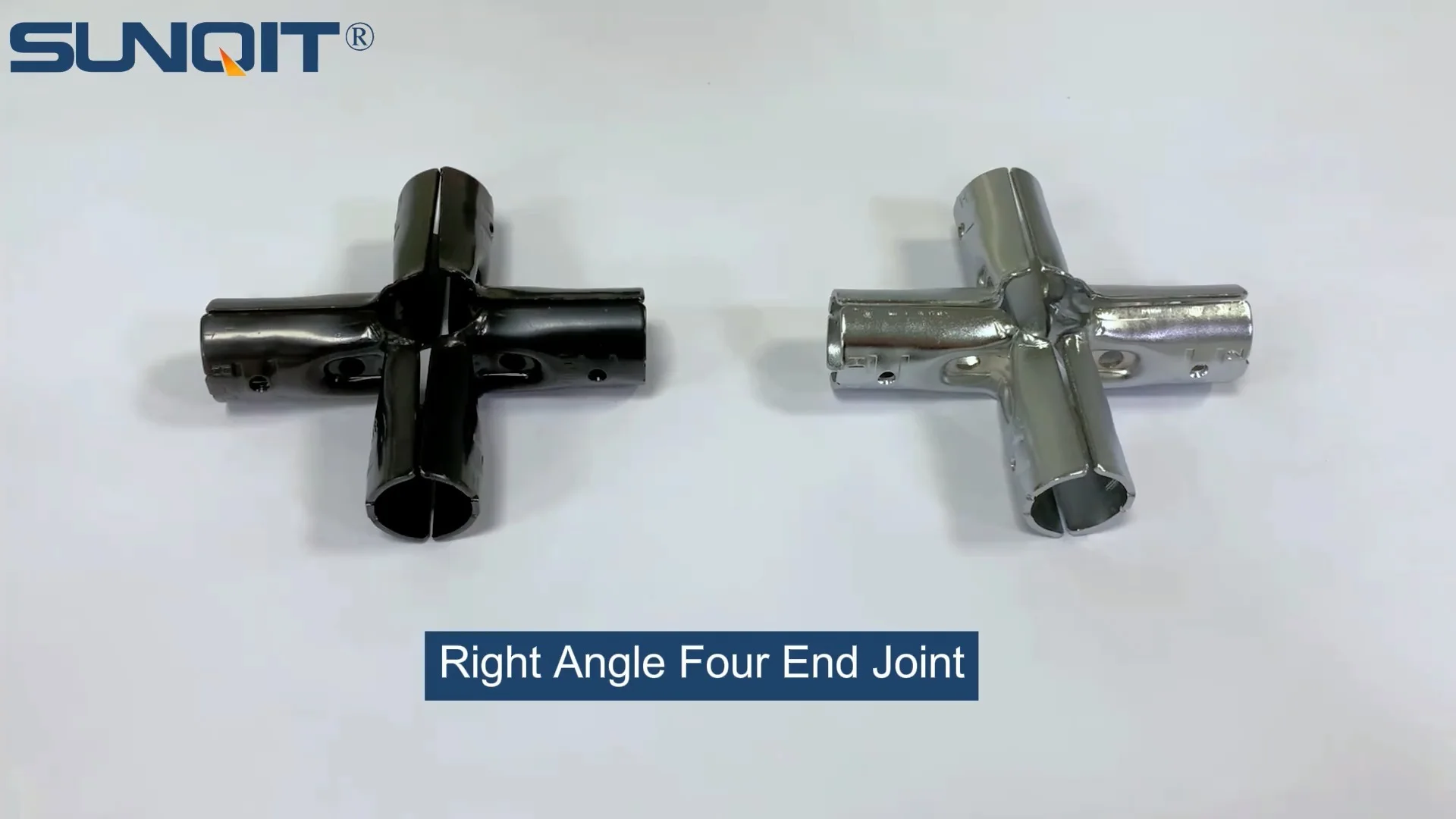
Five way straight lean pipe joint, for 5 pcs 28mm lean pipe connect in straight angle,which used widely in workbench, flow rack, hand trolley frame connection.
In the fast-paced world of 3C manufacturing—where smartphones, laptops, and consumer electronics fly off production lines at breakneck speeds—efficiency isn't just a goal; it's the lifeline of success. Every second saved, every workflow streamlined, and every adjustment made without disrupting production can mean the difference between meeting tight deadlines and falling behind. This is where lean solutions step in, transforming chaotic assembly floors into models of precision and adaptability. And at the heart of many of these transformations? A small but mighty component: the five way straight lean pipe joint. Let's dive into how this unassuming connector is redefining what's possible for 3C manufacturers, from lean pipe workbenches to flow racks and beyond.
What Is a Five Way Straight Lean Pipe Joint, Anyway?
Before we jump into its advantages, let's get clear on what a five way straight lean pipe joint actually is. Imagine a central hub that brings order to your workflow tools—a connector designed to seamlessly attach five lean pipes in a straight line, creating a sturdy, versatile framework for everything from workbenches to material racks. Unlike rigid, one-size-fits-all connectors, this joint is engineered for flexibility: it locks pipes securely in place while still allowing for quick adjustments, making it a cornerstone of modular manufacturing setups.
Typically made from durable materials like aluminum or stainless steel (often paired with aluminum profile components for lightweight strength), these joints are built to withstand the daily grind of 3C production. They're corrosion-resistant, easy to clean, and compatible with a range of lean pipes, including aluminum lean pipe and stainless steel pipe series. Think of it as the "Swiss Army knife" of assembly line components—simple in design, but endlessly adaptable to your team's needs.
Advantage 1: Modularity That Keeps Up with 3C's Constant Changes
The 3C industry waits for no one. New phone models launch quarterly, laptop designs evolve yearly, and production lines must pivot at a moment's notice to keep up. Traditional fixed workstations and rigid material racks simply can't handle this pace—they're too slow to reconfigure, too costly to replace, and too limiting for innovation. Enter the five way straight lean pipe joint, which turns modularity into your greatest asset.
Take the lean pipe workbench, for example. With a five way joint, you can easily adjust the height, width, or even add extra shelves to accommodate a new device model. Need to install a tool holder on one side for larger laptop casings? Just attach a new pipe to the joint. Switching back to smaller smartphone assembly next week? Detach the extra pipes and reposition the joint—no welding, no specialized tools, no downtime. A production manager at a major 3C manufacturer recently shared that their team used to spend 8 hours reconfiguring workbenches for new products; with five way joints, that time dropped to just 2 hours. "It's like rearranging furniture instead of rebuilding the whole room," they said.
This flexibility extends beyond workbenches. Flow racks, which keep components moving smoothly to assembly stations, can be expanded or reorganized in minutes using these joints. Add a new row of rollers to handle more inventory, or adjust the angle of the rack to speed up material flow—all without halting production. In an industry where change is constant, this kind of adaptability isn't just convenient; it's critical.

Advantage 2: Durability That Stands Up to Heavy-Duty 3C Workloads
3C manufacturing isn't gentle. Assembly lines run 24/7, components like circuit boards and metal frames are heavy, and tools are constantly being moved, dropped, or adjusted. A flimsy joint or weak material can lead to wobbly workbenches, collapsed flow racks, and even production shutdowns—costing time, money, and reputational damage. The five way straight lean pipe joint is built to avoid these headaches, with durability that matches the demands of the job.
Many five way joints are crafted from high-grade aluminum profile or stainless steel, materials known for their strength-to-weight ratio. This means they can support heavy loads—think stacks of laptop screens on a flow rack or a fully loaded conveyor carrying smartphone motherboards—without bending or warping. Unlike plastic connectors that crack under pressure or cheap metal joints that rust over time, these joints hold tight, even in humid factory environments or when exposed to cleaning chemicals.
Consider a typical scenario: A flow rack in a 3C plant holds hundreds of small components, each weighing a few ounces, but multiplied by thousands of units daily. A weak joint might start to loosen after weeks of use, causing the rack to tilt and components to slide off. With a five way straight lean pipe joint, that risk is minimized. Its precision-engineered design distributes weight evenly across all connected pipes, reducing stress on individual parts. One electronics manufacturer reported a 40% drop in equipment failures after switching to these joints, citing "rock-solid stability even during peak production runs."

Advantage 3: Streamlined Workflows with Flow Racks and Conveyors
Efficiency in 3C manufacturing isn't just about speed—it's about flow. Components need to move from storage to assembly stations smoothly, tools should be within arm's reach, and finished products must glide onto packaging lines without bottlenecks. The five way straight lean pipe joint excels here, acting as the "traffic cop" that keeps workflows moving in harmony, especially when paired with flow racks and conveyors.
Flow racks, a staple in 3C plants, rely on gravity or rollers to move components from the back to the front, ensuring workers always have access to the next part they need. With a five way joint, these racks can be customized to fit the exact size and weight of your components. For example, a flow rack holding small screws and connectors might use narrower aluminum guide rails, while one storing larger battery packs could use wider, sturdier steel roller tracks. The joint connects these rails and tracks securely, creating a seamless path for materials. No more jams, no more searching for misplaced parts—just a steady stream of components right where they're needed.
Conveyors, too, benefit from the five way joint's design. In 3C assembly, conveyors often need to split into multiple lines (e.g., diverting half-assembled phones to quality checks and half to final packaging). A five way joint acts as a junction, connecting the main conveyor line to two or more secondary lines without disrupting flow. This kind of customization—once only possible with expensive, custom-built conveyor systems—is now accessible to even small to mid-sized manufacturers, thanks to the joint's affordability and ease of installation.
One 3C factory in Shenzhen recently redesigned its motherboard assembly line using five way joints, flow racks, and conveyors. The result? A 25% increase in units produced per hour, with fewer errors from misplaced components. "It's like the line now 'flows' instead of 'stutters,'" said a line supervisor. "Workers aren't waiting for parts, and parts aren't piling up. Everything moves at the right pace."

Advantage 4: Cost-Efficiency That Boosts Your Bottom Line
Let's talk numbers—because in manufacturing, every dollar counts. Traditional 3C setups often require custom-built workbenches, specialized racks, and one-off conveyor systems, which come with sky-high price tags and long lead times. When production needs change (and they always do), these custom solutions become obsolete, forcing manufacturers to invest in new equipment all over again. The five way straight lean pipe joint flips this script, offering long-term cost savings that add up fast.
First, there's the upfront cost. Five way joints are affordable, especially when sourced from a reliable lean pipe supplier that offers wholesale pricing. Pair them with standard lean pipes, aluminum profile, and off-the-shelf accessories like caster wheels or leveling feet, and you've got a workstation or flow rack that costs a fraction of a custom-built alternative. For example, a basic lean pipe workbench with five way joints might run $200–$300, compared to $1,000+ for a fixed wooden or metal workbench.
Then there's the savings from reusability. When your production line needs to change, you don't have to throw out the old setup—just disassemble the joints, reconfigure the pipes, and build something new. A flow rack used for last year's smartphone model can be repurposed as a storage unit for this year's tablet chargers with a few quick adjustments. Over time, this reusability cuts down on waste and reduces the need for constant new equipment purchases.
Maintenance costs are lower, too. Unlike welded or glued joints, five way lean pipe joints are easy to replace if they wear out or get damaged. Just unscrew the old joint, pop in a new one, and you're back up and running—no need for a professional repair crew or expensive tools. For 3C manufacturers operating on tight margins, these savings can make a significant difference in profitability.
Advantage 5: Safety and Ergonomics for Happier, More Productive Teams
At the end of the day, no efficiency gain matters if it comes at the cost of worker safety or comfort. The five way straight lean pipe joint prioritizes both, creating workspaces that protect employees and keep them productive—even during long shifts.
Safety first: Wobbly workbenches or unstable flow racks are accident waiting to happen. A loose joint could cause a rack to collapse, sending heavy components crashing to the floor, or a workbench to tip, injuring a worker. Five way joints eliminate this risk with their secure locking mechanism, which holds pipes firmly in place. Many also come with anti-slip features, like rubberized feet or suction cup adjusters, to prevent sliding on smooth factory floors. In ESD-sensitive environments (where static electricity can damage electronics), joints made from conductive materials or paired with ESD workbench surfaces add an extra layer of protection, keeping both workers and components safe.
Ergonomics matter, too. 3C assembly line workers often spend hours hunched over workbenches, reaching for tools, or bending to retrieve parts—repetitive motions that lead to fatigue, strain, and even long-term injuries. With five way joints, workbenches and flow racks can be adjusted to fit each worker's height and reach. Need a workbench higher for a taller employee? Add a few extra inches of pipe to the joint. Prefer a lower shelf for frequently used tools? Shorten the pipes—no problem. This customization reduces strain on shoulders, backs, and wrists, leading to fewer sick days, higher morale, and better focus. As one plant manager put it: "When workers aren't complaining about aches and pains, they're more engaged. And engaged workers make fewer mistakes."
Real-World Impact: A 3C Manufacturer's Success Story
To put these advantages into perspective, let's look at a real (anonymized) example. A mid-sized 3C manufacturer in Guangdong, specializing in smartwatch production, was struggling with slow changeover times and frequent workflow bottlenecks. Their assembly line relied on fixed wooden workbenches and manual material carts, which made it hard to adapt to new watch models and left workers constantly searching for parts.
After switching to a lean solution centered on five way straight lean pipe joints, the transformation was dramatic. They replaced the wooden workbenches with adjustable lean pipe workbenches, using joints to add tool holders, component bins, and even small conveyors for moving watch cases. Flow racks with aluminum roller tracks were installed along the line, ensuring each station had easy access to batteries, screens, and straps. The five way joints allowed them to reconfigure the entire line in just 4 hours when a new watch model launched—down from 2 days with their old setup.
Within six months, the results spoke for themselves: production output increased by 30%, error rates dropped by 15%, and worker turnover (a major issue in 3C manufacturing) decreased by 20%. "We didn't just buy joints and pipes—we bought a system that grows with us," said the company's operations director. "That's the power of lean solutions."
Choosing the Right Partner: Why Your Lean Pipe Supplier Matters
Of course, none of these advantages matter if you're using low-quality joints or working with an unreliable supplier. To get the most out of your five way straight lean pipe joint assembly, it's crucial to partner with a reputable lean pipe supplier that offers high-quality components, wholesale pricing, and responsive support.
Look for suppliers that specialize in 3C manufacturing needs—they'll understand the unique demands of your industry, from ESD protection to rapid reconfiguration. Ask about material certifications (e.g., aluminum profile strength ratings) and warranty policies. A good supplier should also offer a range of accessories, from caster wheels to aluminum guide rails, so you can source everything you need from one place, simplifying ordering and reducing lead times.
Don't underestimate the value of technical support, either. Even the most modular system can be tricky to set up the first time. A supplier with a knowledgeable team can help you design your workflow, recommend the right joint and pipe combinations, and troubleshoot issues quickly. After all, the goal is to save time and stress—not add to it.
Conclusion: The Five Way Joint—Small Component, Big Impact
In the high-stakes world of 3C manufacturing, efficiency, adaptability, and safety are non-negotiable. The five way straight lean pipe joint may be small, but its impact is enormous. By enabling modular, durable, and cost-effective workflows—from lean pipe workbenches to flow racks and conveyors—it's helping manufacturers keep up with demand, reduce waste, and keep their teams happy and productive.
Whether you're a small startup or a large-scale producer, investing in this humble connector could be the key to unlocking your next level of success. After all, in an industry where every detail counts, the right tools—even the smallest ones—can make all the difference.
Comparing Traditional vs. Lean Pipe Workstations
| Feature | Traditional Fixed Workstation | Lean Pipe Workstation with Five Way Joint |
|---|---|---|
| Reconfiguration Time | 8+ hours (requires tools/welding) | 1–2 hours (no tools needed) |
| Load Capacity | Limited by fixed structure | Up to 500kg (with aluminum profile support) |
| Cost Over 5 Years | High (needs replacement for new models) | Low (reusable, replaceable parts) |
| Ergonomic Adjustability | None (fixed height/width) | Full adjustability (height, shelf positions) |