- Company Articles
- Products and Technology
- Solution
- 3C Industry Solutions: 40 Steel Wheel Roller Track for Assembly

3C Industry Solutions: 40 Steel Wheel Roller Track for Assembly
Related Product
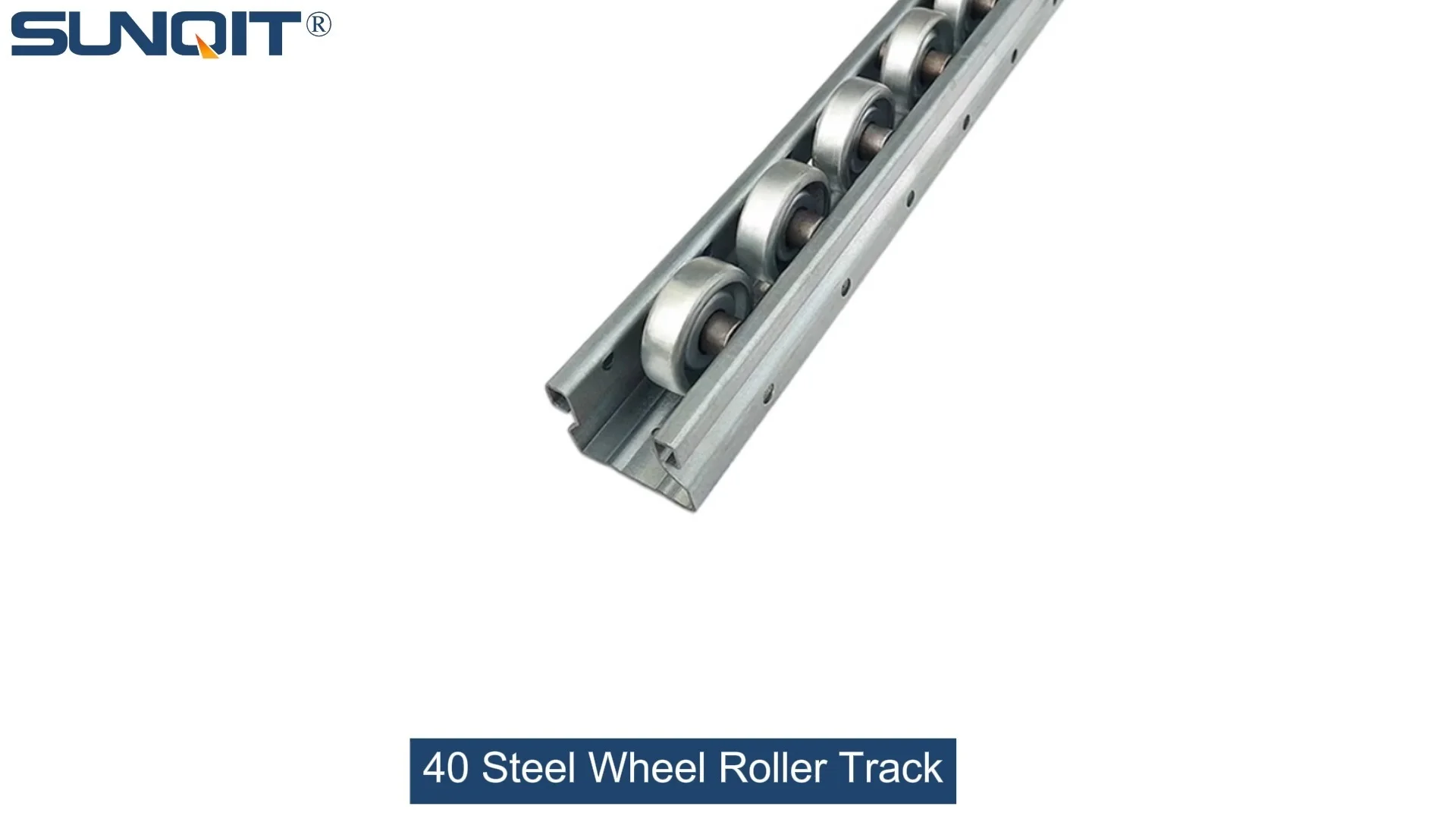
40 Steel Wheel Roller Track
Heavy duty steel wheel roller track with cylindrical steel rollers for use in processing, logistics and materials handling operations. Ideal for transporting goods quickly and easily as well as for installing on shelving to aid in picking operations.
In the fast-paced world of 3C manufacturing—where smartphones, laptops, and smart devices evolve by the month—every second on the assembly line counts. Imagine a production floor where tiny circuit boards glide seamlessly from station to station, where delicate components are handled with precision, and where line workers move with the rhythm of a well-orchestrated dance rather than the chaos of constant adjustments. This isn't just a vision; it's the reality made possible by lean manufacturing systems, and at the heart of this transformation lies a seemingly simple yet powerful tool: the 40 Steel Wheel Roller Track.
For 3C manufacturers, the assembly line is more than just a series of workstations—it's the backbone of innovation. With products becoming smaller, more complex, and more customized than ever, the demand for flexible, efficient, and reliable material handling solutions has never been higher. In this article, we'll explore how the 40 Steel Wheel Roller Track, paired with complementary lean pipe systems and accessories, is redefining assembly line efficiency, one smooth roll at a time.
The Unique Challenges of 3C Assembly Lines
3C assembly isn't just manufacturing—it's a ballet of precision and speed. Let's break down the hurdles that make this industry so demanding:
- Miniaturization & Precision: Components like microchips, connectors, and flex cables are often smaller than a fingernail. Mishandling during transport can lead to bent pins, static damage, or alignment errors—costing time and materials.
- Rapid Product Cycles: A new smartphone model might hit the market every 6–12 months. Assembly lines must adapt quickly to new product dimensions, part configurations, and workflow changes without massive retooling costs.
- ESD Sensitivity: Static electricity is the silent enemy of electronics. Even a tiny discharge can fry sensitive components, making ESD-protected workstations (ESD workbench) and material paths non-negotiable.
- High-Volume, Low-Waste Goals: With profit margins tightening, manufacturers can't afford bottlenecks, excess inventory, or inefficient material flow. Every inch of the assembly line must contribute to value creation, not waste.
Against this backdrop, traditional rigid conveyor systems fall short. They're expensive to reconfigure, heavy, and often struggle with the delicate balance of speed and precision required for 3C parts. This is where lean system thinking—with its focus on flexibility, reusability, and continuous improvement—steps in.
Lean Solution: The Foundation of Modern 3C Assembly
Lean manufacturing isn't just a buzzword; it's a philosophy that puts "flow" at the center. In 3C assembly, "flow" means materials moving smoothly from storage to workstation, workers accessing tools without unnecessary movement, and processes adapting as needs change. At the core of this philosophy is the lean pipe system—a modular framework of aluminum or steel pipes, joints, and accessories that can be reconfigured in hours, not weeks.
But a lean system is only as strong as its components. While lean pipe workbenches and flow racks handle static storage and workstation setups, the 40 Steel Wheel Roller Track addresses the critical "in-between" space: the movement of materials between these stations. It's the connective tissue that turns isolated workbenches into a cohesive, responsive ecosystem.
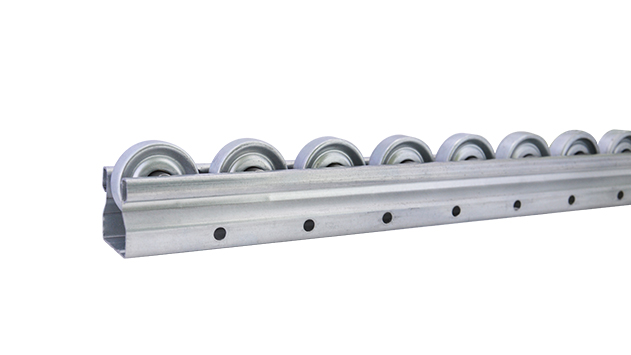
40 Steel Wheel Roller Track: The Assembly Line's "Smooth Operator"
Let's zoom in on the star of the show: the 40 Steel Wheel Roller Track. Designed specifically for the demands of 3C assembly, this track isn't just a conveyor—it's a precision tool engineered to solve real-world problems. Here's why it stands out:
1. Built for Delicate, Fast-Moving Parts
The "40" in its name refers to the track width (40mm), a sweet spot for 3C components. The steel wheels—small, smooth, and evenly spaced—provide gentle, consistent support for everything from circuit boards to battery packs. Unlike plastic rollers that can stick or degrade over time, these steel wheels maintain their shape and glide, even after years of heavy use.
Imagine a line worker placing a partially assembled motherboard onto the track. The wheels rotate with minimal friction, carrying the board at a steady, controlled speed to the next station. No jostling, no sudden stops—just smooth, predictable movement that reduces the risk of human error during transfer.
2. Modular by Design: Adapt in Minutes, Not Months
One of the biggest advantages of the 40 Steel Wheel Roller Track is its compatibility with lean pipe systems. Using simple connectors (roller track connector) and mounting brackets (roller track placon mount), the track can be:
- Adjusted in Height: Mount it to aluminum profile workbenches at waist height for easy loading/unloading, or angle it slightly for gravity-fed flow between stations.
- Extended or Shortened: Add or remove track sections with basic tools to match new product lengths—no need for welding or custom fabrication.
- Combined with Other Lean Components: Pair it with flow racks for kitting parts, lean pipe workbenches for assembly tasks, or ESD-safe casters (caster wheel) for mobile track setups during line reconfigurations.
This modularity slashes changeover time. For example, when shifting from assembling smartwatches to tablets, a team can reposition the track, adjust its angle, and add side guides (plastic roller track guide rail) in under an hour—keeping production downtime to a minimum.
3. Durability That Stands Up to 24/7 Operations
3C factories often run around the clock, so equipment must keep pace. The 40 Steel Wheel Roller Track is built tough:
- High-Quality Steel: The track frame and wheels are made from corrosion-resistant steel, standing up to the humidity and occasional spills common in manufacturing environments.
- Reinforced Joints: Roller track placon mount center support brackets prevent sagging, even when loaded with heavy components like laptop chassis.
- Low Maintenance: No complex motors or belts—just periodic lubrication of the wheel axles to keep things moving smoothly. This reduces downtime and repair costs compared to motorized conveyors.
4. ESD-Ready for Sensitive Electronics
Static protection is baked into the design. Many 40 Steel Wheel Roller Track models come with conductive wheels (40 steel roller track black ESD wheel) and grounded mounting hardware, ensuring that static charges dissipate safely to the floor. When paired with an ESD workbench and antistatic flooring, it creates a continuous ESD-safe path for components—critical for avoiding costly static-related failures.
40 Steel Wheel Roller Track vs. Traditional Conveyors: A 3C Manufacturer's Choice
| Feature | 40 Steel Wheel Roller Track | Traditional Rigid Conveyor |
|---|---|---|
| Reconfiguration Time | 1–2 hours (modular assembly) | Weeks (requires custom parts/welding) |
| ESD Compatibility | Yes (conductive wheels, grounded mounting) | Limited (often requires expensive add-ons) |
| Weight & Portability | Lightweight; can be moved with casters | Heavy; fixed in place |
| Maintenance Costs | Low (occasional lubrication, replaceable wheels) | High (motor repairs, belt replacements) |
| Flexibility for Small Parts | Excellent (gentle, precise movement) | Poor (risk of jamming, rough handling) |

Real-World Applications: How 3C Manufacturers Use the 40 Steel Wheel Roller Track
To bring this to life, let's look at three common scenarios where the 40 Steel Wheel Roller Track shines in 3C assembly:
Scenario 1: Smartphone Motherboard Assembly
At a major smartphone plant, the motherboard assembly line uses a U-shaped configuration of 40 Steel Wheel Roller Track. Here's how it works:
- Operators at the "kitting" station load trays of IC chips, capacitors, and resistors onto the track from a nearby flow rack.
- The track carries the trays to the first assembly workstation (a height-adjustable lean pipe workbench), where a technician places components onto the motherboard using a pick-and-place machine.
- After component placement, the motherboard tray glides via the track to the soldering station, then to inspection, and finally to the next stage of assembly (display mounting).
The track's gentle movement ensures components stay aligned during transport, while its modular design allows the team to add a new inspection station in a day when a new chip supplier requires additional quality checks.
Scenario 2: Laptop Battery Pack Testing
Battery packs are heavy, sensitive to impact, and require careful handling during testing. A laptop manufacturer uses 40 Steel Wheel Roller Track with side guides (38 aluminum roller track yellow with side guide) to move packs through a multi-step testing process:
- Battery packs are loaded onto the track from a turnover trolley (turnover trolley and rack) at the start of the line.
- The track slopes slightly downward, using gravity to carry packs through charging, discharge, and thermal testing stations—eliminating the need for motorized transport and reducing energy use.
- At the end of the line, a stop bracket (end support for roller track placon mount with stop) halts the pack gently, ready for a technician to inspect results and label units.
Scenario 3: Smartwatch Strap Assembly (Small-Batch, High-Mix)
A manufacturer producing multiple smartwatch models with different strap designs relies on the track's flexibility. They've set up a "cell" with:
- A mobile 40 Steel Wheel Roller Track (mounted on casters) that can be wheeled between workbenches as needed.
- Quick-change side guides to accommodate different strap lengths (18mm vs. 22mm).
- ESD-safe wheels to protect metal clasp components from static damage.
This setup allows the team to run small batches of each strap design without reconfiguring the entire line—keeping production agile and responsive to customer demand.

Beyond the Track: Building a Complete Lean Ecosystem
The 40 Steel Wheel Roller Track is powerful on its own, but its true potential is unlocked when integrated with other lean components. Here's how manufacturers build a seamless ecosystem:
Lean Pipe Workbenches: The Heart of the Workstation
Pairing the track with lean pipe workbenches creates a unified workspace. These workbenches—built from aluminum lean pipe and internal rotatary aluminum joints—are lightweight, height-adjustable, and customizable. Add a pegboard for tool storage, a keyboard tray, or an ESD mat, and you've got a workstation tailored to the specific task (e.g., soldering, inspection, or packaging).
For example, a workbench E (single deck-without caster) might sit at the end of a 40 Steel Wheel Roller Track, where operators finalize assembly by attaching screens to device frames. The track delivers frames right to the bench, reducing the need for workers to reach or bend—cutting down on fatigue and improving ergonomics.
Flow Racks: Feeding the Line, Minimizing Waste
Flow racks (flow rack) positioned alongside the track ensure that parts are always within reach of operators. By storing components in tilted bins that slide forward as units are used, flow racks"first-in, first-out" (FIFO) inventory management—reducing the risk of using expired or obsolete parts. When paired with the track, they create a "supermarket" of materials that feeds the assembly line precisely when needed, eliminating stockpiles and freeing up floor space.
Custom Lean Solutions: Tailored to Your Unique Needs
Every 3C manufacturer has unique challenges—whether it's a specialized cleanroom requirement, a narrow production space, or a need for extreme precision. This is where custom lean solutions (lean solution) come into play. Suppliers can design integrated systems that combine 40 Steel Wheel Roller Track with:
- Aluminum Profile Structures: For heavy-duty or elevated track setups (e.g., overhead material transport).
- Specialized Rollers: Swivel roller balls (1 inch swivel roller balls) for 360-degree material movement at workstations.
- Modular Conveyors: Belt or chain conveyors (conveyor) for longer distances, connected seamlessly to the 40 Steel Wheel Track for delicate final transport.
These solutions aren't just about equipment—they're about aligning with your lean goals. A supplier might conduct a workflow analysis to identify bottlenecks, then design a system that reduces material handling steps by 30% or cuts changeover time by half—all while using reusable components that can be repurposed as your needs evolve.
The Future of 3C Assembly: Lean, Flexible, and Human-Centered
As 3C products continue to push the boundaries of innovation, the assembly lines that build them must evolve too. The 40 Steel Wheel Roller Track isn't just a piece of equipment—it's a symbol of this evolution: a tool that combines the precision electronics demand with the flexibility manufacturers need, all while keeping workers at the center of the process.
By integrating this track into a broader lean system—with lean pipe workbenches, flow racks, and custom solutions—3C manufacturers can turn their assembly lines from rigid obstacles into agile partners. They can adapt faster, waste less, and build products with the care and precision that customers expect.
At the end of the day, lean manufacturing is about more than efficiency—it's about creating value: for your business, your customers, and the people who bring your products to life. And with tools like the 40 Steel Wheel Roller Track, that value is rolling off the line, one smooth, precise movement at a time.