
In the fast-paced world of 3C manufacturing—where smartphones, laptops, and wearables fly off production lines at breakneck speeds—every second counts. Downtime isn't just a minor hiccup; it's a silent profit killer. A single hour of halted assembly can cost tens of thousands of dollars, delay shipments, and erode customer trust. Yet, for many factories, downtime remains a persistent headache: rigid workstations that can't adapt to new product designs, clunky material flow systems that jam, and flimsy structures that wear out after months of heavy use. What if there was a solution that could slash these disruptions, making your assembly line as agile and resilient as the tech products you build? Enter the 4040E EU Standard Aluminum Profile—a but powerful building block that's quietly revolutionizing 3C production floors worldwide.
The Hidden Cost of Downtime in 3C Assembly
Let's start with the basics: 3C products are marvels of precision. A typical smartphone contains over 1,000 components, each needing to align with sub-millimeter accuracy. To meet demand, factories run 24/7, with assembly lines churning out hundreds of units per hour. But here's the catch: even small disruptions can throw this delicate balance off-kilter. A workbench that wobbles during component installation leads to misaligned parts. A conveyor track that sticks causes bottlenecks, backing up the line from station to station. A material rack that's too rigid can't be reconfigured when a new model launches, forcing teams to waste days (or weeks) on retrofits.
Industry reports estimate that average 3C factories lose 10-15% of productive time to unplanned downtime. For a mid-sized plant producing 500 smartphones per hour at a $50 profit per unit, that translates to $360,000–$540,000 in lost revenue annually. And that's not counting indirect costs: overtime pay to meet deadlines, rushed repairs that compromise quality, and the stress on workers who must compensate for lost time. It's no wonder factory managers lie awake at night asking: How do we build a production line that keeps up?
Why Traditional Solutions Fall Short
For decades, manufacturers relied on two mainstays: steel and wood. Steel workbenches and racks are strong, sure, but they're also heavy, expensive to modify, and prone to rust in humid factory environments. Welding or drilling new holes to adjust a steel frame? That takes specialized labor and shuts down the line for hours. Wood, on the other hand, is cheap but flimsy. It warps under heavy tooling, absorbs moisture, and can't withstand the constant wear of daily use. Worse, neither steel nor wood offers built-in flexibility—critical in an industry where product cycles shrink from 18 months to 6 months (or less).
Then there are "one-size-fits-all" modular systems made from plastic or low-grade aluminum. They're lighter than steel but lack durability; plastic joints crack under repeated use, and thin aluminum bends when loaded with heavy equipment. By the time teams realize these systems aren't up to the task, they've already sunk time and money into installations that need constant repairs. It's a cycle of Band-Aid fixes that never addresses the root cause: inflexibility.

The 4040E EU Standard Aluminum Profile: A Game-Changer for Agility
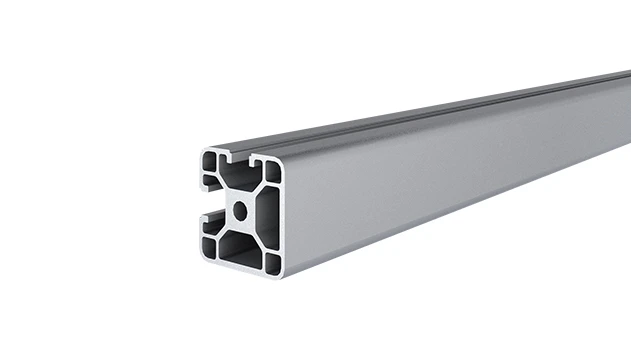
Enter the 4040E EU Standard Aluminum Profile. At first glance, it looks like a simple metal extrusion—40mm by 40mm, with T-shaped slots running along its length. But beneath that unassuming exterior lies a design philosophy that aligns perfectly with 3C manufacturing's needs: modularity, durability, and adaptability . Let's break down why this profile has become a go-to for forward-thinking factories.
Built for Precision, Engineered for Flexibility
The 4040E isn't just any aluminum profile. It's cold-extruded from high-grade 6063-T5 aluminum alloy—a material prized for its strength-to-weight ratio. T5 tempering gives it a yield strength of 110 MPa, meaning it can support heavy loads (up to 500kg per linear meter when properly braced) without bending. That's more than enough for 3C tools, components, and even automated assembly arms.
But what truly sets it apart is the T-slot design. Those grooves along each face aren't just for show; they're the secret to its flexibility. Using aluminum profile accessories like brackets, bolts, and end caps, workers can attach shelves, tool holders, monitors, or even small conveyor tracks directly to the profile—no welding, no drilling, no hassle. Need to raise a workbench by 10cm to improve ergonomics? Loosen the bolts, adjust the height, and retighten. Launching a new laptop model with larger components? Swap out a 30cm shelf for a 50cm one in 10 minutes. This isn't just convenience—it's the ability to reconfigure your line on the fly, turning downtime into uptime.
ESD Safety: Protecting Sensitive Electronics
3C components—microchips, circuit boards, LCD screens—are (ESD) . A single static shock (as small as 2,000 volts) can fry a semiconductor, rendering an entire device useless. Traditional steel workbenches are conductive but prone to rust, which disrupts grounding. Wood is insulating, making it a static hazard. The 4040E solves this with optional anodized finishes that provide a surface resistance of 10^6–10^9 ohms—perfect for dissipating static charges safely to the ground. When paired with ESD mats and grounded accessories, it creates a protected workspace where sensitive components stay intact.
Real-World Applications: How 4040E Transforms Assembly Lines
Theory is great, but how does the 4040E perform on the factory floor? Let's look at three critical areas where it shines: workbenches, material flow systems, and lean manufacturing setups.
1. Workbenches: Ergonomic, Customizable, and Built to Last
A 3C assembly line is only as good as its workstations. Workers spend 8–12 hours a day at these benches, performing repetitive tasks like soldering, screwdriving, and quality inspection. Poor ergonomics lead to fatigue, errors, and even injuries. The 4040E changes this by letting teams build workbenches tailored to human needs.
Take the workbench E (single deck-without caster) , a popular 4040E-based design. Its frame is constructed from 4040E profiles, with height-adjustable legs (via telescoping aluminum tubes) that can be set between 75cm and 95cm—ideal for workers of different heights. The top deck, often made of aluminum honeycomb panel, is lightweight but rigid, providing a stable surface for precision work. T-slots along the bench's edges let workers mount tool balancers, magnifying lamps, and ESD wrist strap holders exactly where they need them. No more reaching across the bench for a screwdriver or straining to see small components—everything is within arm's reach.
And when the line needs to evolve? Add a second deck for extra storage by attaching 4040E crossbars to the frame. Install casters (using caster accessories like mounting plates) to make the bench mobile for quick line reconfigurations. The possibilities are limited only by the team's creativity.
2. Material Flow: Smooth Conveyors and Agile Racks
Material flow is the lifeblood of 3C assembly. Parts need to move from storage to workbench to testing station without delays. The 4040E excels here, too, serving as the backbone for everything from roller tracks to turnover trolleys.
Consider roller track systems. These tracks use gravity or motorized rollers to move component trays between stations. Traditional roller tracks are often built with steel frames that rust or warp, leading to jams. But 4040E-based tracks are different: the aluminum frame resists corrosion, and the T-slots make it easy to adjust roller spacing to fit tray sizes (from small PCB trays to large display panels). Plastic roller track guide rails (yellow or grey, depending on visibility needs) snap into the T-slots, ensuring smooth, quiet movement. In one case study, a Chinese smartphone factory replaced steel roller tracks with 4040E-based ones and reduced jams by 82%, cutting line downtime by 4 hours per week.
Material racks are another area where 4040E shines. The material rack B (3 row and 3 floor) , for example, uses 4040E uprights and crossbars to create a lightweight but sturdy storage system. Each shelf can hold up to 150kg, and the height between shelves is adjustable in 5cm increments—perfect for storing everything from tiny screws to large battery packs. When a new component arrives with different dimensions, workers simply loosen the shelf brackets, slide them to the desired height, and retighten. No more wasted space or overcrowded shelves.
3. Lean Systems: Building a Line That Adapts to Change
Lean manufacturing isn't just a buzzword in 3C—it's a survival strategy. The goal: eliminate waste, reduce lead times, and respond quickly to market shifts. The 4040E is a lean manager's dream, enabling the kind of flexibility that traditional systems can't match.
Imagine launching a new smartwatch model. The assembly process requires three new stations: one for attaching the band, another for testing the heart rate sensor, and a third for final packaging. With a 4040E-based lean system , you don't need to build these stations from scratch. Reuse profiles from old workbenches, add new roller tracks for material flow, and mount the necessary tools via T-slots. What would take weeks with steel or wood takes days with aluminum. And when the product cycle ends, you can disassemble the stations and repurpose the profiles for the next project—no waste, no extra costs.
Comparing the Options: Why 4040E Beats Traditional Materials
Still on the fence? Let's put the 4040E head-to-head with traditional materials. The table below compares key factors for a typical assembly line workstation setup:
| Criteria | Steel Workstations | Wooden Structures | 4040E Aluminum Profile |
|---|---|---|---|
| Installation Time (per workstation) | 8–10 hours (welding/drilling) | 4–6 hours (cutting/screwing) | 1–2 hours (T-slot assembly) |
| Reconfiguration Flexibility | Low (requires welding/drilling) | Very Low (permanent once built) | High (tool-free adjustments) |
| Weight (kg per workstation) | 150–200kg | 80–100kg (but prone to warping) | 40–60kg (easy to move with casters) |
| ESD Compatibility | Yes, but rusts over time | No (insulating, static risk) | Yes (anodized finish, grounded via accessories) |
| Annual Maintenance Cost | $300–$500 (rust removal, repainting) | $200–$400 (repairs, replacements) | $50–$100 (occasional bolt tightening) |
| 5-Year Total Cost (per workstation) | $3,500–$4,500 (high initial + maintenance) | $2,000–$3,000 (low initial, high replacement) | $2,500–$3,000 (moderate initial, low maintenance) |
The numbers speak for themselves: 4040E aluminum profiles offer faster installation, better flexibility, and lower long-term costs than steel or wood. For 3C factories, this isn't just an upgrade—it's a strategic investment in agility.
Case Study: How a 4040E Overhaul Cut Downtime by 32%
Let's look at a real example. A leading Chinese 3C manufacturer (we'll call them "TechPro") produces mid-range smartphones for global brands. In 2023, they were struggling with frequent downtime: their steel workstations wobbled, wooden material racks warped, and conveyor tracks jammed daily. Their production line ran at 85% efficiency, and they were missing quarterly targets.
TechPro's lean team decided to overhaul their assembly line with 4040E-based solutions. They replaced 12 steel workstations with adjustable 4040E workbenches, installed new roller tracks with aluminum frames, and upgraded material racks to 4040E-based systems. The results? Within three months:
- Unplanned downtime dropped from 15% to 10.2% (a 32% reduction).
- Reconfiguration time for new models fell from 2 weeks to 3 days.
- Worker fatigue complaints decreased by 40% (thanks to ergonomic workbenches).
- Annual maintenance costs for workstations and racks dropped by $68,000.
"We used to dread product launches because we knew the line would be down for weeks," said TechPro's production manager. "Now, with 4040E, we can reconfigure stations over a weekend. It's like night and day."
Choosing the Right 4040E Supplier: What to Look For
Not all 4040E profiles are created equal. To get the most out of your investment, partner with a supplier who understands 3C manufacturing's unique needs. Here's what to prioritize:
Quality Certifications: Look for suppliers with EU CE certification and ISO 9001 quality management. This ensures the profiles meet strict dimensional tolerances (critical for T-slot compatibility) and material standards.
Accessory Range: A good supplier should offer a full line of aluminum profile accessories : brackets, bolts, end caps, casters, and ESD components. This avoids the hassle of sourcing parts from multiple vendors.
Customization Support: Every factory is different. Choose a supplier who can help design custom workbenches, racks, or conveyor systems tailored to your line's layout and product specs.
Conclusion: Building a Future-Proof 3C Assembly Line
In the world of 3C manufacturing, standing still means falling behind. Downtime, rigid systems, and outdated materials are no longer acceptable in an industry where innovation moves at the speed of light. The 4040E EU Standard Aluminum Profile isn't just a building material—it's a tool for resilience. It lets you adapt to new products, improve ergonomics, reduce waste, and keep your line running smoothly, 24/7.
So, if you're tired of watching profits slip away due to downtime, or if you're gearing up for your next product launch, consider this: the 4040E isn't an expense—it's an investment in a faster, more flexible, and more profitable future. Your assembly line (and your bottom line) will thank you.