- Company Articles
- Products and Technology
- Product knowledge
- 3C Product Testing Stations: Lean Pipe Fixed Clamps for Stable Fixtures

3C Product Testing Stations: Lean Pipe Fixed Clamps for Stable Fixtures
Related Product
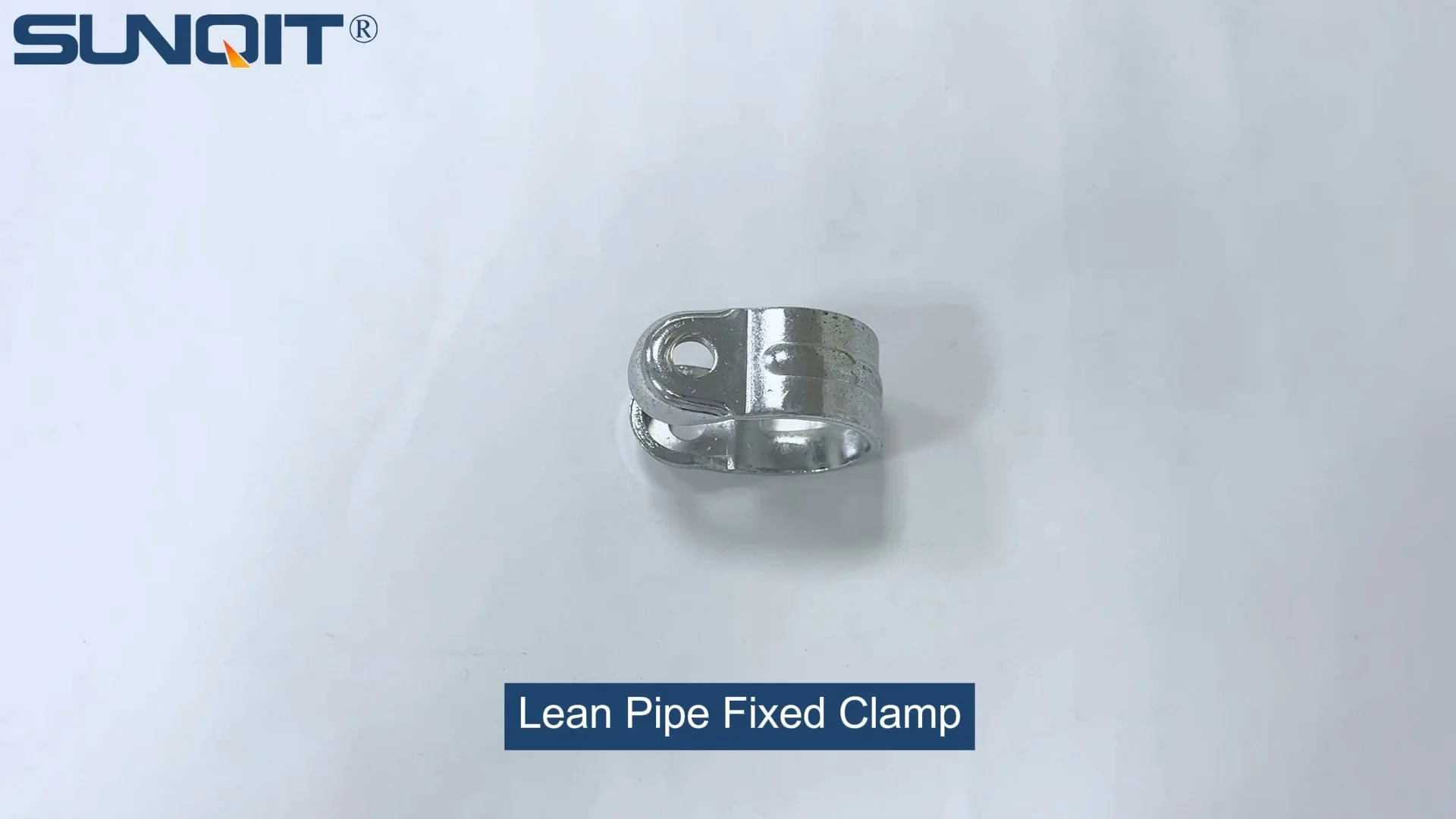
Lean Pipe Fixed Clamp
Lean pipe fixed clamp is used for pipe connector fixing the correct position during workbench flow rack hand trolley assemble work.
Walk into any 3C manufacturing facility—whether it's churning out smartphones, laptops, or smartwatches—and you'll notice a quiet hero in the background: the testing station. These workspaces are where products go from "assembled" to "assured," where every button press, screen tap, and connectivity check determines if a device is ready for the hands of consumers. But here's the thing: none of that precision testing works if the fixtures holding the products are wobbly, inconsistent, or one-size-fits-all. That's where lean pipe fixed clamps step in, quietly revolutionizing how 3C testing stations balance stability, flexibility, and efficiency.
In an industry where device models change faster than seasons—think new phone releases every six months, or wearables with ever-shrinking form factors—testing stations can't afford to be rigid. A fixture that works for a 6.7-inch smartphone might be useless for a 10.9-inch tablet, and neither will fit a tiny fitness tracker. Yet, stability is non-negotiable: a device shifting even a millimeter during a drop test or a connectivity check can throw off results, leading to false failures or, worse, missed defects. So, how do manufacturers solve this paradox? The answer lies in lean pipe systems, and at the heart of that system? The unassuming but indispensable lean pipe fixed clamp.
The Hidden Challenges of 3C Testing Stations
Let's start by understanding why fixture stability matters so much in 3C testing. Imagine a technician running a pressure test on a smartphone screen. They apply a precise 50N force at 10 different points to check for dead pixels or cracks. If the phone shifts mid-test because the fixture isn't holding it securely, the test data becomes unreliable. Now multiply that by hundreds of devices per day, and the cost of rework or, worse, defective products reaching customers becomes staggering.
But stability is just one piece of the puzzle. 3C manufacturers face three big hurdles when it comes to testing fixtures:
1. Rapidly Changing Product Sizes and Shapes: A decade ago, most smartphones were around 5 inches; today, they range from 5.4 inches (mini models) to 6.9 inches (phablets). Tablets, laptops, and even earbuds come in endless variations. A fixed, welded steel fixture can't keep up—retooling costs time and money, and storage for dozens of single-use fixtures becomes a logistical nightmare.
2. ESD Sensitivity: 3C components—chips, circuit boards, OLED screens—are damaged by electrostatic discharge (ESD). Even a small static spark can fry a $500 motherboard. So, fixtures can't just hold devices; they need to dissipate static, protecting both the product and the technician.
3. Workflow Efficiency: Testing stations are often part of a larger assembly line. Fixtures need to integrate with material flow—parts coming in, tested devices going out—without bottlenecks. A bulky, immovable fixture might block a conveyor, slow down technicians, or make it hard to access tools and cables.
For years, manufacturers tried to solve these issues with custom-machined fixtures (expensive, inflexible), plastic molds (not durable enough for daily use), or generic clamps (unreliable for precision). None stuck. Then came lean pipe systems, and suddenly, the game changed.
Lean Pipe Fixed Clamps: The Backbone of Stable, Adaptable Fixtures
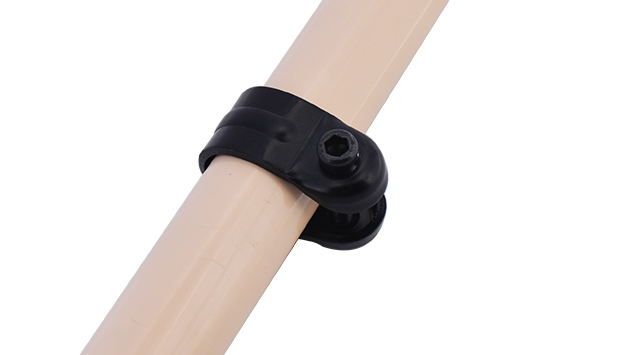
At first glance, a lean pipe fixed clamp looks simple: a metal or plastic connector that joins two lean pipes at a fixed angle, usually 90 degrees. But its simplicity is its strength. Unlike traditional clamps that require tools to adjust or welds that permanently fix position, lean pipe fixed clamps are designed for quick assembly, disassembly, and reconfiguration—all while maintaining rock-solid stability.
What Makes Lean Pipe Fixed Clamps Different?
Let's break down their design. Most lean pipe fixed clamps are made from die-cast aluminum or steel, with a rubber or ESD-safe plastic coating. They feature a two-piece design: a base that attaches to one pipe and a top clamp that secures the second pipe, tightened with a hex key or a hand knob. The magic is in the grip: when tightened, the clamp's internal teeth bite into the lean pipe (often a galvanized steel pipe with a plastic coating or an aluminum pipe), creating a connection that can withstand vibration, lateral forces, and the daily wear of testing.
But why "lean"? Lean manufacturing principles prioritize eliminating waste—whether it's time, materials, or space. Lean pipe fixed clamps embody this by allowing technicians to build fixtures on demand, using standard components, and reusing those components when product lines change. For example, a fixture for a smartphone can be disassembled, and the pipes and clamps repurposed into a tablet fixture in under an hour—no welding, no custom machining, just a hex key and a little creativity.
Stability Without Sacrificing Flexibility
The biggest myth about lean pipe systems is that "flexible" means "flimsy." That couldn't be further from the truth. A well-built lean pipe fixture, secured with quality fixed clamps, can easily hold 50kg or more—plenty for even the heaviest 3C products, like gaming laptops. The secret is in the combination of pipe strength and clamp design. For example, a 28mm diameter steel lean pipe has a bending strength of around 200MPa, and when paired with a fixed clamp that distributes pressure evenly around the pipe, the connection becomes rigid enough for precision testing.
Consider a common scenario: a testing station for smartwatches. The fixture needs to hold the watch steady while a robotic arm presses buttons, checks the heart rate sensor, and verifies the touchscreen. Using lean pipe fixed clamps, technicians can build a frame with adjustable arms that cradle the watch's curved edges. If the next model has a slightly larger case, they loosen the clamps, slide the arms, retighten, and the fixture is ready. No need to order a new part or wait for fabrication—adaptability happens in real time.
Beyond Clamps: Building a Complete Lean Testing Station
Lean pipe fixed clamps are powerful, but they're not alone. To create a fully functional 3C testing station, they team up with other lean components, each playing a role in stability, efficiency, and safety. Let's look at the key players:
1. The Lean Pipe Workbench: The Foundation of the Station
Every testing station starts with a workbench, and a lean pipe workbench is the ideal base. Unlike traditional wooden or steel workbenches, lean pipe workbenches are built using—you guessed it—lean pipes and fixed clamps, topped with a durable surface (often ESD-safe plywood or aluminum honeycomb panel). What makes them special? They're customizable in height, width, and depth, so technicians of all sizes can work comfortably, reducing fatigue during long shifts.
But the real advantage is integration. A lean pipe workbench can have built-in shelves for tools, cable management hooks (using, yes, more clamps), and even attachments for monitors or barcode scanners. For example, a testing station for laptop keyboards might have a lower shelf holding a keyboard tester, with cables routed through holes in the workbench top, kept tidy by clips attached to the pipe frame via fixed clamps. No more tripping over wires, no more wasted time searching for tools—just a clean, organized workspace.
2. Flow Racks: Keeping Materials Moving
Testing doesn't happen in isolation. Devices come in from assembly, get tested, and move to packaging. A bottleneck at the testing station can slow down the entire line. That's where flow racks come in. A flow rack is a gravity-fed shelf system, often built with lean pipes and roller tracks, that lets untested devices slide down to the technician and tested devices move out smoothly. And yes, lean pipe fixed clamps are critical here too—they secure the roller tracks to the rack frame, ensuring the tracks stay aligned even as devices glide over them all day.
Imagine a flow rack with three levels: the top holds untested smartphones in bins, the middle is the testing level (integrated with the lean pipe workbench), and the bottom has bins for passed/failed devices. Gravity does the work—no motors, no complex controls—so the technician can focus on testing, not moving devices. And if the next phone model comes in a larger bin? Adjust the rack's height or width with a few clamp adjustments, and it's good to go.
3. ESD Workstations: Protecting Sensitive Components
We mentioned ESD sensitivity earlier, and it's a big enough issue to deserve its own component: the ESD workstation. An ESD workstation combines a lean pipe workbench with ESD-safe materials—like a surface that dissipates static, grounding straps for technicians, and even ESD-safe lean pipe fixed clamps (coated in conductive plastic) to prevent static buildup in the frame. When a technician places a circuit board on the workstation, the static charge flows through the surface, into the lean pipes, and safely to ground—protecting the board from damage.
In high-precision testing, like checking a laptop's motherboard for short circuits, even a tiny static discharge can ruin a $200 component. ESD workstations eliminate that risk, turning a potential disaster into a non-issue. And because they're built with lean components, they're just as adaptable as standard workstations—swap out the surface for a larger one, add more shelves, or reconfigure the layout without losing ESD protection.
| Component | Role in Testing Station | Why Lean Pipe Version Stands Out |
|---|---|---|
| Lean Pipe Fixed Clamp | Joins pipes at fixed angles to build stable frames/fixtures | Tool-free adjustment, reusable, compatible with all lean pipe types |
| Lean Pipe Workbench | Base workspace for testing activities | Customizable height/width, integrates with tools and storage |
| Flow Rack | Moves devices to/from testing station via gravity | Easy to reconfigure bin sizes, roller tracks secured with clamps |
| ESD Workstation | Protects sensitive components from static damage | Conductive materials + lean adaptability = safe, flexible testing |

The Real-World Impact: Why Manufacturers Are Switching to Lean Pipe Systems
Let's take a step back from the components and talk about results. What happens when a 3C manufacturer swaps traditional fixtures for a lean pipe system centered on fixed clamps? We spoke with a mid-sized smartphone manufacturer in Shenzhen that made the switch last year, and their numbers tell the story:
Reduced Fixture Costs by 40%: Instead of paying $500 for a custom steel fixture per phone model, they now build lean pipe fixtures for under $200, and reuse 80% of components when models change.
Cut Changeover Time from 2 Days to 2 Hours: When launching a new phone model, reconfiguring testing stations used to require (production halt) for 48 hours. With lean pipe fixed clamps, technicians reconfigure fixtures during breaks, with zero downtime.
Lower Rework Rates by 15%: More stable fixtures mean more reliable test data, so fewer devices are incorrectly flagged as "failed" (reducing rework) and fewer defects slip through (improving quality).
Another example: a wearable tech company that produces fitness trackers and smartwatches. Their testing stations need to handle devices as small as a 1.2-inch fitness band and as large as a 45mm smartwatch. With lean pipe fixed clamps, they built modular fixtures with interchangeable "grips"—smaller clamps for bands, larger cradles for watches. When a new model launches, they swap the grip, not the entire fixture. Storage for fixtures went from a 200 sq. ft. room to a single shelf of interchangeable parts.
But it's not just about cost and time. Technicians love the change too. "Before, if a fixture didn't fit quite right, I'd have to prop the device up with foam or tape, which made testing feel like guesswork," said one technician we interviewed. "Now, I can adjust the clamps myself in two minutes, get the device perfectly aligned, and trust that it won't move. It makes my job easier and less stressful."

Choosing the Right Lean Pipe Fixed Clamps and Components
Not all lean pipe fixed clamps are created equal. To get the stability and flexibility we've been talking about, manufacturers need to pay attention to a few key factors when selecting components:
Material Matters: Steel vs. Aluminum
Lean pipes come in two main materials: steel (often coated in plastic) and aluminum. Steel is stronger and cheaper, making it ideal for heavy fixtures or high-stress testing (like drop tests). Aluminum is lighter, corrosion-resistant, and often used in cleanrooms or ESD-sensitive areas. The fixed clamps need to match the pipe material—aluminum clamps for aluminum pipes, steel clamps for steel pipes—to ensure a tight fit.
ESD Ratings for Sensitive Testing
For ESD workstations, look for fixed clamps with a surface resistance of 10^6 to 10^9 ohms—this range ensures static dissipates slowly enough to avoid damaging components but quickly enough to prevent buildup. Cheaper plastic clamps might not have this rating, so always check specs if static protection is critical.
Load Capacity and Durability
Clamps are rated for maximum load, usually in kg. A standard lean pipe fixed clamp can handle 50-100kg, but for heavier applications (like testing laptops), opt for heavy-duty clamps with reinforced teeth and thicker metal. Also, look for clamps with a powder-coated finish or corrosion-resistant plating—they'll last longer in factory environments with dust or humidity.
Supplier Support: More Than Just Parts
Finally, choose a lean pipe supplier that offers more than just components. The best suppliers provide design support, helping you customize fixtures for your specific testing needs, and offer fast replacement parts so a broken clamp doesn't shut down your line. A local supplier with a warehouse nearby can mean next-day delivery, which is a lifesaver when a fixture needs urgent repairs.
The Future of 3C Testing: Lean, Flexible, and Human-Centered
As 3C devices get smarter, smaller, and more complex, testing stations will need to keep pace. Lean pipe systems, with fixed clamps at their core, are more than a trend—they're a long-term solution that grows with your business. They adapt to new products, reduce waste, and make technicians' jobs easier. And in an industry where innovation never stops, that's invaluable.
So, the next time you pick up your smartphone or smartwatch, take a moment to appreciate the quiet work happening behind the scenes. Somewhere, a lean pipe fixed clamp is holding that device steady, ensuring it works as intended. It might not be glamorous, but in the world of 3C manufacturing, stability and flexibility aren't just nice-to-haves—they're the foundation of quality. And that's a foundation built, one clamp at a time.