- Company Articles
- Products and Technology
- Technology Sharing
- 3D Printing vs. Machining Gusset Alp 3030: Prototyping Options

3D Printing vs. Machining Gusset Alp 3030: Prototyping Options
Related Product
Gusset ALP 3030
The 3030 bracket/Gusset is an external fastening method that creates a 90 degree connection. 3030 means this size is used for 30 series aluminum profile with a quick connection by bolt and nut.
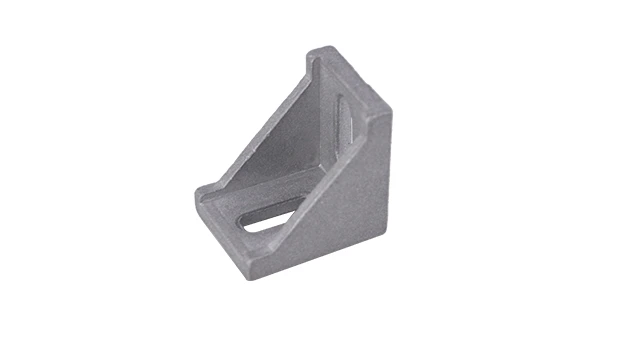
Prototyping is the heartbeat of innovation in manufacturing. Whether you're a small workshop crafting custom workbenches or a large facility designing lean production lines, getting your prototype right can mean the difference between a smooth launch and costly delays. And when it comes to components like the gusset alp 3030 —a critical aluminum profile accessory used to reinforce frames in everything from workbenches to material racks—the choice between 3D printing and machining can feel overwhelming. Let's break down these two methods, their pros and cons, and how they stack up when prototyping this essential part.
What Even Is Gusset Alp 3030, Anyway?
Before diving into prototyping methods, let's make sure we're all on the same page about the star of the show: the gusset alp 3030. If you've ever assembled a sturdy workbench or a lean pipe system, you've probably encountered aluminum profiles—those sleek, T-slot extrusions that form the backbone of modular structures. The gusset alp 3030 is the unsung hero that holds these profiles together, adding rigidity to corners and joints. Think of it as the "cornerstone" of aluminum profile accessories; without it, your frame might wobble, your material rack might sag, and your carefully designed workflow could grind to a halt.
Made from lightweight yet durable aluminum, this gusset is designed to fit 3030 series aluminum profiles (hence the "3030" in its name). It's often used alongside lean pipe joints and other connectors to create stable, adjustable systems. For manufacturers, prototyping this part isn't just about testing dimensions—it's about ensuring it can handle the daily wear and tear of a busy production floor, from supporting heavy tooling on a workbench to withstanding the vibrations of a conveyor system.
3D Printing: Fast, Flexible, but Not Without Trade-Offs
Why Startups and Small Shops Love It
Picture this: You're a small manufacturer with a tight deadline. You need to prototype a custom workbench frame using gusset alp 3030, and you need it yesterday. Enter 3D printing. This method, which builds parts layer by layer from materials like PLA, ABS, or even nylon, has revolutionized rapid prototyping for a reason.
First, speed. Traditional machining often requires setting up complex toolpaths and waiting for a CNC machine to carve out the part from a solid block. With 3D printing, you can go from a CAD file to a physical prototype in hours, not days. For a gusset alp 3030, which has relatively simple geometry (think flat plates with holes for bolts), even a basic FDM (Fused Deposition Modeling) printer can crank out a usable prototype in under 24 hours. That's a game-changer when you're iterating on design tweaks—like adjusting hole spacing to better fit your aluminum profile accessories.
Flexibility is another win. 3D printers don't care about tool access or complex undercuts (within reason). If you want to test a modified gusset with extra reinforcement ribs or a unique shape to reduce weight, you can tweak the CAD model and hit "print" without retooling. This is especially useful for startups experimenting with non-standard workbench designs or lean systems that need to fit into tight factory spaces.
The Catch: Strength and Material Limitations
But 3D printing isn't a silver bullet. Let's talk about strength. While materials like carbon fiber-reinforced nylon can get close to the tensile strength of aluminum, most 3D-printed parts are still no match for the real thing. A PLA gusset might hold up in a static test, but slap it on a workbench where operators are constantly leaning on it or placing heavy equipment, and it could crack or warp over time. For dynamic applications—like a gusset used in a turnover trolley that's pushed around the shop—3D-printed prototypes might not survive the stress test.
Surface finish is another consideration. 3D-printed parts often have visible layer lines, which can affect how well they mate with aluminum profiles and lean pipe joints. You might need to sand or paint the prototype to get a smooth surface, adding extra time to your process. And while some printers can use metal filaments (like bronze-filled PLA), these are more expensive and still not as strong as machined aluminum.

Machining: Precision and Strength, but at a Cost
Why Big Manufacturers Stick With It
Now, let's flip the script. Imagine you're a large automotive supplier tasked with prototyping gusset alp 3030 parts for a high-volume production line. Your priority isn't just speed—it's accuracy, consistency, and material integrity. That's where machining shines.
CNC machining (Computer Numerical Control) uses precision tools to cut, drill, and shape parts from solid blocks of material—including aluminum, the same material as the final production gusset. This means your prototype will behave almost exactly like the real thing. No more guessing if a 3D-printed PLA part can handle the load; a machined aluminum gusset will give you reliable data on strength, durability, and fit.
Accuracy is off the charts, too. Machining can achieve tolerances as tight as ±0.001 inches, ensuring that the holes in your gusset align perfectly with the T-slots in your 3030 aluminum profile. This is critical for modular systems, where even a fraction of a millimeter misalignment can make it impossible to attach lean pipe joints or other accessories. For manufacturers building workbenches or material racks that need to meet strict safety standards, this precision is non-negotiable.
The Downside: Time, Money, and Inflexibility
But machining isn't cheap or fast. Setting up a CNC mill requires programming toolpaths, securing the aluminum block, and running test cuts to ensure everything is dialed in. For a single prototype, this can take days—time that small shops or startups might not have. And if you need to make a design change (say, enlarging a hole to accommodate a thicker bolt), you'll have to start the process over, incurring additional setup costs.
Material waste is another issue. Machining carves the gusset out of a solid block of aluminum, leaving behind a pile of chips. For a small prototype run, this is inefficient compared to 3D printing, which uses only the material needed for the part. And while the scrap aluminum can be recycled, it still adds to the overall cost and environmental footprint.

Head-to-Head: 3D Printing vs. Machining for Gusset Alp 3030
To help you decide which method is right for your project, let's break down the key factors side by side:
| Factor | 3D Printing | Machining |
|---|---|---|
| Lead Time | Hours to 1 day for a single prototype | 3–5 days (setup + machining time) |
| Cost (Single Prototype) | $10–$50 (PLA/ABS); up to $100 for metal-filled materials | $50–$200 (aluminum stock + machining time) |
| Material Options | PLA, ABS, nylon, resin, metal-filled filaments (limited strength) | Aluminum, steel, stainless steel (same as production material) |
| Accuracy | ±0.1mm (good for fit testing, but not critical applications) | ±0.001mm (ideal for precision alignment with aluminum profiles) |
| Surface Finish | Layer lines (requires post-processing for smoothness) | Smooth, uniform finish (no post-processing needed for functional testing) |
| Strength/Durability | Low to moderate (good for form/fit testing, not load-bearing tests) | High (matches production part strength; suitable for load testing) |
| Design Flexibility | Excellent for complex geometries (e.g., custom ribs, hollow sections) | Limited by tool access (best for simple, solid shapes) |
Real-World Applications: When to Choose Which?
Let's put this into context with two scenarios:
Scenario 1: The Small Shop Prototyping a Workbench
A local manufacturer wants to design a custom workbench for a client in the electronics industry. The workbench needs to be lightweight but stable, with a frame made from 3030 aluminum profiles and gusset alp 3030 reinforcements. The client has requested a few tweaks: wider legs for extra stability and a modified gusset design to accommodate cable management channels.
For this shop, 3D printing is the way to go. They need to test the modified gusset's fit quickly—will the cable channels interfere with the lean pipe joints? Will the wider legs require larger holes in the gusset? With a 3D printer, they can print a PLA prototype in a day, assemble it with the aluminum profiles, and adjust the design on the fly. Since the final workbench won't be supporting extremely heavy loads (just circuit boards and small tools), the prototype's strength is less critical than its form and fit. Once the design is locked in, they can then machine the final aluminum gussets for production.
Scenario 2: The Automotive Supplier Testing a Material Rack
A tier-one automotive supplier is designing a heavy-duty material rack to hold engine components. The rack will use 3030 aluminum profiles and gusset alp 3030s at every corner, supporting loads up to 500 lbs per shelf. They need to ensure the gussets can withstand repeated loading and unloading without bending or cracking.
Here, machining is non-negotiable. A 3D-printed prototype might flex under the weight, giving false confidence in the design. By machining the gusset from aluminum, the supplier can run realistic load tests, simulating months of use in the factory. They can measure deflection, test for fatigue, and ensure the gusset works seamlessly with the aluminum profile accessories and lean pipe joints in the rack. The extra time and cost are worth it to avoid a catastrophic failure on the production line.
The Hybrid Approach: Best of Both Worlds?
What if you could have the speed of 3D printing and the accuracy of machining? For many manufacturers, the answer is a hybrid approach. Start with a 3D-printed prototype to test form, fit, and basic functionality. Use it to iterate quickly on design changes—adjusting hole positions, tweaking the gusset's shape, or testing how it interacts with other components like lean pipe joints. Once the design is finalized, machine a small batch of aluminum prototypes for durability testing. This way, you save time and money in the early stages while ensuring the final part meets your performance requirements.
For example, a company designing a conveyor system might 3D-print gusset alp 3030 prototypes to test how they attach to the aluminum guide rails. Once the fit is perfect, they'll machine aluminum versions to test under the stress of moving parts and heavy loads. It's the best of both worlds: agility in the design phase and reliability in the validation phase.
Choosing the Right Method: A Checklist
Still on the fence? Ask yourself these questions to decide between 3D printing and machining for your gusset alp 3030 prototype:
- What's your timeline? If you need a prototype in days, 3D printing is the clear choice. If you have a week or more, machining might be worth the wait.
- What are you testing? Form/fit? 3D printing works. Strength/durability? Machining is better.
- What's your budget? For a single prototype, 3D printing is cheaper. For small batches (5+ parts), machining might become more cost-effective.
- What's the final material? If the production part is aluminum, machining gives you the most accurate representation. If it's plastic, 3D printing could be sufficient.
Final Thoughts: It's About the End Goal
At the end of the day, prototyping gusset alp 3030—whether with 3D printing or machining—is about ensuring your aluminum profile systems are safe, efficient, and built to last. For small shops and startups, 3D printing offers the speed and flexibility to iterate quickly, turning ideas into physical parts before the competition. For large manufacturers and critical applications, machining provides the precision and reliability needed to avoid costly mistakes.
And remember: There's no one-size-fits-all solution. Many successful manufacturers use both methods, leveraging 3D printing for early-stage design and machining for final validation. Whichever path you choose, the goal is the same: to create a gusset that holds your workbench, your material rack, and your workflow together—so you can focus on what you do best: building great products.