- Company Articles
- Products and Technology
- Product knowledge
- 40 Aluminum Roller Track Green Speed Control: Adjusting for Different Production Needs

40 Aluminum Roller Track Green Speed Control: Adjusting for Different Production Needs
Related Product
40 Aluminum Roller Track Green
Durable and smooth-running modular roller rails. The system is fully assembled. The roller rail profile contains plastic rollers mounted on steel axles. Aluminum frame with plastic wheel make it anti corrosion,and material convey more smooth.
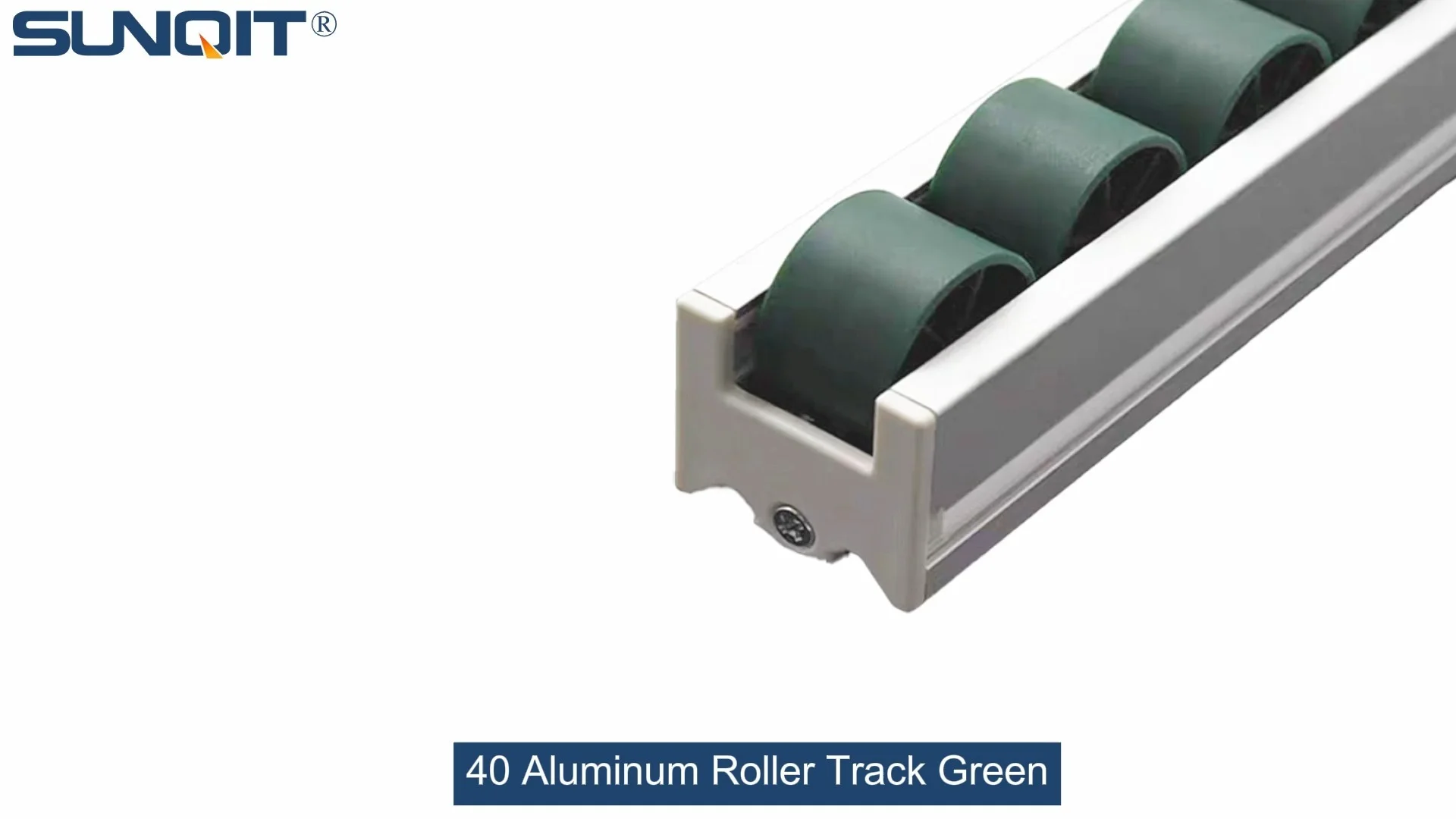
A busy production line is a symphony of moving parts, each needing to work in perfect harmony. One small component that often makes a big difference is the roller track—specifically, the 40 Aluminum Roller Track Green with speed control. This little workhorse isn't just a piece of metal; it's a key player in keeping your production flow smooth, efficient, and adaptable to whatever your line throws at it.
Whether you're assembling delicate 3C components or moving heavy automotive parts, the ability to adjust speed on the fly can transform how your line operates. Let's dive deep into what makes this roller track special and how it can solve common production challenges.
What Exactly Is the 40 Aluminum Roller Track Green Speed Control?
Let's break it down. The "40" refers to the 40mm dimension, a standard size in lean manufacturing setups. It's crafted from aluminum—lightweight yet sturdy, resistant to corrosion, and easy to maintain. The green color isn't arbitrary; it helps with visual management on busy lines, making it easy to spot and organize.
The star feature here is speed control. Unlike fixed-speed tracks, this one lets you tweak how fast products move along the line. Why does that matter? Because not every product is the same. A tiny circuit board needs a gentle pace to avoid damage, while a robust engine part can handle a quicker flow. This adaptability is where the real value lies.
Why Speed Control Is a Game-Changer in Production
Think about a typical day in a factory. One hour, you're assembling small medical devices that require careful handling. The next, you're moving larger parts for a home appliance assembly. If your roller track only has one speed, you're either rushing the delicate items (risking defects) or slowing down the heavier ones (wasting time). That's where adjustable speed comes in.
Speed control helps with:
- Reducing product damage: Delicate items move slower, so they don't get jostled or dropped.
- Optimizing throughput: Heavier, sturdier items move faster, keeping the line moving efficiently.
- Flexibility: Switch between different products quickly without reconfiguring the entire line.
- Worker safety: If products move at a manageable speed, workers can handle them without rushing, reducing accidents.

Key Features of the 40 Aluminum Roller Track Green
This roller track isn't just about speed control—it has other features that make it a great addition to any production line:
| Feature | Benefit |
|---|---|
| Aluminum Construction | Lightweight but strong, resistant to corrosion, easy to clean. |
| Adjustable Speed Control | Customize movement for different products and processes. |
| Green Color Coding | Helps with visual management, easy to identify in a busy line. |
| Compatibility with Lean Systems | Works seamlessly with flow racks, conveyors, and lean pipe workbenches. |
| Durable Rollers | Smooth movement, long lifespan, minimal maintenance. |

Where Can You Use This Roller Track?
The 40 Aluminum Roller Track Green is versatile enough to fit into almost any manufacturing scenario. Let's look at some key industries:
3C Assembly
In 3C (computers, communications, consumer electronics) assembly lines, products are often small and delicate. For example, when assembling a smartphone, circuit boards need to move slowly to avoid static damage. The speed control on this roller track lets you set a gentle pace, ensuring each component arrives at the workstation in perfect condition. Pair it with an ESD workbench, and you've got a setup that's both efficient and safe.
Medical Device Manufacturing
Medical devices require precision and compliance with strict standards. When moving sterile components or sensitive instruments, speed control is non-negotiable. The aluminum construction is easy to sanitize, making it ideal for cleanroom environments. Whether you're moving surgical tools or diagnostic equipment parts, this roller track can be adjusted to the exact speed needed to maintain quality.
Warehousing and Logistics
Warehouses handle a wide range of products—from small packages to larger boxes. The 40 Aluminum Roller Track Green can be integrated into flow racks to create a first-in-first-out (FIFO) system. Adjust the speed based on item weight: lighter packages move faster, heavier ones slower to prevent jams. This helps keep the warehouse organized and reduces picking errors.
Automotive and Home Appliance Production
Automotive parts are often bulky and heavy, while home appliance components vary in size. The roller track's speed control allows you to adapt to these differences. For example, in a car assembly line, moving engine parts might require a slower speed to ensure correct handling, while smaller interior components can move faster. This flexibility keeps the line running smoothly without bottlenecks.

Integrating with Lean Systems for Maximum Efficiency
Lean manufacturing is all about eliminating waste and continuous improvement. The 40 Aluminum Roller Track Green fits perfectly into this philosophy. Let's see how it works with other lean components:
Flow Racks
Flow racks are a staple in lean warehouses. By adding the 40 Aluminum Roller Track Green to a flow rack, you can control how quickly items move down the rack. This is great for kitting parts—set the speed so that each kit arrives at the packing station just in time, reducing inventory buildup. It's a classic example of just-in-time (JIT) production.
Conveyors
Conveyors are the backbone of many production lines. The roller track can be connected to conveyors to create a seamless flow. For instance, if a conveyor moves products to a lean pipe workbench, the roller track can adjust its speed to match the conveyor's pace, ensuring a smooth handoff. This integration reduces downtime and keeps the line moving.
Lean Pipe Workbenches
Lean pipe workbenches are customizable and flexible. Pairing the roller track with a workbench creates a workstation where parts arrive at the right speed for the worker. In an electronics assembly workstation, the roller track can bring components to the worker at a steady, manageable pace, allowing them to focus on assembly without rushing. This improves both quality and productivity.
Custom Solutions
Every production line is unique. That's why custom solutions are so important. Whether you need a roller track that integrates with a specific conveyor system or a setup tailored to your 3C assembly process, the right supplier can design a solution that fits your needs. The key is to work with a team that understands lean principles and can create a system that's reusable and adaptable—so you can keep improving your line over time.
The Benefits of Choosing the 40 Aluminum Roller Track Green
Why should you invest in this roller track? Let's list the top benefits:
1. Increased Efficiency
By adjusting speed to match each product, you reduce bottlenecks and keep the line moving. This means more products out the door in less time.
2. Improved Product Quality
Slower speeds for delicate items mean fewer defects. Fewer defects translate to less waste and higher customer satisfaction.
3. Flexibility
Switch between products quickly without reconfiguring the entire line. This is perfect for lines that handle multiple product types.
4. Sustainability
Aluminum is recyclable, and the roller track is designed to be reusable. This aligns with the "sustainable improvement" lean many companies adopt.
5. Cost Savings
Less waste, fewer defects, and higher efficiency all lead to lower costs over time. Plus, the durable construction means you won't have to replace it as often.
Real-World Examples: How This Roller Track Makes a Difference
Let's look at a couple of realistic case studies to see how the 40 Aluminum Roller Track Green has helped businesses:
Case Study 1: 3C Assembly Line Upgrade
A consumer electronics company struggled with high defect rates in their smartphone assembly line. The problem? Fixed-speed roller tracks moved circuit boards too fast, causing static damage. They switched to the 40 Aluminum Roller Track Green, setting slower speeds for circuit board stages. Defect rates dropped by 30%, and productivity increased by 15% as workers no longer fixed damaged components. They integrated it with existing ESD workbenches for added protection.
Case Study 2: Medical Device Warehouse Optimization
A medical device manufacturer needed to improve warehouse flow. Old flow racks with fixed-speed tracks caused jams with heavy items and slow movement for light ones. They installed the 40 Aluminum Roller Track Green, adjusting speeds by item weight. Jams reduced by 40%, picking time cut by 20%, and aluminum construction simplified cleaning for compliance.
Case Study 3: Automotive Parts Production Line
An automotive parts supplier faced bottlenecks in engine component lines. Fixed-speed tracks couldn't handle varying part weights. They added the 40 Aluminum Roller Track Green, setting different speeds for components. Bottlenecks disappeared, and production increased by 25% without extra staff. The durable aluminum construction stood up to heavy automotive use.
How to Choose the Right Speed Control Settings
Setting the right speed isn't guesswork—it's based on key factors. Here's what to consider:
Product Weight and Size
Heavier, larger items need slower speeds to prevent damage and jams. Lighter, smaller items can move faster.
Production Volume
High-volume lines might need faster speeds, but only if products can handle it. Low-volume, high-precision lines should use slower speeds.
Process Steps
If workers inspect or assemble items, speeds should be slow enough for careful work. For simple transport, faster speeds are okay.
Product Material
Delicate materials (glass, electronics) need slower speeds. Sturdy materials (metal) can handle faster speeds.
Test different speeds with your products to find the sweet spot. Start slow and adjust upward until you find the fastest speed without issues.
Maintenance Tips to Keep Your Roller Track Running Smoothly
Like any equipment, the 40 Aluminum Roller Track Green needs regular care. Here are some tips:
Clean Regularly
Wipe track and rollers with a soft cloth to remove dust and debris. This prevents jams and keeps speed control working correctly.
Lubricate Rollers
Apply small amounts of lubricant every few months for smooth movement. Avoid excess lubricant that attracts dust.
Check Speed Control Mechanism
Test speed control regularly to ensure proper adjustment. Contact your supplier for repairs if it malfunctions.
Inspect for Damage
Look for bent rollers or damaged tracks. replace worn parts immediately to prevent further issues.
Train Workers
Ensure your team knows how to adjust speeds and use correct settings for different products. This reduces mistakes and keeps lines running smoothly.
The 40 Aluminum Roller Track Green with speed control is more than equipment—it's a tool to adapt to modern manufacturing needs. Whether in 3C assembly, medical devices, or warehousing, it improves efficiency, reduces defects, and boosts flexibility.
It integrates seamlessly with lean systems, so you can build a tailored setup. If upgrading your line, consider this roller track—it's an investment in productivity, cost savings, and customer satisfaction.
Lean manufacturing thrives on continuous improvement. This roller track is one step toward a more efficient, sustainable production system. Start exploring how it transforms your line today.