- Company Articles
- Products and Technology
- Product knowledge
- 40 Aluminum Roller Track Green vs. 30mm Tracks: When to Choose Larger Sizes

40 Aluminum Roller Track Green vs. 30mm Tracks: When to Choose Larger Sizes
Related Product
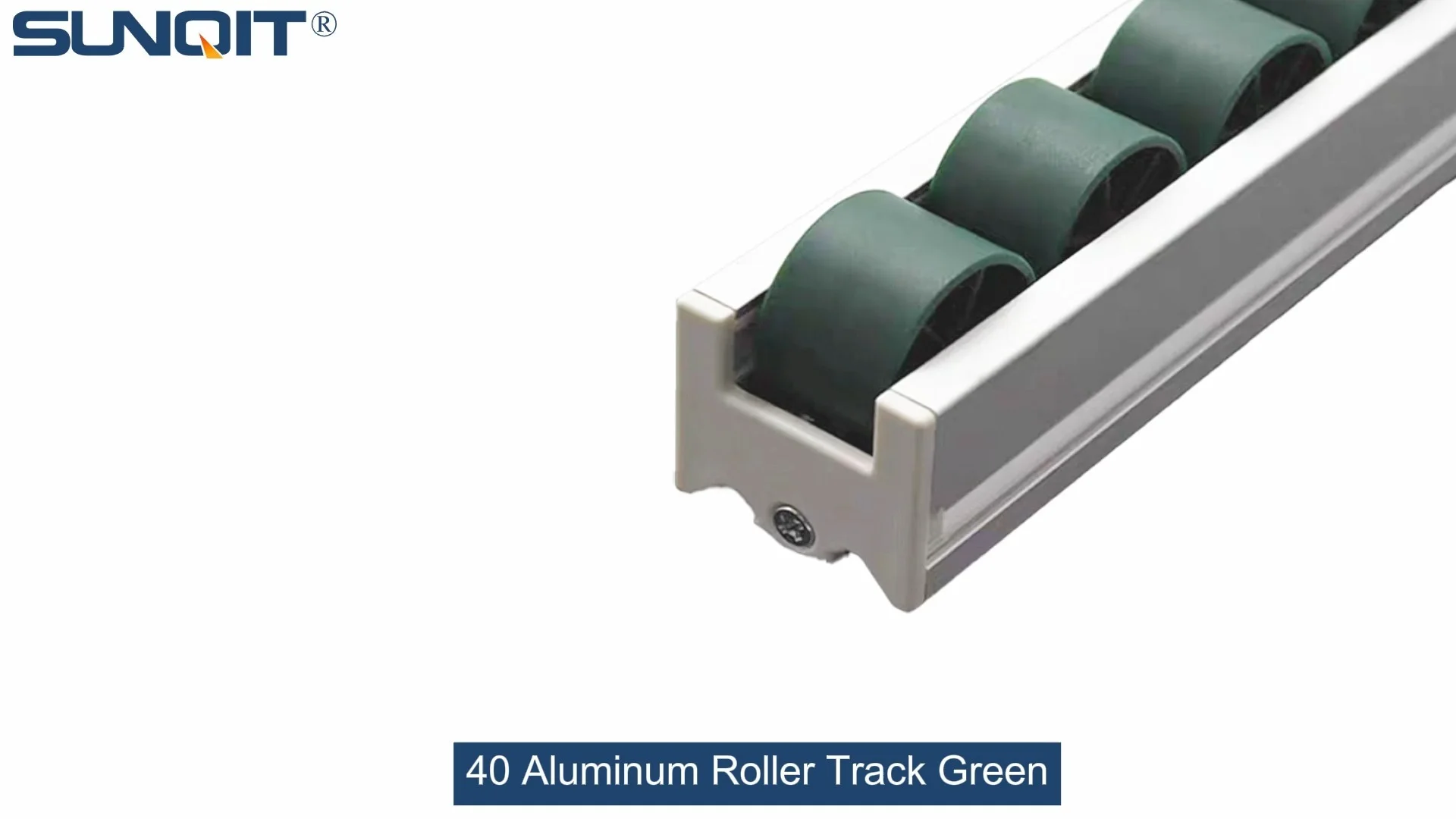
40 Aluminum Roller Track Green
Durable and smooth-running modular roller rails. The system is fully assembled. The roller rail profile contains plastic rollers mounted on steel axles. Aluminum frame with plastic wheel make it anti corrosion,and material convey more smooth.
If you've ever managed a warehouse or production line, you know that even the smallest equipment choices can make a huge difference in daily operations. One of those choices is picking the right roller track size for your flow racks or conveyors. Too small, and you'll deal with bent tracks, broken parts, and delayed workflows. Too large, and you're wasting money on capacity you don't need. Today, we're breaking down the differences between 40mm green aluminum roller tracks and 30mm tracks—so you can decide which one fits your business best.
What Are 40mm Green Aluminum Roller Tracks & 30mm Tracks?
Let's start with the basics. 40mm green aluminum roller tracks are sturdy, coated components designed for heavy-duty use. Made from aluminum extrusion profiles (thick, durable aluminum shapes), they're covered in a green protective layer to resist corrosion—perfect for warehouses or production lines where moisture or chemicals might be present. These tracks are part of a larger lean system ecosystem, often used in flow racks and conveyors to move parts smoothly from one place to another.
On the other hand, 30mm tracks are thinner and lighter. They're typically made from similar materials but with a smaller width and thickness. These tracks are common in industries where parts are lightweight, like 3C assembly lines (think phone screens or small circuit boards). They're cost-effective and take up less space, but they can't handle heavy loads like their 40mm counterparts.
Key Differences: 40mm Green vs.30mm Tracks
| Feature | 40mm Green Aluminum Roller Track | 30mm Roller Track |
|---|---|---|
| Load Capacity (Per Linear Meter) | Up to 50 kg | Up to 25 kg |
| Material Thickness | 2.0 mm | 1.5 mm |
| Corrosion Resistance | Yes (green protective coating) | Basic (no specialized coating) |
| Ideal Applications | Heavy-duty flow racks, conveyors for automotive/medical parts | Light 3C components, small material racks, tight workstations |
| Compatibility with Accessories | Works with roller track connectors, flow rack wholesale parts, and large caster accessories | Limited to smaller connectors and lightweight accessories |
| Longevity | 5+ years (with proper maintenance) | 2-3 years (under regular use) |
When to Choose 40mm Green Aluminum Roller Tracks
Now that we know the differences, let's talk about when 40mm green tracks are the right pick. These tracks are built for strength and durability, so they shine in scenarios where heavy loads or long-term use are involved.
1. Heavy-Duty Warehousing
If your flow racks hold bulky items like engine parts, large medical devices, or industrial machinery components, 30mm tracks won't cut it. Over time, the weight will bend or break the thinner tracks, leading to product damage and downtime. 40mm green tracks can handle these heavy loads without deformation—so you can store and move items safely, even in high-volume warehouses. This aligns perfectly with lean solution principles: reducing downtime means more efficient operations and happier customers.
If your flow racks hold bulky items like engine parts, large medical devices, or industrial machinery components, 30mm tracks won't cut it. Over time, the weight will bend or break the thinner tracks, leading to product damage and downtime. 40mm green tracks can handle these heavy loads without deformation—so you can store and move items safely, even in high-volume warehouses. This aligns perfectly with lean solution principles: reducing downtime means more efficient operations and happier customers.
2. High-Volume Production Lines
Conveyors are the backbone of many production lines, moving parts between stations quickly and efficiently. For lines that handle heavy parts (like automotive assembly lines or medical equipment manufacturing), 40mm green tracks are essential. They can withstand continuous use and heavy loads, so you don't have to stop production to fix broken tracks. For example, a car assembly line using 40mm green tracks to move door panels between painting and installation stations will see fewer delays and higher output.
Conveyors are the backbone of many production lines, moving parts between stations quickly and efficiently. For lines that handle heavy parts (like automotive assembly lines or medical equipment manufacturing), 40mm green tracks are essential. They can withstand continuous use and heavy loads, so you don't have to stop production to fix broken tracks. For example, a car assembly line using 40mm green tracks to move door panels between painting and installation stations will see fewer delays and higher output.
3. Long-Term Durability Needs
If you're looking for equipment that lasts, 40mm green tracks are the way to go. Their thick aluminum construction and green coating mean they resist corrosion and wear—so you won't have to replace them as often as 30mm tracks. This is great for businesses that want to follow sustainable lean practices: fewer replacements mean less waste and lower long-term costs. Plus, since these tracks are reusable, you can repurpose them if your workflow changes—another win for sustainability.
If you're looking for equipment that lasts, 40mm green tracks are the way to go. Their thick aluminum construction and green coating mean they resist corrosion and wear—so you won't have to replace them as often as 30mm tracks. This is great for businesses that want to follow sustainable lean practices: fewer replacements mean less waste and lower long-term costs. Plus, since these tracks are reusable, you can repurpose them if your workflow changes—another win for sustainability.
4. Corrosive Environments
Warehouses or production lines that deal with moisture, chemicals, or outdoor elements need equipment that can resist corrosion. The green coating on 40mm tracks provides an extra layer of protection, so they won't rust or degrade quickly. This is especially important for industries like food processing (though note: always check if the coating is food-safe) or marine equipment manufacturing, where corrosion is a constant threat.
Warehouses or production lines that deal with moisture, chemicals, or outdoor elements need equipment that can resist corrosion. The green coating on 40mm tracks provides an extra layer of protection, so they won't rust or degrade quickly. This is especially important for industries like food processing (though note: always check if the coating is food-safe) or marine equipment manufacturing, where corrosion is a constant threat.
5. Large-Scale Storage Solutions
For warehouses that use multi-level storage racks (like Material Rack B with 3 rows and 3 floors), 40mm green tracks are a must. These racks hold a lot of items, and the tracks need to support the weight of multiple boxes or parts. 30mm tracks would buckle under the pressure, but 40mm green tracks can handle the load, ensuring that items move smoothly from the top to the bottom of the rack.
For warehouses that use multi-level storage racks (like Material Rack B with 3 rows and 3 floors), 40mm green tracks are a must. These racks hold a lot of items, and the tracks need to support the weight of multiple boxes or parts. 30mm tracks would buckle under the pressure, but 40mm green tracks can handle the load, ensuring that items move smoothly from the top to the bottom of the rack.
When to Stick with 30mm Roller Tracks
40mm green tracks are great, but they aren't always necessary. There are plenty of scenarios where 30mm tracks are the better choice—saving you money and space.
1. Lightweight Component Handling
If your business deals with small, light parts (like 3C assembly components: phone screens, circuit boards, or small plastic parts), 30mm tracks are more than sufficient. These parts don't weigh enough to damage the thinner tracks, so you can use them without worrying about breakdowns. For example, a 3C factory using 30mm tracks to move small camera lenses between assembly stations will see no issues and save money on unnecessary capacity.
If your business deals with small, light parts (like 3C assembly components: phone screens, circuit boards, or small plastic parts), 30mm tracks are more than sufficient. These parts don't weigh enough to damage the thinner tracks, so you can use them without worrying about breakdowns. For example, a 3C factory using 30mm tracks to move small camera lenses between assembly stations will see no issues and save money on unnecessary capacity.
2. Tight Spaces or Small Workstations
30mm tracks take up less width than 40mm tracks, making them ideal for tight spaces. If your workstations are small or your flow racks are designed for compact storage, 30mm tracks will fit better. This is common in industries like electronics repair, where workbenches are small and space is at a premium. For example, a repair shop using 30mm tracks on their workbench to hold small phone parts will have more room to work without sacrificing efficiency.
30mm tracks take up less width than 40mm tracks, making them ideal for tight spaces. If your workstations are small or your flow racks are designed for compact storage, 30mm tracks will fit better. This is common in industries like electronics repair, where workbenches are small and space is at a premium. For example, a repair shop using 30mm tracks on their workbench to hold small phone parts will have more room to work without sacrificing efficiency.
3. Budget-Friendly Operations
Let's face it: cost matters. 30mm tracks are cheaper than 40mm green tracks, so if you don't need the extra capacity, they're a great way to save money. For small businesses or startups with limited budgets, 30mm tracks can help you set up your workflow without breaking the bank. Just make sure you're not sacrificing quality for cost—always choose tracks from a reputable supplier to ensure durability.
Let's face it: cost matters. 30mm tracks are cheaper than 40mm green tracks, so if you don't need the extra capacity, they're a great way to save money. For small businesses or startups with limited budgets, 30mm tracks can help you set up your workflow without breaking the bank. Just make sure you're not sacrificing quality for cost—always choose tracks from a reputable supplier to ensure durability.
4. Low-Volume Production Lines
If your production line handles a small number of parts each day, 30mm tracks are sufficient. For example, a small workshop making custom jewelry or handcrafted items won't need the heavy capacity of 40mm tracks. 30mm tracks will handle the light parts and save you money on equipment costs.
If your production line handles a small number of parts each day, 30mm tracks are sufficient. For example, a small workshop making custom jewelry or handcrafted items won't need the heavy capacity of 40mm tracks. 30mm tracks will handle the light parts and save you money on equipment costs.
Real-World Case Studies
Case Study 1: Automotive Parts Warehouse
A mid-sized automotive parts warehouse was using 30mm tracks for their flow racks holding transmission parts. After a few months, they noticed that the tracks were bending under the weight, leading to parts falling off and delayed order fulfillment. They decided to switch to 40mm green aluminum tracks. The result? No more bent tracks, and order processing time reduced by 15%. The warehouse manager reported that the new tracks were "a game-changer" for their operations, and they haven't had any track-related issues in over a year. They also noted that the green coating has prevented rust, even in their damp warehouse environment.
Case Study 2: 3C Assembly Plant
A 3C assembly plant specializing in phone screens uses 30mm tracks for their small component flow racks. The parts they handle are light (under 10kg each), so 30mm tracks are perfect. The plant manager says that using 30mm tracks has saved them money on equipment costs, and they haven't had any issues with track durability. They also appreciate that the tracks take up less space, allowing them to fit more workstations in their facility. The plant processes over 5000 phone screens a day, and the 30mm tracks handle the volume without any problems.
Case Study 3: Medical Equipment Manufacturer
A medical equipment manufacturer needed a lean solution for their production line moving heavy MRI machine components. They chose 40mm green tracks paired with custom conveyors. The tracks have been running smoothly for two years, with zero track-related downtime. The manufacturer reports that the tracks are "extremely durable" and have helped them increase production efficiency by 20%. They also note that the green coating has prevented corrosion, which is important for maintaining sterile conditions in their facility. The conveyors move parts between assembly stations, and the 40mm tracks handle the heavy MRI components (up to 40kg each) with ease.
Case Study 4: Small Electronics Repair Shop
A small electronics repair shop uses 30mm tracks on their workbench to hold small parts like phone batteries and circuit boards. The shop owner says that the 30mm tracks are perfect for their needs—they take up little space and handle the light parts without any issues. The shop processes around 50 repairs a day, and the tracks have been in use for over two years with no signs of wear. The owner also mentioned that the low cost of the 30mm tracks was a big selling point for their small business.
Integrating 40mm Green Tracks into Your Lean System
If you decide to go with 40mm green tracks, you might be wondering how to integrate them into your existing workflow. Here are a few tips to get the most out of your investment:
Final Thoughts
Choosing between 40mm green aluminum roller tracks and 30mm tracks comes down to your specific needs. If you handle heavy loads, need long-term durability, or work in a corrosive environment, 40mm green tracks are the right choice. If you handle light parts, have limited space, or are on a budget, 30mm tracks are a better fit.
Remember, the best equipment is the one that fits your workflow. Whether you choose 40mm or 30mm tracks, make sure to buy from a reputable supplier to ensure quality and durability. Suppliers like szsunqit offer a wide range of roller tracks and lean system components, so you can find exactly what you need to optimize your operations.
At the end of the day, the right roller track size will help you reduce downtime, increase efficiency, and save money. So take the time to assess your needs—your business will thank you for it. Whether you're running a large warehouse or a small repair shop, the right roller tracks can make a world of difference in your daily operations.
If you're still unsure which track size to choose, don't hesitate to reach out to a lean system expert. They can help you evaluate your workflow and recommend the best equipment for your needs. With the right tools, you can create a more efficient, sustainable, and profitable business.