- Company Articles
- Products and Technology
- Product knowledge
- 40 Aluminum Roller Track Green vs. Steel Tracks: Which is Better for Lean Manufacturing?

40 Aluminum Roller Track Green vs. Steel Tracks: Which is Better for Lean Manufacturing?
Related Product
40 Aluminum Roller Track Green
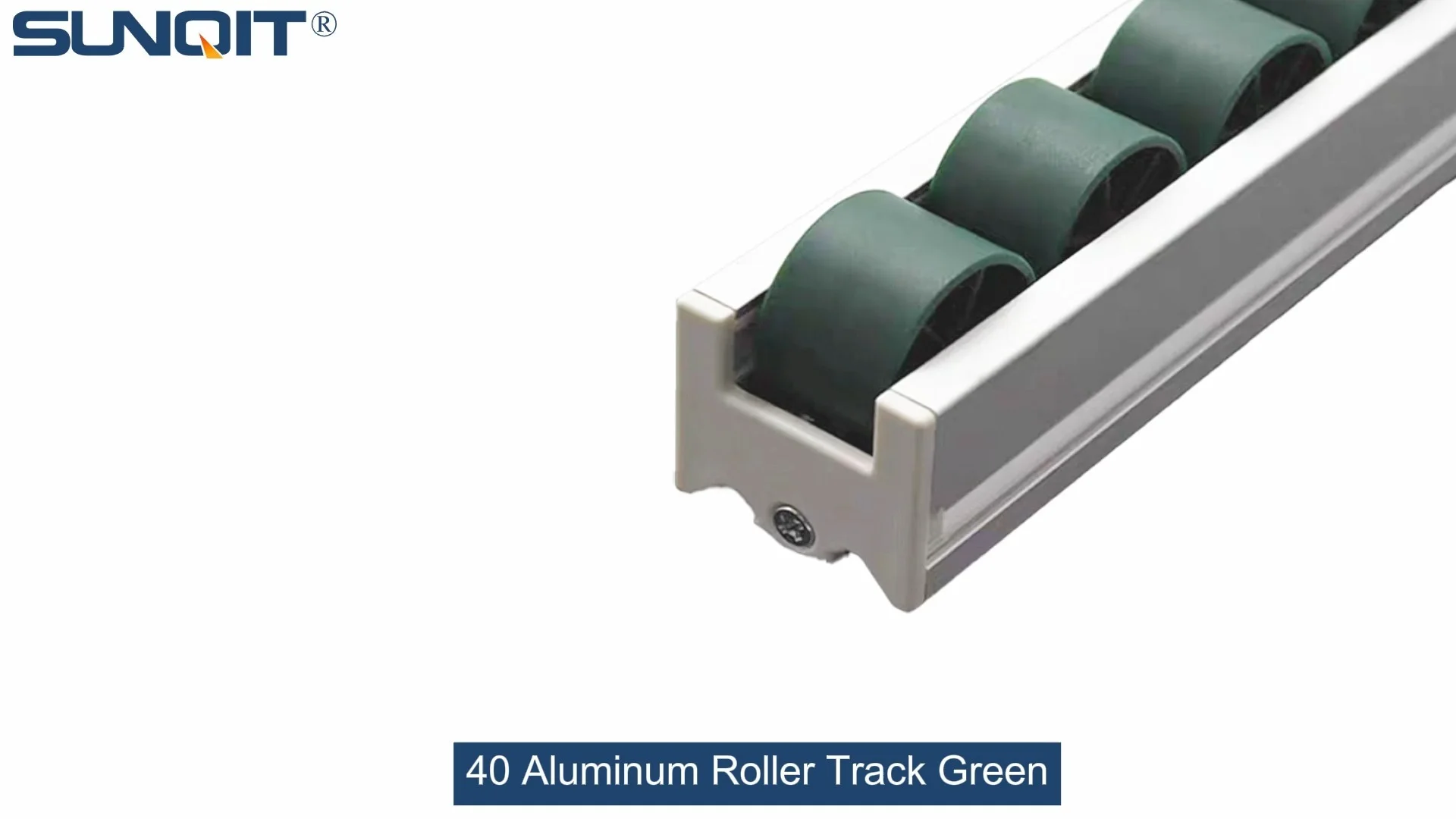
Durable and smooth-running modular roller rails. The system is fully assembled. The roller rail profile contains plastic rollers mounted on steel axles. Aluminum frame with plastic wheel make it anti corrosion,and material convey more smooth.
40 Aluminum Roller Track Green vs. Steel Tracks: Which is Better for Lean Manufacturing?
Introduction: The Heart of Lean Material Handling
Lean manufacturing isn't just a buzzword—it's a way of life for factories aiming to cut waste, boost efficiency, and keep up with ever-changing market demands. At the core of any lean setup is material handling: how parts move from one station to the next, how quickly lines can be reconfigured, and how well every component aligns with the principles of "do more with less." Roller tracks are unsung heroes here—they're the backbone of flow racks and conveyor systems, making sure parts glide smoothly where they need to go without unnecessary delays. But when it comes to choosing between 40 Aluminum Roller Track Green and traditional steel tracks, many manufacturers find themselves stuck. Which one fits better into a lean system? Which offers the best long-term value? Which adapts to the flexible needs of industries like 3C assembly or medical device manufacturing? Let's dive deep into this comparison to help you make the right choice for your lean solution.
What Are 40 Aluminum Roller Track Green and Steel Tracks?
Before we compare, let's get clear on what each track is. The 40 Aluminum Roller Track Green is a type of aluminum profile accessory designed for lean material handling systems. It's made from lightweight aluminum extrusion profile, coated with a green finish that adds corrosion resistance and a clean look. This track is part of a broader ecosystem of aluminum-based components—think 40 aluminum profile end caps, aluminum guide rails, and internal rotary aluminum joints—that make it easy to build and reconfigure flow racks, conveyors, and workstations. On the other hand, steel tracks are the traditional option: heavy, sturdy, and made from steel sheets or bars, often painted or galvanized to prevent rust. They've been used in manufacturing for decades, but do they still hold up in the fast-paced, flexible world of modern lean manufacturing?
Key Comparison Factors for Lean Manufacturing
When evaluating roller tracks for lean manufacturing, we can't just look at price or strength in isolation. We need to consider how each track aligns with the core principles of lean: waste reduction, flexibility, continuous improvement, and sustainability. Let's break down the critical factors to compare:
| Factor | 40 Aluminum Roller Track Green | Steel Tracks | Lean Manufacturing Relevance |
|---|---|---|---|
| Weight & Portability | Lightweight (≈1.2 kg/m) | Heavy (≈3.5 kg/m) | Flexibility to reconfigure lines quickly |
| Durability | Corrosion-resistant green coating; ideal for indoor use | High tensile strength; prone to rust if uncoated | Longevity & reduced replacement waste |
| Cost | Higher initial ($15-$20/m) | Lower initial ($8-$12/m) | Long-term value vs. short-term savings |
| Flexibility & Adaptability | Easy to integrate with aluminum profiles; compatible with end caps/guide rails | Harder to modify; requires welding/heavy fasteners | Adjust lines for new products (continuous improvement) |
| ESD Compliance | Treatable for ESD; works with ESD workbenches | Needs extra coatings; less natural conductivity | Suitability for 3C/medical device manufacturing |
| Maintenance | Minimal (wipe clean; no rust prevention) | Regular (oil, repaint to prevent rust) | Reduced downtime & maintenance waste |
| Sustainability | 100% recyclable; reusable in multiple setups | Recyclable but higher energy to repurpose | Alignment with "reusable, sustainable" lean |
Deep Dive into Each Comparison Factor
1. Weight & Portability: The Key to Flexible Lean Lines
Lean manufacturing thrives on flexibility. If your production line needs to be reconfigured every few months (or even weeks) to accommodate new products, heavy steel tracks are a nightmare. The 40 Aluminum Roller Track Green weighs roughly a third of steel tracks—this makes it easy for your team to move sections of the line, add new flow racks, or adjust conveyor paths without needing heavy machinery or extra manpower. For example, in a 3C assembly plant where new smartphone models launch every six months, being able to quickly rearrange the material handling system saves time and reduces waste. Aluminum tracks also pair perfectly with lightweight aluminum workbenches (like Workbench E from the site) and turnover trolleys, creating a cohesive, easy-to-move setup that aligns with lean's "continuous improvement" ethos.
2. Durability & Longevity: Balancing Strength and Corrosion Resistance
Steel tracks are known for their strength—they can handle heavier loads (up to 500 kg/m) than aluminum tracks (around 300 kg/m). But strength isn't everything. In indoor manufacturing environments (like medical device factories or clean rooms), corrosion resistance matters more than raw load capacity. The green coating on the aluminum track acts as a barrier against moisture and chemicals, preventing rust and extending its lifespan. Steel tracks, even if galvanized, can start to rust over time if scratched or exposed to humidity. For example, in a warehouse where products are stored with slight moisture (like food packaging components), aluminum tracks would last longer without needing replacement. This aligns with lean's goal of reducing waste—fewer replacements mean less material going to landfills.
3. Cost: Initial Investment vs. Long-Term Value
Let's talk numbers. A meter of steel track might cost $8-$12 upfront, while the 40 Aluminum Roller Track Green costs $15-$20. At first glance, steel seems cheaper—but let's calculate the long-term costs. Steel tracks require regular maintenance: repainting every 2-3 years (costing $2-$3 per meter each time), oiling to prevent rust, and replacement of rusted sections every 5-7 years. Aluminum tracks, on the other hand, need almost no maintenance—just an occasional wipe down. Over 10 years, the total cost for steel tracks per meter would be: initial ($10) + maintenance ($2*3 times) + replacement ($10) = $16. For aluminum: initial ($18) + zero maintenance + zero replacement = $18. Wait, that's almost the same? But wait—aluminum tracks can be reused in different configurations. If you reconfigure your line, you can take the aluminum tracks apart and reassemble them elsewhere, whereas steel tracks are often welded in place and have to be cut (wasting material). So the long-term value of aluminum is higher because of its reusability, which is a core part of the site's lean solution offering.
4. Flexibility & Adaptability: Building Lines That Grow With Your Business
One of the biggest advantages of aluminum tracks is their compatibility with aluminum profiles and accessories. The 40 Aluminum Roller Track Green can be easily attached to 4040 aluminum profiles using aluminum profile end caps and guide rails—no welding required. This means you can modify your flow rack or conveyor system in hours, not days. For example, if you need to add an extra shelf to your Material Rack B (from the site's product list), you can just slide the aluminum track into a new position and secure it with a few bolts. Steel tracks, however, are often welded to frames, so modifying them requires cutting the welds (which is time-consuming and can damage the track). This flexibility is crucial for lean manufacturing, where lines need to adapt to new products, higher demand, or process improvements. The site's custom solutions for 3C assembly and medical industries rely heavily on this adaptability—aluminum tracks are a key component of those solutions.
5. ESD Compliance: Safe for Sensitive Industries
Many lean manufacturing setups (especially in 3C assembly and medical device production) require ESD compliance to protect sensitive electronic components from static discharge. The 40 Aluminum Roller Track Green can be treated with an ESD coating to dissipate static electricity, making it compatible with ESD workbenches and ESD workstations. Steel tracks, on the other hand, are not naturally ESD-compliant—they need additional coatings or treatments, which add to the cost and maintenance. For example, in a smartphone assembly line, using ESD-compliant aluminum tracks ensures that components like circuit boards don't get damaged by static, reducing waste and improving product quality. This is a key reason why many 3C manufacturers prefer aluminum tracks over steel.
6. Maintenance: Less Time Fixing, More Time Producing
Lean manufacturing hates downtime—every minute spent fixing equipment is a minute lost in production. Aluminum tracks require almost no maintenance: just wipe them down with a dry cloth to remove dust. Steel tracks, however, need regular oiling to keep the rollers moving smoothly and repainting to prevent rust. For a factory with 100 meters of steel tracks, maintenance could take 4-5 hours every month—time that could be spent on production or process improvements. Aluminum tracks eliminate this downtime, aligning with lean's goal of maximizing value-added activities.
7. Sustainability: Reusable, Recyclable, and Green
The site's core lean emphasizes "reusable, sustainable improvement." Aluminum tracks fit perfectly into this vision. Aluminum is 100% recyclable—when you're done with a track, you can melt it down and turn it into a new component without losing any quality. Steel is also recyclable, but aluminum requires less energy to recycle (only 5% of the energy needed to produce new aluminum). Additionally, aluminum tracks can be reused in multiple configurations—you don't have to throw them away when you reconfigure your line. For example, a track used in a conveyor system today can be repurposed as part of a flow rack tomorrow. This reduces waste and aligns with the circular economy principles that many modern lean factories are adopting.
Which Track Is Right for Your Lean Manufacturing Setup?
The answer depends on your specific needs. Let's summarize the best use cases for each track:
Choose 40 Aluminum Roller Track Green If:
- You need flexible lines that can be reconfigured quickly (e.g., 3C assembly, medical device manufacturing).
- Your factory requires ESD compliance (pair with ESD workbenches).
- You prioritize sustainability and reusability.
- You want minimal maintenance and downtime.
Choose Steel Tracks If:
- You have heavy load requirements (e.g., automotive parts, large machinery components).
- Your budget is tight and you don't need frequent reconfigurations.
- You're working in an outdoor or harsh environment where raw strength is more important than corrosion resistance.
For most modern lean manufacturing setups—especially those in industries like 3C assembly, medical devices, or consumer electronics—the 40 Aluminum Roller Track Green is the better choice. It aligns with the core principles of lean: flexibility, waste reduction, sustainability, and continuous improvement. The site's custom lean solutions often include aluminum tracks because they're easy to integrate and adapt to changing needs.
Real-World Examples: How Aluminum Tracks Transform Lean Lines
Let's take a look at two real-world scenarios where the 40 Aluminum Roller Track Green made a difference in lean manufacturing:
Case Study 1: 3C Assembly Plant
A leading smartphone manufacturer in China needed to reconfigure its assembly line every 6 months to launch new models. Previously, they used steel tracks that were welded in place—reconfiguring took 2 weeks and cost $10,000 each time. They switched to 40 Aluminum Roller Track Green and aluminum profiles. Now, reconfiguring the line takes just 3 days and costs $2,000. The aluminum tracks are easy to disassemble and reassemble, and they're compatible with their ESD workbenches, reducing static-related defects by 15%. This aligns with their lean goals of reducing waste (time and money) and improving flexibility.
Case Study 2: Medical Device Factory
A medical device manufacturer needed a clean, ESD-compliant material handling system for their surgical instrument assembly line. They chose the 40 Aluminum Roller Track Green because it's corrosion-resistant and can be treated for ESD. The tracks are integrated with aluminum workstations and flow racks, making it easy to adjust the line as new instruments are developed. The system has been in use for 5 years with no maintenance issues, and the manufacturer estimates they've saved $50,000 in replacement costs compared to steel tracks. This fits their lean focus on sustainability and long-term value.
FAQs About 40 Aluminum Roller Track Green
Let's answer some common questions about this track:
Q: Can the 40 Aluminum Roller Track Green handle heavy loads?
A: Yes—each meter can support up to 300 kg, which is enough for most small to medium-sized components (like 3C parts, medical devices, or electronics). For heavier loads, you can add extra support brackets or use multiple tracks in parallel.
Q: Is the green coating ESD-compliant?
A: The standard green coating is not ESD-compliant, but we offer an optional ESD coating that dissipates static electricity. This is ideal for industries like 3C assembly where ESD protection is critical.
Q: How easy is it to install the 40 Aluminum Roller Track Green?
A: Very easy. The track comes with pre-drilled holes that align with aluminum profiles. You just need to use bolts and nuts (included with the track) to attach it to the profile. No welding or special tools are required.
Q: Can I reuse the track in different configurations?
A: Absolutely. The track is designed to be disassembled and reassembled multiple times. This is a key feature for lean manufacturing—you can repurpose the track for flow racks, conveyors, or workstations as your needs change.
Q: What industries benefit most from this track?
A: Industries that require flexible, ESD-compliant material handling systems benefit the most—including 3C assembly, medical device manufacturing, consumer electronics, and warehousing. These industries often need to reconfigure lines quickly and prioritize sustainability.
Conclusion: The Future of Lean Material Handling
Lean manufacturing is evolving, and so are the tools that support it. The 40 Aluminum Roller Track Green represents the next step in material handling—lightweight, flexible, sustainable, and ESD-compliant. While steel tracks still have their place in heavy-duty applications, aluminum tracks are becoming the go-to choice for factories that want to stay agile and efficient. Whether you're building a new flow rack, modifying a conveyor system, or designing a custom lean solution for your industry, the 40 Aluminum Roller Track Green offers the perfect balance of performance and adaptability. It's not just a track—it's a building block for a leaner, more efficient future.