- Company Articles
- Products and Technology
- Product knowledge
- 40 Aluminum Roller Track Grey Accessories: Must-Have Add-Ons for Complete Systems

40 Aluminum Roller Track Grey Accessories: Must-Have Add-Ons for Complete Systems
Related Product
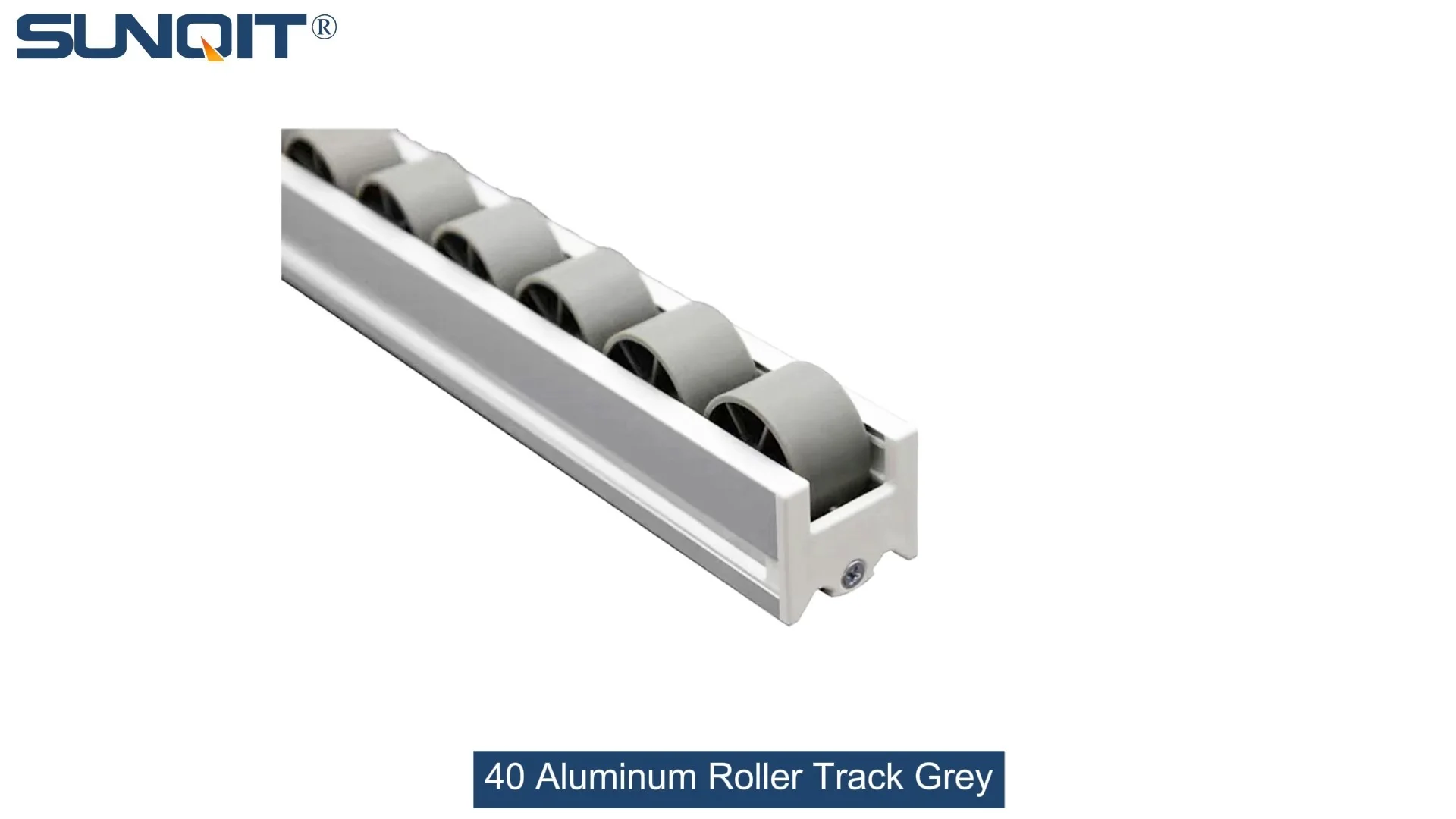
40 Aluminum Roller Track Grey
Durable and smooth-running modular roller rails. The system is fully assembled. The roller rail profile contains plastic rollers mounted on steel axles. Aluminum frame with plastic wheel make it anti corrosion,and material convey more smooth.
In the fast-paced world of manufacturing, warehousing, and assembly, efficiency isn't just a buzzword—it's the backbone of success. Every second saved in material flow, every reduction in downtime, and every improvement in workflow translates to tangible results for your bottom line. At the heart of many of these operations lies a humble yet critical tool: the roller track. Specifically, the 40 Aluminum Roller Track Grey has emerged as a go-to choice for businesses aiming to balance durability, flexibility, and cost-effectiveness. But here's the thing: a roller track on its own is like a puzzle missing half its pieces. To truly unlock its potential, you need the right accessories. These aren't mere afterthoughts; they're the unsung heroes that turn a basic track into a customized, high-performing system tailored to your unique needs. In this article, we'll dive deep into the world of 40 Aluminum Roller Track Grey accessories, exploring why they matter, which ones you can't do without, and how they work together to transform your material handling processes.
Understanding the 40 Aluminum Roller Track Grey: A Foundation for Efficiency
Before we jump into accessories, let's take a moment to appreciate the star of the show: the 40 Aluminum Roller Track Grey itself. What makes this track a staple in so many industries? For starters, it's crafted from high-grade aluminum, a material celebrated for its winning combination of strength and lightness. Unlike heavier steel alternatives, aluminum roller tracks are easier to install, reconfigure, and transport—qualities that matter when your production line needs to adapt to changing demands. Its corrosion-resistant properties also mean it holds up well in diverse environments, from dry warehouses to slightly humid assembly floors, ensuring a longer lifespan with minimal maintenance.
The "40" in its name refers to its standard width, making it compatible with a wide range of materials, from small components like electronic parts to larger items such as automotive subassemblies. And then there's the color: grey. While it might seem like a minor detail, the neutral grey finish serves a practical purpose. It resists showing scratches and wear, keeping the track looking professional even after years of use, and it blends seamlessly with most industrial settings, avoiding the distraction of bright colors that might clash with your workspace aesthetic.
Common applications for the 40 Aluminum Roller Track Grey include assembly lines, where parts glide smoothly from one workstation to the next; order fulfillment centers, where boxes and totes move efficiently toward packing stations; and manufacturing facilities, where raw materials are transported to production cells. In each case, the track's design—featuring evenly spaced rollers that reduce friction—ensures materials move with minimal effort, whether pushed manually or via gravity. But to make this system truly work for your operation, you need accessories that fine-tune its performance.
Why Accessories Matter: Beyond the Basics
Think of your 40 Aluminum Roller Track Grey as the foundation of a house. Without a solid foundation, the house won't stand—but without walls, a roof, and doors, it's just a slab of concrete. Accessories play the role of those walls and doors: they add structure, functionality, and adaptability. A track alone might let materials roll, but can it handle heavy loads without sagging? Can it guide irregularly shaped items to prevent jams? Can it integrate with other equipment, like workbenches or mobile trolleys? The answer to all these questions lies in the accessories you choose.
Accessories also address the unique challenges of your workflow. Maybe your team needs the track to be mobile, so you can move it to different parts of the facility as projects change. Or perhaps you're dealing with delicate materials that need extra stability during transport. Some operations require the track to connect to existing aluminum profile frameworks, while others need to adjust the height or angle of the track to align with workstations. Whatever your needs, the right accessories turn a one-size-fits-all solution into a system that works for you , not against you.
Another key point: investing in quality accessories now can save you from costly headaches later. A poorly secured track might wobble under heavy loads, leading to damaged products or even workplace injuries. A missing guide rail could result in materials sliding off the track, causing delays and wasted resources. By choosing the right add-ons, you're not just enhancing performance—you're investing in reliability and safety.

Must-Have Accessories for 40 Aluminum Roller Track Grey Systems
Now, let's get to the accessories that make all the difference. While the market offers a wide range of options, we've narrowed down the list to the ones that deliver the most impact for most users. These are the accessories that solve common pain points, boost efficiency, and ensure your roller track system works as a cohesive unit.
1. Aluminum Profile: The Backbone of Structural Support
You can't talk about roller track systems without mentioning aluminum profile . These extruded aluminum beams are the unsung framework that holds everything together. Think of them as the "legs" of your roller track setup—providing the vertical and horizontal support needed to keep the track stable, level, and secure. Aluminum profiles come in various shapes and sizes, but for 40 Aluminum Roller Track Grey systems, the most common are T-slot profiles. These profiles feature grooves (or "T-slots") along their length, which allow for easy attachment of accessories like mounts, brackets, and guide rails—no drilling or welding required.
Why aluminum profiles? They're lightweight enough to be maneuvered during installation but strong enough to support heavy loads, making them ideal for both fixed and semi-permanent setups. Their modular design also means you can easily extend or reconfigure your system as your needs grow. For example, if you need to raise your roller track to waist height for ergonomic loading, you can pair the track with taller aluminum profiles. If you're creating a multi-tiered material rack, shorter profiles can serve as dividers between levels. The compatibility between 40 Aluminum Roller Track Grey and standard aluminum profiles is a game-changer, as it opens up endless possibilities for customization without the need for custom fabrication.
Practical tip: When selecting aluminum profiles for your roller track, always check the load capacity. Profiles are rated based on their thickness and cross-sectional design, so make sure they can handle the weight of both the track and the materials you'll be moving. A quick chat with your supplier can help you match the right profile to your application.
2. Roller Track Placon Mount for Aluminum Profile Flat: Secure Attachment, Seamless Integration
So you have your 40 Aluminum Roller Track Grey and your aluminum profiles—now how do you attach them? Enter the roller track placon mount for aluminum profile flat . This small but mighty accessory is designed to securely fasten the roller track to flat-surfaced aluminum profiles, ensuring a tight, wobble-free connection that can withstand the daily wear and tear of busy operations.
What sets the placon mount apart from basic clamps or brackets? Its precision-engineered design. Most placon mounts feature a base that fits snugly into the T-slot of the aluminum profile, with a top plate that aligns perfectly with the bottom of the roller track. This ensures the track sits level and stable, preventing materials from getting stuck or sliding off due to unevenness. Installation is a breeze, too: simply slide the mount into the profile's T-slot, position the roller track on top, and tighten the bolts. No special tools, no complicated measurements—just a secure fit in minutes.
Another advantage? Adjustability. If you need to reposition the roller track along the profile (to create space for a new workstation, for example), the placon mount allows you to loosen the bolts, slide the track to the desired location, and retighten—no need to remove and reinstall the entire system. This flexibility is a lifesaver in dynamic environments where workflows change frequently. Whether you're setting up a permanent assembly line or a temporary material staging area, the roller track placon mount for aluminum profile flat ensures your track stays put, so you can focus on what matters: moving materials efficiently.
3. Aluminum Guide Rail A: Keeping Materials on Track (Literally)
Imagine this: you've set up your 40 Aluminum Roller Track Grey, mounted it securely with placon mounts, and start sending materials down the line. But halfway through, a box shifts to the side, jamming against the edge of the track. Suddenly, your smooth workflow grinds to a halt as someone rushes to free the jam. Sound familiar? This is where aluminum guide rail A comes in. Guide rails are the guardians of your roller track, ensuring materials stay aligned and move in a straight path, even when pushed or pulled with varying force.
Aluminum Guide Rail A is a popular choice for 40 Aluminum Roller Track Grey systems thanks to its durable, lightweight design and compatibility with standard aluminum profiles. Typically made from the same high-grade aluminum as the track itself, it features a low-profile, rounded edge that gently guides materials without scratching or damaging them—important if you're handling delicate items like glass components or finished products. The "A" designation refers to its specific shape, which is optimized for use with 40mm-wide tracks, providing just the right amount of side support to prevent shifting.
Installing Guide Rail A is straightforward. It attaches to the aluminum profiles (using the same T-slot system as the placon mounts) along either side of the roller track, creating a channel that keeps materials centered. Depending on your needs, you can install guide rails along the entire length of the track or in specific sections where materials are most likely to veer off course (like around curves or near loading/unloading points). For extra precision, some Guide Rail A models come with adjustable height settings, allowing you to fine-tune the guidance based on the size of your materials—from small bins to larger cartons.
Real-world impact: A manufacturer of small electrical appliances once reported a 30% reduction in jams after installing Aluminum Guide Rail A on their 40 Aluminum Roller Track Grey lines. By keeping circuit boards and plastic housings aligned, they cut down on downtime and reduced product damage, leading to significant cost savings over six months. Sometimes, the simplest accessories make the biggest difference.
4. Caster Wheel: Adding Mobility to Your Roller Track System
Not all roller track systems need to be fixed in place. In fact, many operations benefit from the ability to move material handling equipment where it's needed most—whether that's a temporary assembly station on the factory floor or a mobile picking cart in the warehouse. That's where caster wheels come into play. These versatile accessories transform your stationary roller track setup into a mobile unit, giving you the flexibility to adapt to changing workflows on the fly.
When pairing caster wheels with 40 Aluminum Roller Track Grey, there are a few key considerations. First, load capacity: the casters must support the combined weight of the track, accessories, and materials. Swivel casters are a popular choice for maneuverability, allowing the unit to turn 360 degrees, while rigid casters (fixed in direction) provide stability for straight-line movement. Many models also come with brakes, which lock the wheels in place when the unit is in use, preventing unwanted movement during loading or unloading.
Integration is seamless, too. Most caster wheels designed for industrial use feature mounting plates that attach directly to the bottom of aluminum profiles (using, you guessed it, T-slot fasteners). This means you can add mobility to almost any roller track setup—whether it's a small section of track mounted on a portable frame or a full-length material flow line on wheels. For example, a automotive parts supplier uses mobile roller track units with caster wheels to transport components from the warehouse to the assembly line, eliminating the need for forklifts or manual carrying and reducing the risk of workplace injuries.
Pro tip: If you're using caster wheels outdoors or in wet environments, look for models with rust-resistant finishes and sealed bearings to prevent dirt and moisture from affecting performance. A little extra investment in quality casters can save you from frequent replacements down the line.

Building a Complete System: How Accessories Work Together
To truly appreciate the power of these accessories, let's walk through a real-world example of how they come together to create a functional, efficient system. Meet "Acme Electronics," a mid-sized manufacturer of smartphone components. Acme recently expanded its production line and needed a material flow system to move circuit boards from the soldering station to the testing area, then to packaging. Here's how they used 40 Aluminum Roller Track Grey and its accessories:
First, they selected 40 Aluminum Roller Track Grey for its compatibility with their existing aluminum profile-based workstations. They then paired the track with aluminum profiles to raise the track to a comfortable working height (eliminating bending for workers). To attach the track to the profiles, they used roller track placon mounts for aluminum profile flat , ensuring a secure, level fit. Since circuit boards are small and lightweight but prone to sliding, they added aluminum guide rail A along both sides of the track to keep the boards aligned. Finally, for the testing area, they wanted the flexibility to move the track closer to the testing equipment when needed, so they added caster wheels with brakes to the base of the aluminum profiles.
The result? A smooth, integrated system where circuit boards glide effortlessly from station to station, with minimal human intervention. The guide rails prevent jams, the placon mounts keep the track stable during use, the aluminum profiles provide ergonomic height, and the caster wheels add mobility for quick adjustments. Acme reported a 25% increase in throughput and a 15% reduction in material handling time within the first month—proof that the right accessories turn a good system into a great one.
| Accessory | Primary Function | Key Features | Ideal For |
|---|---|---|---|
| Aluminum Profile | Structural support for roller track; framework for customization | Lightweight, T-slot design, corrosion-resistant, modular | Fixed or semi-permanent setups; multi-tiered systems; ergonomic height adjustment |
| Roller Track Placon Mount for Aluminum Profile Flat | Securely attaches roller track to flat aluminum profiles | Precision alignment, easy installation, adjustable positioning | Ensuring track stability; preventing wobble during material flow |
| Aluminum Guide Rail A | Keeps materials aligned on the track; prevents jams | Low-profile, rounded edges, compatible with 40mm tracks | Small or irregularly shaped materials; high-speed flow lines |
| Caster Wheel | Adds mobility to roller track systems | Swivel/rigid options, brake mechanisms, load-rated designs | Mobile workstations; temporary setups; material transport between areas |

Choosing the Right Accessories: Factors to Consider
With so many accessories available, how do you know which ones are right for your 40 Aluminum Roller Track Grey system? Here are a few key factors to keep in mind:
- Load Capacity: Always match accessories to the weight of the materials you'll be moving. A placon mount rated for 50kg won't cut it if you're transporting 100kg assemblies.
- Environment: Consider where the system will be used. If it's in a humid area, opt for corrosion-resistant accessories (like aluminum or stainless steel). If it's outdoors, look for weatherproof casters and mounts.
- Workflow Needs: Are you looking for a fixed system, or do you need mobility? Do materials need to be guided, or is a basic track sufficient? Answering these questions will narrow down your accessory list.
- Compatibility: Not all accessories are universal. Ensure the ones you choose are designed to work with 40 Aluminum Roller Track Grey and your specific aluminum profiles (e.g., T-slot vs. non-T-slot).
- Future Growth: Think ahead. Will you need to expand the system later? Choose modular accessories that can be easily added or reconfigured.
When in doubt, don't hesitate to reach out to your lean pipe supplier or roller track manufacturer. They can provide expert advice based on your unique application and help you avoid costly mistakes (like choosing an accessory that doesn't fit or underperforms).
Conclusion: Investing in Accessories = Investing in Efficiency
The 40 Aluminum Roller Track Grey is more than just a piece of equipment—it's a foundation for building efficient, adaptable material handling systems. But as we've explored, its true potential is unlocked when paired with the right accessories. From aluminum profiles that provide structural support to placon mounts that ensure secure attachment, guide rails that keep materials on track, and caster wheels that add mobility, each accessory plays a vital role in creating a system that works for you.
These add-ons aren't expenses—they're investments. Investments in reduced downtime, improved ergonomics, increased throughput, and ultimately, a stronger bottom line. Whether you're setting up a new production line, upgrading an existing system, or simply looking to squeeze more efficiency out of your current workflow, don't overlook the power of accessories. After all, in the world of material handling, the difference between good and great often comes down to the details.
So, take a look at your current 40 Aluminum Roller Track Grey setup. Are you missing any of these key accessories? Could your workflow benefit from a little more alignment, stability, or mobility? The answers might just be the first step toward a more efficient, productive operation.