- Company Articles
- Products and Technology
- Product knowledge
- 40 Aluminum Roller Track Grey Dimensions: A Technical Overview for Engineers

40 Aluminum Roller Track Grey Dimensions: A Technical Overview for Engineers
Related Product
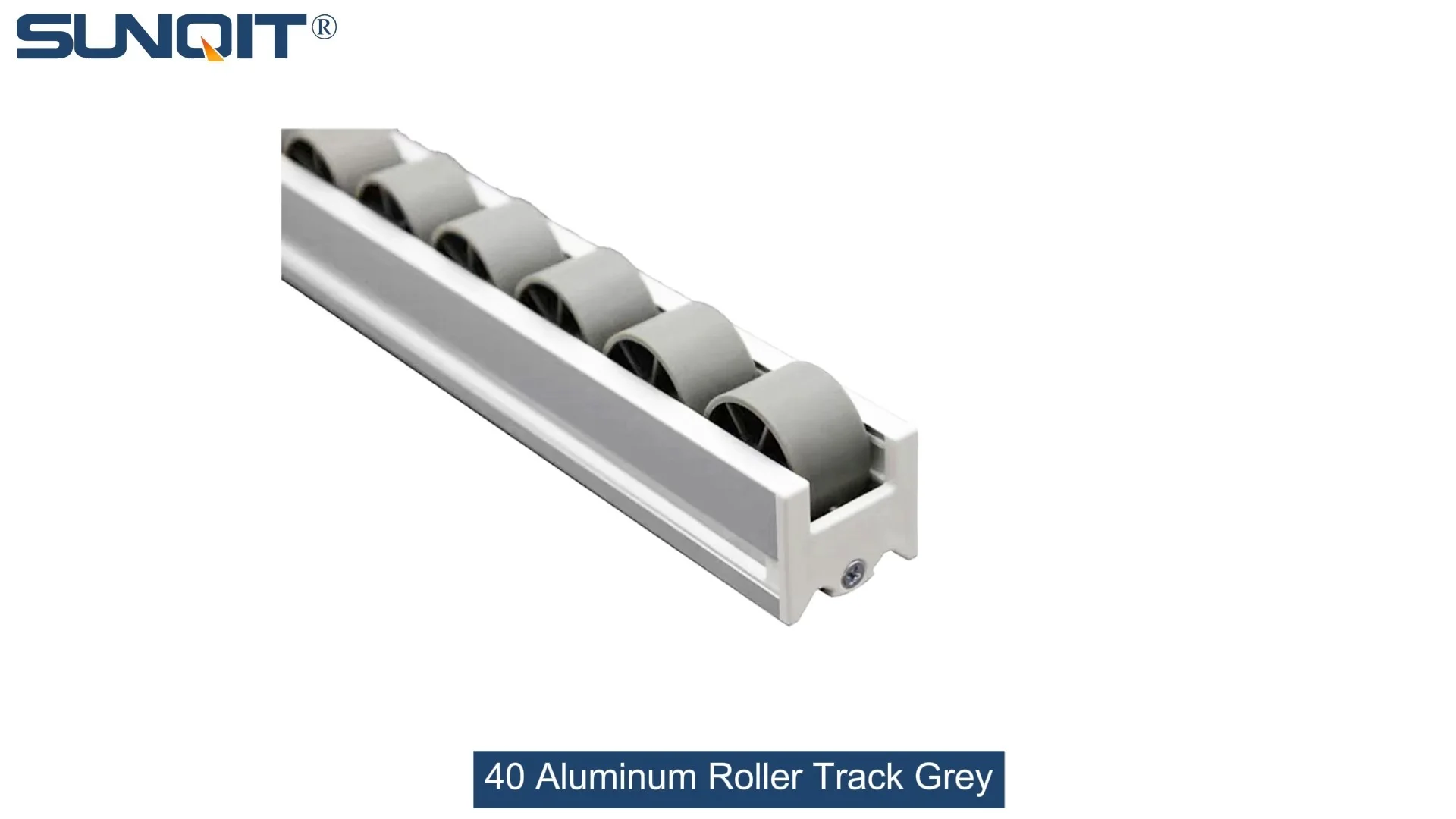
40 Aluminum Roller Track Grey
Durable and smooth-running modular roller rails. The system is fully assembled. The roller rail profile contains plastic rollers mounted on steel axles. Aluminum frame with plastic wheel make it anti corrosion,and material convey more smooth.
In the fast-paced world of manufacturing and production, every component plays a critical role in ensuring efficiency, precision, and reliability. Among these components, roller tracks stand out as unsung heroes, facilitating the smooth movement of materials, parts, and products across assembly lines, workbenches, and material racks. For engineers tasked with designing or optimizing production systems, understanding the nuances of these components—from material composition to dimensional specifications—is essential. In this technical overview, we'll focus on one such workhorse: the 40 Aluminum Roller Track Grey. We'll explore its dimensions, material properties, installation requirements, and real-world applications, equipping you with the knowledge to make informed decisions for your next project.
Understanding 40 Aluminum Roller Track Grey: What Sets It Apart?
Before diving into dimensions, let's clarify what makes the 40 Aluminum Roller Track Grey a preferred choice in industrial settings. The "40" in its name refers to the track width—40mm—a standard size that balances load capacity with flexibility. The "aluminum" denotes its core material, chosen for its unique blend of strength, lightweight properties, and corrosion resistance. The "grey" finish is not just aesthetic; it's often anodized to enhance durability and provide a neutral, professional look that integrates seamlessly into various work environments, from automotive plants to electronics assembly facilities.
Unlike steel roller tracks, which can be heavy and prone to rust in humid conditions, aluminum tracks offer superior maneuverability during installation and reconfiguration—key advantages in lean manufacturing systems where adaptability is prized. The 40mm width strikes a sweet spot: it's narrow enough to fit into compact workbench setups yet robust enough to handle moderate to heavy loads, making it versatile for both small-part assembly and bulk material transport.
Material Composition: Why Aluminum Alloy Matters
The performance of any roller track hinges on its material, and the 40 Aluminum Roller Track Grey is typically crafted from 6063-T5 aluminum alloy. This alloy is a staple in industrial profiles for good reason: it offers excellent extrudability, allowing for precise dimensional control during manufacturing, and it ages naturally (T5 temper) to achieve a balance of strength and ductility. The result is a track that can withstand repeated impacts from moving parts without deforming, while remaining lightweight enough to reduce strain on supporting structures like aluminum profiles and workbench frames.
The anodized grey finish further enhances the material's properties. Anodization creates a protective oxide layer on the aluminum surface, increasing resistance to scratches, chemical exposure, and corrosion. This is particularly valuable in environments where cleaning agents or coolants are used, as it prevents pitting or discoloration over time. For engineers, this translates to longer component lifespans, reduced replacement costs, and consistent performance even in demanding conditions.

Key Dimensions and Specifications
Precision is non-negotiable in roller track design. Even minor variations in dimensions can lead to jamming, uneven material flow, or premature wear. Below is a detailed breakdown of the critical dimensions of the 40 Aluminum Roller Track Grey, based on industry standards and typical manufacturer specifications.
| Dimension | Specification | Importance |
|---|---|---|
| Track Width | 40mm ± 0.2mm | Ensures compatibility with standard aluminum profile accessories and roller mounts. |
| Track Height (Overall) | 32mm ± 0.3mm | Affects clearance for materials and integration with workbench surfaces. |
| Roller Diameter | 25mm (standard); 20mm (optional for light loads) | Larger diameters reduce rolling resistance for heavier items. |
| Roller Spacing | 50mm center-to-center | Even spacing distributes load and prevents materials from tipping or getting stuck. |
| Material Thickness (Track Wall) | 1.5mm – 2.0mm | Balances weight and structural integrity; thicker walls for higher load capacities. |
| Length Options | 1m, 2m, 3m (custom lengths available) | Standard lengths reduce waste; custom options suit unique layout requirements. |
| Weight Capacity | 50kg/m (uniform load) | Based on 1.5mm wall thickness; increases to 75kg/m with 2.0mm walls. |
| Roller Material | Nylon (grey) or ESD-safe black nylon | Nylon offers low friction; ESD versions prevent static damage in electronics manufacturing. |
These dimensions are not arbitrary. Each specification is engineered to work in harmony: the 50mm roller spacing, for example, ensures that even small components (like circuit boards or mechanical parts) remain stable during transport, while the 25mm roller diameter minimizes rolling resistance, allowing for smooth movement with minimal manual force. The weight capacity of 50kg/m is validated through rigorous testing, simulating real-world conditions where materials may be placed unevenly or pushed/pulled repeatedly throughout a shift.

Installation Components: The Role of Roller Track Placon Mounts
A roller track is only as effective as its installation. To secure the 40 Aluminum Roller Track Grey to supporting structures like aluminum profiles or workbench frames, engineers rely on specialized mounting components. Among these, the roller track placon mount for aluminum profile flat is particularly critical. This mount is designed to attach the track to flat surfaces of aluminum profiles—common in workbench frames and material racks—providing a stable, vibration-resistant connection.
The roller track placon mount for aluminum profile flat features a low-profile design that sits flush against the profile, ensuring the track remains level and aligned. It typically includes pre-drilled holes for M5 or M6 screws, allowing for quick assembly with standard hex keys. What sets this mount apart is its adjustability: slots in the mount allow for fine-tuning of the track's position along the profile, ensuring parallel alignment when installing multiple tracks side by side—a must for preventing jams in multi-lane material flow systems.
While the flat mount is ideal for horizontal surfaces, other placon mount variants cater to specific needs: the "high" mount raises the track for under-track clearance (useful for integrating sensors or labels), and the "center support bracket" adds stability for longer track sections or heavier loads. Engineers should select mounts based on the profile type (e.g., 2020, 3030, or 4040 aluminum profiles) and the intended load, as using an undersized mount can lead to sagging or premature failure.

Compatibility with Aluminum Profile Accessories
The 40 Aluminum Roller Track Grey doesn't operate in isolation; it's part of a larger ecosystem of aluminum profile accessories that enable modular, customizable production systems. From joints and brackets to guide rails and stoppers, these accessories enhance the track's functionality and adaptability.
For example, aluminum guide rails (Type A or B) can be mounted alongside the roller track to keep materials centered, preventing lateral movement during transport. These guide rails are often made from the same 6063-T5 aluminum, ensuring consistent thermal expansion and contraction with the track—critical in environments with temperature fluctuations. Similarly, end stops (plastic or aluminum) can be attached to the track's terminus to halt materials precisely at workbench stations, reducing the risk of overshooting and damage.
Aluminum profile accessories also facilitate integration with other lean manufacturing components, such as workbenches and material racks. A workbench with a built-in 40mm roller track, for instance, allows assemblers to slide parts directly from the track to the work surface, minimizing manual handling and reducing cycle times. When paired with adjustable height legs and ESD-safe worktops, such a setup becomes a cornerstone of efficient, ergonomic assembly lines.
Practical Applications in Production Environments
To truly appreciate the 40 Aluminum Roller Track Grey's value, let's explore its real-world applications across industries:
Workbench Integration for Electronics Assembly
In electronics manufacturing, precision and static control are paramount. The 40 Aluminum Roller Track Grey, when paired with ESD-safe nylon rollers, provides a static-dissipative path for circuit boards and sensitive components. Mounted along the edge of a workbench, the track allows operators to receive parts from upstream stations and slide them directly into position for assembly, reducing the risk of ESD damage from manual carrying. The 40mm width is ideal for small to medium PCBs, while the grey anodized finish resists staining from flux or cleaning solvents common in electronics work.
Material Racks and Turnover Trolleys
Material racks, such as "Material Rack B (3 row and 3 floor)" from many lean system suppliers, often incorporate 40mm roller tracks to enable gravity-fed material flow. In a typical setup, tracks are inclined slightly (3-5 degrees) so that bins or totes slide forward as the front one is removed, ensuring operators always have easy access to parts. The 50kg/m load capacity supports stacked bins of metal components or plastic parts, while the corrosion-resistant aluminum ensures the rack remains functional even in warehouses with high humidity.
Case Study: Automotive Component Assembly Line
A leading automotive parts manufacturer recently upgraded its transmission assembly line with 40 Aluminum Roller Track Grey, replacing outdated steel tracks. The goal was to reduce line reconfiguration time during model changes and lower maintenance costs. By switching to aluminum, the team reduced the weight of each track section by 40%, making manual adjustments easier and faster. The roller track placon mount for aluminum profile flat simplified installation on existing 4040 aluminum profile frames, and the grey finish matched the plant's existing equipment, eliminating the need for repainting.
Within three months, the manufacturer reported a 15% reduction in material handling time and a 20% drop in maintenance requests (largely due to reduced rust-related roller jams). The adjustable placon mounts also allowed for quick alignment tweaks, ensuring the tracks remained parallel even after repeated use—critical for the smooth flow of heavy transmission casings.
Maintenance and Longevity: Ensuring Optimal Performance
Like any industrial component, the 40 Aluminum Roller Track Grey requires regular maintenance to maximize its lifespan and performance. Fortunately, aluminum's inherent properties simplify upkeep compared to steel alternatives. Below are key maintenance tips for engineers and facility managers:
- Regular Cleaning: Wipe down tracks weekly with a lint-free cloth and mild detergent to remove dust, grease, and debris. Avoid abrasive cleaners, which can scratch the anodized finish. For stubborn residues (e.g., oil from machinery), use isopropyl alcohol, followed by a water rinse.
- Lubrication: Nylon rollers are self-lubricating, but occasional lubrication with silicone spray (avoid petroleum-based lubricants, which can degrade nylon) can reduce friction and noise. Focus on roller axles, especially in high-use areas.
- Inspect Rollers and Mounts: Monthly, check for worn or cracked rollers, loose placon mounts, or bent track sections. replace rollers immediately if they show signs of flat spots or binding, as these can damage materials or cause jams.
- Check Alignment: Over time, vibration or heavy loads can shift tracks out of alignment. Use a straightedge to ensure tracks remain parallel and level; adjust placon mounts as needed to correct misalignment.
- Protect from Impact: Install bumper guards at track entrances/exits if materials are loaded/unloaded manually. This prevents dents to the track edges, which can snag totes or parts.
With proper maintenance, a well-engineered 40 Aluminum Roller Track Grey can last 5-7 years in moderate-use environments, and up to 10 years in low-vibration settings like electronics assembly lines. This longevity makes it a cost-effective investment compared to cheaper, shorter-lived plastic tracks or high-maintenance steel options.
Choosing the Right Supplier: Why Partner with a Reputable Lean Pipe Supplier
The quality of your roller track is only as good as the supplier behind it. When selecting a 40 Aluminum Roller Track Grey, engineers should prioritize partnering with a reputable lean pipe supplier—one with a track record of delivering precision components, technical expertise, and reliable support.
A trusted lean pipe supplier will provide certified dimensional reports, material test certificates (e.g., for 6063-T5 aluminum), and installation guides tailored to your application. They'll also offer customization options, such as custom track lengths, specialized roller materials (e.g., ESD-safe or high-temperature resistant), and branded finishes. Perhaps most importantly, they'll have a knowledgeable technical team to assist with design questions—whether you're integrating tracks into a new workbench or retrofitting an existing material rack.
Avoid suppliers that cut corners on material thickness or skip anodization to lower costs. These practices may save money upfront but lead to premature failure, costly downtime, and safety risks. A reputable supplier will stand behind their products with warranties (typically 1-2 years) and responsive after-sales service, ensuring you get the support you need if issues arise.
Conclusion: Elevating Production Efficiency with Precision Engineered Components
The 40 Aluminum Roller Track Grey is more than just a simple conveyor component; it's a precision-engineered tool that empowers engineers to design leaner, more efficient production systems. Its 40mm width, lightweight aluminum construction, and compatibility with aluminum profile accessories make it versatile for a range of applications, from workbench assembly lines to gravity-fed material racks. By understanding its dimensions, installation requirements, and maintenance needs, engineers can unlock its full potential—reducing material handling time, minimizing downtime, and enhancing overall productivity.
Whether you're building a new production line or upgrading an existing one, remember that the success of your system depends on the quality of its components. By partnering with a reputable lean pipe supplier and prioritizing precision-engineered parts like the 40 Aluminum Roller Track Grey, you're not just investing in equipment—you're investing in the long-term efficiency and profitability of your operation. In the world of manufacturing, where every second and every cent counts, that's a decision that pays dividends.