- Company Articles
- Products and Technology
- Product knowledge
- 40 Aluminum Roller Track Grey for Medical Supply Warehousing: Traceability & Speed

40 Aluminum Roller Track Grey for Medical Supply Warehousing: Traceability & Speed
Related Product
40 Aluminum Roller Track Grey
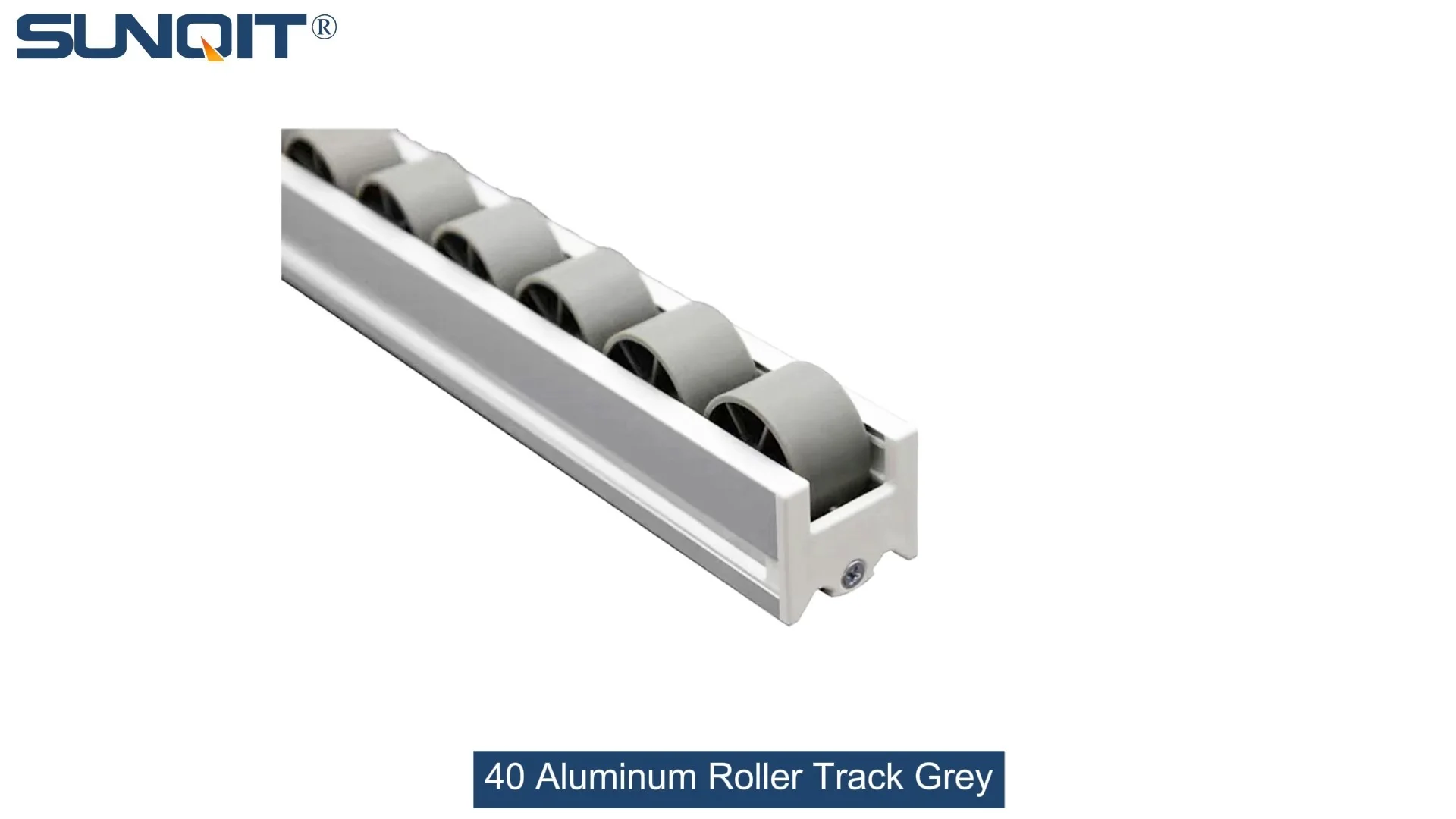
Durable and smooth-running modular roller rails. The system is fully assembled. The roller rail profile contains plastic rollers mounted on steel axles. Aluminum frame with plastic wheel make it anti corrosion,and material convey more smooth.
In the high-stakes world of medical supply warehousing, every second counts. When a hospital runs low on surgical gloves, a clinic needs urgent vaccine restocks, or a trauma center requires sterile dressings, the difference between timely delivery and delay can impact patient care—even lives. But speed alone isn't enough. Medical supplies, from syringes to life-saving medications, demand meticulous traceability: where a product was manufactured, when it arrived, how it was stored, and who handled it. Any gap in this chain can lead to compliance violations, product waste, or worse, compromised safety.
This is where the right equipment makes all the difference. Warehouses that rely on outdated, clunky systems often find themselves stuck in a cycle: slow workflows, missed deadlines, and frustratingly opaque tracking processes. But there's a solution that's quietly transforming medical supply chains around the world: the 40 Aluminum Roller Track Grey . More than just a conveyor component, this unassuming piece of hardware is a linchpin in building lean, efficient, and traceable warehousing operations. Let's dive into why it's become a must-have for medical facilities and distributors alike.
The Pressure Cooker of Medical Supply Warehousing: Why Speed and Traceability Can't Be Compromised
To understand the value of the 40 Aluminum Roller Track Grey, let's first step into the shoes of a medical warehouse manager. Their to-do list is a mile long: ensure vaccines are stored at precise temperatures, track expiration dates on surgical tools, manage sudden surges in demand (like during a public health crisis), and keep up with ever-changing regulations from bodies like the FDA or WHO. And through it all, they're under pressure to get supplies to hospitals and clinics fast —because in healthcare, "soon" might as well be "too late."
Speed here isn't just about moving boxes quickly. It's about predictable speed. When a nurse orders 500 face masks, the warehouse needs to locate them, pack them, and ship them in a timeframe they can commit to. Delays happen when products get stuck in bottlenecks: a heavy cart that's hard to push, a shelf that's awkward to reach, or a picking process that requires workers to backtrack across the warehouse.
Traceability, meanwhile, is the safety net. Imagine a batch of IV fluids is recalled due to a manufacturing defect. The warehouse must immediately identify every unit that came from that batch, where it's stored, and which facilities received it. Without a clear paper (or digital) trail, this could take hours—even days—wasting precious time and risking patient exposure. In the worst cases, poor traceability leads to expired products being shipped, counterfeit supplies entering the chain, or non-compliance fines that cripple operations.
So, what's the common thread between solving speed and traceability? Flow . A warehouse with smooth, logical flow reduces bottlenecks (boosting speed) and creates clear, trackable paths for products (enhancing traceability). This is where lean systems come into play—and why the 40 Aluminum Roller Track Grey is such a critical component of those systems.
Introducing the 40 Aluminum Roller Track Grey: A Workhorse Built for Medical Environments
At first glance, a roller track might seem like a simple tool: a series of rollers mounted on a frame, designed to let products glide from point A to point B. But in medical warehousing, "simple" is often misleading. The 40 Aluminum Roller Track Grey is anything but basic. Let's break down what makes it stand out.
Material Matters: Why Aluminum is Non-Negotiable
Medical warehouses are harsh environments. They're cleaned regularly with disinfectants, temperatures can fluctuate (especially in cold storage for vaccines), and products are often heavy or delicate. Steel roller tracks might seem durable, but they're prone to rust if not properly maintained—a big risk in damp or frequently cleaned spaces. Plastic tracks, on the other hand, can warp under heavy loads or degrade when exposed to strong cleaning chemicals.
Aluminum solves these problems. It's naturally resistant to corrosion, so even with daily wipe-downs or accidental spills, the 40 Aluminum Roller Track Grey stays looking and functioning like new. It's also lightweight—about 1/3 the weight of steel—making installation and reconfiguration a breeze. This is a huge plus for warehouses that need to adapt quickly (e.g., shifting from storing PPE to ventilators overnight).
And then there's the color: grey . Unlike bright yellow or red tracks, grey is neutral, which helps mask scuffs and minor scratches—keeping the warehouse looking professional even after heavy use. It also reduces eye strain for workers who spend hours navigating the facility, making it easier to spot product labels or color-coded bins.
Design Details: Smooth Rollers, Sturdy Frames, and Precision Engineering
The "40" in 40 Aluminum Roller Track Grey refers to its width—40mm—making it ideal for medium to large-sized medical supplies: think boxes of bandages, cases of syringes, or even small medical devices. The rollers themselves are typically made of high-grade plastic or rubber, chosen for their ability to glide smoothly without scratching product packaging. Each roller is spaced evenly to ensure even weight distribution, preventing boxes from tipping or getting stuck.
But what really sets this track apart is its compatibility with aluminum profile accessories . Medical warehouses rarely have one-size-fits-all needs: some areas might require a steep incline for fast-moving items, others a gentle slope for fragile goods. With aluminum profile accessories like adjustable brackets, connectors, and end stops, the 40 Aluminum Roller Track Grey can be customized to fit any layout. Need to curve around a corner? Use a swivel connector. Want to add a brake to slow down heavy boxes? Attach a friction pad. These accessories turn a basic track into a tailored solution.
Another key feature is its modularity. Unlike fixed conveyor belts, which are expensive to reconfigure, aluminum roller tracks are designed to be taken apart and reassembled. If a warehouse expands or changes its workflow, workers can simply unbolt the track, move it, and reattach it with minimal downtime. This flexibility is a cornerstone of lean systems, which prioritize adaptability to eliminate waste.

Lean Systems in Action: How 40 Aluminum Roller Track Grey Eliminates Waste and Boosts Speed
Lean systems are all about cutting out inefficiencies—whether that's wasted time, unnecessary movement, or excess inventory. In medical warehousing, these principles aren't just about saving money; they're about saving lives. Let's see how the 40 Aluminum Roller Track Grey fits into a lean workflow.
From Receiving to Shipping: A Seamless Flow
Picture a typical day in a medical warehouse using lean principles:
- Receiving: Trucks unload pallets of medical supplies. Workers scan each pallet into the inventory system, then place them onto a 40 Aluminum Roller Track Grey leading to the storage area. The track's gentle slope lets pallets glide forward without manual pushing, reducing worker fatigue.
- Storage: Pallets move along the track to flow racks —vertical storage units with roller tracks built into each shelf. Flow racks use FIFO (First In, First Out) logic: the oldest products are at the front, ensuring they're picked first and reducing expiration waste. The 40mm track is wide enough to support standard medical supply boxes, so items slide easily from the back of the rack to the picking face.
- Picking: When an order comes in, a worker travels to the flow rack, picks the required items, and places them onto a smaller roller track cart (equipped with 40 Aluminum Roller Track Grey sections) that glides to the packing area. No more hauling heavy bins across the warehouse—gravity does the work.
- Packing: At the workbench , workers verify the order, add any necessary documentation, and pack the items. The workbench is positioned at the end of another roller track, so packed boxes slide directly onto a shipping conveyor, ready for delivery.
In this setup, the 40 Aluminum Roller Track Grey is the backbone, connecting every step of the process. By minimizing manual handling, it cuts down on the time between receiving and shipping. Workers no longer waste energy pushing carts or searching for misplace items—they focus on high-value tasks like verifying orders or updating inventory.
Reducing Errors Through Visual Management
Lean systems also rely on visual cues to keep workflows on track, and the 40 Aluminum Roller Track Grey excels here. Its neutral grey color makes it easy to add color-coded labels or tape, designating lanes for different product types: red for vaccines, blue for surgical tools, green for PPE. Workers can quickly identify where items belong, reducing misplacements and picking errors.
Flow racks, paired with the roller track, also make inventory levels visible at a glance. If a shelf is running low, it's immediately obvious—no need to scan every item to check stock. This "visual management" ensures shortages are caught early, preventing delays in fulfilling orders.

Traceability: How Roller Tracks Create a Clear Paper Trail
Speed is useless if you can't track where a product has been. In medical warehousing, traceability isn't just a best practice—it's the law. Regulators require detailed records of every product's journey, and the 40 Aluminum Roller Track Grey plays a surprisingly key role in making this possible.
Mapping the Journey: From Scan to Shipment
Every time a product moves along the 40 Aluminum Roller Track Grey, it passes through checkpoints where it can be scanned or logged. For example:
- Receiving Checkpoint: As pallets arrive, they're scanned into the system and placed on the roller track. The track's starting point is logged in the inventory software, creating the first entry in the product's journey.
- Flow Rack Checkpoint: When items are stored in flow racks, each shelf is assigned a unique location code. Scanning the product and the shelf code links the two in the system, so anyone can see exactly where an item is stored.
- Picking Checkpoint: At the picking station, workers scan the product and the order number, recording that the item has been picked. The roller track cart used to transport the item can also be tagged, linking the product to its route through the warehouse.
- Shipping Checkpoint: Finally, at the workbench, the packed order is scanned one last time before shipping, closing the loop on the product's journey.
Because the roller track creates a fixed path, there's no ambiguity about where a product was at any given time. If a recall is issued, the warehouse can pull up the product's scan history, trace it back to its storage location, and identify all other items from the same batch—all in minutes, not hours.
Cleanliness and Compliance: A Track That Meets Medical Standards
Medical warehouses are held to strict hygiene standards, and any equipment used must be easy to clean and sanitize. The 40 Aluminum Roller Track Grey's smooth, non-porous surface leaves nowhere for dirt, dust, or bacteria to hide. A quick wipe with disinfectant is all it takes to keep it compliant with regulations like ISO 13485 (medical device quality management). Unlike steel tracks with crevices or wooden shelves that absorb moisture, aluminum resists microbial growth—critical for storing sterile supplies.
Even the rollers are designed with cleanliness in mind. Many models feature sealed bearings, preventing lubricant from leaking onto products or attracting dust. This attention to detail ensures the track itself never becomes a source of contamination, further safeguarding traceability and patient safety.

Comparing Roller Tracks: Why 40 Aluminum Grey is the Best Fit for Medical Warehousing
Not all roller tracks are created equal. To understand why the 40 Aluminum Roller Track Grey stands out, let's compare it to other common options used in warehousing:
| Track Type | Material | Best For | Pros | Cons for Medical Warehousing |
|---|---|---|---|---|
| 40 Aluminum Roller Track Grey | Aluminum frame, plastic/rubber rollers | Medium to large medical supplies, FIFO storage, clean environments | Corrosion-resistant, easy to clean, lightweight, customizable with aluminum profile accessories | Higher upfront cost than plastic (offset by longevity) |
| 38 Aluminum Roller Track Black ESD | Aluminum frame, ESD-safe rollers | Electronics (e.g., medical devices with circuit boards) | ESD protection, similar durability to 40mm grey | Narrower (38mm), not ideal for larger boxes; ESD features unnecessary for most medical supplies |
| 60 Steel Roller Track Green | Steel frame, steel rollers | Extremely heavy loads (e.g., industrial equipment) | High weight capacity | Prone to rust, heavy (hard to reconfigure), requires regular painting to prevent corrosion |
| Plastic Roller Track Yellow | Plastic frame and rollers | Lightweight, low-cost applications (e.g., retail) | Inexpensive, lightweight | Warp under heavy loads, degrade with cleaning chemicals, poor durability |
As the table shows, the 40 Aluminum Roller Track Grey strikes the perfect balance for medical warehousing: it's durable enough to handle daily use, clean enough to meet hygiene standards, and flexible enough to adapt to changing needs. While steel tracks might offer higher weight capacity, they're overkill for most medical supplies and come with maintenance headaches. Plastic tracks are cheap but short-lived, leading to higher replacement costs over time. For medical facilities that need reliability, compliance, and efficiency, aluminum is the clear choice.
Real-World Results: How One Warehouse Transformed with 40 Aluminum Roller Track Grey
To put this all into perspective, let's look at a hypothetical (but realistic) example of a medical supply distributor that upgraded to 40 Aluminum Roller Track Grey. We'll call them "MediFlow Distribution."
The Challenge: Slow Orders and Traceability Gaps
MediFlow operates a 50,000-square-foot warehouse supplying hospitals in the Midwest. Before upgrading, they relied on manual carts and basic wooden shelves. Their biggest pain points:
- Slow order fulfillment: Workers spent 40% of their time pushing carts between shelves and the packing area. A single order could take 2 hours to process during peak times.
- Traceability errors: Without a clear flow, products were sometimes misplaced, leading to 5-10 "lost" items per week. This forced MediFlow to keep extra inventory on hand to avoid stockouts, tying up capital.
- Worker injuries: Pushing heavy carts led to frequent strains and sprains, increasing absenteeism and workers' compensation costs.
The Solution: Installing 40 Aluminum Roller Track Grey and Lean Systems
MediFlow partnered with a lean system supplier to redesign their warehouse. The centerpiece of the upgrade was installing 40 Aluminum Roller Track Grey throughout the facility, paired with flow racks and workbenches. Here's what changed:
- Flow racks with roller tracks: 80% of storage was converted to flow racks, with 40mm grey tracks on each shelf. This allowed FIFO rotation and eliminated the need to reach to the back of shelves.
- Picking carts with built-in tracks: Workers now use lightweight carts with small 40 Aluminum Roller Track Grey sections. Picked items slide onto the cart, which glides along a main track to the packing area.
- Packing workbenches: Workbenches were positioned at the end of the roller track system, so packed orders slide directly onto shipping conveyors. Aluminum profile accessories like adjustable shelves and barcode scanner mounts were added to customize each workbench.
The Results: Faster, Safer, and More Traceable
Within 3 months, MediFlow saw dramatic improvements:
- Order fulfillment time cut by 35%: What took 2 hours now takes 1 hour and 10 minutes. The roller tracks eliminated manual cart pushing, letting workers focus on picking and scanning.
- Traceability errors reduced to zero: With products moving along fixed tracks and scanned at each checkpoint, there are no more "lost" items. Inventory levels are now 99.9% accurate.
- Worker injuries down by 60%: Less lifting and pushing means fewer strains. Absenteeism dropped, and employee satisfaction scores rose.
- Inventory costs reduced by 20%: With better traceability, MediFlow no longer needs to overstock items, freeing up cash flow.
MediFlow's story isn't unique. Warehouses across the medical supply chain are discovering that the 40 Aluminum Roller Track Grey isn't just a tool—it's an investment in speed, safety, and compliance.
The Future of Medical Warehousing: Why 40 Aluminum Roller Track Grey is Here to Stay
The demand for medical supplies isn't slowing down. Aging populations, new medical technologies, and global health crises are driving warehouses to do more with less. To keep up, facilities need solutions that are scalable, adaptable, and future-proof—and the 40 Aluminum Roller Track Grey checks all three boxes.
Scalability: Growing Without Growing Pains
As warehouses expand, their equipment needs to grow with them. The 40 Aluminum Roller Track Grey's modular design makes scaling easy. Adding a new track section takes minutes, not days, and aluminum profile accessories ensure the new section integrates seamlessly with the old. Whether a warehouse doubles in size or adds a new product line, the roller track system can adapt without major overhauls.
Tech Integration: Smarter Traceability with IoT
The future of traceability lies in technology like RFID (Radio-Frequency Identification) and IoT (Internet of Things) sensors. The 40 Aluminum Roller Track Grey is primed for this integration. Aluminum's conductive properties make it easy to install RFID readers along the track, automatically scanning products as they glide by. Sensors can monitor roller speed, track inventory levels in real time, or alert managers if a product is stuck—all without human intervention. This "smart" track turns data into action, further reducing waste and errors.
Sustainability: Greener Warehousing Practices
Sustainability is no longer a nice-to-have; it's a business imperative. Aluminum is 100% recyclable, and the 40 Aluminum Roller Track Grey's long lifespan means less waste from replacements. Its lightweight design also reduces energy use during transportation and installation compared to steel tracks. For medical facilities committed to reducing their carbon footprint, aluminum roller tracks are a step in the right direction.
Conclusion: The Unsung Hero of Medical Supply Chains
In the world of medical warehousing, where speed and traceability can mean the difference between life and death, the 40 Aluminum Roller Track Grey is more than just a piece of hardware. It's a silent partner in ensuring that vaccines reach clinics on time, surgical tools are sterile and accounted for, and healthcare workers have the supplies they need to save lives.
By integrating with lean systems, flow racks, and workbenches, and leveraging aluminum profile accessories for customization, this roller track transforms chaotic warehouses into models of efficiency. It reduces waste, cuts down on errors, and keeps workers safe—all while meeting the strict compliance standards of the medical industry.
So the next time you walk into a medical supply warehouse, take a moment to look down. Chances are, you'll see the 40 Aluminum Roller Track Grey hard at work, quietly keeping the supply chain moving forward. In a world that depends on medical supplies, it's the unsung hero we can't afford to overlook.