- Company Articles
- Products and Technology
- Product knowledge
- 40 Aluminum Roller Track Grey for Warehouse Automation: Integrating with IoT Systems

40 Aluminum Roller Track Grey for Warehouse Automation: Integrating with IoT Systems
Related Product
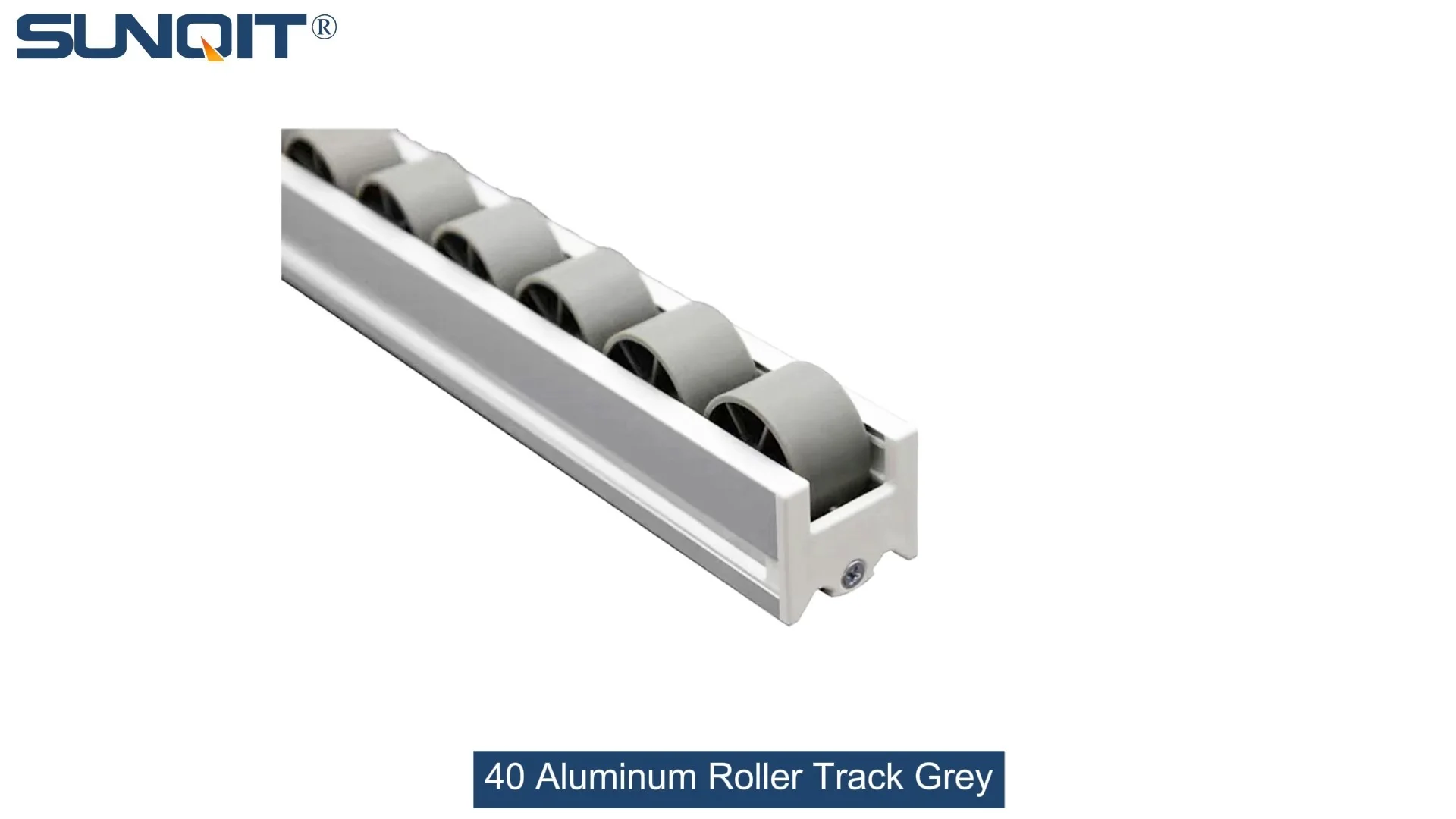
40 Aluminum Roller Track Grey
Durable and smooth-running modular roller rails. The system is fully assembled. The roller rail profile contains plastic rollers mounted on steel axles. Aluminum frame with plastic wheel make it anti corrosion,and material convey more smooth.
The Warehouse Revolution: Why Material Flow Matters More Than Ever
Walk into any modern warehouse today, and you'll likely be met with a symphony of movement: robots gliding along floor markers, workers scanning packages with handheld devices, and conveyor belts humming as they ferry goods from one station to the next. But behind this orchestrated chaos lies a critical, often overlooked hero: the material handling infrastructure that keeps everything flowing. In an era where consumers expect same-day shipping and manufacturers demand just-in-time production, the efficiency of material flow can make or break a business. Yet, for many operations, outdated systems—rickety steel tracks, manual carts, and disjointed workflows—are still holding them back. Bottlenecks form at every turn, inventory gets lost in transit, and workers spend more time pushing heavy loads than adding value. The question isn't just how to automate—it's how to build a foundation that can keep up with tomorrow's demands.
The Problem with "Good Enough": Why Traditional Roller Tracks Fall Short
For decades, warehouses relied on basic steel roller tracks to move boxes and parts. They were sturdy, affordable, and got the job done—until they didn't. Steel tracks are heavy, making them hard to reconfigure when layouts change. They rust over time, especially in humid environments, leading to jams and costly downtime. And their rigid design? Forget about adapting to different load sizes or integrating with new tech. Then there are the plastic alternatives: lightweight but flimsy, prone to cracking under heavy loads. What warehouses need is something that balances strength, flexibility, and smart integration. Enter the 40 aluminum roller track grey—a name for a component that's quietly transforming how goods move.

Meet 40 Aluminum Roller Track Grey: The Workhorse of Modern Material Flow
At first glance, the 40 aluminum roller track grey might seem like just another piece of hardware. But take a closer look, and you'll see why it's become a favorite among warehouse managers and system integrators. Let's start with the basics: it's made from high-grade aluminum profile, a material prized for its winning combo of lightness and strength. Unlike steel, aluminum doesn't rust, so it holds up in everything from dry manufacturing plants to chilly cold-storage facilities. The "40" in its name refers to its width—40mm—striking a sweet spot between compactness (it fits in tight spaces) and load capacity (it can handle up to 50kg per linear meter, depending on configuration). And that grey color? It's not just for looks. The muted tone hides scuffs and scratches, keeping your warehouse looking professional even after years of heavy use. But the real magic is in its design.
Each track features precision-engineered rollers, spaced evenly to ensure smooth, consistent movement of goods. Whether you're sliding small electronics components or bulkier boxes, there's no jerking or sticking—just a steady glide that reduces friction and minimizes wear on both the track and the items being transported. And because it's modular, you can easily extend or shorten the track using simple roller track connectors. No welding, no heavy tools—just snap the connectors into place, and you're ready to go. This modularity is a game-changer for warehouses that need to adapt quickly to shifting inventory levels or seasonal peaks. One month, you might need a straight track from receiving to picking; the next, a curved section to navigate around a new robot workstation. With 40 aluminum roller track grey, reconfiguration takes hours, not days.

From Lean Principles to Smart Systems: How It Fits Into Your Workflow
In the world of warehouse management, "lean" isn't just a buzzword—it's a mindset. Lean systems are all about eliminating waste: wasted time, wasted space, wasted effort. The 40 aluminum roller track grey was practically built for lean. By ensuring a continuous flow of materials, it cuts down on the "waiting" waste that plagues manual operations. No more workers standing around while a cart is wheeled across the warehouse; instead, goods move automatically, freeing staff to focus on higher-value tasks like quality control or order verification. It also optimizes space. Traditional conveyor belts are bulky and fixed, but these aluminum tracks are sleek and can be mounted overhead, under workbenches, or along walls, making the most of every square foot. And because they're lightweight, they don't require reinforced flooring, reducing installation costs from the start.
| Feature | Traditional Steel Track | 40 Aluminum Roller Track Grey |
|---|---|---|
| Weight | Heavy (hard to reconfigure) | Lightweight (easy to move/adjust) |
| Durability | Prone to rust and corrosion | Rust-resistant aluminum profile |
| Installation/Reconfiguration | Requires welding/tools; time-consuming | Tool-free with roller track connectors; modular |
| IoT Compatibility | Limited (hard to integrate sensors) | Design supports sensor mounting and data flow |

Bridging the Gap: 40 Aluminum Roller Track Grey and IoT Integration
So, we've established that 40 aluminum roller track grey is a star when it comes to material flow. But in today's smart warehouses, moving goods efficiently is only half the battle. The other half? Data. That's where IoT (Internet of Things) integration comes in. Imagine a warehouse where every movement of a box is tracked in real time, where a potential jam is detected before it happens, and where you can predict maintenance needs before a track fails. With 40 aluminum roller track grey, this isn't science fiction—it's reality.
The key is in the track's design, which easily accommodates small, low-power sensors. For example, you can mount infrared sensors along the track to count items as they pass, giving you real-time visibility into how many units have moved from point A to point B. This data feeds into your warehouse management system (WMS), so you always know exactly where your inventory is. No more "phantom stock" or time wasted searching for misplaced items. Then there are vibration sensors, which can detect unusual patterns—like a roller that's starting to stick or a connector that's coming loose. Instead of waiting for a breakdown, the system alerts your maintenance team, who can fix the issue during a scheduled lull, avoiding costly downtime. Temperature and humidity sensors are another option, critical for warehouses storing sensitive goods like pharmaceuticals or electronics. If conditions drift outside the optimal range, the track can trigger an alert, ensuring your products stay in top condition.
But perhaps the most exciting application is predictive analytics. By collecting data on track usage—how often it's used, the types of loads it carries, peak hours—AI algorithms can predict when components might wear out. For example, if a section of track near the shipping dock handles twice as many loads as others, the system might recommend replacing its rollers six months earlier than the standard schedule. This proactive approach not only extends the life of your equipment but also keeps your material flow uninterrupted. And because the track is made from aluminum profile, adding these sensors is a breeze. The T-slots in the aluminum allow for easy mounting of sensor brackets, so you don't have to drill holes or modify the track itself. It's plug-and-play IoT, designed for busy warehouse managers who don't have time for complicated setups.
Real-World Impact: How One Warehouse Boosted Efficiency by 35%
Let's put this all into perspective with a hypothetical (but realistic) example. Consider a mid-sized e-commerce fulfillment center that was struggling with order delays during peak season. Their existing material handling system relied on manual carts and a few outdated steel roller tracks, which were prone to jams. Workers were spending up to 20% of their shift just moving goods between stations, and order accuracy was suffering due to misplaced inventory. The warehouse manager knew they needed a change, so they invested in 40 aluminum roller track grey, integrated with IoT sensors, and aligned it with their existing lean system.
The results were striking. First, the modular tracks reduced reconfiguration time by 70%, allowing the warehouse to add three new pick zones in just two days before the holiday rush. The smooth-rolling design cut down on manual labor, freeing up workers to focus on picking and packing—order processing time dropped by 25%. Then there was the IoT integration: real-time tracking meant the WMS always had accurate inventory counts, reducing "out of stock" errors by 40%. Vibration sensors caught two potential roller jams before they happened, preventing what could have been hours of downtime. And predictive maintenance? The system flagged a worn connector in a high-traffic area, which was replaced overnight—no disruption to operations. By the end of the season, the warehouse's overall efficiency had jumped by 35%, and employee satisfaction scores rose too (no more pushing heavy carts!). It's a story we're seeing repeated across industries, from automotive manufacturing to third-party logistics: 40 aluminum roller track grey isn't just a piece of equipment—it's a catalyst for transformation.
Choosing the Right Partner: Why Your Supplier Matters
Of course, none of this is possible without a reliable supplier. When shopping for 40 aluminum roller track grey, look for a lean system supplier with a proven track record in warehouse automation. They should offer not just the tracks themselves, but a full range of accessories—roller track connectors, aluminum guide rails, end stops—to ensure your system works seamlessly. Customization is key too. Every warehouse is unique, so your supplier should be able to design a layout that fits your space, load requirements, and workflow. And don't forget after-sales support. Even the best equipment needs occasional maintenance, so choose a supplier that offers quick turnaround on replacement parts and has a knowledgeable team to help with troubleshooting. A good supplier will feel like a partner, invested in your warehouse's success.
The Future of Warehousing: Where 40 Aluminum Roller Track Grey Fits In
As warehouses continue to evolve, driven by advances in AI, robotics, and IoT, the role of material handling infrastructure will only grow in importance. 40 aluminum roller track grey is well-positioned to be a cornerstone of this evolution. Its durability and adaptability make it a long-term investment, while its compatibility with new technologies ensures it won't become obsolete as your warehouse gets smarter. We're already seeing trends like "lights-out" warehouses—fully automated facilities that operate with minimal human intervention—and 40 aluminum roller track grey will play a key role there, moving goods between robotic workstations with precision and reliability. And as sustainability becomes a priority, aluminum's recyclability makes it an eco-friendly choice, aligning with corporate goals to reduce carbon footprints.
Conclusion: More Than a Track—A Foundation for Success
At the end of the day, 40 aluminum roller track grey is more than just a piece of metal with rollers. It's a bridge between the manual past and the automated future of warehousing. It's a tool that empowers workers, optimizes workflows, and unlocks the full potential of IoT and lean systems. Whether you're running a small distribution center or a large-scale manufacturing plant, investing in this humble track could be the first step toward a more efficient, resilient, and successful operation. So, the next time you walk through your warehouse, take a look at your material flow. Are your current systems holding you back? If the answer is yes, maybe it's time to go grey.