- Company Articles
- Products and Technology
- Application Cases
- 40 Aluminum Roller Track Grey in Automotive Parts Logistics: Streamlining Supply Chains

40 Aluminum Roller Track Grey in Automotive Parts Logistics: Streamlining Supply Chains
Related Product
40 Aluminum Roller Track Grey
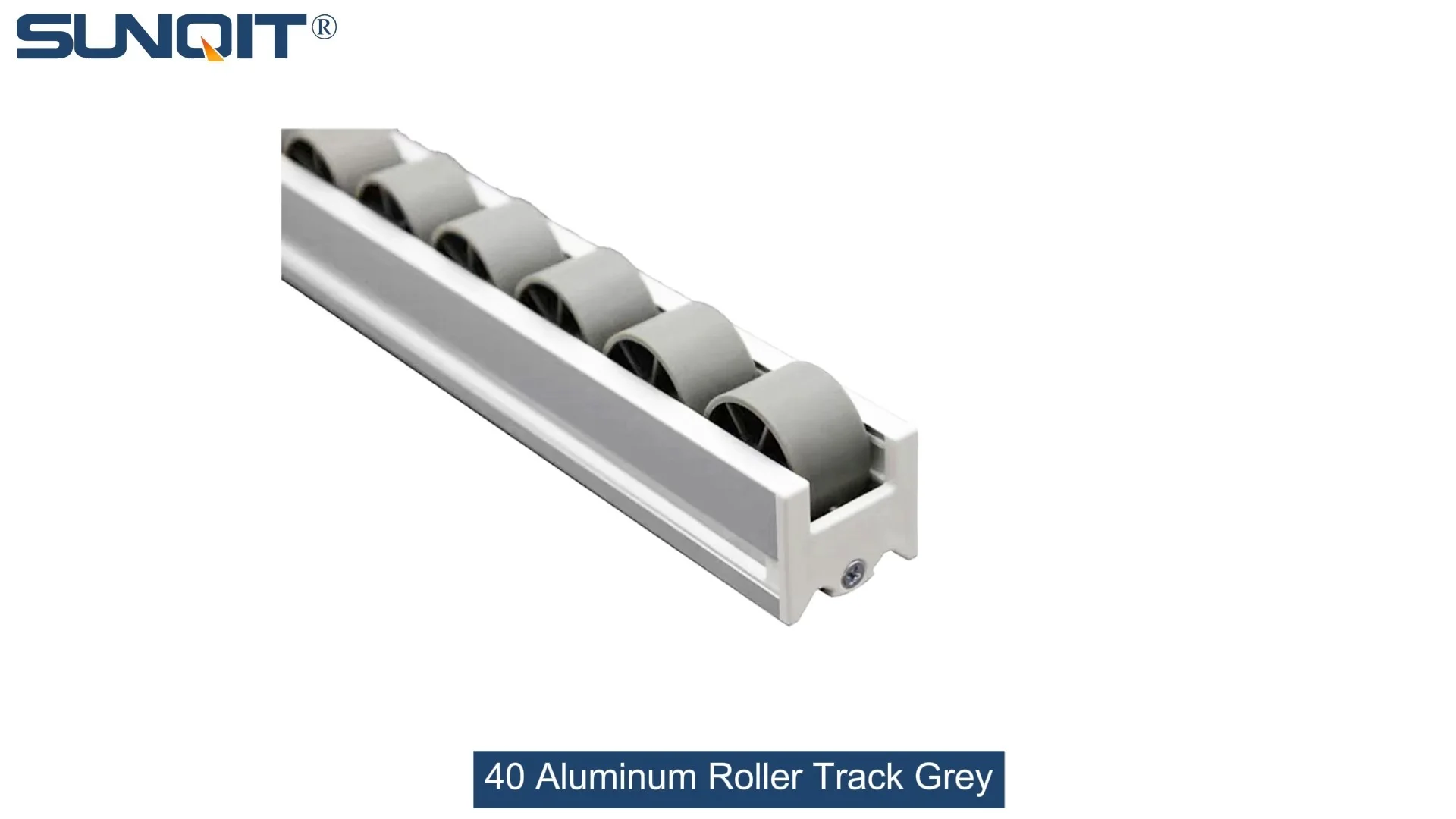
Durable and smooth-running modular roller rails. The system is fully assembled. The roller rail profile contains plastic rollers mounted on steel axles. Aluminum frame with plastic wheel make it anti corrosion,and material convey more smooth.
Step into any automotive parts warehouse, and you'll immediately sense the urgency of movement—pallets gliding, workers coordinating, and the steady thrum of machinery that keeps the industry alive. Yet beneath this orchestrated chaos lies a silent challenge: ensuring parts flow from storage to assembly lines with the precision of a well-tuned engine, minus the delays, damage, or wasted effort that can derail production. In an industry where a single misplaced part can halt an entire assembly line, the stakes couldn't be higher. This is where unassuming workhorses like the 40 Aluminum Roller Track Grey make their mark—a deceptively simple tool that transforms logistical bottlenecks into smooth, efficient streams, turning everyday struggles into moments of quiet triumph for warehouse teams.
At first glance, a roller track might seem like little more than a series of wheels mounted on a metal frame. But for those who navigate the factory floor daily, it's the backbone of their workflow. It's the difference between a worker straining to push a 50-pound bin and watching it glide effortlessly into place. It's the assurance that delicate sensors or fragile gaskets won't get scratched during transit. And in automotive logistics, where parts range from tiny screws to bulky engine blocks, having a system that can handle this diversity with grace is nothing short of essential. Today, we're exploring how the 40 Aluminum Roller Track Grey is redefining efficiency in automotive parts logistics, its role in lean systems, and how it harmonizes with conveyors and workbenches to create supply chains that don't just function—they thrive.
What Makes 40 Aluminum Roller Track Grey a Game-Changer?
To truly grasp its impact, let's start with the basics: What sets the 40 Aluminum Roller Track Grey apart, and why has it become a staple in automotive warehouses worldwide? Let's break down its design, material, and functionality to uncover the secrets behind its success.
Aluminum: The Lightweight Powerhouse
Aluminum might not be the first material that comes to mind for industrial equipment—steel has long dominated that space—but its unique properties make it ideal for roller tracks. For starters, aluminum is remarkably lightweight, which means installation and reconfiguration are a breeze. Unlike steel tracks that require heavy machinery or teams of workers to move, these aluminum tracks can be adjusted with basic tools, allowing warehouses to adapt quickly to new part sizes or shifting production schedules. But don't let its lightness fool you: aluminum boasts an impressive strength-to-weight ratio, enabling the 40mm track to support up to 50kg per linear meter—more than enough for most automotive components, from brake pads to suspension parts.
Durability is another feather in aluminum's cap. Automotive warehouses are harsh environments: dust, oil, and constant use take a toll on equipment. Steel tracks, while strong, are prone to rust if their coatings chip, leading to seized rollers and costly replacements. Aluminum, however, forms a natural oxide layer that resists corrosion, even when exposed to moisture or grease. The track's grey powder coating adds an extra layer of protection, shielding it from scratches and wear. For warehouse managers, this translates to less time spent on maintenance and more time focused on keeping parts moving.
The "40" and the "Grey": Purpose in Every Detail
The "40" in its name refers to the track's width—40mm—a dimension carefully chosen to balance versatility and stability. Automotive parts come in all shapes and sizes, from narrow wiring harnesses to wider plastic panels. A 40mm track hits the sweet spot: narrow enough to fit into tight spaces between racks or alongside workbenches, yet wide enough to cradle standard bins and containers without tipping. This balance is critical in warehouses where every inch of space is precious.
Then there's the grey color—a choice that's equal parts practical and purposeful. Grey provides a neutral backdrop that makes colored bins, labels, or part indicators stand out, helping workers quickly identify which parts are which. In a fast-paced environment, where split-second decisions matter, this visibility reduces errors and speeds up workflows. The rollers themselves, often made of hardened steel or wear-resistant nylon, are spaced evenly to ensure smooth, consistent movement. Run your hand along the track, and you'll feel the precision: no wobbles, no gaps, just a steady glide that inspires confidence in even the most skeptical warehouse veteran.
The Automotive Logistics Challenge: Why Standard Solutions Fall Short
To appreciate the 40 Aluminum Roller Track Grey, it helps to understand the unique hurdles automotive logistics teams face daily. This isn't just about moving boxes—it's about transporting components that directly impact vehicle safety, quality, and production timelines. Let's unpack these challenges and why traditional tools often come up short.
Speed vs. Precision: The Balancing Act
Automotive assembly lines run on razor-thin schedules. A single delayed part can halt production, costing manufacturers thousands of dollars per minute. To keep up, warehouses need to move parts quickly—but speed can't compromise precision. Delicate parts like fuel injectors or airbag sensors can't withstand rough handling; even a minor scratch can render them useless. Manual carts are slow and labor-intensive, while basic conveyors often move too fast (risking damage) or too slow (causing backups). The result? A constant tug-of-war between meeting deadlines and protecting parts.
Durability in Unforgiving Environments
Automotive warehouses are gritty places. Dust, oil spills, and temperature fluctuations are part of the daily grind. Parts may be greasy, sharp, or heavy—all of which wear down equipment. Plastic roller tracks, common in retail settings, crack under the weight of metal parts. Steel tracks rust, leading to jams. For logistics teams, this means endless repairs, unexpected downtime, and the frustration of replacing equipment that should last years, not months.
Adaptability: Keeping Pace with a Changing Industry
The automotive industry is in constant flux. New models, electric vehicles, and shifting consumer demands mean warehouses must adapt quickly. A system optimized for sedans one year might need to handle SUV parts the next, or battery components for electric vehicles the year after. Rigid, fixed systems—like welded steel racks or permanent conveyor lines—can't keep up. They're expensive to modify and time-consuming to reinstall, leaving warehouses stuck with outdated infrastructure.

How 40 Aluminum Roller Track Grey Solves These Pain Points
The 40 Aluminum Roller Track Grey isn't just another tool—it's a solution engineered to address the specific headaches of automotive logistics. Let's break down how it turns challenges into opportunities.
Smooth, Controlled Movement: Speed Without Sacrifice
The track's precision rollers are its secret weapon. They strike the perfect balance between speed and control, allowing bins to glide forward at a steady pace without jostling parts. Delicate sensors ride gently, gaskets stay in place, and workers can focus on guiding the flow rather than wrestling with heavy loads. For example, a bin of electrical connectors might roll from a flow rack to a workbench in seconds, arriving intact and ready for use. This balance reduces damaged parts by up to 40% in some warehouses—a game-changer for quality control teams.
Built to Last: Corrosion Resistance and Low Maintenance
Aluminum's natural corrosion resistance shines in greasy, dusty warehouses. Unlike steel, the track won't rust when oil drips on it or when moisture accumulates. The grey powder coating resists scratches from sharp parts, ensuring the track looks and functions like new for years. Maintenance is minimal: a quick wipe with a cloth to remove dust or debris, and the track is good to go. One warehouse manager put it best: "We used to have a guy spending 4 hours a week fixing jams in our old steel tracks. Now, he spends 30 minutes a month cleaning the aluminum ones. That's time he can spend on more important tasks."
Adaptable by Design: Ready for Whatever Comes Next
Aluminum's lightweight nature makes the track incredibly easy to reconfigure. Need to reroute a track to feed parts to a new assembly line? Unbolt the sections, move them, and reattach—no welding or heavy machinery required. Adding a new branch to accommodate a surge in orders? Just connect a few extra segments. This flexibility is a lifesaver for warehouses adapting to new models or shifting production needs. It's not just about saving time; it's about future-proofing the warehouse, ensuring the system can evolve alongside the business.

Integrating with Lean Systems: Reducing Waste, Boosting Flow
Lean manufacturing principles—focused on reducing waste and maximizing value—are the backbone of modern automotive production. The 40 Aluminum Roller Track Grey isn't just compatible with lean systems; it's a catalyst for them, helping teams eliminate waste and create continuous flow.
Eliminating "Muda": The Lean Fight Against Waste
In lean terminology, "muda" refers to waste—and one of the biggest sources is unnecessary movement. Workers pushing carts back and forth, searching for parts, or wrestling with stuck bins—all of this is muda. The 40 Aluminum Roller Track Grey cuts this waste by creating gravity-fed or low-power flow systems. Parts glide from storage to the line with minimal human effort, freeing workers to focus on higher-value tasks like inspecting parts or troubleshooting issues. For example, a worker who once spent 2 hours a day pushing carts might now spend that time quality-checking components, reducing errors and improving overall efficiency.
Supporting Just-In-Time (JIT) Delivery
JIT manufacturing—where parts arrive exactly when needed—minimizes inventory costs and reduces storage space. But JIT relies on precise, reliable part flow. The 40 Aluminum Roller Track Grey makes this possible by ensuring parts move quickly and predictably from storage to assembly. A bin of bolts, for instance, can roll directly from the flow rack to the line just as the assembly team needs them, eliminating the need for excess inventory. This not only saves space but also reduces the risk of parts becoming obsolete or damaged in storage.
| Lean Principle | How 40 Aluminum Roller Track Grey Supports It | Impact on Warehouse Operations |
|---|---|---|
| Continuous Flow | Steady, uninterrupted part movement from storage to line | Reduced bottlenecks, faster throughput |
| Waste Reduction (Muda) | Eliminates manual cart-pushing and unnecessary handling | 20-30% less labor time spent on material movement |
| Visual Management | Grey track highlights colored bins/parts for easy identification | Fewer picking errors, faster decision-making |
| Flexibility | Easy to reconfigure for new parts or production changes | Adapts to new models/orders in hours, not days |

Harmony with Conveyors and Workbenches: A Unified Ecosystem
A roller track rarely works alone. In top-tier automotive warehouses, it's part of a larger ecosystem that includes conveyors, workbenches, and flow racks, all working in concert to create a seamless path from storage to assembly. Let's explore how the 40 Aluminum Roller Track Grey integrates with these systems to amplify its impact.
Conveyors: Extending the Flow
Conveyors excel at moving large volumes of parts over long distances, but they're not always ideal for short, precise movements—like feeding parts from a conveyor to a workbench. The 40 Aluminum Roller Track Grey bridges this gap, acting as a "buffer zone" that slows parts down gently. For example, a main conveyor might bring a bin of door handles to a workstation; the bin then rolls onto the track, which feeds it smoothly to the worker. No more reaching over fast-moving conveyors or fumbling with bins that won't stop—just a steady, controlled handoff.
Workbenches: The Final Prep Station
Workbenches are where parts are inspected, sorted, or prepped before assembly. A cluttered bench slows workers down and increases errors. Integrating the 40 Aluminum Roller Track Grey into bench design changes everything. Imagine a bench with a track along its edge: bins roll up, the worker uses what they need, and the empty bin rolls back to storage—all without the worker leaving their seat. This keeps the bench clear, reduces clutter, and cuts down on wasted motion. Some workbenches even feature tracks at different heights, letting workers organize parts by priority or type, further streamlining the process.
Flow Racks: The Frontline of Storage
Flow racks—designed for first-in, first-out (FIFO) storage—are a staple in automotive warehouses. The 40 Aluminum Roller Track Grey is often built into these racks, with tracks angled slightly downward so that as the front bin is removed, the next one slides forward automatically. This "self-stocking" feature ensures parts are always accessible, reducing the time workers spend digging through racks. When paired with the track's smooth movement, flow racks become a powerhouse of efficiency, ensuring parts are ready when needed and inventory is rotated properly.
Real-World Impact: Stories from the Factory Floor
Numbers tell part of the story, but the real proof lies in the experiences of those who use the track daily. Let's look at how it's transformed operations for two hypothetical (but realistic) automotive suppliers.
Case Study 1: A Brake Component Supplier Cuts Downtime by 30%
A mid-size supplier manufacturing brake calipers for a major automaker struggled with frequent line stoppages. Their old plastic roller tracks jammed constantly, and workers spent hours pushing carts between storage and assembly. After installing 40 Aluminum Roller Track Grey, they connected their flow racks directly to the line. Cart-pushing time dropped by 75%, and track jams decreased by 90%. "The difference is night and day," said the warehouse supervisor. "We used to have people running around, stressed, trying to keep up. Now the parts just flow, and everyone's calmer, more focused. Downtime on the line is down 30%, and the automaker even praised us for improving their on-time delivery rate."
Case Study 2: An EV Battery Supplier Reduces Damage by 45%
An electric vehicle battery supplier was losing thousands annually to damaged battery components, which were being jostled on rough steel tracks. Switching to the 40 Aluminum Roller Track Grey—with its smooth rollers and corrosion resistance—changed everything. The track's gentle movement reduced component damage by 45%, and its rust resistance meant no more contaminated parts from corroded steel. "Batteries are sensitive, expensive, and critical to our business," noted the logistics director. "The track doesn't just move parts—it protects them. That alone has made it worth every penny."
Looking Ahead: The Future of 40 Aluminum Roller Track Grey
As automotive manufacturing evolves—with electric vehicles, automation, and smart factories leading the charge—the 40 Aluminum Roller Track Grey is poised to evolve with it. Here's what the future might hold:
Smart Track Technology
Future iterations could integrate sensors that monitor roller speed, track usage, or detect jams in real time. Imagine a track that alerts maintenance when a roller starts to wear, or one that adjusts its incline automatically based on part weight. This data-driven approach would further reduce downtime and optimize flow, making the track an active participant in warehouse management.
Sustainability Focus
With automakers prioritizing sustainability, we'll likely see tracks made from recycled aluminum (already common) and eco-friendly coatings. Gravity-fed designs, requiring no electricity, could become more prevalent, reducing reliance on power-hungry conveyors. Some tracks might even integrate small solar panels to power sensors or lights, making them self-sustaining.
Customization for EV Parts
Electric vehicles bring unique parts—larger batteries, heavier motors, and delicate electronics. We'll see specialized track versions: wider tracks for batteries, reinforced rollers for motors, or padded tracks for sensitive electronics. The goal? To ensure the track remains a vital tool, no matter what the future of automotive looks like.
Conclusion: The Quiet Hero of Automotive Logistics
In the high-stakes world of automotive manufacturing, the 40 Aluminum Roller Track Grey might not grab headlines like a new assembly robot or a cutting-edge EV. But for the workers who rely on it daily, it's a hero—quiet, reliable, and indispensable. It's a reminder that innovation often lives in the details: the smooth roller, the corrosion-resistant aluminum, the thoughtful 40mm width. These details add up to something bigger: a logistics system that doesn't just keep up with the pace of automotive manufacturing—it sets it.
From reducing downtime and damage to empowering workers and supporting lean systems, the 40 Aluminum Roller Track Grey is more than a track. It's a partner in progress, helping automotive logistics teams turn chaos into order, inefficiency into productivity, and challenges into opportunities. As the industry races toward a future of electric vehicles and smart factories, one thing is clear: the need for smooth, reliable part flow will never fade. And with tools like this, the future of automotive logistics looks brighter—and more streamlined—than ever.