- Company Articles
- Products and Technology
- Application Cases
- 40 Aluminum Roller Track Grey in Communication Device Assembly: Case Study

40 Aluminum Roller Track Grey in Communication Device Assembly: Case Study
Related Product
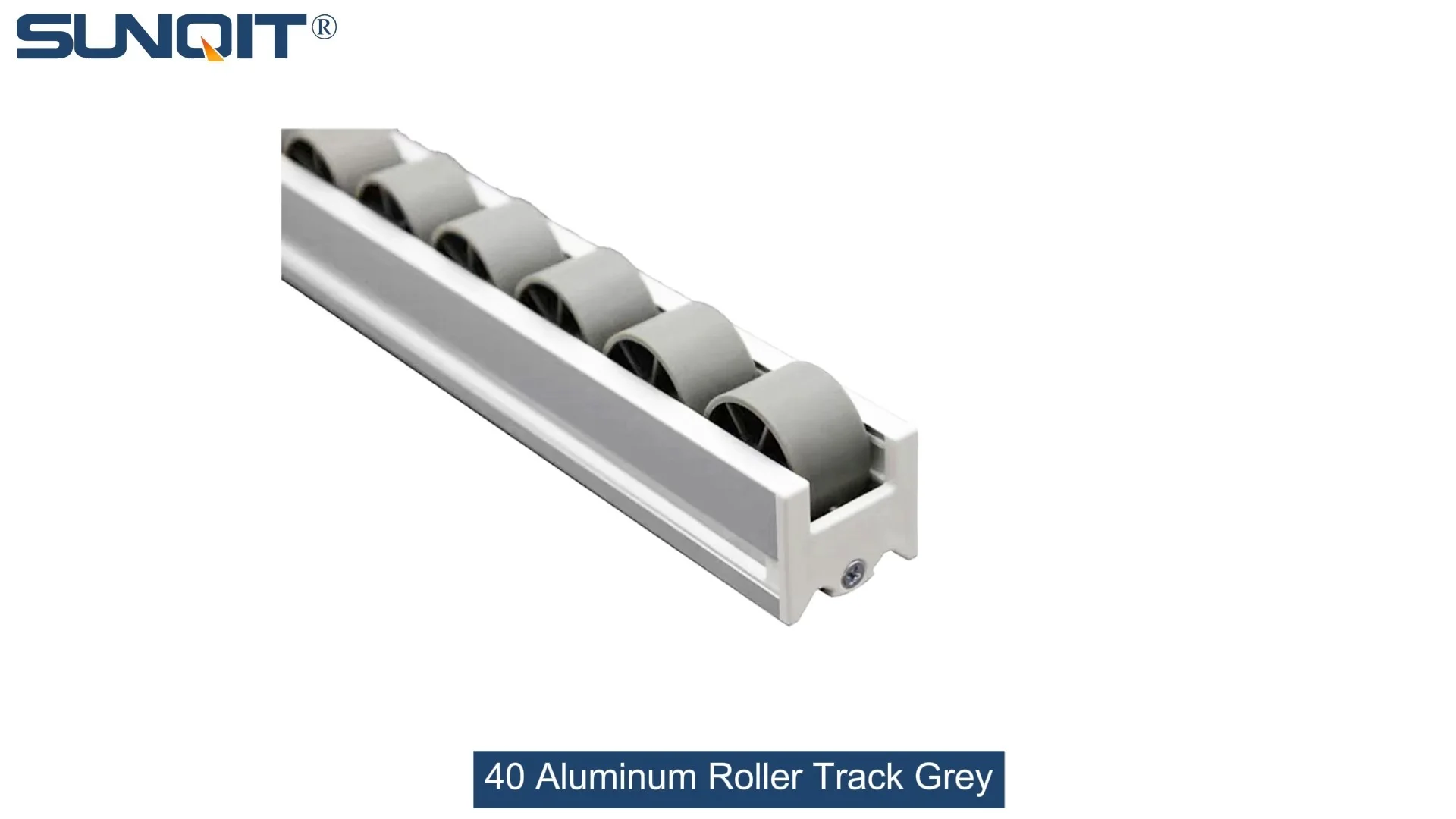
40 Aluminum Roller Track Grey
Durable and smooth-running modular roller rails. The system is fully assembled. The roller rail profile contains plastic rollers mounted on steel axles. Aluminum frame with plastic wheel make it anti corrosion,and material convey more smooth.
Introduction: The Pulse of Modern Communication Device Manufacturing
In the fast-paced world of communication device manufacturing—where routers, modems, and 5G transceivers fly off production lines to meet global demand—efficiency isn't just a buzzword. It's the lifeblood of staying competitive. Every second lost to clunky material handling, every error from misaligned workstations, or every delay in component flow can ripple into missed deadlines, inflated costs, and frustrated teams. For manufacturers like TechFlow Communications, a mid-sized producer of network hardware based in Oregon, these challenges weren't just hypothetical—they were daily realities. By 2023, their assembly line for next-gen Wi-Fi 6 routers was struggling with bottlenecks that threatened to derail their growth. That's when they turned to a humble yet transformative tool: the 40 Aluminum Roller Track Grey, a key component in their broader lean system overhaul. This case study dives into how this unassuming piece of equipment became the cornerstone of a 30% boost in production efficiency, reshaping their workflow from chaotic to streamlined.
Company Background: TechFlow's Growing Pains
Founded in 2010, TechFlow Communications carved a niche in the mid-tier network hardware market, specializing in affordable, high-performance routers and modems for small businesses and households. By 2022, their annual output had hit 500,000 units, and they'd secured a contract to supply a major telecom provider with 200,000 Wi-Fi 6 routers—their most complex product yet. The new router, code-named "AetherX," featured a dense circuit board, multiple antennae, and a sleek aluminum casing, requiring precise assembly across 12 stations. But their existing setup, a hodgepodge of steel roller tracks, wooden workbenches, and manual material carts, was ill-equipped for the task.
"We were drowning in inefficiencies," recalls Maria Gonzalez, TechFlow's Production Manager. "Components like PCBs and antennae would get stuck on rusted steel tracks, or workers would waste 10 minutes per hour wheeling heavy bins between stations. Our error rate spiked to 8%—unacceptable for a product with tight tolerances. We needed a lean solution, not just more Band-Aids."
The root of the problem? Their material flow system was outdated. Steel tracks were prone to corrosion in Oregon's humid climate, leading to jams. Wooden workbenches lacked adjustability, forcing workers into awkward postures. And with no standardized way to move materials, each workstation operated like a silo, disconnected from the next. TechFlow's leadership knew they needed to invest in a system that prioritized flow, flexibility, and durability—three pillars of lean manufacturing. After researching suppliers, they zeroed in on aluminum-based solutions, drawn to its lightweight strength and resistance to corrosion. The star of the show? The 40 Aluminum Roller Track Grey, recommended by their lean system supplier as the ideal bridge between workstations.

The Problem: Bottlenecks in the AetherX Assembly Line
To understand why the 40 Aluminum Roller Track Grey became a game-changer, it's critical to first map TechFlow's pre-overhaul workflow for the AetherX router. The assembly process unfolded across 12 stations, each responsible for a specific task: from PCB soldering and antenna mounting to casing assembly and final testing. Here's how the old system failed at each step:
1. Material Transfer Delays: Between Station 3 (PCB soldering) and Station 4 (component mounting), workers relied on a 10-foot steel roller track installed in 2015. Over time, rust and dents caused PCBs to catch, requiring manual intervention 3–4 times per shift. "A single jam could back up the line for 15 minutes," Gonzalez notes. "And since the track was bolted to the floor, we couldn't easily reposition it when we adjusted the workflow."
2. Inconsistent Workstation Heights: TechFlow's wooden workbenches were fixed at 36 inches, too low for taller workers and too high for shorter ones. This led to increased fatigue, with 12% of workers reporting wrist or back pain by the end of the week. "When you're hunched over a bench for 8 hours, precision suffers," says Jake Lin, a senior assembler. "I'd misalign antennae simply because my arms were at the wrong angle."
3. Poor Ergonomics in Material Storage: Components were stored in static flow racks at floor level, meaning workers had to bend or kneel to retrieve small parts like screws or connectors. This not only slowed down picking times but also increased the risk of dropped components—a costly mistake, as AetherX's PCB was sensitive to ESD (electrostatic discharge).
4. Lack of Scalability: As production demands grew, TechFlow needed to add a 13th station for quality control, but their steel tracks and fixed workbenches couldn't be reconfigured without extensive welding and carpentry. "We felt stuck," Gonzalez says. "Our supplier quoted $40,000 to modify the steel tracks—money we didn't have for a stopgap solution."
By early 2023, the numbers told the story: AetherX production was 20% below target, error rates were 3x higher than for their older router models, and employee turnover in the assembly team hit 15%. TechFlow's leadership knew they needed more than incremental changes—they needed a complete flow overhaul. That's when their lean system supplier proposed a solution centered on the 40 Aluminum Roller Track Grey, paired with adjustable aluminum workbenches and modular flow racks.

The Solution: Introducing the 40 Aluminum Roller Track Grey
In April 2023, TechFlow began a two-week overhaul of their AetherX assembly line, guided by their lean system supplier. At the heart of the upgrade was the 40 Aluminum Roller Track Grey—a 40mm-wide aluminum track with grey plastic rollers, designed for medium-weight loads (up to 50 lbs per linear foot). But why aluminum? And why grey?
Why Aluminum? Unlike steel, aluminum resists corrosion, a must in Oregon's damp environment. It's also 30% lighter than steel, making installation easier and reducing strain on floor supports. "We could carry 10-foot sections by hand, no forklift needed," says Lin. "That cut installation time in half." Aluminum's malleability also meant the tracks could be custom-cut to fit TechFlow's 12-station layout without compromising structural integrity.
Why Grey Rollers? The grey plastic rollers (as opposed to black or yellow) were a practical choice. "Black rollers made it hard to spot small debris like metal shavings, which could jam the track," explains Gonzalez. "Grey provides contrast, so workers can spot issues at a glance. Plus, the plastic is ESD-safe—critical for handling PCBs, which are sensitive to static."
The 40 Aluminum Roller Track Grey wasn't deployed in isolation. It was part of a holistic lean system that included:
- Adjustable Aluminum Workbenches: Height-adjustable (from 30–42 inches) with ESD-safe tops, replacing the old wooden benches. Each workstation now aligns with workers' ergonomic needs.
- Modular Flow Racks: Lightweight aluminum flow racks with inclined tracks, storing components at waist height to eliminate bending. These fed directly into the roller tracks, ensuring a "pull" system where components arrived just-in-time.
- Caster Wheels for Mobile Carts: To complement the fixed roller tracks, TechFlow added aluminum-framed carts with locking caster wheels, allowing workers to transport bulk materials (like casings) without strain.
The centerpiece, however, was the roller track. Installed between all 12 stations, it created a continuous "highway" for materials, sloping gently downward (a 2° incline) to use gravity for flow—eliminating the need for motorized conveyors and cutting energy costs. "It's surprisingly simple," Lin says. "You place a bin of PCBs on the track at Station 3, give it a gentle push, and it glides to Station 4 in 10 seconds—no effort, no jams."

Implementation: From Blueprint to Assembly Line
Implementing the new system required careful planning to avoid halting production. TechFlow split the line into two phases: first, upgrading Stations 1–6, then 7–12, with a week of overlap to test integration. Here's how the process unfolded:
Phase 1: Assessment and Design (Week 1)
The lean system supplier sent a team to map TechFlow's workflow, measuring distances between stations, recording material weights, and interviewing workers about pain points. Using this data, they designed a 3D layout with the 40 Aluminum Roller Track Grey as the spine. Key adjustments included widening the track from 30mm (old steel) to 40mm to accommodate larger bins and adding "merge points" where two tracks converged (e.g., at Station 7, where antennae and casings needed to meet).
Phase 2: Installation (Weeks 2–3)
The installation team arrived with pre-cut aluminum tracks, joints, and brackets. Since aluminum is lightweight, they mounted the tracks to the floor using simple L-brackets (no welding required), reducing downtime. "We worked nights and weekends to avoid disrupting production," Gonzalez says. "By Monday morning, Stations 1–6 were up and running with the new tracks. The first time a bin glided from Station 2 to 3 without jamming, the team cheered—it felt like a small victory."
Phase 3: Training and Tweaks (Week 4)
Workers received an hour of training on the new system: how to load bins, spot jams, and adjust workbench heights. Early feedback led to minor tweaks, like adding rubber bumpers at track ends to prevent bins from sliding off and installing clear plastic guards to keep debris out. "The biggest surprise? How quickly everyone adapted," Lin notes. "Even our most senior assemblers, who were skeptical of 'newfangled aluminum,' were converts within a day."
Results: By the Numbers—A 30% Efficiency Boost
By the end of the first full month (May 2023), the results were undeniable. TechFlow tracked key metrics before and after the upgrade, and the data spoke for itself. Below is a comparison of their performance:
| Key Performance Indicator | Before (March 2023) | After (May 2023) | Improvement |
|---|---|---|---|
| Production Output (Units/Day) | 850 | 1,100 | +29.4% |
| Material Transfer Time (Per Station, Seconds) | 45 | 12 | -73.3% |
| Error Rate (%) | 8% | 3% | -62.5% |
| Worker Fatigue Reports (Per Week) | 15 | 4 | -73.3% |
| Track Maintenance Hours (Per Month) | 12 | 3 | -75% |
"The most impactful change was the 73% drop in material transfer time," Gonzalez says. "Workers used to spend 2 hours per shift just moving materials—now it's 30 minutes. That time goes back into assembly, which directly boosts output." The error rate improvement was equally significant: with ESD-safe tracks and ergonomic workbenches, workers made fewer mistakes, reducing rework and scrapped components by $12,000 per month.
Maintenance also became a breeze. The 40 Aluminum Roller Track Grey required minimal upkeep—just weekly wiping to remove dust, compared to the steel tracks, which needed monthly oiling and rust treatment. "I used to assign a full day each month to steel track maintenance," says Raj Patel, TechFlow's Maintenance Supervisor. "Now, I spend 2 hours a month on the aluminum tracks. It's freed up time to focus on other projects, like upgrading our testing equipment."
Perhaps the most heartening feedback came from workers. "My back doesn't ache anymore," says Lin, who's worked at TechFlow for 8 years. "I can adjust my bench to stand or sit, and the tracks mean I'm not lifting heavy bins. It feels like the company cares about us, not just the bottom line." Turnover in the assembly team dropped to 5% by August 2023, a 67% improvement.
Why It Worked: The 40 Aluminum Roller Track Grey's Secret Sauce
What made the 40 Aluminum Roller Track Grey so effective? It boils down to three key strengths:
1. Simplicity = Reliability
Unlike complex conveyor systems with motors and sensors, the roller track relies on gravity and smooth bearings. "No moving parts to break, no software to crash," Patel says. "It's like a well-oiled machine, but simpler." This simplicity reduced downtime—TechFlow's line now runs 98% of scheduled hours, up from 92% before.
2. Flexibility for Future Growth
Aluminum's modularity means TechFlow can easily expand. When they added a 13th testing station in September 2023, they simply cut a new section of track, bolted it to the floor, and connected it to the existing line—no welding, no major overhauls. "We went from 'can we add a station?' to 'done in a day,'" Gonzalez says. "That agility is priceless in this industry."
3. Cost-Effectiveness
While aluminum costs more upfront than steel ($15 per linear foot vs. $8), the total cost of ownership is lower. TechFlow estimates the system will pay for itself in 14 months, thanks to reduced labor, maintenance, and scrap costs. "It's an investment, not an expense," Gonzalez notes. "We're already planning to roll this out to our modem assembly line next quarter."
Conclusion: The Roller Track That Transformed a Factory
TechFlow Communications' journey from bottlenecked assembly line to lean powerhouse is a testament to the impact of thoughtful material flow design. While the 40 Aluminum Roller Track Grey may seem like a small component, it was the linchpin that connected workstations, reduced waste, and empowered workers. By pairing it with adjustable workbenches, flow racks, and a focus on ergonomics, TechFlow created a system that's not just efficient—but human-centered.
"Lean manufacturing isn't about cutting corners," Gonzalez reflects. "It's about creating an environment where people and processes thrive. The 40 Aluminum Roller Track Grey did that by removing friction—literal and figurative—from our workflow. Our workers are happier, our products are better, and we're ready to take on the next big contract."
For manufacturers facing similar challenges, the lesson is clear: sometimes, the solution to complex problems lies in simple, durable tools. The 40 Aluminum Roller Track Grey may not grab headlines, but in the quiet hum of a well-oiled assembly line, its impact speaks volumes.