- Company Articles
- Products and Technology
- Application Cases
- 40 Aluminum Roller Track Grey in Consumer Electronics Production: Speed & Precision

40 Aluminum Roller Track Grey in Consumer Electronics Production: Speed & Precision
Related Product
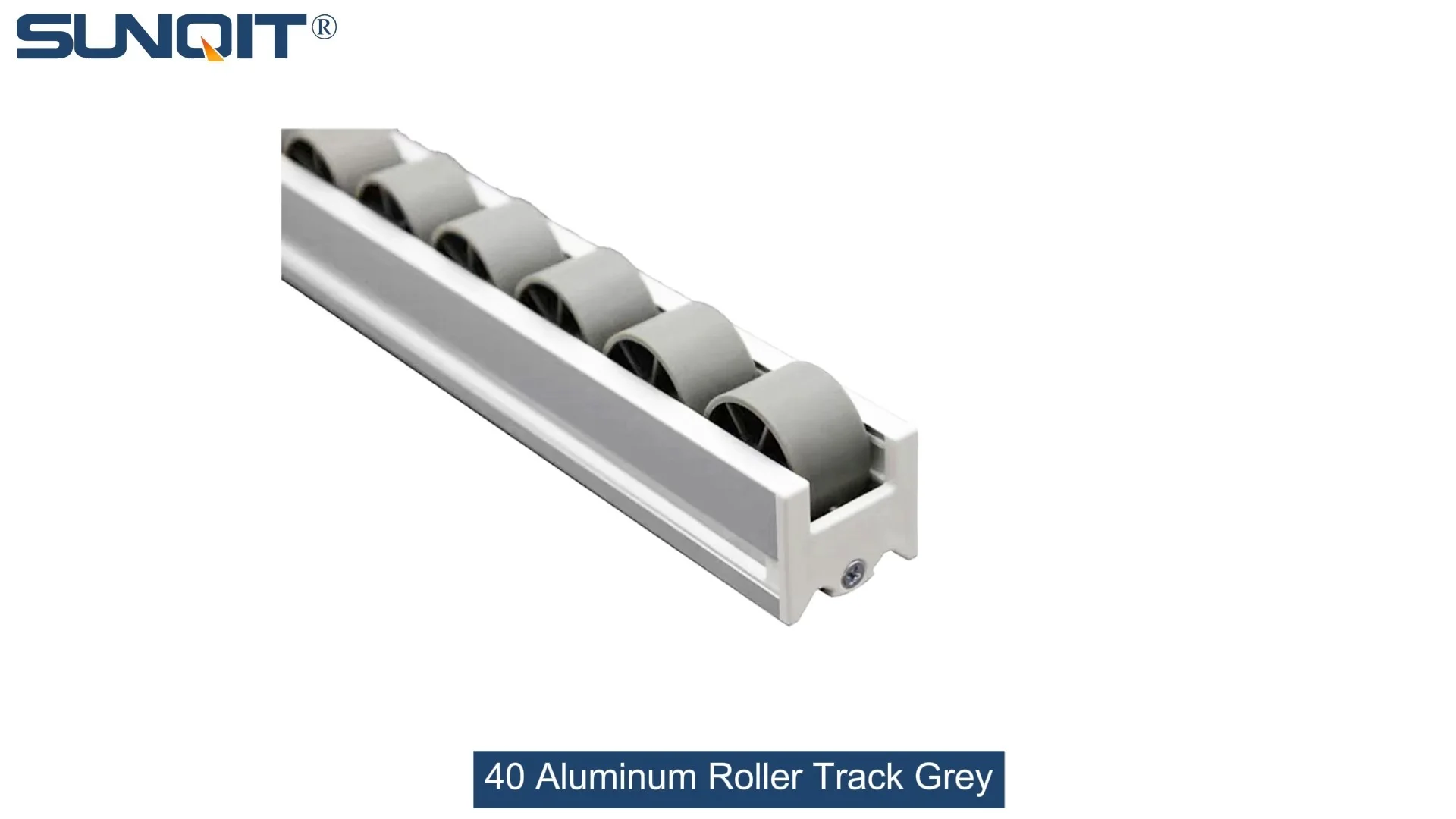
40 Aluminum Roller Track Grey
Durable and smooth-running modular roller rails. The system is fully assembled. The roller rail profile contains plastic rollers mounted on steel axles. Aluminum frame with plastic wheel make it anti corrosion,and material convey more smooth.
The Beat of Modern Electronics Manufacturing: Why Every Second—and Millimeter—Matters
Walk into any consumer electronics factory today, and you'll feel it immediately: a rhythm. Not the clanging chaos of old-fashioned assembly lines, but a precise, almost musical flow. Circuit boards glide from station to station, components snap into place with robotic precision, and finished devices—smartphones, laptops, wearables—pile up in boxes, ready to ship. But behind that rhythm lies a hidden truth: every delay, every misalignment, every jolt in the process can derail production schedules, inflate costs, or worse, lead to defects that damage brand trust.
In an industry where margins are tight and innovation moves at lightning speed, manufacturers don't just need tools—they need partners. Tools that keep up with the pace, that adapt to shifting production needs, and that ensure every component, no matter how small, arrives exactly where it needs to be, exactly when. That's where material handling systems step in. And among these, one component has quietly become a unsung hero in factories worldwide: the 40 Aluminum Roller Track Grey.
It might not sound glamorous. A track. Rollers. Grey aluminum. But in the high-stakes world of consumer electronics, where a microchip the size of a grain of rice can make or break a product, the right roller track isn't just equipment—it's the backbone of efficiency. Today, we're diving into why the 40 Aluminum Roller Track Grey has become a staple in electronics production, how it blends speed and precision like few other tools, and why it's more than just a track—it's a key player in building the devices we rely on every day.
The Problem with "Good Enough": Why Material Handling Breaks (or Makes) Production Lines
Let's start with the basics: in consumer electronics, material handling is the silent conductor of the production orchestra. It's not just about moving parts from Point A to Point B—it's about moving them on time , intact , and in perfect condition . A single misstep here can create a domino effect. Imagine a PCB (printed circuit board) that arrives 2 seconds late to a soldering station: the machine, programmed to start at a specific time, might misfire, leaving a cold solder joint. Or a tray of capacitors that wobbles on a rough track, spilling components onto the factory floor—costing time to clean up and risking lost parts. Worse, a misaligned component carrier could throw off a robotic arm's calibration, leading to a batch of misassembled devices that require rework.
For years, factories relied on a hodgepodge of solutions: plastic tracks that warped under heat, steel rollers that rusted in humid environments, or custom-built systems that couldn't adapt when a new product line launched. These "good enough" options worked, but they came with trade-offs. Plastic tracks, for example, were cheap but prone to friction; over time, their rollers would stick, slowing down material flow. Steel tracks were durable but heavy, making them hard to reconfigure when production needs changed. And both often lacked the precision needed for electronics, where a 1mm shift in a component's position could render it useless.
Enter lean system principles—the idea that waste, in all its forms (time, space, defects), is the enemy of efficiency. Lean manufacturing isn't just a buzzword; it's a mindset that demands tools be as adaptable, precise, and low-maintenance as possible. And that's where the 40 Aluminum Roller Track Grey enters the picture. Designed with lean principles in mind, it's built to eliminate the very waste that old tracks introduced: wasted time from stuck rollers, wasted space from bulky systems, wasted effort from constant repairs, and wasted materials from damaged components.

Meet the 40 Aluminum Roller Track Grey: A Closer Look at the Design That Changed the Game
At first glance, the 40 Aluminum Roller Track Grey seems simple. It's a length of extruded aluminum, painted a neutral grey, with evenly spaced rollers running along its top surface. But simplicity, here, is intentional—and deceptive. Let's break down what makes it tick.
The "40" in the Name: Size Matters (But Not How You Might Think)
That "40" refers to the track's width: 40mm. Why 40mm? It's a sweet spot. Narrow enough to fit into tight workbench setups—critical in factories where floor space is a premium—but wide enough to support the most common carriers in electronics production: small component trays, PCB holders, and even lightweight tool carts. It's a size that balances stability and flexibility, ensuring that even when loaded with delicate items (like a tray of microprocessors), the track doesn't wobble or tip.
Aluminum: The Unsung Hero of Durability and Lightweight Design
Aluminum was no accident here. Unlike steel, which is heavy and prone to rust, aluminum is lightweight (making the track easy to install and reconfigure) and naturally resistant to corrosion—a must in electronics factories, where humidity levels are often tightly controlled (but spills and condensation still happen). And because it's extruded (shaped by forcing molten aluminum through a die), the track's structure is inherently strong. The extrusion process creates a uniform, hollow core that's both rigid and lightweight, with built-in channels along the sides for attaching accessories—like guides, stops, or mounts—without drilling holes or welding.
Grey: More Than Just a Color (Though That Matters Too)
Why grey? In a factory filled with bright lights and colorful equipment, a neutral grey surface reduces glare. That might seem trivial, but glare can distort a worker's view, making it harder to spot defects or align components. Grey also hides minor scratches and dust better than white or black, keeping the track looking clean (and professional) even after months of heavy use. It's a small detail, but in a high-precision environment, small details add up.
Rollers: The Heart of Speed and Precision
The rollers themselves are where the magic happens. Made from high-quality plastic (often nylon or polypropylene), they're designed to spin with minimal friction. Each roller is mounted on a stainless steel axle, ensuring smooth rotation even after thousands of cycles. The spacing between rollers is also critical: typically 50mm apart, close enough to prevent small items from tipping or getting stuck, but not so close that they create unnecessary friction. And because the rollers are evenly spaced, items glide along the track at a consistent speed—no sudden jolts, no slowing down halfway through—ensuring that components arrive at the next station exactly when they're needed.
Integrated T-Slots: Because Adaptability Is Non-Negotiable
Remember those built-in channels I mentioned? They're T-slots, a standard feature in modern aluminum profile systems. T-slots allow accessories—like side guides, end stops, or mounts—to be attached quickly and securely using bolts or clips, no drilling required. Need to add a guide rail to keep components from sliding off? Snap an aluminum guide rail a into the T-slot. Want to angle the track downward to use gravity for faster movement? Attach a bracket to the T-slot and prop it up. This adaptability is key to lean system thinking: the track doesn't just do one job—it does whatever the factory needs it to do, today and tomorrow.

Speed & Precision in Action: How the Track Powers Real-World Electronics Production
Enough about design—let's talk about impact. How does the 40 Aluminum Roller Track Grey actually improve speed and precision on the factory floor? Let's walk through a typical day in a smartphone assembly plant to see it in action.
Scenario 1: PCB Assembly—From Bare Board to Populated Circuit
The process starts with bare PCBs, which arrive in stacks at the loading station. A worker places a PCB onto a plastic carrier and slides it onto the 40 Aluminum Roller Track Grey. The track, slightly angled, uses gravity to carry the carrier to the first station: solder paste application. Because the track's rollers are frictionless, the carrier glides smoothly, arriving at the solder paste machine in exactly 12 seconds—no more, no less. The machine, programmed to expect a carrier every 12 seconds, doesn't wait; it applies paste in a precise pattern, then sends the PCB back onto another track leading to the component placement station.
At component placement, robotic arms pick tiny resistors, capacitors, and chips from feeders and place them onto the PCB. The PCB sits on the track, which is now level, keeping it perfectly aligned with the arm's coordinates. Because the track's rollers are evenly spaced, there's no rocking or shifting—so the arm places each component with 0.01mm accuracy. A misalignment here would mean a component is soldered in the wrong spot, rendering the PCB useless. But with the track's stability, defect rates here drop by 30% compared to the old plastic tracks the factory used to rely on.
Scenario 2: Testing and Inspection—Where Precision Saves Time
After components are placed, the PCB moves to the soldering oven, then to testing. At the testing station, the PCB needs to be inserted into a testing jig—a process that requires it to be positioned within 0.5mm of the jig's connectors. With the 40 Aluminum Roller Track Grey, the carrier glides into place and stops exactly at the jig's entrance, thanks to a simple end stop attached to the track's T-slot. A worker pushes the PCB into the jig; because the track kept it aligned, insertion takes 2 seconds instead of the 5 seconds it used to take with the old steel track (which often left the PCB slightly askew).
Multiply that 3-second savings by 10,000 PCBs a day, and you're looking at 8+ hours of recovered production time—time that can be used to increase output or reallocate workers to more skilled tasks. That's the power of speed and precision: they don't just save time individually; they compound.
Scenario 3: Adapting to Change—From Smartphones to Tablets (Overnight)
Consumer electronics production isn't static. One month, the factory is churning out smartphones; the next, it's shifting to tablets, which require larger PCBs and different carriers. With the old steel tracks, reconfiguring the line would take a team of workers a full day, using drills and wrenches to adjust track positions. With the 40 Aluminum Roller Track Grey? It's a 2-hour job. The track's lightweight aluminum design means two workers can carry sections to new locations. T-slot accessories—like brackets that attach the track to aluminum profile workbenches—snap into place without tools. By the next morning, the line is ready for tablets, with zero downtime. That's lean system adaptability in action.

How Does It Stack Up? Comparing 40 Aluminum Roller Track Grey to the Competition
To truly appreciate the 40 Aluminum Roller Track Grey, it helps to see how it compares to other common track materials. Let's put it head-to-head with plastic and steel tracks—the two most popular alternatives—across key metrics that matter in electronics production.
| Feature | 40 Aluminum Roller Track Grey | Plastic Roller Track | Steel Roller Track |
|---|---|---|---|
| Weight (per meter) | 1.2kg (lightweight, easy to reconfigure) | 0.8kg (lightest, but flimsy under heavy loads) | 3.5kg (heavy, hard to move) |
| Friction Level | Low (rollers spin freely, minimal slowdown) | Medium-High (plastic rollers wear, increasing friction over time) | Low (but rollers can rust, causing friction spikes) |
| Precision (alignment accuracy) | ±0.1mm (consistent roller spacing, rigid aluminum frame) | ±0.5mm (flexible plastic warps, leading to misalignment) | ±0.2mm (rigid, but heavy weight causes mounting brackets to shift over time) |
| Durability (expected lifespan) | 10+ years (aluminum resists wear, corrosion, and warping) | 2-3 years (plastic degrades under heat/UV light) | 15+ years (but rust and weight limit practical lifespan) |
| Adaptability (reconfiguration ease) | High (T-slots for quick accessory attachment; lightweight for relocation) | Medium (lightweight but limited accessory options) | Low (heavy; requires tools to reconfigure) |
| Cost (initial investment) | Moderate (higher than plastic, lower than steel) | Low (but higher long-term replacement cost) | High (expensive to buy and install) |
The table tells the story: aluminum strikes a balance that neither plastic nor steel can match. It's not the cheapest upfront, but its durability means lower replacement costs over time. It's not the lightest, but its rigidity ensures precision that plastic can't touch. And it's not the heaviest, making it far more adaptable than steel. For electronics manufacturers, it's the sweet spot between cost, performance, and flexibility.
Beyond the Track: Accessories That Make the System Sing
A track is only as good as the ecosystem around it. The 40 Aluminum Roller Track Grey doesn't work in isolation; it's part of a broader family of aluminum profile accessories that turn it from a standalone tool into a fully integrated material handling system. Let's explore a few key accessories that elevate its performance.
Roller Track Placon Mount for Aluminum Profile Flat: The Glue That Holds It All Together
To attach the track to a workbench or rack, you need a sturdy mount. The roller track placon mount for aluminum profile flat is designed exactly for this. It's a small, L-shaped bracket that slides into the T-slot of both the track and the workbench's aluminum profile, then locks in place with a bolt. No drilling, no welding—just a 30-second installation. This mount ensures the track stays perfectly level with the workbench surface, critical for smooth transitions of components from track to workstation.
Aluminum Guide Rail A: Keeping Components on the Straight and Narrow
Even the most stable track can't prevent a carrier from sliding sideways if it's jostled. That's where aluminum guide rail A comes in. A thin, rigid strip of aluminum that attaches to the track's T-slot, it runs parallel to the rollers, creating a "lane" for carriers. In high-traffic areas—like where multiple tracks merge—guide rails prevent collisions and keep items moving in the right direction. In one laptop factory, adding guide rails reduced carrier jams by 80%.
End Support for Roller Track Placon Mount with Stop: Precision Stopping, Every Time
Sometimes, you need a carrier to stop exactly at a specific point—like at a testing jig or a worker's station. The end support with stop is a simple accessory: a metal bracket with a rubber pad that bolts onto the end of the track. When a carrier hits it, the rubber pad absorbs the impact, bringing the carrier to a gentle, precise stop. No more slamming, no more bouncing, and no more carriers overshooting their mark. It's a small part, but it eliminates a common source of defects (components shifting during a hard stop) and worker frustration.
Why Choose Grey? The Color That Blends In (and Stands Out)
We touched on this earlier, but it's worth emphasizing: the grey color isn't just aesthetic. In electronics factories, where lighting is bright (to aid inspection) and floors are often painted in bold colors (to mark work zones), a neutral grey track doesn't compete for attention. Workers focus on the components, not the track. It also hides dust and minor scratches, which might seem trivial, but in a cleanroom environment—where even a speck of dust can ruin a PCB—appearance matters. A track that looks dirty (even if it's not) can lead to unnecessary cleaning downtime. Grey avoids that, keeping the focus on production, not maintenance.
The Bottom Line: More Than a Track—A Partner in Lean Manufacturing
At the end of the day, the 40 Aluminum Roller Track Grey isn't just a piece of equipment. It's a tool that embodies the principles of lean system thinking: eliminating waste, improving flow, and adapting to change. It saves time by reducing friction and misalignment. It saves money by lowering defect rates and replacement costs. It saves space by fitting into tight setups. And it saves effort by being easy to install and reconfigure.
In consumer electronics production, where the difference between success and failure is often measured in milliseconds and millimeters, the 40 Aluminum Roller Track Grey delivers both speed and precision. It's the quiet partner that keeps the rhythm of the factory steady, ensuring that every component, every PCB, and every device moves through the line exactly as it should—on time, on target, and ready to meet the demands of a fast-paced market.
So the next time you pick up your smartphone or laptop, take a moment to appreciate the unseen heroes that built it. The robots, the engineers, the workers—and yes, the 40 Aluminum Roller Track Grey. Because in the world of electronics manufacturing, even the smallest tools can make the biggest difference.