- Company Articles
- Products and Technology
- Application Cases
- 40 Aluminum Roller Track Grey in Home Appliance Production: Streamlining Workflows

40 Aluminum Roller Track Grey in Home Appliance Production: Streamlining Workflows
Related Product
40 Aluminum Roller Track Grey
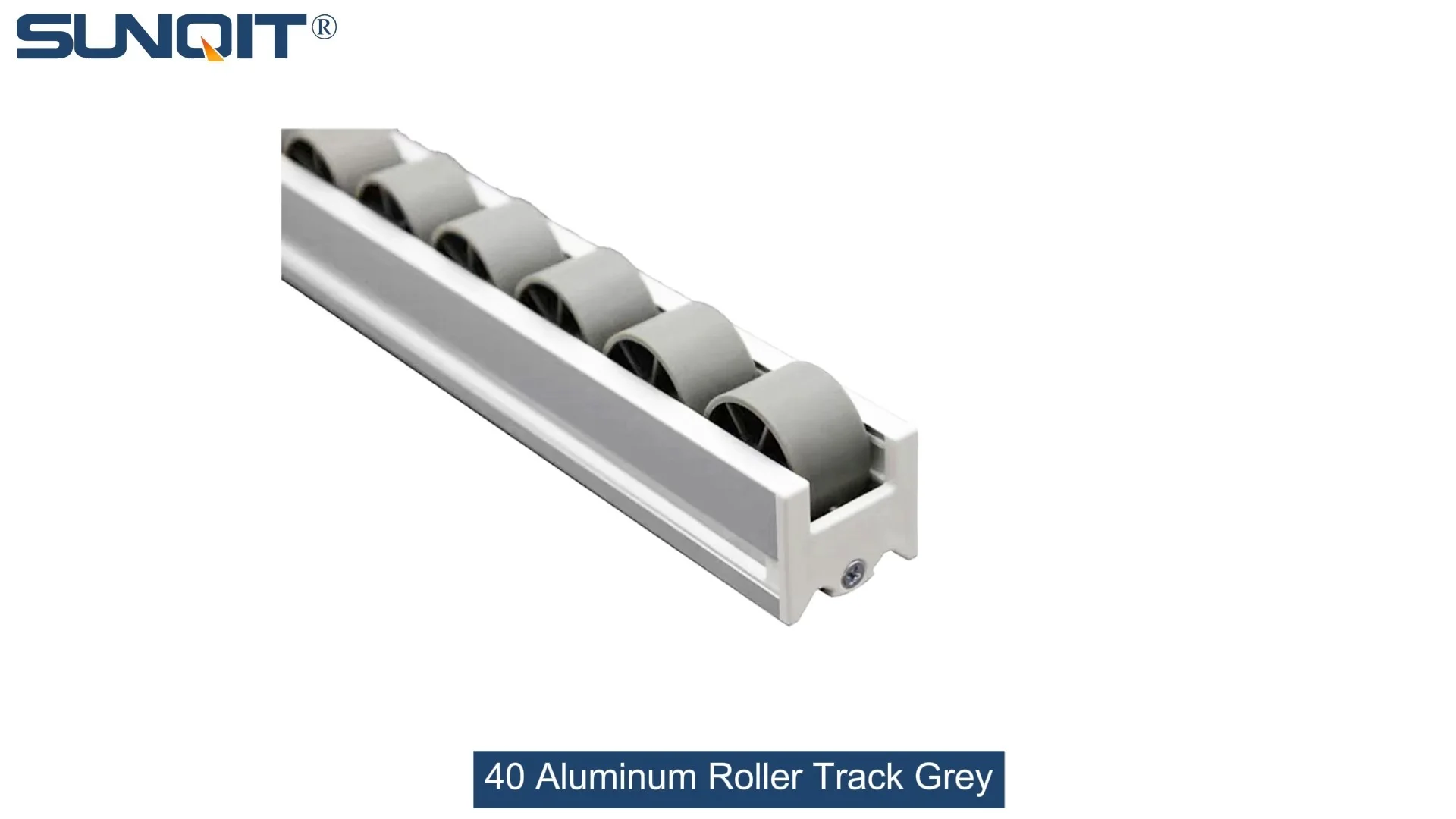
Durable and smooth-running modular roller rails. The system is fully assembled. The roller rail profile contains plastic rollers mounted on steel axles. Aluminum frame with plastic wheel make it anti corrosion,and material convey more smooth.
Walk into any modern home appliance factory, and you'll notice a symphony of movement: parts gliding from station to station, assemblers working in rhythm, and finished products rolling off the line. But beneath that harmony lies a critical challenge: keeping workflows smooth, efficient, and adaptable. In an industry where margins are tight and consumer demands shift faster than ever, even small disruptions—a stuck cart, a misaligned conveyor, or a part that takes too long to reach the next station—can throw off production schedules and eat into profits. That's where components like roller tracks step in—and today, we're shining a light on one that's quietly revolutionizing production lines: the 40 Aluminum Roller Track Grey. This unassuming piece of equipment isn't just a track; it's a bridge between chaos and efficiency, and it's time we gave it the attention it deserves.
What Is the 40 Aluminum Roller Track Grey, Anyway?
Let's start with the basics. The "40" in its name refers to its width—40 millimeters—making it compact enough to fit into tight production spaces but sturdy enough to handle the demands of heavy appliance parts. The "aluminum" is self-explanatory: it's crafted from high-grade aluminum alloy, a material prized in manufacturing for its rare blend of strength and lightness. And "grey"? That's more than just a color choice. Unlike bright yellows or reds that might clash with factory aesthetics, the muted grey finish is practical—it hides minor scratches and scuffs, stays looking clean longer, and blends seamlessly with the industrial palette of most production floors. But beyond its looks, this track is designed with one goal in mind: to make material flow feel almost effortless.
At first glance, it might look like any other roller track. A long, flat strip with evenly spaced rollers, mounted on a frame. But take a closer look, and you'll spot the details that set it apart. The rollers themselves are made from a durable plastic composite, chosen for its smooth glide and noise reduction—no more clanging metal-on-metal as parts move. The aluminum frame is extruded, meaning it's formed in one continuous piece, eliminating weak points where bends or breaks might occur. And the entire system is lightweight enough that two workers can easily carry and install a section, yet strong enough to support up to 50 kilograms per linear meter—plenty for most home appliance components, from small control panels to larger parts like motor housings.
Why Home Appliance Production Needs This Track (Spoiler: It's All About the Flow)
Home appliance manufacturing is a dance of precision. Every part, from a tiny screw to a bulky drum, needs to arrive at the right station, at the right time, in the right condition. When that flow breaks down, everything suffers. Workers wait for parts, deadlines slip, and frustration builds. Traditional solutions—like manual carts or rigid steel tracks—often fall short. Carts require operators to stop what they're doing to move them, creating bottlenecks. Steel tracks are heavy, hard to reconfigure, and prone to rust if not maintained meticulously. The 40 Aluminum Roller Track Grey addresses these pain points head-on, and it starts with how it moves material.
Smoother Flow, Fewer Headaches
Imagine a worker on the dishwasher assembly line. Their job is to attach the door hinge to the main frame, a task that requires focus and steady hands. In a factory using manual carts, they might spend 10 minutes every hour pausing to fetch a cart of hinges from the storage area, or waiting for a cart to be pushed their way. With the 40 Aluminum Roller Track Grey, that hinge cart is replaced by a continuous flow: hinges glide down the track directly to their workbench, arriving just as they're needed. No waiting, no interruptions, just a steady stream of parts that lets the worker stay in their rhythm. That's the power of gravity-assisted flow—parts move on their own, guided by the track's slight incline, reducing the need for manual intervention.
But it's not just about speed. The track's smooth rollers minimize jostling, which is crucial for delicate parts like circuit boards or glass panels. In one study by a leading lean system consultant, factories using aluminum roller tracks reported a 30% reduction in part damage compared to steel tracks, where rough rollers or sharp edges often caused scratches or dents. For home appliances, where even a small blemish can lead to a rejected product, that's a game-changer for quality control.
Flexibility That Keeps Up With Change
Home appliance trends shift fast. One year, consumers want slim, energy-efficient refrigerators; the next, they're demanding smart ovens with touchscreen controls. To keep up, factories need to reconfigure their lines quickly—adding a new workbench here, rerouting a material path there. Traditional steel tracks, bolted permanently to the floor, make this nearly impossible without a major renovation. The 40 Aluminum Roller Track Grey, though, is designed for adaptability. Thanks to its lightweight aluminum frame and compatible aluminum profile accessories, it can be easily disassembled, moved, and reassembled in a fraction of the time. Need to add a 90-degree turn to route parts around a new machine? Just use a roller track connector (another handy accessory) to join two track sections at the angle you need. Want to mount it overhead to free up floor space? Brackets and hanging kits make that possible too. This flexibility isn't just convenient—it's essential for staying competitive in an industry where product lifecycles grow shorter by the day.
Pro Tip: When choosing a roller track, always check the compatibility with aluminum profile accessories. The 40 Aluminum Roller Track Grey works seamlessly with standard brackets, connectors, and end supports, meaning you won't be locked into a single supplier or forced to buy custom parts. This interchangeability saves time, money, and headaches down the line.
Ergonomics: Kind to Your Team, Good for Business
It's easy to focus on machines and metrics in manufacturing, but the most valuable asset on any factory floor is the people. Repetitive lifting, bending, or reaching to move parts can lead to fatigue, injuries, and high turnover—all of which hurt productivity. The 40 Aluminum Roller Track Grey helps here too by bringing parts to the worker, not the other way around. By mounting the track at waist height along the assembly line, parts glide directly to the workbench, eliminating the need for operators to stoop, stretch, or lift heavy loads. This isn't just about comfort; it's about results. A study by the Occupational Safety and Health Administration (OSHA) found that ergonomic improvements in material handling can reduce injury rates by up to 40% and boost worker satisfaction, leading to lower turnover and higher productivity. For factories struggling with staffing shortages, that's a win-win.

How It Fits Into the Lean System Puzzle
If you've spent any time in manufacturing, you've probably heard of "lean systems"—the philosophy of minimizing waste while maximizing value. Lean is all about asking: "What can we cut out that doesn't add value to the product?" That includes wasted time, wasted motion, and wasted resources. The 40 Aluminum Roller Track Grey isn't just a tool; it's a lean enabler. It aligns perfectly with core lean principles, helping factories trim waste and run more efficiently.
Take "motion waste," for example. Lean teaches that any movement by workers that doesn't directly contribute to assembly is waste. When an operator has to walk 10 feet to fetch a part from a cart, that's motion waste. The roller track eliminates that by bringing the part to the operator, turning wasted steps into productive work. Then there's "inventory waste"—having too many parts sitting around, tying up capital and taking up space. With the track's ability to deliver parts just-in-time, factories can keep smaller stockpiles at each station, reducing clutter and freeing up cash flow.
Case Study: A Refrigerator Factory's 22% Improvement
Let's put this into real-world context. A mid-sized refrigerator manufacturer in the Midwest was struggling with their door assembly line. Parts for the door—hinges, gaskets, handles—were stored in bins at the end of the line, requiring operators to walk back and forth up to 20 times per hour to collect them. The factory's lean system supplier suggested installing 40 Aluminum Roller Track Grey to connect the parts storage area directly to each workbench. Within a month of installation, the results were clear: operators walked 60% fewer steps, part retrieval time dropped by 75%, and the line's throughput increased by 22%. "It sounds small, but those minutes add up," said the plant manager. "Our team is less tired, more focused, and we're hitting production targets we never could before."
The Data Speaks: Comparing Traditional vs. 40 Aluminum Roller Track Grey
Numbers tell the story best. To see just how much of an impact this track can have, let's compare it to two common alternatives: manual carts and steel roller tracks. The table below breaks down key metrics for a typical home appliance assembly line handling mid-sized parts (e.g., washing machine control panels).
| Aspect | Manual Carts | Steel Roller Tracks | 40 Aluminum Roller Track Grey | Key Improvement |
|---|---|---|---|---|
| Part Transfer Time (per 10 parts) | 15 minutes | 8 minutes | 3 minutes | 80% faster than manual carts; 62% faster than steel tracks |
| Labor Required (per shift) | 2 dedicated cart operators | 1 operator for maintenance/adjustments | 0 dedicated operators (self-flowing) | Eliminates need for cart operators, freeing staff for value-added tasks |
| Maintenance Frequency | Low (occasional cart wheel replacement) | High (monthly lubrication, rust treatment) | Very low (quarterly roller inspection) | 75% reduction in maintenance time vs. steel tracks |
| Reconfiguration Time (to add 5m of track) | N/A (carts can't be "reconfigured") | 8 hours (requires tools, multiple workers) | 2 hours (lightweight, tool-free connectors) | 75% faster reconfiguration than steel tracks |
| Cost Over 5 Years (including installation, maintenance, labor) | $45,000 (carts, labor, replacement parts) | $38,000 (track, installation, maintenance) | $22,000 (track, minimal labor/maintenance) | 51% lower total cost than manual carts; 42% lower than steel tracks |
The data is clear: while the upfront cost of the 40 Aluminum Roller Track Grey might be slightly higher than manual carts, its long-term savings in labor, maintenance, and efficiency make it a far smarter investment. And compared to steel tracks, it's not just cheaper over time—it's more adaptable, easier to use, and better for your team.

Beyond the Track: The Accessories That Make It Work
A roller track is only as good as the system around it. That's why the 40 Aluminum Roller Track Grey is designed to work with a range of aluminum profile accessories, turning a simple track into a fully integrated material handling solution. These accessories solve common challenges, from keeping parts from sliding off the end to connecting tracks at tricky angles.
End Supports with Stops: No More Lost Parts
Ever had a part slide off the end of a track and crash to the floor? It's not just frustrating—it can damage the part or even injure someone. End supports with built-in stops solve this. These simple accessories attach to the end of the track, creating a gentle barrier that stops parts in their tracks (pun intended) without damaging them. They're easy to install, just clip onto the aluminum frame, and adjustable—so you can set the stop height based on the size of your parts.
Connectors: Making Turns and Splits Look Easy
Most production lines aren't straight; they twist, turn, and split to route parts to different stations. The roller track placon mount for aluminum profile flat is a connector that makes these transitions seamless. It's a small, lightweight bracket that lets you join two track sections at angles up to 90 degrees, ensuring parts flow smoothly around corners without getting stuck. For more complex layouts—like splitting a single track into two—there are Y-shaped connectors, designed to divide the flow evenly so parts go to the right station every time.
Mounting Brackets: Attach It Anywhere
Whether you want to mount the track on the floor, under a workbench, or even overhead, there's a bracket for that. The most versatile is the roller track placon mount for aluminum profile high, which attaches the track to vertical aluminum profiles, letting you adjust the height to match your workers' ergonomic needs. For workbench integration, the flat mount bracket is perfect—it sits flush under the bench, keeping the track out of the way but still within easy reach.

Why Aluminum? (Spoiler: It's Not Just for Planes and Soda Cans)
You might be wondering, "Why aluminum instead of steel or plastic?" It's a fair question. Steel is stronger, plastic is cheaper. But aluminum hits the sweet spot for a roller track in home appliance production, and it's all about balance.
Aluminum is corrosion-resistant. Unlike steel, it doesn't rust when exposed to moisture or factory chemicals, which means less maintenance and a longer lifespan. It's also lightweight—about a third the weight of steel—making installation and reconfiguration a breeze. But don't let its lightness fool you: aluminum alloy is surprisingly strong. The 40mm track can handle the same loads as a steel track of similar size, but with half the effort to move and install. And when it comes to cost, aluminum is more affordable than stainless steel and more durable than plastic, making it a cost-effective choice over time.
Another hidden benefit? Aluminum conducts heat well. In factories with temperature fluctuations, this helps the track expand and contract evenly, reducing warping that could throw off the roller alignment. Plastic tracks, by contrast, can warp in high heat, and steel can become brittle in cold conditions. For home appliance factories that run 24/7, with machinery generating heat and loading docks letting in cold air, this stability is critical.
The Future of Production: Where This Track Fits In
Home appliance manufacturing isn't standing still. Factories are getting smarter, with IoT sensors, automation, and AI-driven analytics transforming how work gets done. The 40 Aluminum Roller Track Grey is ready for this future, too. Its aluminum frame is easy to equip with simple sensors that track part flow, alerting managers if a section gets jammed or if parts are arriving too slowly. Some manufacturers are even experimenting with adding small motors to the track, turning it into a powered conveyor for heavier loads—though for most applications, gravity is still the most efficient (and cheapest) power source.
As factories move toward more modular production lines—where stations can be rearranged in hours instead of days—the track's flexibility will become even more valuable. Need to shift from making refrigerators to air conditioners? Unbolt the track, move it to the new line, and reconnect it with a few accessories. No need for custom fabrication or lengthy downtime. It's this adaptability that will keep the 40 Aluminum Roller Track Grey relevant long after newer, flashier technologies come and go.
Final Thoughts: It's the Little Things That Matter
In the grand scheme of home appliance production, a roller track might seem like a small player. But as any seasoned manufacturer will tell you, the little things often make the biggest difference. The 40 Aluminum Roller Track Grey isn't just a piece of equipment; it's a tool that empowers workers, streamlines workflows, and helps factories keep up with the demands of a fast-paced industry. It's durable, flexible, and designed with the realities of the factory floor in mind—no fancy bells and whistles, just reliable performance day in and day out.
So, the next time you walk through a home appliance factory, take a moment to look down. You might just spot this grey track, quietly doing its job, making sure the show goes on. And if you're a manufacturer looking to boost efficiency, cut waste, or just make your team's lives a little easier? It might be time to give it a closer look. After all, in production, as in life, smooth flow makes everything better.