- Company Articles
- Products and Technology
- Solution
- 40 Aluminum Roller Track Grey in Logistics Hubs: Boosting Order Fulfillment Rates

40 Aluminum Roller Track Grey in Logistics Hubs: Boosting Order Fulfillment Rates
Related Product
40 Aluminum Roller Track Grey
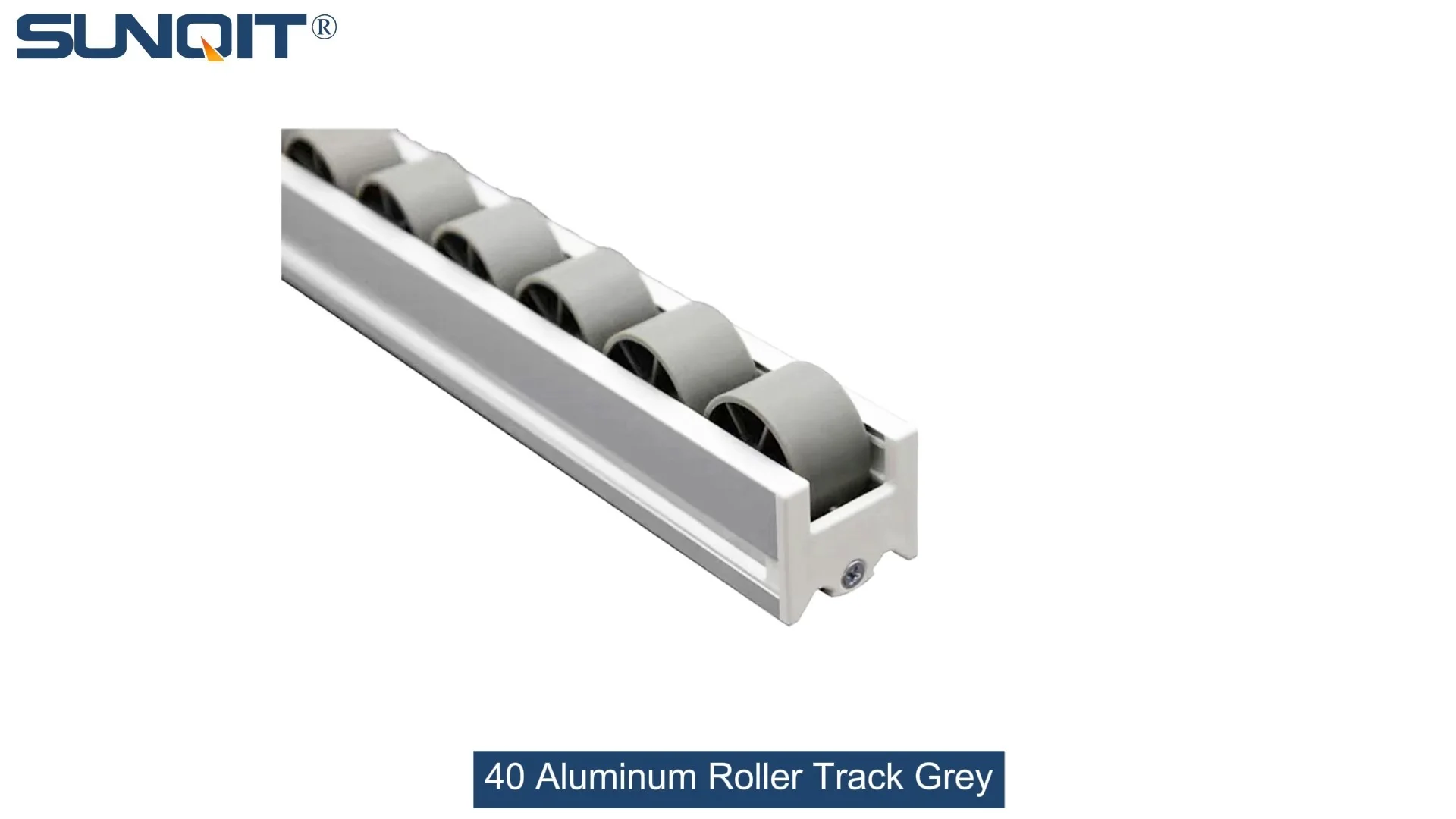
Durable and smooth-running modular roller rails. The system is fully assembled. The roller rail profile contains plastic rollers mounted on steel axles. Aluminum frame with plastic wheel make it anti corrosion,and material convey more smooth.
In the fast-paced world of logistics, where every second counts and customer expectations loom large, the difference between a satisfied client and a lost opportunity often hinges on one critical factor: efficiency. Logistics hubs, the beating hearts of supply chains, are tasked with moving goods from storage to shipment with precision, speed, and reliability. Yet, even the most advanced hubs can stumble over outdated material handling systems—clunky conveyor belts, rigid flow racks, or roller tracks that slow down rather than streamline operations. Enter the
40 Aluminum Roller Track Grey
: a quiet game-changer that's redefining how logistics teams approach order fulfillment. This unassuming component, often overlooked in the grand scheme of warehouse tech, is proving to be the key to unlocking smoother workflows, faster processing times, and ultimately, higher fulfillment rates. Let's dive into why this specific roller track is becoming a staple in modern logistics hubs.
The Backbone of Material Flow: What Makes 40 Aluminum Roller Track Grey Unique?
At first glance, a roller track might seem like a simple tool—just a series of rollers mounted on a frame, right? But the
40 Aluminum Roller Track Grey
is far from basic. Let's break down its design and why it matters. First, the material: aluminum. Unlike heavy steel tracks that require extra manpower to install and reconfigure, aluminum strikes the perfect balance between strength and lightness. This makes the 40mm-wide track easy to maneuver during setup, reducing installation time and labor costs. Its grey finish, while aesthetically understated, serves a practical purpose too: it hides minor scuffs and wear, maintaining a clean look even in high-traffic areas, and blends seamlessly with industrial environments, avoiding the distraction of bright colors that can clash with warehouse aesthetics.
Then there's the 40mm width. This isn't arbitrary. After years of testing, manufacturers found that 40mm offers the ideal sweet spot for versatility. It's narrow enough to fit into tight spaces—like between flow racks or alongside workbenches—but wide enough to support a variety of load sizes, from small parcels to larger cartons. The rollers themselves are precision-engineered: each one spins freely, reducing friction so goods glide smoothly without jamming. And because they're made from high-grade plastic (often reinforced with nylon), they're gentle on packages, minimizing the risk of scuffing or damaging fragile items.
Then there's the 40mm width. This isn't arbitrary. After years of testing, manufacturers found that 40mm offers the ideal sweet spot for versatility. It's narrow enough to fit into tight spaces—like between flow racks or alongside workbenches—but wide enough to support a variety of load sizes, from small parcels to larger cartons. The rollers themselves are precision-engineered: each one spins freely, reducing friction so goods glide smoothly without jamming. And because they're made from high-grade plastic (often reinforced with nylon), they're gentle on packages, minimizing the risk of scuffing or damaging fragile items.
From Storage to Shipment: Integrating with Flow Racks and Conveyors
No material handling system works in isolation, and the
40 Aluminum Roller Track Grey
truly shines when paired with other logistics staples like flow racks and conveyors. Let's walk through a typical workflow in a hub that's adopted this track. Imagine a regional distribution center handling e-commerce orders. Pallets of inventory arrive and are stored in high-density racking systems. When an order comes in, pickers retrieve the items and place them into totes, which then need to move to the packing station. Instead of relying on manual carting (slow and error-prone) or rigid conveyor belts (expensive and hard to adjust), the hub uses flow racks equipped with 40 Aluminum Roller Track Grey.
Here's how it works: The flow rack is angled slightly downward, so gravity does the heavy lifting. Totes loaded with picked items are placed at the top of the track, and they glide smoothly down to the packing area—no motors, no complicated controls, just consistent, reliable movement. The aluminum track's low friction ensures that even fully loaded totes (up to 50kg per linear meter, in many cases) move at a steady pace, preventing bottlenecks at the packing workbench. Once at the packing station, workers can easily slide the tote off the track and onto the workbench, where they pack, label, and prepare the order for shipping. From there, the packed boxes might move to a shipping conveyor, often connected via another section of 40 Aluminum Roller Track Grey, ensuring a seamless handoff between stages.
What makes this integration so effective? Flexibility. Unlike fixed conveyor systems that require permanent installation, the 40 Aluminum Roller Track Grey can be easily adjusted or extended as the hub's needs change. Adding a new flow rack? Simply attach a few more track sections. Repurposing a corner of the warehouse for seasonal items? Disassemble the track and rebuild it elsewhere. This adaptability is crucial in logistics, where demand fluctuates—think holiday peaks or sudden product launches—and hubs need to pivot quickly.
Here's how it works: The flow rack is angled slightly downward, so gravity does the heavy lifting. Totes loaded with picked items are placed at the top of the track, and they glide smoothly down to the packing area—no motors, no complicated controls, just consistent, reliable movement. The aluminum track's low friction ensures that even fully loaded totes (up to 50kg per linear meter, in many cases) move at a steady pace, preventing bottlenecks at the packing workbench. Once at the packing station, workers can easily slide the tote off the track and onto the workbench, where they pack, label, and prepare the order for shipping. From there, the packed boxes might move to a shipping conveyor, often connected via another section of 40 Aluminum Roller Track Grey, ensuring a seamless handoff between stages.
What makes this integration so effective? Flexibility. Unlike fixed conveyor systems that require permanent installation, the 40 Aluminum Roller Track Grey can be easily adjusted or extended as the hub's needs change. Adding a new flow rack? Simply attach a few more track sections. Repurposing a corner of the warehouse for seasonal items? Disassemble the track and rebuild it elsewhere. This adaptability is crucial in logistics, where demand fluctuates—think holiday peaks or sudden product launches—and hubs need to pivot quickly.

Lean System Principles in Action: Reducing Waste, Boosting Productivity
Modern logistics hubs don't just aim for speed—they strive for
lean system
efficiency, where every step adds value and waste is minimized. The 40 Aluminum Roller Track Grey aligns perfectly with this philosophy. Let's start with waste reduction: in traditional setups, workers might spend 20-30% of their time pushing heavy carts or waiting for slow-moving conveyors. With the roller track, that time is reclaimed. Totes and packages move autonomously (thanks to gravity or minimal manual effort), freeing up staff to focus on higher-value tasks like quality checks or order verification. This cuts down on "motion waste," a common lean target, and reduces physical strain on workers, lowering the risk of injuries and improving morale.
Then there's "waiting waste." In hubs with outdated tracks, jams are a frequent headache—rollers get stuck, items tip over, or the track itself bends under heavy loads. The 40 Aluminum Roller Track Grey, with its durable aluminum frame and smooth-rolling plastic wheels, drastically reduces these interruptions. Its 40mm width provides stability, preventing items from wobbling or falling off, while the aluminum extrusion profile (reinforced at stress points) resists bending, even under continuous use. The result? Fewer stoppages, consistent flow, and a more predictable workflow. When workflows are predictable, planning becomes easier—managers can allocate staff more effectively, and fulfillment times become more reliable, which means fewer missed delivery windows.
Perhaps most importantly, the roller track supports "just-in-time" (JIT) principles, a cornerstone of lean systems. By ensuring that items arrive at the packing station exactly when they're needed (not too early, not too late), the hub avoids overstocking workbenches with unnecessary inventory, which can lead to clutter and errors. Instead, the track acts as a "buffer" that feeds items to workers at a steady pace, keeping the packing area organized and efficient.
Then there's "waiting waste." In hubs with outdated tracks, jams are a frequent headache—rollers get stuck, items tip over, or the track itself bends under heavy loads. The 40 Aluminum Roller Track Grey, with its durable aluminum frame and smooth-rolling plastic wheels, drastically reduces these interruptions. Its 40mm width provides stability, preventing items from wobbling or falling off, while the aluminum extrusion profile (reinforced at stress points) resists bending, even under continuous use. The result? Fewer stoppages, consistent flow, and a more predictable workflow. When workflows are predictable, planning becomes easier—managers can allocate staff more effectively, and fulfillment times become more reliable, which means fewer missed delivery windows.
Perhaps most importantly, the roller track supports "just-in-time" (JIT) principles, a cornerstone of lean systems. By ensuring that items arrive at the packing station exactly when they're needed (not too early, not too late), the hub avoids overstocking workbenches with unnecessary inventory, which can lead to clutter and errors. Instead, the track acts as a "buffer" that feeds items to workers at a steady pace, keeping the packing area organized and efficient.

How Does It Stack Up? Comparing 40 Aluminum Roller Track Grey to Alternatives
To truly appreciate the value of the 40 Aluminum Roller Track Grey, it helps to see how it compares to other common roller track options. Let's take a look at a side-by-side comparison:
| Feature | 40 Aluminum Roller Track Grey | Plastic Roller Track (Yellow/Grey) | Steel Roller Track |
|---|---|---|---|
| Material | Aluminum extrusion profile | PVC or polypropylene | Mild steel |
| Weight (per meter) | 1.2-1.5 kg | 0.8-1.0 kg | 3.0-4.0 kg |
| Load Capacity (per linear meter) | Up to 50 kg | Up to 30 kg | Up to 80 kg |
| Corrosion Resistance | High (aluminum resists rust) | High (plastic is non-corrosive) | Low (requires coating; prone to rust in humid environments) |
| Maintenance Needs | Low (occasional cleaning; rollers rarely need replacement) | Medium (plastic can warp in high heat; rollers may wear faster) | High (regular lubrication; rust removal) |
| Cost (Relative) | Moderate (higher than plastic, lower than steel) | Low (cheapest upfront, but higher replacement costs) | High (expensive upfront and to install) |
| Best For | Medium-to-high throughput hubs; lean systems; variable load sizes | Light-duty, low-budget operations; temporary setups | Extremely heavy loads (e.g., automotive parts); fixed, permanent workflows |
As the table shows, the 40 Aluminum Roller Track Grey hits the sweet spot for most logistics hubs. It's not the cheapest option, but its durability and low maintenance mean lower long-term costs than plastic tracks, which often need replacement after a year or two of heavy use. And while steel tracks can handle heavier loads, they're overkill for the typical e-commerce or retail hub, where most items weigh under 50kg. For hubs focused on
lean system
efficiency and adaptability, aluminum is the clear choice.

Real-World Results: A Case Study in Fulfillment Rate Improvement
Let's ground this in a real scenario. Consider a mid-sized logistics hub in the Midwest, handling 10,000-12,000 orders daily for a national retail chain. Before adopting the 40 Aluminum Roller Track Grey, their packing area relied on a mix of plastic roller tracks and manual carts. Workers complained about frequent jams, especially with heavier items like electronics, and the plastic tracks warped in the summer heat, causing items to get stuck. Fulfillment rates hovered around 85%—meaning 15% of orders missed their same-day or next-day shipping windows, leading to customer complaints and lost repeat business.
The hub's operations manager decided to test the 40 Aluminum Roller Track Grey in one section of the packing area, replacing 50 meters of plastic track with the aluminum version. Within two weeks, the results were undeniable: jams dropped by 70%, and the time it took for a tote to move from the flow rack to the workbench decreased by 15 seconds per order. Scaled across 10,000 orders, that's a time savings of over 40 hours per day—time that workers redirected to quality checks and faster packing. After three months, the hub expanded the aluminum track to the entire packing floor and saw fulfillment rates climb to 94%. Customer complaints about late shipments fell by 60%, and employee turnover in the packing team (previously high due to frustration with the old system) decreased by 25%.
What made the difference? The aluminum track's reliability eliminated the "stop-and-start" workflow that had plagued the team. Workers no longer wasted time unjamming tracks or manually lifting heavy totes; instead, they could focus on packing orders accurately and quickly. The track's compatibility with their existing flow rack system also meant minimal disruption during installation—no need to replace entire racks, just the track sections. For this hub, the 40 Aluminum Roller Track Grey wasn't just a tool; it was a catalyst for cultural change, fostering a more productive and positive work environment.
The hub's operations manager decided to test the 40 Aluminum Roller Track Grey in one section of the packing area, replacing 50 meters of plastic track with the aluminum version. Within two weeks, the results were undeniable: jams dropped by 70%, and the time it took for a tote to move from the flow rack to the workbench decreased by 15 seconds per order. Scaled across 10,000 orders, that's a time savings of over 40 hours per day—time that workers redirected to quality checks and faster packing. After three months, the hub expanded the aluminum track to the entire packing floor and saw fulfillment rates climb to 94%. Customer complaints about late shipments fell by 60%, and employee turnover in the packing team (previously high due to frustration with the old system) decreased by 25%.
What made the difference? The aluminum track's reliability eliminated the "stop-and-start" workflow that had plagued the team. Workers no longer wasted time unjamming tracks or manually lifting heavy totes; instead, they could focus on packing orders accurately and quickly. The track's compatibility with their existing flow rack system also meant minimal disruption during installation—no need to replace entire racks, just the track sections. For this hub, the 40 Aluminum Roller Track Grey wasn't just a tool; it was a catalyst for cultural change, fostering a more productive and positive work environment.
Beyond the Track: Accessories That Enhance Performance
A roller track is only as good as its supporting components, and the 40 Aluminum Roller Track Grey works best when paired with the right accessories. Let's explore a few key ones:
Roller Track Placon Mounts: These small but critical pieces connect the track to flow racks or aluminum profiles. Options like the "roller track placon mount for aluminum profile flat" or "high" mounts ensure a secure fit, preventing the track from shifting during use. This stability is essential for maintaining consistent flow—even a slight wobble can cause items to tip or slow down.
End Supports with Stops: Placed at the end of a track section, these prevent totes from sliding off the edge, protecting both the items and the workers below. Some end supports come with wheels, making it easy to redirect items onto another track or into a cart.
Connectors: For longer track runs, "roller track placon mount connectors" allow sections to be joined seamlessly, eliminating gaps that could catch on packages. This is especially useful for hubs that need to create custom track layouts around obstacles like pillars or machinery.
These accessories might seem minor, but they turn a basic track into a fully integrated material handling solution. When combined, the track and its accessories create a system that's not just efficient, but also safe and customizable.
Roller Track Placon Mounts: These small but critical pieces connect the track to flow racks or aluminum profiles. Options like the "roller track placon mount for aluminum profile flat" or "high" mounts ensure a secure fit, preventing the track from shifting during use. This stability is essential for maintaining consistent flow—even a slight wobble can cause items to tip or slow down.
End Supports with Stops: Placed at the end of a track section, these prevent totes from sliding off the edge, protecting both the items and the workers below. Some end supports come with wheels, making it easy to redirect items onto another track or into a cart.
Connectors: For longer track runs, "roller track placon mount connectors" allow sections to be joined seamlessly, eliminating gaps that could catch on packages. This is especially useful for hubs that need to create custom track layouts around obstacles like pillars or machinery.
These accessories might seem minor, but they turn a basic track into a fully integrated material handling solution. When combined, the track and its accessories create a system that's not just efficient, but also safe and customizable.
Maintenance Tips: Keeping Your Roller Track Running Smoothly
Like any piece of equipment, the 40 Aluminum Roller Track Grey performs best with regular care. The good news? Maintenance is minimal, thanks to its durable design. Here's what logistics teams should prioritize:
Weekly Cleaning: Use a dry cloth or a soft brush to remove dust, debris, and small particles from the rollers and track frame. Built-up dirt can cause rollers to stick, so keeping them clean is key to maintaining smooth movement.
Monthly Lubrication: Apply a light silicone-based lubricant to the roller axles (avoid oil-based lubricants, which attract dust). This keeps the rollers spinning freely, especially in humid environments where rust (though rare with aluminum) could form on metal axles.
Quarterly Inspections: Check for loose connectors, bent rollers, or signs of wear on the track frame. Tighten any loose placon mounts, and replace rollers that show cracks or damage—most suppliers offer replacement rollers at a low cost, making this a quick fix.
Seasonal Adjustments: In areas with extreme temperature changes, aluminum can expand or contract slightly. Check track alignment in spring and fall, and adjust connectors if needed to ensure sections remain flush.
With these simple steps, the 40 Aluminum Roller Track Grey can last 5-7 years or more—far longer than plastic tracks and with less maintenance than steel.
Weekly Cleaning: Use a dry cloth or a soft brush to remove dust, debris, and small particles from the rollers and track frame. Built-up dirt can cause rollers to stick, so keeping them clean is key to maintaining smooth movement.
Monthly Lubrication: Apply a light silicone-based lubricant to the roller axles (avoid oil-based lubricants, which attract dust). This keeps the rollers spinning freely, especially in humid environments where rust (though rare with aluminum) could form on metal axles.
Quarterly Inspections: Check for loose connectors, bent rollers, or signs of wear on the track frame. Tighten any loose placon mounts, and replace rollers that show cracks or damage—most suppliers offer replacement rollers at a low cost, making this a quick fix.
Seasonal Adjustments: In areas with extreme temperature changes, aluminum can expand or contract slightly. Check track alignment in spring and fall, and adjust connectors if needed to ensure sections remain flush.
With these simple steps, the 40 Aluminum Roller Track Grey can last 5-7 years or more—far longer than plastic tracks and with less maintenance than steel.
Looking Ahead: The Future of Logistics and the Role of Adaptable Tools
As logistics hubs evolve—adopting automation, AI-driven inventory management, and robotics—the tools they use must keep pace. The 40 Aluminum Roller Track Grey is well-positioned for this future, thanks to its modular design. It integrates seamlessly with automated systems, for example: in some advanced hubs, robotic arms place items onto the track, which then deliver them to human workers at packing stations. The track's smooth movement ensures that items arrive in the right position for the robot to pick, reducing errors and improving coordination between humans and machines.
Additionally, as hubs grow, the track can scale with them. Need to add a new shipping lane? Just extend the track. Launching a new product line with larger packaging? Swap out the standard rollers for heavier-duty ones (many suppliers offer compatible roller upgrades). This scalability makes the 40 Aluminum Roller Track Grey a long-term investment, not just a short-term fix.
Additionally, as hubs grow, the track can scale with them. Need to add a new shipping lane? Just extend the track. Launching a new product line with larger packaging? Swap out the standard rollers for heavier-duty ones (many suppliers offer compatible roller upgrades). This scalability makes the 40 Aluminum Roller Track Grey a long-term investment, not just a short-term fix.
Conclusion: The Quiet Catalyst for Fulfillment Success
In the world of logistics, where innovation often focuses on flashy tech like drones or automated warehouses, it's easy to overlook the humble roller track. But as we've seen, the 40 Aluminum Roller Track Grey is proof that sometimes the most impactful solutions are the ones that work behind the scenes. By combining durability, flexibility, and lean efficiency, it's helping logistics hubs move beyond the status quo, turning bottlenecks into smooth workflows and missed deadlines into satisfied customers.
For operations managers and logistics leaders, the message is clear: to boost fulfillment rates, start with the basics. Invest in tools that reduce waste, empower workers, and adapt to your hub's changing needs. The 40 Aluminum Roller Track Grey isn't just a track—it's a foundation for success in an industry where every second, every order, and every customer matters. So the next time you walk through a logistics hub and see goods gliding effortlessly from flow rack to workbench, take a closer look. Chances are, you'll spot the grey aluminum track that's making it all possible—one roller at a time.
For operations managers and logistics leaders, the message is clear: to boost fulfillment rates, start with the basics. Invest in tools that reduce waste, empower workers, and adapt to your hub's changing needs. The 40 Aluminum Roller Track Grey isn't just a track—it's a foundation for success in an industry where every second, every order, and every customer matters. So the next time you walk through a logistics hub and see goods gliding effortlessly from flow rack to workbench, take a closer look. Chances are, you'll spot the grey aluminum track that's making it all possible—one roller at a time.