- Company Articles
- Products and Technology
- Product knowledge
- 40 Aluminum Roller Track Grey in Machinery Manufacturing: Precision & Reliability

40 Aluminum Roller Track Grey in Machinery Manufacturing: Precision & Reliability
Related Product
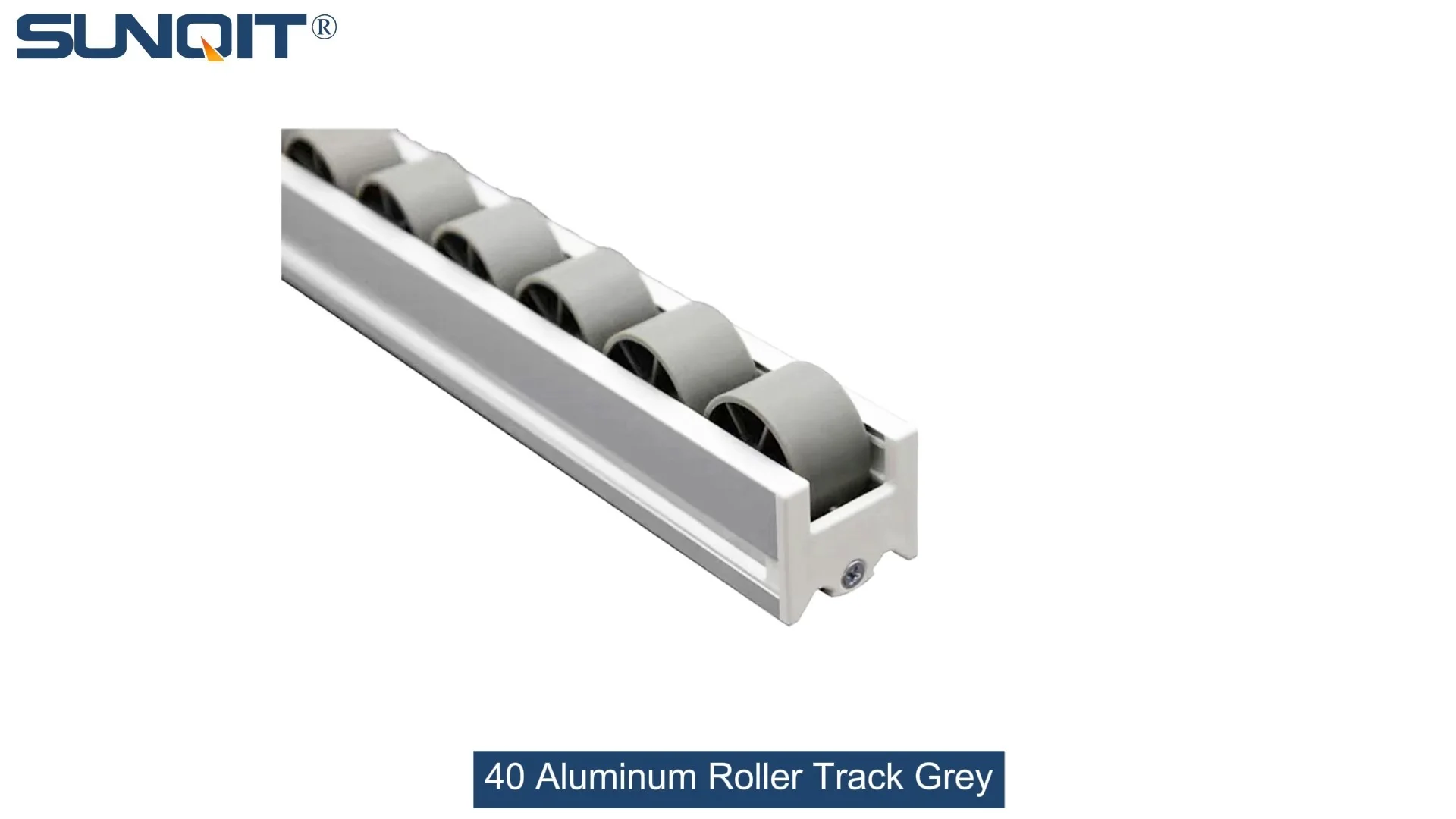
40 Aluminum Roller Track Grey
Durable and smooth-running modular roller rails. The system is fully assembled. The roller rail profile contains plastic rollers mounted on steel axles. Aluminum frame with plastic wheel make it anti corrosion,and material convey more smooth.
Walk into any machinery manufacturing plant, and you'll quickly realize that the real magic isn't just in the big, flashy machines assembling engines or stamping metal—it's in the quiet, consistent flow of materials that keeps everything moving. Picture this: a worker at a workbench reaches for a component, and it glides smoothly toward them on a track, no jams, no delays. A supervisor checks the production line, and every part is exactly where it needs to be, exactly when it needs to be there. This seamless rhythm? It's often thanks to unsung heroes like the 40 Aluminum Roller Track Grey.
In an industry where even a minute of downtime can cost thousands of dollars, reliability isn't just a nice-to-have—it's the backbone of productivity. And when it comes to moving parts, components, and finished products across factory floors, few tools deliver the precision and dependability of the 40 Aluminum Roller Track Grey. Let's dive into why this unassuming piece of equipment has become a staple in modern manufacturing, how its design leverages durable aluminum profile and smart roller track accessories, and why it's a cornerstone of efficient lean system implementation.
What Exactly Is 40 Aluminum Roller Track Grey?
Let's start with the basics. The name itself gives away a few key details: "40" refers to its width (typically 40mm, though exact measurements can vary by manufacturer), "Aluminum" highlights its core material, "Roller Track" explains its function, and "Grey" is the color of its finish. But there's far more to it than just dimensions and hue. This track is a meticulously engineered system designed to move materials with minimal friction, maximum control, and long-lasting performance.
At its core, the 40 Aluminum Roller Track Grey consists of three main components: the aluminum frame (crafted from high-grade aluminum profile), a series of rotating rollers, and a set of roller track accessories that hold everything together and let you customize the setup. The frame is usually an extruded aluminum profile—think of it as a sturdy, lightweight backbone with built-in channels or slots that make attaching rollers, guides, and other accessories a breeze. The rollers, often made of durable plastic or rubber (depending on the application), are mounted along the frame at precise intervals to ensure smooth, even movement of items placed on top. And the grey finish? It's not just for looks. Most manufacturers use a powder-coated finish that resists scratches, hides minor wear and tear, and stands up to the oils, coolants, and dust common in manufacturing environments.
Ever noticed how some factory equipment starts looking beat up after a few months? Not this track. That grey powder coating acts like a shield, keeping it looking (and working) sharp even in busy shops. I once visited a plant that had been using the same 40 Aluminum Roller Track Grey sections for over five years, and you'd swear they were new—minus a few minor scuffs, of course.
Aluminum Profile: The Secret to Its Strength and Lightweight Design
If the 40 Aluminum Roller Track Grey were a superhero, the aluminum profile would be its superpower. Aluminum might not seem as tough as steel, but when it comes to manufacturing equipment, its unique blend of strength and lightness is a game-changer. Let's break down why aluminum profile is the material of choice here.
First, aluminum is inherently resistant to corrosion. Unlike steel, which can rust when exposed to moisture or chemicals, aluminum forms a thin oxide layer on its surface that acts as a natural barrier. In machinery shops where coolants, lubricants, or even water might splash onto the track, this resistance is critical. It means less maintenance, fewer replacements, and a longer lifespan for the equipment.
Second, aluminum is lightweight. A typical 40mm aluminum profile section weighs significantly less than a steel equivalent, making the track easier to install, reconfigure, and move if needed. Imagine setting up a new production line: instead of needing a team of workers to lift heavy steel tracks, a couple of people can handle the aluminum version. This flexibility is a big plus in today's manufacturing world, where factories often retool their layouts to adapt to new products or processes.
Third, aluminum extrusion—the process used to create the profile—allows for incredibly precise shapes. Manufacturers can design the profile with built-in grooves, tabs, or channels that perfectly fit the rollers and accessories. This precision ensures that every component lines up exactly as it should, reducing wobble, minimizing friction, and enhancing the track's overall performance. It's like building a puzzle where every piece is custom-made to fit—no gaps, no misalignments.
I spoke with a plant engineer once who told me switching from steel to aluminum profile tracks cut their installation time in half. "We used to need a crane to move the old steel sections," he said. "Now, two guys with a dolly can set up a 20-foot track in an hour. And when we rearranged the floor last quarter? We just unbolted the tracks, moved them, and bolted them back down. No hassle."

Design Features That Deliver Unmatched Precision
Precision is non-negotiable in machinery manufacturing. Whether you're moving delicate electronic components or heavy metal parts, even a small misalignment can cause jams, damage products, or slow down the line. The 40 Aluminum Roller Track Grey is built with precision in mind, from the spacing of its rollers to the alignment of its frame.
Let's start with the rollers. They're not just randomly placed—manufacturers calculate the optimal spacing based on the average size and weight of the materials the track will carry. For example, if the track is designed for small parts (like bolts or washers), the rollers might be closer together to prevent items from slipping through gaps. For larger, heavier components, the spacing might be wider, but each roller is reinforced to handle the load. The result? Materials glide along without tilting, bouncing, or getting stuck.
The rollers themselves are also engineered for smooth rotation. Most use ball bearings or bushings to reduce friction, ensuring that even a light push can set a load in motion. And because they're mounted in the aluminum profile's precision-machined slots, they stay perfectly aligned. No more wobbly rollers that cause materials to veer off course—every rotation is consistent, every movement predictable.
Then there's the frame's straightness. Aluminum profile, when extruded properly, has extremely tight tolerances for straightness and flatness. This means that a 10-foot section of 40 Aluminum Roller Track Grey will have almost no bowing or warping, even under load. When you connect multiple sections together (using roller track accessories like connectors or brackets), they line up seamlessly, creating a continuous, level path for materials. In contrast, cheaper steel or plastic tracks might flex or bend over time, leading to uneven movement and frustrating bottlenecks.
The grey finish plays a subtle role in precision too. By reducing glare, it makes it easier for workers to visually check if materials are centered on the track or if there's debris that might cause a jam. In bright factory lighting, a shiny metal track can reflect light, hiding small issues until they become big problems. The muted grey surface eliminates that distraction, keeping the focus on the materials where it belongs.

Reliability: Built to Keep Up with 24/7 Manufacturing
Machinery manufacturing plants don't run 9-to-5—they run around the clock. That means the equipment on the factory floor needs to keep up, day in and day out, without frequent breakdowns or performance dips. The 40 Aluminum Roller Track Grey is built for this kind of endurance, and it shows in every detail.
Let's talk about load capacity. While exact numbers vary by manufacturer, a typical 40mm aluminum roller track can handle anywhere from 50 to 200 pounds per linear foot, depending on the roller material and frame thickness. That's more than enough for most manufacturing needs, whether you're moving small subassemblies or larger components like gearboxes. And because the aluminum profile is rigid, it distributes weight evenly across the track, preventing stress points that could lead to failure.
Then there's wear and tear. The rollers are designed to resist abrasion, even when moving rough or sharp-edged parts. Many are made of high-density polyethylene (HDPE) or polyurethane, which are both tough and gentle on materials (so they won't scratch delicate surfaces). The aluminum frame, as we mentioned earlier, resists corrosion and dents, even in harsh environments. And because the track has few moving parts (just the rollers and their bearings), there's less to go wrong. No complicated gears, belts, or motors—just simple, reliable rotation.
A maintenance technician I know once joked that the 40 Aluminum Roller Track Grey is "the set-it-and-forget-it" equipment in their shop. "We check the rollers every six months, maybe lubricate them once a year, and that's it," he said. "In ten years, I've only had to replace a handful of rollers—usually because someone dropped a wrench on them, not because they wore out."
Temperature resistance is another underrated feature. Manufacturing plants can get hot—really hot—especially near welding stations or furnaces. Aluminum handles heat well, maintaining its strength and shape even in temperatures up to 200°F (and some high-grade aluminum profiles can go higher). Unlike plastic tracks, which might warp or soften in heat, or steel tracks that can expand and contract with temperature changes (leading to misalignment), the 40 Aluminum Roller Track Grey stays stable, ensuring consistent performance no matter how warm the shop gets.

Integrating with Lean Systems: Reducing Waste, Boosting Efficiency
Lean manufacturing isn't just a buzzword—it's a philosophy centered on eliminating waste and creating value. And one of the biggest sources of waste in manufacturing is motion waste: the time and energy spent moving materials around the shop. The 40 Aluminum Roller Track Grey is a lean system's best friend, designed to streamline material flow and cut down on unnecessary movement.
Think about a traditional setup where workers have to walk to a storage area, pick up parts, and carry them back to their workbench. That's motion waste. With a well-placed roller track, parts can flow directly from storage to the workbench, or from one workstation to the next, with minimal human intervention. It's just-in-time production in action: materials arrive exactly when they're needed, right where they're needed, reducing inventory (another form of waste) and keeping the line moving.
The track's modular design also supports lean principles. Thanks to roller track accessories like connectors, end stops, and guides, you can easily adjust the track's length, direction, or angle to match your workflow. Need to add a side branch to feed parts to a new machine? Just attach a connector. Want to slow down parts at the end of the track to prevent them from sliding off? Add an end stop. This flexibility means you can adapt the system as your processes change, without having to invest in entirely new equipment.
And let's not forget about ergonomics—a key part of lean systems that's often overlooked. Bending, lifting, and carrying heavy parts all day takes a toll on workers, leading to fatigue, injuries, and lost productivity. By bringing materials to the worker at waist height (thanks to adjustable track heights and workbench integration), the 40 Aluminum Roller Track Grey reduces strain and keeps employees fresh and focused. Happier, healthier workers are more efficient workers—and that's a win for everyone.
A lean coordinator at an automotive parts plant shared a story with me: After installing roller tracks between their storage area and assembly line, they tracked the time workers spent fetching parts. The result? A 35% reduction in non-value-added time. "Workers used to spend 2-3 hours a day walking back and forth," she said. "Now, they spend that time assembling parts. And since the parts come to them, error rates dropped too—no more grabbing the wrong part from a bin."
Roller Track Accessories: Customizing for Every Need
If the 40 Aluminum Roller Track Grey is the backbone of your material handling system, then roller track accessories are the muscles and joints that let it adapt to any task. These small but mighty components turn a basic track into a fully customized solution, whether you're moving delicate electronics, heavy machinery parts, or anything in between.
Let's start with connectors. These are the pieces that let you join two track sections together, either in a straight line or at an angle. Some connectors are fixed (for straight runs), while others are swivel (for turns). They're usually made of the same aluminum or steel as the track frame, ensuring a secure, wobble-free connection.
Then there are guides and side rails. These attach to the edges of the track to keep materials centered, preventing them from sliding off or veering off course. They're especially useful for irregularly shaped parts or for tracks that are mounted on an incline. Most guides are adjustable, so you can set the width to match the size of your materials.
End stops and buffers are another essential accessory. End stops prevent materials from rolling off the end of the track, while buffers (often made of rubber) cushion the impact, protecting both the parts and the track. Imagine a heavy metal bracket rolling down the track—without a buffer, it might slam into the end, damaging itself or the track. With a buffer, it comes to a gentle stop, ready to be picked up.
Finally, there are mounting brackets. These let you attach the track to workbenches, walls, or stands, adjusting the height and angle to fit your setup. Some brackets are fixed, while others are adjustable, so you can tilt the track slightly to use gravity to move materials (reducing the need for motors or manual pushing).
A shop foreman once showed me his "Frankenstein track"—a mishmash of straight sections, curves, and inclines all held together with roller track accessories. "We built this thing piece by piece over three years," he laughed. "Started with a simple straight track, then added a curve when we got a new machine, then a side branch for the inspection station. The accessories make it easy to experiment. If something doesn't work, we just swap out the connector or adjust the guide."
How Does It Stack Up? Comparing 40 Aluminum Roller Track Grey to Other Options
So, why choose the 40 Aluminum Roller Track Grey over other material handling options? Let's take a look at how it compares to two common alternatives: plastic roller tracks and stainless steel roller tracks.
| Feature | 40 Aluminum Roller Track Grey | Plastic Roller Track | Stainless Steel Roller Track |
|---|---|---|---|
| Material | Extruded aluminum profile with powder-coated grey finish | Plastic (PVC or HDPE) frame and rollers | Stainless steel frame and rollers |
| Weight | Lightweight (easy to install/move) | Lightest (but less durable) | Heavy (harder to install/reconfigure) |
| Load Capacity | Medium to high (50-200 lbs/linear ft) | Low to medium (20-80 lbs/linear ft) | High to very high (100-300 lbs/linear ft) |
| Corrosion Resistance | Excellent (resists oils, coolants, moisture) | Good (but can warp in heat/UV light) | Excellent (best for wet/caustic environments) |
| Cost | Moderate (balance of price and performance) | Low (budget-friendly but shorter lifespan) | High (expensive but extremely durable) |
| Best For | General manufacturing, lean systems, workbench integration, moderate loads | Light-duty applications, cleanrooms, temporary setups | Heavy loads, wet environments (food processing, chemical plants), high-temperature applications |
| Maintenance | Low (occasional roller lubrication, inspection) | Low (but rollers may wear faster; frame can warp) | Moderate (may require more frequent cleaning to prevent rust; heavier to maintain) |
As you can see, the 40 Aluminum Roller Track Grey hits a sweet spot between performance and practicality. It's more durable than plastic (and less likely to warp), lighter and more affordable than stainless steel (and easier to install), making it ideal for most general manufacturing applications. Unless you're dealing with extremely heavy loads (over 200 lbs/linear ft) or highly corrosive environments (like saltwater or harsh chemicals), the aluminum track is likely the best choice.
Real-World Success Stories: 40 Aluminum Roller Track Grey in Action
Numbers and specs are great, but nothing tells the story like real-world examples. Let's look at a few case studies of manufacturers that implemented the 40 Aluminum Roller Track Grey and saw tangible results.
Case Study 1: Automotive Parts Manufacturer
A mid-sized automotive parts plant was struggling with bottlenecks in their transmission assembly line. Workers were spending too much time fetching gears, bearings, and seals from storage bins across the shop, leading to delays and missed deadlines. The plant manager decided to install 40 Aluminum Roller Track Grey sections from the storage area to each assembly workbench, using roller track accessories to create a "flow line" that fed parts directly to workers. Within three months, they saw a 22% increase in units produced per day and a 15% reduction in labor costs (since fewer workers were needed to fetch parts). The grey finish also proved popular with the team—"It doesn't show grease stains like the old steel tracks did," one worker noted.
A mid-sized automotive parts plant was struggling with bottlenecks in their transmission assembly line. Workers were spending too much time fetching gears, bearings, and seals from storage bins across the shop, leading to delays and missed deadlines. The plant manager decided to install 40 Aluminum Roller Track Grey sections from the storage area to each assembly workbench, using roller track accessories to create a "flow line" that fed parts directly to workers. Within three months, they saw a 22% increase in units produced per day and a 15% reduction in labor costs (since fewer workers were needed to fetch parts). The grey finish also proved popular with the team—"It doesn't show grease stains like the old steel tracks did," one worker noted.
Case Study 2: Electronics Assembly Plant
An electronics manufacturer specializing in circuit boards needed a way to move delicate components between soldering, testing, and packaging stations without damaging them. They chose the 40 Aluminum Roller Track Grey for its smooth roller action and lightweight design (to avoid vibrations that could harm sensitive parts). By integrating the track with their workbenches and adding soft rubber rollers (a roller track accessory), they eliminated component damage entirely. "We used to have a 5% rejection rate due to handling damage," the quality control manager reported. "Now it's less than 1%. And the track's modular design let us add a testing station in a week when we got a new contract—no downtime, no hassle."
An electronics manufacturer specializing in circuit boards needed a way to move delicate components between soldering, testing, and packaging stations without damaging them. They chose the 40 Aluminum Roller Track Grey for its smooth roller action and lightweight design (to avoid vibrations that could harm sensitive parts). By integrating the track with their workbenches and adding soft rubber rollers (a roller track accessory), they eliminated component damage entirely. "We used to have a 5% rejection rate due to handling damage," the quality control manager reported. "Now it's less than 1%. And the track's modular design let us add a testing station in a week when we got a new contract—no downtime, no hassle."
Case Study 3: Heavy Machinery Shop
A shop that builds industrial pumps was using manual carts to move heavy castings from the foundry to the machining area. The carts were slow, required two workers to push, and often got stuck on uneven floors. They replaced the carts with 40 Aluminum Roller Track Grey sections mounted on stands (adjusted to waist height for easy loading). The tracks, reinforced with heavy-duty rollers and aluminum profile brackets, handled the 150-lb castings with ease. Now, one worker can push a casting down the track with one hand, and the line moves twice as fast. "We used to have three people just moving parts," the operations manager said. "Now, those three are running the machines. Productivity's up, and so's morale—no one misses pushing those carts."
A shop that builds industrial pumps was using manual carts to move heavy castings from the foundry to the machining area. The carts were slow, required two workers to push, and often got stuck on uneven floors. They replaced the carts with 40 Aluminum Roller Track Grey sections mounted on stands (adjusted to waist height for easy loading). The tracks, reinforced with heavy-duty rollers and aluminum profile brackets, handled the 150-lb castings with ease. Now, one worker can push a casting down the track with one hand, and the line moves twice as fast. "We used to have three people just moving parts," the operations manager said. "Now, those three are running the machines. Productivity's up, and so's morale—no one misses pushing those carts."
Maintenance Tips to Keep Your Track Running Smoothly
The 40 Aluminum Roller Track Grey is low-maintenance, but a little care goes a long way in extending its lifespan. Here are a few simple tips to keep it running like new:
1. Clean Regularly
Dust, debris, and metal shavings can build up in the track's rollers or frame, causing friction and jams. Wipe down the track with a dry cloth or brush once a week, and use a mild detergent (avoid harsh chemicals) if there's oil or grease buildup. Pay extra attention to the roller bearings—even a small chip of metal can gum up the works.
Dust, debris, and metal shavings can build up in the track's rollers or frame, causing friction and jams. Wipe down the track with a dry cloth or brush once a week, and use a mild detergent (avoid harsh chemicals) if there's oil or grease buildup. Pay extra attention to the roller bearings—even a small chip of metal can gum up the works.
2. Lubricate Rollers Annually
Most rollers come pre-lubricated, but over time, the lubricant can dry out or get contaminated. Once a year (or more often if the track is used heavily), apply a small amount of lightweight machine oil or silicone lubricant to each roller's bearing. Avoid over-lubricating—excess oil can attract dust.
Most rollers come pre-lubricated, but over time, the lubricant can dry out or get contaminated. Once a year (or more often if the track is used heavily), apply a small amount of lightweight machine oil or silicone lubricant to each roller's bearing. Avoid over-lubricating—excess oil can attract dust.
3. Check for Loose Accessories
Vibration from moving parts can loosen connectors, brackets, or end stops. Every month, walk the track and tighten any loose bolts or screws. This prevents misalignment and ensures the track stays safe to use.
Vibration from moving parts can loosen connectors, brackets, or end stops. Every month, walk the track and tighten any loose bolts or screws. This prevents misalignment and ensures the track stays safe to use.
4. replace Worn Rollers Promptly
Rollers will eventually wear out—look for signs like cracks, flat spots, or rough rotation. replace worn rollers as soon as you notice them to prevent jams or damage to materials. Most roller track accessories (including replacement rollers) are easy to find and install—no special tools needed.
Rollers will eventually wear out—look for signs like cracks, flat spots, or rough rotation. replace worn rollers as soon as you notice them to prevent jams or damage to materials. Most roller track accessories (including replacement rollers) are easy to find and install—no special tools needed.
5. Inspect the Frame for Damage
While aluminum profile is tough, it can bend if something heavy is dropped on it. Check the frame for dents or bends monthly. A bent frame can cause rollers to misalign, leading to jams. If you spot a bend, gently straighten it (if possible) or replace the section—don't try to "work around" it, as it will only get worse.
While aluminum profile is tough, it can bend if something heavy is dropped on it. Check the frame for dents or bends monthly. A bent frame can cause rollers to misalign, leading to jams. If you spot a bend, gently straighten it (if possible) or replace the section—don't try to "work around" it, as it will only get worse.
The Future of Material Handling: What's Next for 40 Aluminum Roller Track Grey?
As manufacturing evolves, so too will the tools that power it. What does the future hold for the 40 Aluminum Roller Track Grey? Here are a few trends to watch:
Smart Track Technology
Imagine track rollers embedded with sensors that monitor speed, load, and wear, sending data to a central system. If a roller starts to slow down (a sign of wear), the system alerts maintenance before it causes a jam. Some manufacturers are already experimenting with this "smart track" technology, and it's likely to become more common as IoT (Internet of Things) devices become cheaper and easier to integrate.
Imagine track rollers embedded with sensors that monitor speed, load, and wear, sending data to a central system. If a roller starts to slow down (a sign of wear), the system alerts maintenance before it causes a jam. Some manufacturers are already experimenting with this "smart track" technology, and it's likely to become more common as IoT (Internet of Things) devices become cheaper and easier to integrate.
Eco-Friendly Materials
As sustainability becomes a priority, we may see more use of recycled aluminum in the profile, or bio-based plastics in the rollers. Manufacturers are also exploring ways to make the powder coating more environmentally friendly, using low-VOC (volatile organic compound) formulas that reduce emissions.
As sustainability becomes a priority, we may see more use of recycled aluminum in the profile, or bio-based plastics in the rollers. Manufacturers are also exploring ways to make the powder coating more environmentally friendly, using low-VOC (volatile organic compound) formulas that reduce emissions.
Enhanced Customization
With 3D printing becoming more accessible, we might see on-demand roller track accessories—custom brackets, guides, or rollers designed for specific, niche applications. Need a roller track that fits a uniquely shaped part? Just 3D print the bracket or roller to match.
With 3D printing becoming more accessible, we might see on-demand roller track accessories—custom brackets, guides, or rollers designed for specific, niche applications. Need a roller track that fits a uniquely shaped part? Just 3D print the bracket or roller to match.
Integration with Automation
Collaborative robots (cobots) are already working alongside humans in factories, and roller tracks will play a key role in feeding materials to these robots. Imagine a cobot picking parts off a 40 Aluminum Roller Track Grey, assembling them, and placing the finished product back on the track to move to the next station—all without human help. This level of automation could further boost efficiency and reduce labor costs.
Collaborative robots (cobots) are already working alongside humans in factories, and roller tracks will play a key role in feeding materials to these robots. Imagine a cobot picking parts off a 40 Aluminum Roller Track Grey, assembling them, and placing the finished product back on the track to move to the next station—all without human help. This level of automation could further boost efficiency and reduce labor costs.
Conclusion: The Quiet Hero of Manufacturing
In the grand scheme of machinery manufacturing, the 40 Aluminum Roller Track Grey might not get the same attention as a state-of-the-art CNC machine or a high-speed assembly robot. But without it, those big machines would struggle to perform. It's the quiet hero that keeps materials flowing, workers efficient, and lean systems humming.
With its durable aluminum profile, precision design, versatile roller track accessories, and seamless integration with lean systems, this track is more than just a piece of equipment—it's a partner in productivity. Whether you're building cars, circuit boards, or industrial pumps, the 40 Aluminum Roller Track Grey delivers the precision and reliability you need to stay competitive in today's fast-paced manufacturing world.
So, the next time you walk through a factory and see parts gliding smoothly from one station to the next, take a moment to appreciate the track beneath them. It might not be flashy, but it's the backbone of the operation—quiet, consistent, and indispensable. And that, in a nutshell, is the story of the 40 Aluminum Roller Track Grey: precision, reliability, and a whole lot of manufacturing magic.