- Company Articles
- Products and Technology
- Product knowledge
- 40 Aluminum Roller Track Grey in Mechanical Manufacturing: Reducing Assembly Time

40 Aluminum Roller Track Grey in Mechanical Manufacturing: Reducing Assembly Time
Related Product
40 Aluminum Roller Track Grey
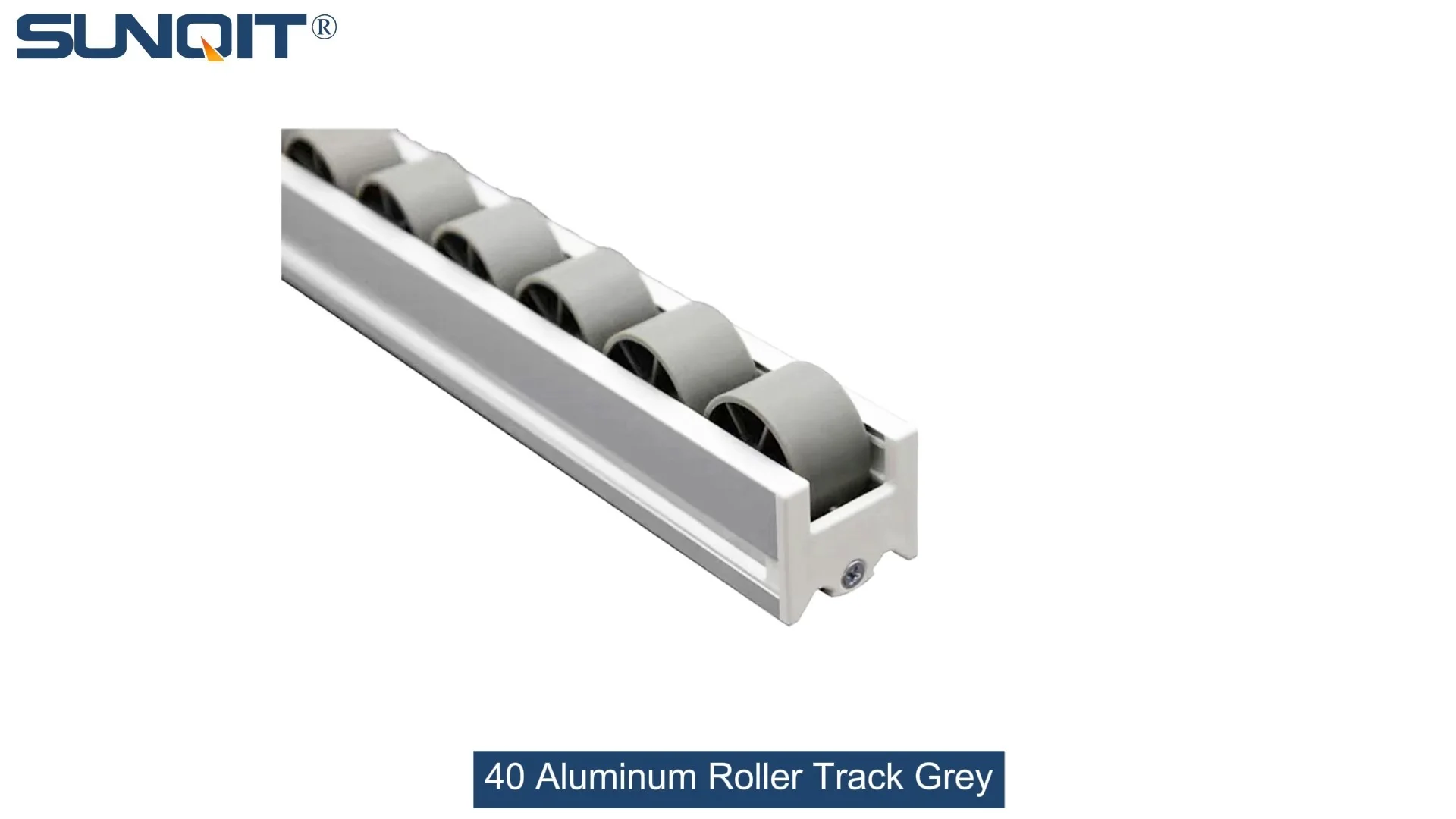
Durable and smooth-running modular roller rails. The system is fully assembled. The roller rail profile contains plastic rollers mounted on steel axles. Aluminum frame with plastic wheel make it anti corrosion,and material convey more smooth.
In the fast-paced world of mechanical manufacturing, every second counts. Assembly lines hum with the urgency of deadlines, workers juggle multiple tasks, and the pressure to boost productivity without cutting corners is constant. Yet, even the most advanced factories often hit a wall when it comes to material handling—the invisible bottleneck that slows down workflows, increases fatigue, and eats into precious assembly time. What if there was a simple, unassuming tool that could smooth out these kinks, making parts glide where they once dragged, and turning chaotic workstations into models of efficiency? Enter the 40 Aluminum Roller Track Grey—a quiet hero in the world of lean manufacturing that's redefining how teams move, access, and assemble components.
What Is 40 Aluminum Roller Track Grey, Anyway?
At first glance, it might look like just another metal track with rollers. But the 40 Aluminum Roller Track Grey is far more than that. Let's break it down: "40" refers to its standard width (40mm), a size carefully chosen to balance load capacity with flexibility. "Aluminum" speaks to its core material—lightweight, corrosion-resistant, and strong enough to handle the daily grind of factory life. "Roller Track" tells you its purpose: a series of small, smooth-rolling wheels embedded along the track, designed to let materials slide with minimal friction. And "Grey"? That's not just for show. The muted grey finish is both functional (hiding minor scratches and wear) and aesthetic (blending seamlessly into industrial environments without clashing with safety colors or equipment). Think of it as the unsung backbone of a well-oiled assembly line—subtle, but indispensable.
But what really sets this track apart is its modular design. Unlike rigid, one-size-fits-all conveyor systems, the 40 Aluminum Roller Track Grey is part of a larger ecosystem of aluminum profile accessories. This means it can be clipped, bolted, or mounted onto workbenches, flow racks, or even mobile trolleys with minimal effort. No welding, no custom fabrication—just simple, tool-free connections that let teams adapt on the fly. For manufacturers tired of being stuck with inflexible setups, this modularity is a game-changer.
The Hidden Cost of Clunky Material Handling
To appreciate why the 40 Aluminum Roller Track Grey matters, let's first talk about the problem it solves: inefficient material handling. Walk into any manufacturing plant, and you'll likely see workers bending, reaching, or even walking back and forth to grab parts. A technician might spend 10 minutes per hour just retrieving components from a shelf across the room. A assembler could strain their back lifting a heavy part onto a workbench. These small, repeated actions add up—costing time, increasing injury risks, and draining team morale.
Traditional solutions often fall short. Static workbenches trap parts in one place, forcing workers to adjust their posture or move around the table. Steel roller tracks, while durable, are heavy and hard to reconfigure. Plastic tracks might be lightweight but lack the strength to handle metal components or repeated use. And bulky conveyor belts? They're expensive to install, tough to modify, and overkill for small-scale operations or frequently changing workflows. What manufacturers need is something that's strong enough to carry the load, flexible enough to fit their space, and smooth enough to make material movement feel effortless.

How 40 Aluminum Roller Track Grey Turns the Tide
Imagine a workstation where parts don't sit idle—they flow. A flow rack where components glide from the back (storage) to the front (assembly point) as soon as the front slot is empty. A workbench where a heavy gear slides across the track with a gentle push, instead of requiring two hands to lift. That's the reality the 40 Aluminum Roller Track Grey creates. Let's dive into how it makes this possible.
1. Friction? What Friction?
The rollers are the star here. Each wheel is precision-engineered to spin freely, reducing the force needed to move materials by up to 70% compared to sliding items across a flat surface. For a worker assembling small motors, that means pushing a tray of screws from the storage bin to their bench with one finger instead of two hands. For a team loading parts onto a turnover trolley, it means sliding a 20kg component into place without straining. Less effort = more energy for actual assembly work = faster, more consistent output.
2. Lean System Integration: Waste Not, Want Not
Lean manufacturing is all about eliminating waste—whether it's time, motion, or materials. The 40 Aluminum Roller Track Grey is a lean system's best friend. Take "motion waste," for example: when a worker walks 10 steps to grab a part, that's 10 steps they're not assembling. By mounting the track on a flow rack, parts are stored at the point of use, so they're always within arm's reach. No more walking, no more searching, no more wasted steps. It's just-in-time material handling at its simplest.
Then there's "inventory waste." With the track's smooth flow, teams can implement kanban systems—using visual cues (like colored bins) to signal when stock is low. Since parts move so easily, restocking the flow rack takes minutes, not hours, keeping inventory levels lean and reducing the risk of overstocking. One automotive parts manufacturer in Michigan reported cutting inventory holding costs by 15% after installing grey roller tracks on their kanban racks—all because they could better manage stock flow.
3. Adaptable to Any Workflow
Manufacturing lines aren't static. Products change, order volumes fluctuate, and new processes are introduced. The 40 Aluminum Roller Track Grey thrives in this dynamic environment, thanks to its compatibility with aluminum profile accessories. Need to extend a track by 2 feet? Add a section using roller track placon mount for aluminum profile flat—no tools required. Want to angle the track to feed parts into a workbench from above? Use a 45° aluminum pipe joint to adjust the slope. Need to move the entire setup to a new area? Mount the track on a trolley with caster wheels, and you've got a mobile material station. This adaptability means the track grows with your needs, instead of becoming obsolete when workflows change.

Comparing the Competition: Why Aluminum Grey Stands Out
You might be thinking, "Steel tracks are stronger, right? Plastic is cheaper. Why choose aluminum grey?" Let's put it to the test with a side-by-side comparison of common roller track materials.
| Feature | 40 Aluminum Roller Track Grey | Steel Roller Track | Plastic Roller Track |
|---|---|---|---|
| Weight (per meter) | 1.2kg – Light enough for one person to install | 3.5kg – Requires two people to move/modify | 0.8kg – Light, but less stable with heavy loads |
| Corrosion Resistance | High – Aluminum + grey finish resists rust, even in humid factories | Low – Prone to rust without frequent painting | High – But plastic degrades in extreme heat |
| Assembly Time | 10 minutes per 2-meter section (modular clips) | 30+ minutes (welding or heavy bolts required) | 15 minutes (snaps together, but clips break easily) |
| Load Capacity | Up to 50kg per meter – Handles most small to medium parts | Up to 100kg per meter – Overkill for many applications | Up to 20kg per meter – Not ideal for metal components |
| Long-Term Durability | 5–7 years (rollers replaceable, track itself lasts decades) | 10+ years, but rust weakens structural integrity over time | 2–3 years (rollers wear out; track bends under stress) |
The takeaway? Steel is overkill for most manufacturing needs, and plastic lacks the heft. Aluminum grey hits the sweet spot: lightweight for easy installation, strong enough for daily use, and durable enough to outlast quick-fix solutions. It's not just a track—it's an investment that pays off in lower labor costs, fewer replacements, and smoother workflows.

Real-World Impact: Stories from the Factory Floor
Numbers tell one story, but real people tell another. Let's hear from teams who've swapped their old setups for 40 Aluminum Roller Track Grey and never looked back.
Case Study 1: The Electronics Assembler Who Gained 2 Hours a Day
Maria runs a small electronics assembly line in Texas, building circuit boards for medical devices. Before installing the grey roller tracks, her team's workflow was chaotic: parts were stored in bins on shelves above their workbenches, so workers had to stand, reach up, and pull down heavy bins multiple times an hour. "We were losing 10–15 minutes every hour just fetching parts," Maria recalls. "And with 8-hour shifts, that added up to over 2 hours of wasted time daily."
Then they installed 40 Aluminum Roller Track Grey on the front edge of their workbenches, connecting to a flow rack behind each station. Now, bins slide down the track directly into the workers' reach. "It's like magic," Maria laughs. "One of my assemblers said, 'It's as if the parts deliver themselves now.' We've cut assembly time per board by 15%, and no one complains about shoulder pain anymore. Best of all, that 2 hours we used to waste? Now we're using it to train new hires and test quality—things we never had time for before."
Case Study 2: The Automotive Supplier Who Slashed Changeover Time
A tier-1 automotive supplier in Ohio produces door handles for three different car models. Their old setup used fixed steel racks, so switching between models meant disassembling and rebuilding the racks—taking up to 4 hours per changeover. "We were losing a full workday every week just reconfiguring our lines," says Jake, the plant manager. "With tight deadlines from the automakers, that was unsustainable."
They replaced the steel racks with aluminum flow racks fitted with 40 Aluminum Roller Track Grey and caster wheels. Now, when a model change is needed, the team simply rolls out the old racks (loaded with the previous model's parts) and rolls in the new ones—changeover time reduced to 30 minutes. "The grey tracks are the key," Jake explains. "They're light enough to move, strong enough to hold the parts, and the rollers mean we can load/unload the racks in minutes. Last quarter, we hit 100% on-time delivery for the first time in years. The track paid for itself in three months."
Accessories: Making the Track Even Better
The 40 Aluminum Roller Track Grey is powerful on its own, but it's the accessories that take it to the next level. Think of them as the track's supporting cast—each playing a role in making workflows smoother, safer, or more flexible. Here are a few standouts:
End Support with Stop: No More Lost Parts
Ever had a part slide off the end of a track and crash to the floor? Not with end support for roller track placon mount with stop. This simple accessory bolts onto the end of the track, creating a gentle barrier that stops materials in their tracks (pun intended). For a team assembling delicate sensors, this means no more broken parts or time wasted retrieving items from under workbenches.
Caster Wheels: Mobility Meets Stability
Mount the track on a trolley with caster wheels, and you've got a mobile material station that can follow the assembly line. Need to move parts from the warehouse to the line? Roll the trolley there. Need to reposition the track for a new project? Just push it into place. The casters lock securely, so the trolley stays put during use—no wobbling, no accidents.
Aluminum Guide Rail A: Keeping Parts on Track
For long tracks or irregularly shaped parts, aluminum guide rail A acts as a "lane" to keep materials centered. No more parts veering off course or getting stuck between rollers. It's especially useful for small components like screws or washers, which tend to slide sideways. One aerospace manufacturer uses guide rails with their grey tracks to feed tiny rivets to their assembly stations—reducing spillage by 90%.
Installation & Maintenance: Simple as 1-2-3
You might be thinking, "This sounds great, but installing it must be a hassle." Not at all. The 40 Aluminum Roller Track Grey is designed for quick, pain-free setup. Here's how it works:
Step 1: Choose your mounting surface—workbench, flow rack, trolley, whatever. The track can be mounted flat, angled, or even vertically (for gravity-fed systems). Step 2: Attach the track using aluminum profile accessories like placon mounts or clips. Most connections require just a hex key—no welding, no drilling, no special tools. Step 3: Add end stops or guide rails if needed, and you're done. A 2-meter track takes about 10 minutes to install, even for someone with no technical experience.
Maintenance is just as easy. Wipe the track with a damp cloth weekly to remove dust or debris. Check the rollers monthly to ensure they're spinning freely—if one sticks, a drop of light machine oil usually fixes it. Unlike steel tracks, there's no rust to sand or paint, and the grey finish hides minor scratches, so it still looks professional year after year. In short: install it, use it, forget about it—until you wonder how you ever worked without it.
Why Grey? The Unsung Benefit of Color
We've mentioned the grey finish a few times, but let's take a moment to appreciate why it matters. In a factory filled with bright safety yellows, reds, and oranges, the muted grey is a breath of calm. It doesn't compete for attention, so workers can focus on the parts (not the track). It also hides the small scrapes and scuffs that come with daily use—so even after a year of heavy use, the track still looks clean and well-maintained. For plant managers who care about workplace aesthetics (and yes, that matters for morale!), the grey finish is a subtle win.
Final Thoughts: Small Track, Big Impact
The 40 Aluminum Roller Track Grey isn't flashy. It doesn't have blinking lights or complex software. But in the world of mechanical manufacturing, where every second and every motion counts, it's a revolution in simplicity. It turns static workbenches into dynamic workstations, transforms heavy lifting into effortless sliding, and turns wasted time into productive minutes. It's a tool that respects the people who use it—reducing fatigue, boosting morale, and letting them focus on what they do best: building quality products.
So, the next time you walk through a factory and see parts gliding smoothly from shelf to bench, take a closer look. Chances are, there's a 40 Aluminum Roller Track Grey hard at work—quietly, reliably, and tirelessly making assembly lines faster, smarter, and more human. Because in manufacturing, the best innovations aren't always the ones that grab headlines. Sometimes, they're the ones that just… work.