- Company Articles
- Products and Technology
- Application Cases
- 40 Aluminum Roller Track Grey in Telecommunication Equipment Assembly: Case Study

40 Aluminum Roller Track Grey in Telecommunication Equipment Assembly: Case Study
Related Product
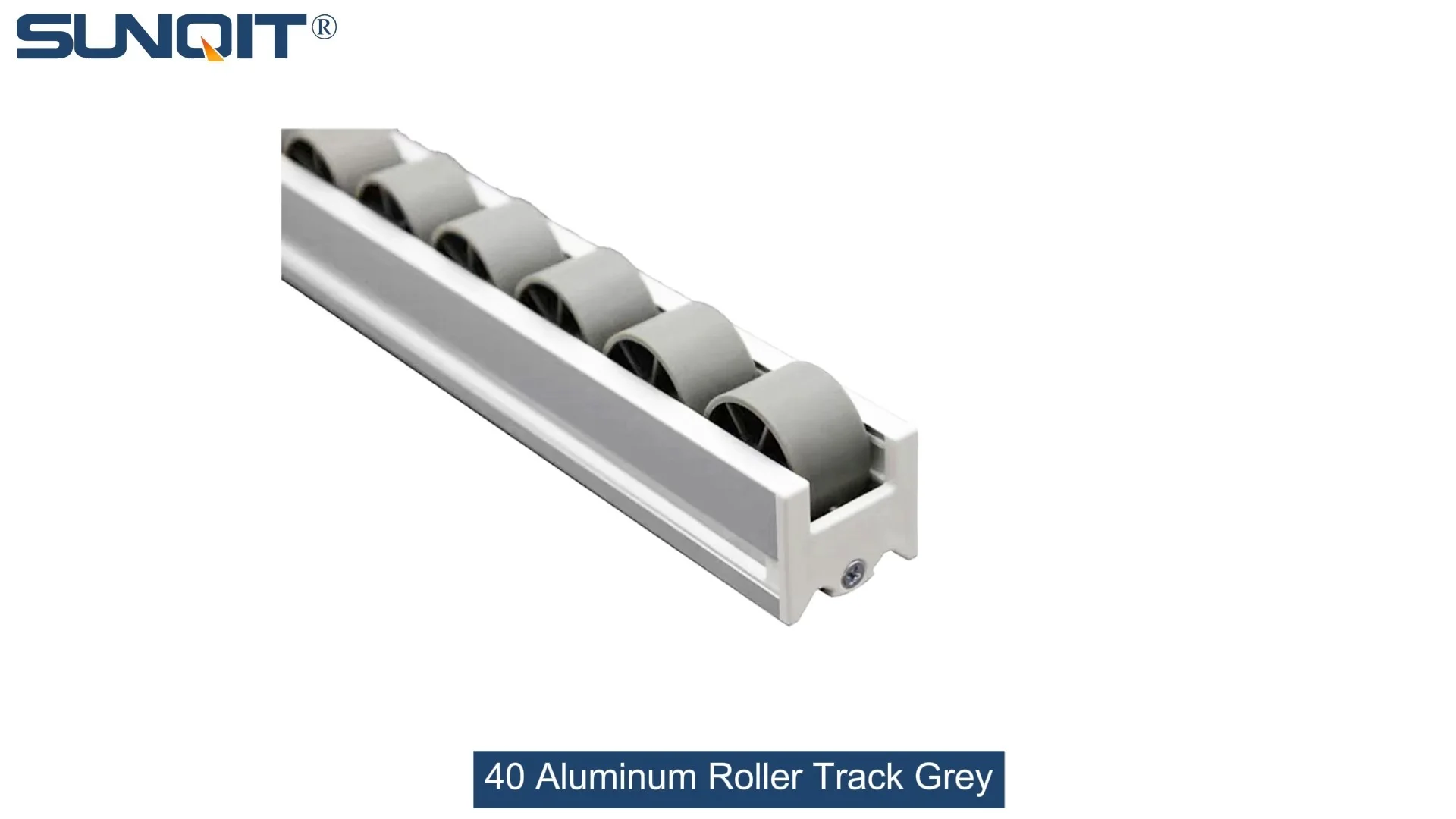
40 Aluminum Roller Track Grey
Durable and smooth-running modular roller rails. The system is fully assembled. The roller rail profile contains plastic rollers mounted on steel axles. Aluminum frame with plastic wheel make it anti corrosion,and material convey more smooth.
In the fast-paced world of telecommunication equipment assembly, where precision meets productivity, every component in the production line plays a critical role. From tiny circuit boards to bulky server racks, the way materials flow through the assembly process can make or break a manufacturer's ability to meet tight deadlines, maintain quality standards, and keep costs in check. In recent years, lean manufacturing principles have become the backbone of efficient production, emphasizing waste reduction, continuous improvement, and streamlined workflows. Yet, even the most well-designed lean systems can hit bottlenecks when the right tools—like material handling components—aren't in place. This case study explores how one specific component, the 40 Aluminum Roller Track Grey , transformed the assembly line of a mid-sized telecommunication equipment manufacturer, addressing long-standing inefficiencies and aligning their operations with modern lean system demands.
The Challenge: Bottlenecks in a Traditional Assembly Line
Meet TechFlow Telecom, a manufacturer specializing in high-speed routers and data transmission equipment. By 2024, TechFlow's production volume had grown by 40% year-over-year, driven by the global demand for 5G infrastructure. However, their existing assembly line, which relied on a mix of plastic roller tracks and manual material carts, was struggling to keep up. The team identified three critical pain points:
- Slow Material Flow: Plastic roller tracks, though inexpensive, often jammed under the weight of metal component trays, causing delays. Workers spent 15–20 minutes per shift clearing blockages.
- Ergonomic Strain: Manual carts required operators to bend or stretch to load/unload materials, leading to a 25% increase in reported muscle fatigue.
- ESD Compatibility Issues: Telecommunication components are sensitive to electrostatic discharge (ESD). The plastic tracks generated static, forcing additional ESD-safe packaging steps that added cost and time.
TechFlow's lean system coordinator, Maria Gonzalez, summarized the challenge: "We needed a material handling solution that could keep up with our throughput, protect our components, and reduce physical strain on our team. The plastic tracks were a band-aid; we needed something built for durability and integration with our existing lean pipe workbenches and conveyors."
The Solution: Introducing 40 Aluminum Roller Track Grey
After researching alternatives—including stainless steel tracks and heavier-duty plastic options—TechFlow's engineering team landed on the 40 Aluminum Roller Track Grey. What set this product apart? Its combination of material science, design flexibility, and compatibility with their existing aluminum profile accessories made it a natural fit. Let's break down the key features:
Why Aluminum? Why Grey?
Aluminum was a strategic choice for several reasons. Unlike plastic, aluminum is naturally conductive, which helps dissipate static electricity—a critical feature for ESD-sensitive telecom components. It's also lightweight (30% lighter than steel) but strong, with a load capacity of up to 150 kg/m, easily supporting TechFlow's component trays. The grey color, often overlooked, served a practical purpose: it hides minor scratches and dirt, maintaining a clean appearance in busy production environments without constant cleaning.
Design Specs That Matter
The "40" in the name refers to the track's width: 40mm, which perfectly matches the standard 38mm width of TechFlow's component trays, leaving a 2mm buffer to prevent jamming. The track is extruded from 6063-T5 aluminum alloy—an industry standard for structural components—known for its corrosion resistance and machinability. Each section comes pre-assembled with precision-machined roller bearings (1 inch in diameter) spaced 50mm apart, ensuring smooth, consistent material flow. Importantly, the track's modular design allowed TechFlow to connect sections using roller track placon mount for aluminum profile flat accessories, eliminating the need for custom fabrication.

Technical Deep Dive: Beyond the Basics
To understand why the 40 Aluminum Roller Track Grey outperformed alternatives, it's helpful to dive into the technical details that address TechFlow's specific pain points:
Material Composition & Durability
The track is constructed from aluminum extrusion profile —a manufacturing process that shapes aluminum into complex cross-sections with consistent strength. The extrusion includes integrated channels for roller bearings and mounting slots that align with TechFlow's existing aluminum profile accessories, such as end stops and side guides. Unlike plastic, which degrades under UV light and temperature fluctuations, aluminum maintains its structural integrity in the 18–30°C range typical of assembly plants.
ESD Safety Built In
Aluminum's conductivity is enhanced by the track's surface treatment: a clear anodized finish that reduces surface resistance to < 10^6 ohms, meeting ANSI/ESD S20.20 standards for ESD protection. This eliminated the need for anti-static sprays or specialized packaging, as components could now slide directly on the track without static buildup. "We used to wrap every tray in ESD-safe bubble wrap," noted assembly line lead James Park. "Now, we just load and go. It's saved us about 2 hours per shift in packaging alone."
Accessory Ecosystem
What truly made the 40 Aluminum Roller Track Grey a "system solution" was its compatibility with TechFlow's existing aluminum profile accessories. Key accessories included:
- Roller Track Placon Mount for Aluminum Profile Flat: These brackets secured the track to TechFlow's existing aluminum workbenches, creating a seamless flow from storage racks to assembly stations.
- Aluminum Guide Rail A: Attached to the track's edges, these prevented trays from sliding off during transport, reducing the risk of component damage.
- Swivel Roller Balls 1 Inch: Added at transfer points between track sections to ensure smooth transitions, eliminating the "bump" that often caused jams with plastic tracks.

Implementation: Integrating the Track into TechFlow's Lean System
TechFlow's implementation began in Q1 2024, starting with a pilot line for their high-volume router assembly. The process involved three phases:
Phase 1: Design & Customization
Working with their aluminum profile supplier, TechFlow mapped the assembly line's material flow paths. The team identified 12 critical transfer points where the 40 Aluminum Roller Track Grey would replace plastic tracks. Using CAD software, they designed custom mounting brackets (using aluminum profile accessories) to angle the tracks at 5 degrees—enough to allow gravity-fed flow without sacrificing control.
Phase 2: Installation & Training
Installation took three days, with minimal disruption to production. The lightweight aluminum tracks (1.2 kg per meter) were easy to maneuver, and the modular design meant sections could be cut to length on-site. Post-installation, operators received a 2-hour training session on maintenance: lubricating roller bearings monthly, checking for loose placon mounts, and cleaning the tracks with mild detergent to preserve ESD properties.
Phase 3: Full-Scale Rollout
After 30 days of pilot testing—during which the pilot line saw a 15% reduction in material handling time—the team approved full-scale rollout across all three assembly lines. By the end of Q2 2024, over 120 meters of 40 Aluminum Roller Track Grey were integrated into TechFlow's operations.

Results: Quantifying the Impact
Six months post-implementation, TechFlow conducted a comprehensive review of the new system. The results, captured in the table below, exceeded expectations:
| Metric | Pre-Implementation (Q4 2023) | Post-Implementation (Q3 2024) | Improvement |
|---|---|---|---|
| Daily Throughput (Units) | 210 | 285 | +35.7% |
| Material Handling Time (Minutes/Unit) | 4.2 | 2.8 | -33.3% |
| ESD-Related Defects | 12 per month | 2 per month | -83.3% |
| Reported Worker Fatigue Cases | 16 per month | 5 per month | -68.8% |
| Maintenance Costs (USD/Month) | $450 (plastic track replacements, ESD packaging) | $180 (lubrication, occasional bearing replacement) | -60% |
Perhaps the most telling feedback came from the assembly line workers. "The grey tracks glide so smoothly—no more yanking trays or worrying about static shocks," said operator Raj Patel. "And since they're mounted to the workbench, I don't have to bend down to grab materials anymore. It's like night and day."
Why It Worked: Alignment with Lean Principles
The success of the 40 Aluminum Roller Track Grey wasn't just about the product itself—it was about how it fit into TechFlow's broader lean system. Here's how it aligned with key lean principles:
Waste Reduction (Muda)
By eliminating jams and reducing ESD packaging, the track cut down on "waiting" and "overprocessing" waste. The gravity-fed design also reduced the need for manual cart transport, minimizing "transportation" waste—a core target of lean management.
Continuous Improvement (Kaizen)
The modular design allows TechFlow to easily reconfigure the track layout as production needs change. For example, when they introduced a new router model with larger trays, they simply added aluminum guide rail extensions—no need for a full system overhaul.
Respect for People (Respect for Humanity)
Reducing physical strain and fatigue isn't just about productivity—it's about valuing the workforce. TechFlow's HR team reported a 15% increase in employee satisfaction scores post-implementation, with several operators citing the new tracks as a "sign the company cares about our well-being."
Conclusion: A Foundation for Future Growth
For TechFlow Telecom, the 40 Aluminum Roller Track Grey proved to be more than a material handling upgrade—it was a catalyst for broader operational excellence. By addressing material flow, ESD safety, and ergonomics in one solution, the track enabled the company to scale production without sacrificing quality or employee well-being. As Maria Gonzalez put it: "Lean systems are only as strong as their components. The right tools—like this aluminum track—turn abstract lean principles into tangible results."
Today, TechFlow is exploring expanding the track to their warehouse operations, using it to connect their lean pipe workbenches with automated conveyors for even greater efficiency. For other telecommunication manufacturers facing similar challenges, the takeaway is clear: investing in durable, compatible material handling components isn't an expense—it's an investment in building a lean system that can adapt, grow, and thrive in an industry where speed and precision are everything.