- Company Articles
- Products and Technology
- Product knowledge
- 40 Aluminum Roller Track Grey's Impact on Overall Equipment Effectiveness (OEE)

40 Aluminum Roller Track Grey's Impact on Overall Equipment Effectiveness (OEE)
Related Product
40 Aluminum Roller Track Grey
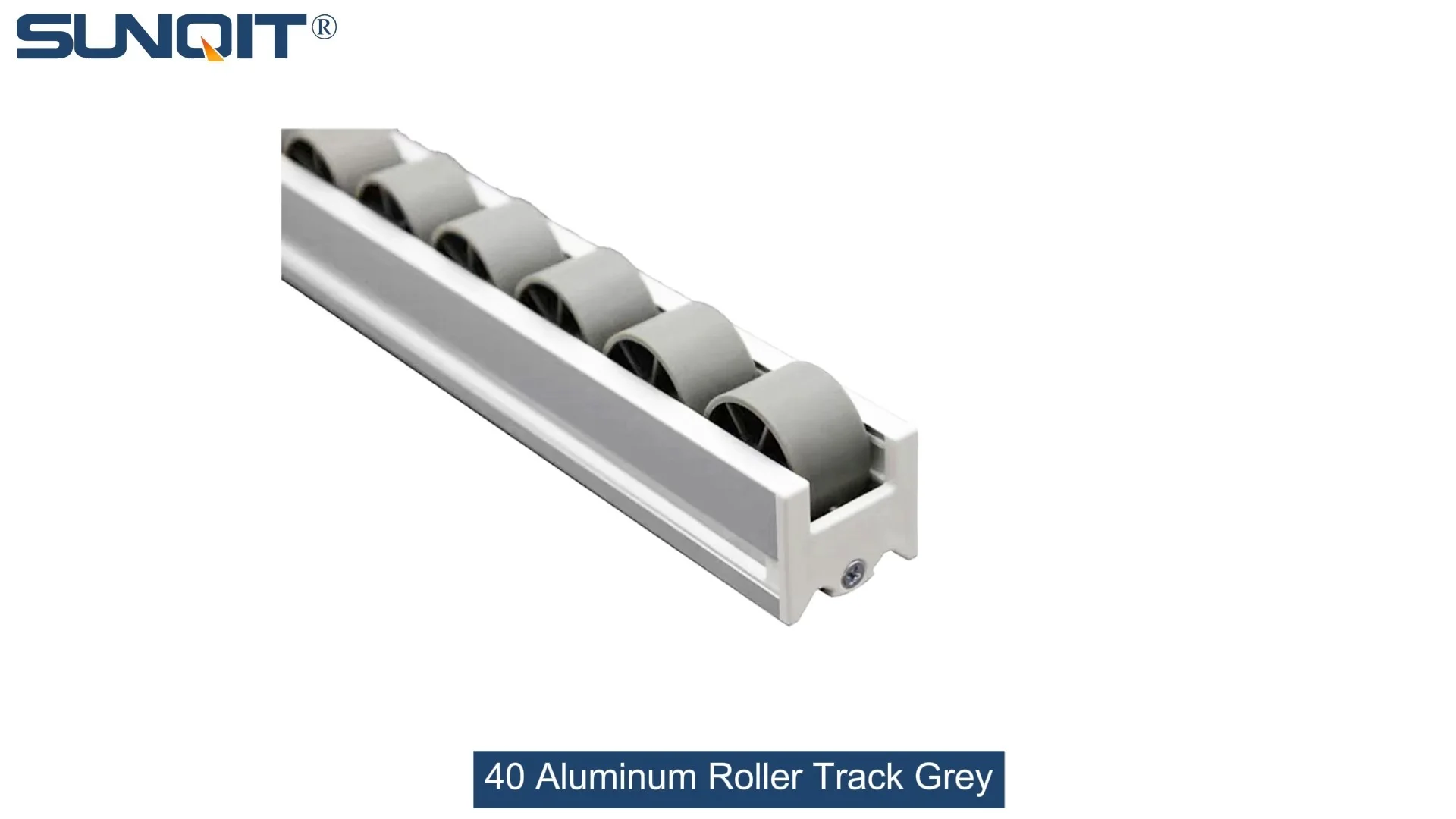
Durable and smooth-running modular roller rails. The system is fully assembled. The roller rail profile contains plastic rollers mounted on steel axles. Aluminum frame with plastic wheel make it anti corrosion,and material convey more smooth.
On a typical Tuesday morning at PrecisionWorks Electronics, Maria, the production supervisor, stands at the edge of the assembly line, her clipboard in hand and a furrow between her brows. The line is supposed to hit 500 units by noon, but the counter currently reads 387. She watches as a worker, Raj, pauses mid-task, straining to pull a bin of circuit boards from a static metal shelf. The bin catches on a uneven edge, and a few components spill onto the floor. Raj sighs, kneels to pick them up, and by the time he resumes, the next station is already waiting. "Another delay," Maria mutters, jotting it down. "This is the third time this week."
If you've ever set foot in a manufacturing plant, warehouse, or assembly facility, you've seen this scene—or one like it—play out. It's the invisible cost of inefficient material handling: small, repeated delays that chip away at productivity, morale, and ultimately, the bottom line. What Maria and her team are struggling with isn't just bad luck; it's a gap in their lean system —specifically, how materials move through their workflow. And that's where a seemingly small component comes into play: the 40 Aluminum Roller Track Grey.
Understanding OEE: The Scorecard of Production Health
Before we dive into the roller track itself, let's talk about the metric that's keeping Maria up at night: Overall Equipment Effectiveness, or OEE. Think of OEE as a report card for your production line. It measures three key factors:
- Availability: How often your equipment is running when it should be (not stuck in downtime, maintenance, or waiting for materials).
- Performance: How fast your equipment runs compared to its maximum capacity (are you hitting target speeds, or is there slowdown?)
- Quality: How many products meet standards (fewer defects mean less waste and rework).
The average manufacturing plant has an OEE score of around 60%, according to industry reports. World-class facilities? They hit 85% or higher. The difference? Often, it's not the fancy machines or cutting-edge software. It's the "small stuff"—like how smoothly materials flow from Point A to Point B. And that's exactly where the 40 Aluminum Roller Track Grey starts to shine.
Material Handling: The Unsung Hero (or Villain) of OEE
Here's a surprising stat: Up to 30% of production time is wasted on material handling, according to the Lean Enterprise Institute. That includes moving parts, searching for tools, waiting for supplies, or fixing jams. For Maria's team, that 30% translates to missed deadlines, overtime costs, and frustrated workers. "We invested in new robots last year," she says, "but if the parts don't get to the robots on time, what's the point?"
Traditional material handling systems—think static shelves, heavy plastic bins, and manual carts—are like trying to run a marathon in flip-flops. They work, but not well. Bins get stuck, carts collide, workers strain their backs lifting, and every delay ripples through the line. By the time the day ends, Availability is low (machines wait for materials), Performance is sluggish (workers can't keep up), and Quality suffers (rushed tasks lead to errors). It's a triple whammy for OEE.

Enter 40 Aluminum Roller Track Grey: A Quiet Revolution in Material Flow
So, what makes the 40 Aluminum Roller Track Grey different? Let's start with the basics. This isn't just a metal track with wheels. It's a purpose-built tool designed to fix the very issues plaguing Maria's line. Let's break down its design:
Aluminum Construction: Lightweight but durable, aluminum resists rust and stands up to the daily wear of a busy plant. Unlike steel, it won't bend under heavy bins, and it's easy to clean—critical for industries like electronics, where dust and debris can ruin components.
40mm Width: The 40mm size is a sweet spot. It's narrow enough to fit into tight workspaces (like between workbench stations) but wide enough to support standard bins and containers. No more cramming awkwardly shaped materials or worrying about bins tipping over.
Grey Finish: You might think color is trivial, but in a high-speed environment, visibility matters. The muted grey tone makes it easy to spot spills, misaligned bins, or debris on the track—so workers like Raj can catch issues before they cause delays. It also hides scuffs better than bright colors, keeping the line looking clean and professional.
Smooth-Rolling Design: The track's rollers are precision-engineered to glide with minimal friction. Even fully loaded bins move with a gentle push, reducing the physical strain on workers. No more heaving, pulling, or jarring stops that damage parts.

Boosting Availability: When Materials Show Up on Time, Every Time
Availability is all about reducing unplanned downtime. For Maria's team, a big chunk of that downtime comes from "material starvation"—when a station runs out of parts because the next batch is stuck in transit. Let's say Raj's station needs a bin of capacitors every 20 minutes. With a static shelf, he has to stop, walk 10 feet, lift the bin, and carry it back—taking 2-3 minutes each time. Multiply that by 15 stations, and suddenly you're losing an hour of production a day.
With the 40 Aluminum Roller Track Grey installed along the line, that changes. The track connects directly to a flow rack at the end of the line, where bins are pre-loaded. When Raj's bin is empty, he simply pushes it along the track to the next station (which uses the empty bin for waste), and a full bin glides down to take its place—no walking, no lifting, no stopping. "It's like a conveyor belt for bins," Maria says, "but simpler. No motors, no complicated programming—just gravity and good design."
The result? Stations rarely run out of materials. In a pilot test at PrecisionWorks, they saw a 22% drop in unplanned downtime within the first month of installing the roller tracks. "Raj used to take two coffee breaks a day," Maria laughs. "Now he says he doesn't need them—he's too busy actually building things, not fetching parts."

Enhancing Performance: Speed Without the Chaos
Performance in OEE isn't just about speed—it's about consistent speed. A line that races at 100 units/hour one hour and 50 the next is harder to manage than one that steadily hits 75. The 40 Aluminum Roller Track Grey brings that consistency by eliminating the "start-stop" rhythm of manual material handling.
Consider this: When materials flow smoothly, workers can fall into a rhythm. Raj no longer has to mentally shift from "assembling" to "searching for parts" to "cleaning up spills." He (zhuānzhù)—focuses—on his task, which makes him faster and more accurate. At PrecisionWorks, the assembly line's average cycle time dropped from 45 seconds per unit to 38 seconds after installing the roller tracks. That might sound small, but over a 10-hour shift, it adds up to 133 more units. "We went from missing targets to blowing them out of the water," Maria says.
Another hidden benefit? The track's smooth roll reduces the risk of "bin collisions." In the past, when workers rushed to push bins across uneven floors, bins would crash into each other, spilling parts or damaging labels. With the roller track, bins glide into place gently, so labels stay intact, parts stay put, and workers don't waste time sorting through messes. "I used to spend 20 minutes a day just re-labeling bins that got smudged," says Lina, the line's quality inspector. "Now? Maybe 5 minutes. That's time I can spend checking for defects instead."
Improving Quality: When Materials Move Gently, Defects Disappear
Quality is the third pillar of OEE, and it's often the most fragile. A single jostled component, a scratch on a circuit board, or a misaligned part can turn a good unit into scrap. Traditional material handling is rough on parts: bins are dropped, dragged, or stacked haphazardly, leading to micro-damage that's hard to spot until final testing.
The 40 Aluminum Roller Track Grey changes that with its "gentle transport" design. The rollers are spaced evenly, so bins glide without bouncing. The aluminum frame is smooth, with no sharp edges to catch or scratch parts. Even the grey color helps: it contrasts with most component colors, making it easier to spot if a small part (like a resistor or screw) falls onto the track. "We used to find 8-10 damaged components a day," Lina says. "Now? Maybe 1 or 2. And when we do, it's usually because someone forgot to close the bin lid—not because the track messed it up."
Less damage means fewer defects, which means less rework. At PrecisionWorks, the defect rate dropped from 4.2% to 2.8% after installing the roller tracks. For a line producing 5,000 units a week, that's 70 fewer defective units—and 70 fewer hours spent fixing them. "The QA team used to stay late every night," Maria says. "Now they're out the door by 5:00, same as everyone else. Morale? Through the roof."
Beyond the Track: How 40 Aluminum Roller Track Grey Fits Into Your Lean Ecosystem
The best tools in manufacturing don't work in isolation—and the 40 Aluminum Roller Track Grey is no exception. Its real power lies in how seamlessly it integrates with other lean system components, like flow racks , workbenches, and even roller track accessories that customize its functionality.
Take flow racks , for example. A flow rack is designed to hold multiple bins, with the front bin sliding forward as the one in front is emptied—like a vending machine for parts. Pair a flow rack with the 40 Aluminum Roller Track Grey, and you've got a self-sustaining material delivery system. At PrecisionWorks, they installed a flow rack loaded with capacitors at the start of the line, connected via roller track to each assembly station. "The line feeds itself," Maria says. "The only time we touch the bins is when we restock the flow rack at the end of the shift."
Then there are workbenches . Many assembly tasks require tools and materials to be within arm's reach. By mounting 40 Aluminum Roller Track Grey along the edge of a workbench, workers can slide bins of tools or parts right where they need them—no stretching, no bending, no wasted motion. Raj's workbench now has a mini roller track for his most-used tools: "I used to keep a screwdriver in my pocket because I was tired of walking to the tool cart," he admits. "Now it's right there, gliding into place when I need it."
And let's not forget roller track accessories . From guide rails that keep bins aligned to stop blocks that prevent overshooting, these add-ons turn a basic track into a customized solution. At PrecisionWorks, they added plastic guide rails (grey, to match the track) to prevent bins from sliding off during peak hours. "We also use connector brackets to join tracks at corners," Maria notes. "Now the track snakes around the line, reaching every station without dead ends."
The Proof in the Numbers: A Case Study
Let's put this all together with hard numbers. At PrecisionWorks, before installing the 40 Aluminum Roller Track Grey, their OEE score hovered around 62%. Six months after implementation, it hit 78%—a 16-point jump that put them in the top 25% of manufacturers in their industry. Here's how that broke down:
What did that 16% improvement mean for the bottom line? Maria crunches the numbers: "We're producing 12% more units with the same number of workers. Our scrap rate is down, overtime is down, and customer complaints? Practically zero. The ROI on the roller tracks? We hit it in three months. Three months!"
Overcoming the "But It's Just a Track" Mentality
If you're thinking, "Is a roller track really worth the investment?" you're not alone. Maria heard the same skepticism from her team at first. "Why spend money on tracks when we could get a new robot?" one manager asked. Her response? "Because the robot can't build parts out of thin air. If materials don't flow, even the best robot is just an expensive paperweight."
The key is to shift from thinking about "tools" to thinking about "flow." Lean manufacturing isn't about buying gadgets—it's about creating a system where every component, big or small, works together to eliminate waste. The 40 Aluminum Roller Track Grey isn't a luxury; it's a foundation. It's the difference between a line that fights to keep up and one that glides toward success.
Conclusion: The Small Component That Drives Big Results
Back at PrecisionWorks, Maria no longer starts her mornings staring at a lagging counter. These days, she's more likely to be chatting with Raj about process improvements or high-fiving Lina over a perfect quality report. The 40 Aluminum Roller Track Grey didn't just fix their material handling problem—it transformed their entire approach to production.
So, what's the takeaway? If you're looking to boost OEE, don't just focus on the big-ticket items. Look down at the floor. Look at how your materials move. Ask your workers: "What's slowing you down?" Chances are, their answer will lead you to a solution like the 40 Aluminum Roller Track Grey—a small component with a huge impact.
Because in manufacturing, as in life, the difference between good and great often lies in the details. And when it comes to details that drive OEE, few are as powerful as a track that simply… works.
So, the next time you walk through your facility, take a closer look at your material flow. You might just find that the key to hitting that 85% OEE score isn't a new machine or a software upgrade. It's a quiet, grey aluminum track—rolling steadily toward better days.