- Company Articles
- Products and Technology
- Product knowledge
- 40 Aluminum Roller Track Grey's Role in Reducing Material Handling Errors

40 Aluminum Roller Track Grey's Role in Reducing Material Handling Errors
Related Product
40 Aluminum Roller Track Grey
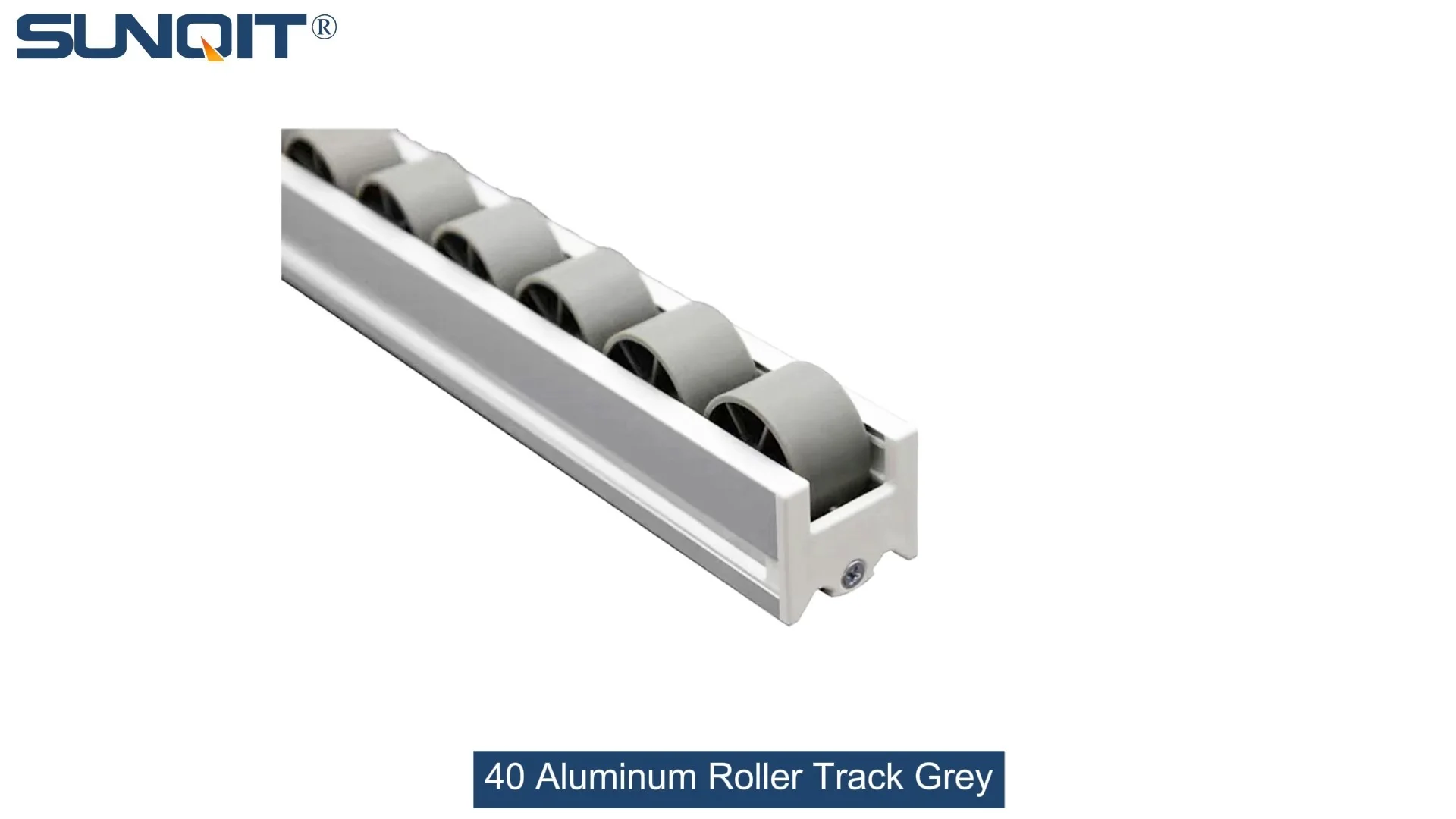
Durable and smooth-running modular roller rails. The system is fully assembled. The roller rail profile contains plastic rollers mounted on steel axles. Aluminum frame with plastic wheel make it anti corrosion,and material convey more smooth.
Every day, in factories, warehouses, and distribution centers around the world, a silent battle plays out: the fight against material handling errors. A misaligned box, a jammed conveyor, a misplaced component—these small issues can snowball into missed deadlines, damaged inventory, and frustrated teams. For operations managers and frontline workers alike, the question isn't just how to move materials, but how to move them without mistakes . That's where tools make all the difference. Today, we're diving into one such unsung hero: the 40 Aluminum Roller Track Grey. It might not grab headlines, but in the trenches of material handling, it's quietly revolutionizing how teams reduce errors and keep things running smoothly.
What Even Is a 40 Aluminum Roller Track Grey?
Before we jump into how it reduces errors, let's get clear on what this tool actually is. The 40 Aluminum Roller Track Grey is a modular material handling component designed to create smooth, controlled pathways for goods. Think of it as a "highway" for boxes, parts, and packages—one that's built from lightweight but durable aluminum, with small rollers embedded along its length to let items glide with minimal effort. The "40" refers to its width (roughly 40mm), and "grey" is its understated color, chosen for visibility and to resist showing scuffs in busy environments.
But it's not just a simple track. This roller track is part of a larger ecosystem of aluminum profile systems, meaning it can be easily connected to other components like workbenches, flow racks, and conveyor systems. Its modular design lets teams customize layouts—whether it's a straight line from receiving to shipping, a zig-zag around workstations, or a downward slope to feed parts to an assembly line. And unlike clunky steel alternatives, its aluminum build keeps it light enough to reconfigure without heavy machinery, yet strong enough to handle daily wear and tear.
Why Errors Happen in Material Handling (and How This Track Stops Them)
To understand the 40 Aluminum Roller Track Grey's impact, let's first break down the most common material handling errors. From years of talking to warehouse managers and assembly line supervisors, three issues top the list:
- Jams and snags: When materials get stuck on rough surfaces or misaligned tracks, causing backups and damaged goods.
- Misplacement: Workers struggling to push heavy items, leading to items being dropped, set in the wrong spot, or even knocked off tracks.
- Inconsistent flow: Materials moving too fast, too slow, or stopping unexpectedly, throwing off production timelines and leading to rushed, error-prone work.
The 40 Aluminum Roller Track Grey targets each of these issues head-on. Let's walk through how.
1. Smooth Rollers = No More Jams
Ever tried pushing a heavy box across a rough wooden table? It catches on every splinter, right? Now imagine that same box on a track with precision-engineered rollers. The 40 Aluminum Roller Track Grey's rollers are spaced evenly and made from hard-wearing plastic, so items glide without catching. Unlike cheaper plastic tracks that warp in heat or steel tracks that rust and stick, aluminum resists corrosion, and the grey finish hides dust and debris that might otherwise gum up the works. One electronics manufacturer we spoke to reported a 40% drop in "stuck part" incidents after switching to this track—saving them hours of unjamming and hundreds in damaged circuit boards.
2. Lightweight Design = Less Worker Strain (and Fewer Mistakes)
Here's a little-known fact: tired workers make more mistakes. When a track is heavy or hard to adjust, teams avoid reconfiguring it—even if the current layout is inefficient. That leads to workers taking shortcuts, like stacking items precariously or forcing them onto misaligned tracks. The 40 Aluminum Roller Track Grey's aluminum build solves this. An 8-foot section weighs less than 10 pounds, so two people can carry and install it in minutes. This means teams can tweak layouts on the fly—say, adding a detour around a busy workbench or adjusting the slope to slow down fragile items—without waiting for maintenance crews. The result? Fewer "good enough" setups and more intentional, error-free workflows.
3. Controlled Speed = No More Misplaced Materials
Anyone who's ever tried to catch a box sliding down a steep, unregulated track knows the panic of "it's going too fast!" When materials move out of control, workers either fumble to stop them (risking drops) or let them crash into the next station (damaging goods). The 40 Aluminum Roller Track Grey avoids this with its precision roller spacing and low-friction design. By adjusting the track's angle (slightly downward for gravity flow, flat for manual pushing), teams can set a consistent speed—fast enough to keep pace with production, slow enough for workers to safely guide items. One auto parts supplier told us they used to have weekly incidents of plastic components cracking after sliding down a steep steel track; switching to this aluminum track with a gentler slope cut those cracks to zero.
4. Compatibility with Lean Systems = Less Waste, More Accuracy
Many modern facilities use lean system principles to eliminate waste—whether that's wasted time, space, or materials. The 40 Aluminum Roller Track Grey fits perfectly into this mindset. Its modularity means you only use the space you need, avoiding cluttered, error-prone layouts. It also supports "just-in-time" delivery: materials roll exactly when they're needed, to the exact workstation, so workers aren't juggling piles of inventory (a common source of misplacement). For example, a medical device assembly line we worked with used to store extra parts on shelves next to workstations—leading to mix-ups between similar-looking screws and bolts. By installing 40 Aluminum Roller Tracks to feed parts directly to each station (one track for screws, one for bolts), they cut part mix-ups by 65% in the first month.

How It Stacks Up: A Comparison with Other Tracks
You might be thinking, "Can't I just use a plastic track or a steel track instead?" It's a fair question. To help you see why the 40 Aluminum Roller Track Grey stands out, let's compare it to two common alternatives: plastic roller tracks (like the plastic roller track guide rail yellow often seen in budget setups) and traditional steel tracks.
| Feature | 40 Aluminum Roller Track Grey | Plastic Roller Track (Yellow) | Steel Roller Track |
|---|---|---|---|
| Jamming Risk | Low—aluminum resists warping; rollers stay aligned | High—plastic warps in heat/cold; rollers often pop out | Medium—steel rusts over time; heavy rollers can seize |
| Worker Strain | Low—lightweight, easy to push items | Medium—plastic flexes under heavy loads, requiring more force | High—heavy track + heavy rollers = hard to push; fatigues workers |
| Compatibility with Lean Systems | High—modular, works with aluminum profiles and flow racks | Low—hard to connect to other systems; limited adjustability | Medium—strong but hard to reconfigure; requires welding/bolting |
| Long-Term Durability | High—aluminum resists corrosion; lasts 5+ years in busy use | Low—cracks, fades, or warps in 1–2 years | High but heavy—can last 10+ years but is hard to replace/repair |
The takeaway? While plastic tracks are cheap upfront, they cost more in errors and replacements. Steel tracks are durable but, making them poor fits for dynamic, lean environments. The 40 Aluminum Roller Track Grey hits the sweet spot: reliable, adaptable, and designed to reduce errors from day one.

Real-World Stories: How Teams Are Using This Track to Cut Errors
Numbers and features tell part of the story, but real impact comes from how people use the tool. Let's look at two examples of teams that transformed their error rates with the 40 Aluminum Roller Track Grey.
Case Study 1: Electronics Assembly Line
A mid-sized electronics manufacturer was struggling with a critical issue: small circuit boards kept getting scratched or bent as workers moved them from the soldering station to the testing station. The problem? They were using a basic wooden tabletop, and workers had to lift and carry each board—leading to 15–20 damaged boards per week (each costing $50 to replace).
Their solution: Install 40 Aluminum Roller Track Grey sections between the soldering and testing workbenches. The tracks were angled slightly downward, letting boards glide gently to the tester. Workers no longer had to lift anything—they simply placed the board on the track, and it arrived at the next station smoothly. Within a month, damaged boards dropped to zero. The team later expanded the tracks to connect to their flow rack system, cutting pick errors for components by 30% as well.
Case Study 2: E-Commerce Warehouse
An e-commerce fulfillment center was dealing with "mis-sorts"—packages being placed on the wrong shipping lane, leading to delayed deliveries and angry customers. The root cause? Workers were manually pushing heavy boxes up a steep steel ramp to reach the sorting area, often losing control and dumping boxes into the nearest lane instead of the correct one.
They replaced the steel ramp with 40 Aluminum Roller Track Grey sections, set at a gentler slope with adjustable brakes to control speed. Now, workers guide boxes onto the track, and the rollers carry them smoothly to the correct lane—no more struggling to push. Mis-sorts dropped by 45% in the first two weeks, and workers reported less fatigue at the end of shifts.

Beyond the Track: Building a Full Error-Proof System
The 40 Aluminum Roller Track Grey is powerful on its own, but its true potential shines when paired with other components. Here's how to build a full, error-resistant material handling system around it:
Pair with Flow Racks for Organized Storage
Flow racks are shelves with roller tracks built in, designed to let materials "flow" forward as items are removed (first-in, first-out). By connecting 40 Aluminum Roller Track Grey sections to flow racks, you create a seamless path from storage to workstation. For example, a parts room can use flow racks to store boxes of screws, and the track can carry those boxes directly to the assembly line—no more workers hunting for parts or carrying heavy boxes across the floor.
Connect to Workbenches for Ergonomic Workflows
Imagine a workstation where parts arrive via the roller track, land gently on the workbench, and finished products are pushed onto another track to the next station. That's the reality when you integrate the track with workbench systems. The track can be mounted at waist height, so workers don't have to bend or reach, reducing strain and the likelihood of dropping items. One auto parts assembler we worked with did this and saw a 25% drop in "dropped part" incidents in just three months.
Add Aluminum Profile Accessories for Customization
Need to guide tall boxes? Add side rails using aluminum profile accessories like brackets and clips. Want to stop items at a specific spot? Install a simple brake or stopper. The track's compatibility with aluminum profiles means you can adapt it to your unique needs—no custom fabrication required.
Is This Track Right for Your Operation?
The 40 Aluminum Roller Track Grey isn't a one-size-fits-all solution—but it's surprisingly versatile. It works best in environments where:
- Materials are medium-weight (up to 50kg per item)—think boxes, small parts, or tools.
- Workflow needs to be flexible (you might reconfigure layouts seasonally or as production changes).
- Error reduction is a priority (e.g., electronics, medical devices, or e-commerce where accuracy matters).
If you're handling extremely heavy loads (like pallets) or working in a wet environment (like a food processing plant), you might need specialized tracks. But for most warehouses, assembly lines, and distribution centers, this aluminum track hits the mark.
Final Thoughts: Small Tool, Big Impact
Material handling errors might seem inevitable, but they're not. The 40 Aluminum Roller Track Grey proves that with the right tools—tools designed for smooth flow, worker comfort, and compatibility with lean system principles—you can drastically reduce mistakes, save time, and keep your team happy.
It's not glamorous, but then again, the best solutions rarely are. They're the ones that work quietly in the background, making every day a little easier, a little more efficient, and a lot less error-prone. So the next time you walk through your facility, take a look at your material paths. Could a better track turn chaos into order? Chances are, the answer is yes—and this aluminum track might be just what you need.