- Company Articles
- Products and Technology
- Product knowledge
- 40 Aluminum Roller Track White: Compatibility with Material Trolleys

40 Aluminum Roller Track White: Compatibility with Material Trolleys
Related Product
40 Aluminum Roller Track White
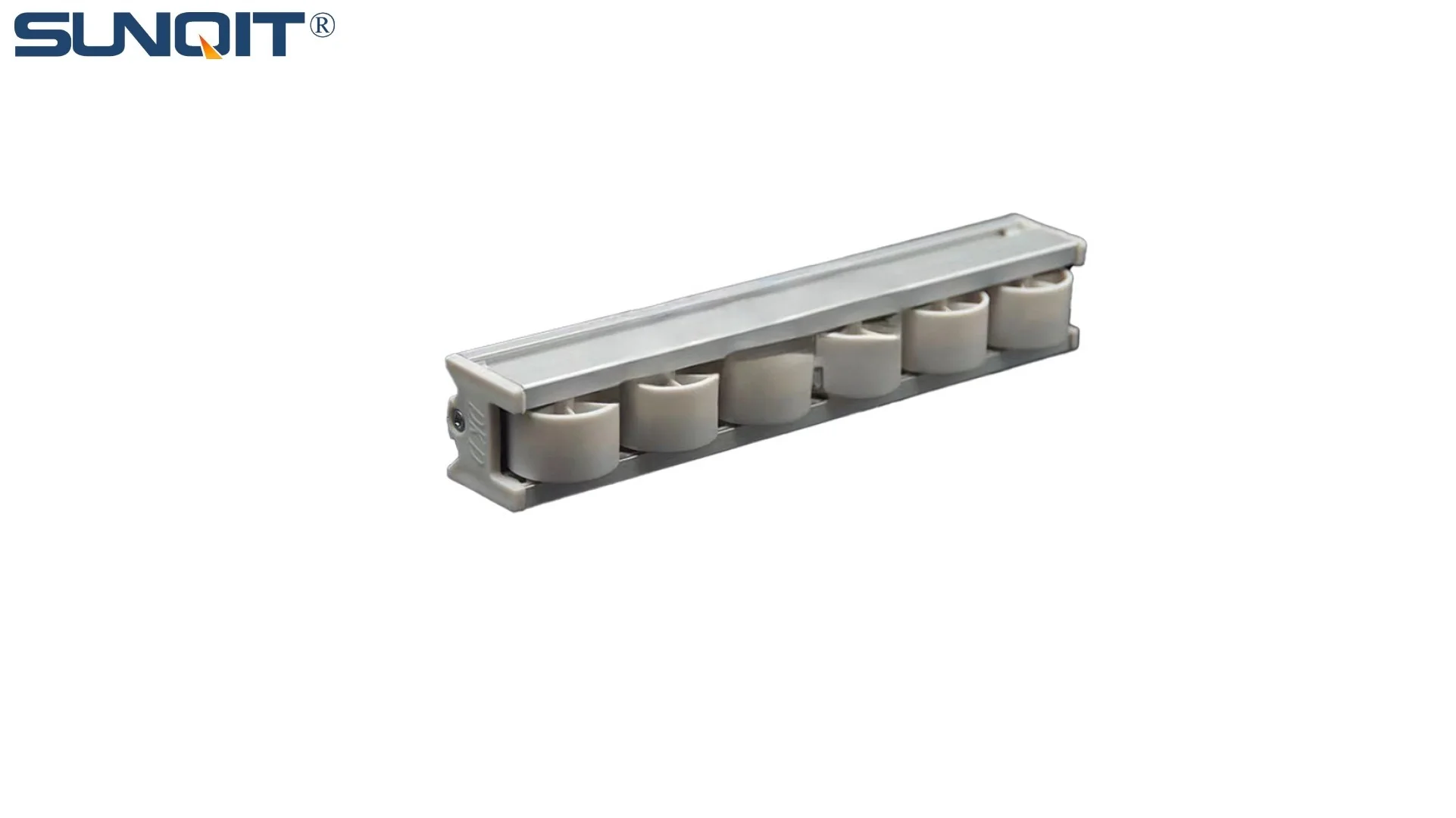
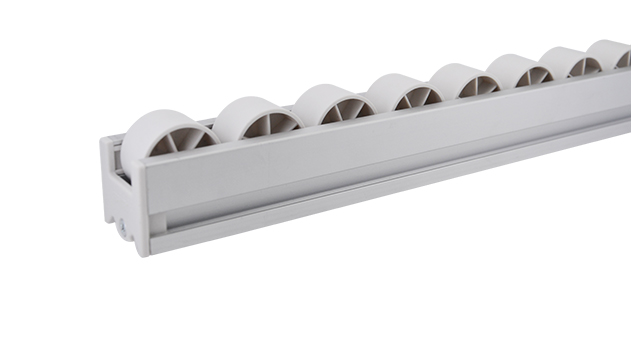
Durable and smooth-running modular roller rails. The system is fully assembled. The roller rail profile contains plastic rollers mounted on steel axles. Aluminum frame with plastic wheel make it anti corrosion,and material convey more smooth.
In the bustling world of manufacturing and warehousing, where every second counts and efficiency is the name of the game, the unsung heroes often lie in the details of material handling. Picture this: a production floor where components glide seamlessly from one workstation to the next, where material trolleys move without a hitch, and where bottlenecks are nothing more than a distant memory. This isn't just a dream scenario—it's the reality when the right tools are in place. Today, we're shining a spotlight on one such tool that's quietly revolutionizing material flow: the 40 Aluminum Roller Track White . More specifically, we're diving into how this unassuming piece of equipment forms a powerful partnership with material trolleys, turning chaotic workflows into symphonies of productivity.
Whether you're running a small assembly shop or managing a large-scale warehouse, the connection between roller tracks and trolleys is the backbone of smooth operations. Missteps here—like using a track that's too narrow for your trolley wheels or a trolley that can't handle the track's weight capacity—can lead to jams, delays, and even safety hazards. That's why understanding compatibility isn't just about "making things fit"—it's about creating a system where every part works in harmony. And when it comes to harmony, the 40 Aluminum Roller Track White is a virtuoso. Let's start by getting to know this star player a little better.
Meet the 40 Aluminum Roller Track White: More Than Just a Track
At first glance, a roller track might seem like a simple strip of metal with wheels—but the 40 Aluminum Roller Track White is anything but simple. Let's break down what makes it tick. First, the "40" in its name refers to its width: 40mm, a dimension carefully chosen to balance stability and versatility. Then there's the material: aluminum. Why aluminum? For starters, it's lightweight, which makes installation and reconfiguration a breeze—no need for heavy machinery or a team of to move it around. But don't let its lightness fool you; aluminum is also surprisingly strong, able to withstand the daily wear and tear of busy production environments. Plus, it's resistant to rust and corrosion, so even in humid or dusty settings, it maintains its smooth operation.
The "White" in its name isn't just for aesthetics (though it does lend a clean, professional look to any workspace). That white finish is often a powder coating, which adds an extra layer of durability, protecting the aluminum from scratches and scuffs. But the real magic is in the details: the rollers. These aren't just any rollers—they're precision-engineered to reduce friction, ensuring that even heavy loads glide with minimal effort. The spacing between rollers is optimized, too, so there are no gaps that could catch on trolley wheels or snag materials. And let's not forget the aluminum profile itself. Made from high-quality aluminum extrusion, it's designed with T-slots that make attaching accessories a snap—think guides, stops, or brackets to keep your trolleys on track (literally).
But what truly sets this track apart is its focus on adaptability. Unlike rigid steel tracks that are hard to modify, the 40 Aluminum Roller Track White plays well with a variety of setups. Need to curve it around a corner? There are connectors for that. Want to adjust the height to match your workbench? Aluminum profile accessories like placon mounts and brackets make it possible. And that white color? It's not just about looks—it reflects light, brightening up work areas and making it easier to spot debris or spills that could disrupt trolley movement. In short, this track is built to grow with your business, adapting to new workflows and challenges as they arise.
Material Trolleys: The Workhorses of Material Handling
Now that we've met the track, let's turn our attention to its dance partner: the material trolley. These humble carts are the workhorses of any operation, ferrying parts, tools, and finished goods from point A to point B. But not all trolleys are created equal. From lightweight plastic models for small components to heavy-duty steel carts for bulky items, there's a trolley for every job. And then there are specialized ones, like the material rack b (3 row and 3 floor) —a multi-tiered trolley designed to maximize storage space while keeping items organized and accessible. Imagine a trolley with three rows and three floors, each level holding different components, all within arm's reach. That's the kind of efficiency that turns a chaotic workstation into a model of order.
But here's the thing: even the best trolley is only as good as the track it runs on. A trolley with small wheels might get stuck on a track with widely spaced rollers. A heavy trolley could bend a flimsy track, leading to misalignment. And a trolley that's too wide for the track? That's a recipe for collisions and spills. That's why compatibility starts with understanding the trolley's needs: wheel size, weight capacity, and maneuverability. For example, the material rack b (3 row and 3 floor) is built to carry multiple layers of materials, so it needs a track that can support its loaded weight without sagging. It also needs a track that allows for smooth starts and stops, especially when navigating tight corners or busy aisles. Enter the 40 Aluminum Roller Track White, which checks all these boxes and more.
Let's talk about wheels for a second—specifically, caster wheels . The wheels on a trolley are the points of contact with the track, so their size and design matter a lot. Most standard material trolleys use caster wheels with diameters ranging from 2 to 5 inches. The 40 Aluminum Roller Track White, with its 40mm width, is perfectly suited to accommodate these common wheel sizes. The rollers on the track are spaced to cradle the wheels, reducing friction and allowing the trolley to move with minimal force. Even better, the aluminum construction of the track ensures that there's no uneven wear over time, so the trolley's wheels stay aligned, and the ride remains smooth—day in, day out.
Compatibility 101: How the 40 Aluminum Roller Track White and Trolleys Speak the Same Language
So, what exactly makes the 40 Aluminum Roller Track White and material trolleys compatible? Let's break it down into four key areas: dimensional harmony, weight capacity, connection mechanisms, and smooth transition. These are the building blocks of a system that works without a hitch.
Dimensional Harmony: A Perfect Fit
First up: size matters. The 40mm width of the track is no accident. It's designed to align with the wheelbase of most standard material trolleys, including the material rack b (3 row and 3 floor). Let's say your trolley has caster wheels that are 2.5 inches in diameter and spaced 35mm apart. The 40mm track provides enough width to accommodate those wheels without leaving too much extra space (which could cause the trolley to wobble) or too little (which would lead to jamming). The track's height is another factor—typically around 50mm from the mounting surface to the top of the rollers—which raises the trolley just enough to clear the floor, preventing it from catching on uneven surfaces. This dimensional sweet spot ensures that the trolley and track move as one, even when loaded with heavy materials.
Weight Capacity: Strength in Every Roll
Next, let's talk about weight. The 40 Aluminum Roller Track White is built tough, thanks to its aluminum extrusion profile. Aluminum might be lighter than steel, but when extruded into a sturdy shape with reinforced rollers, it can handle impressive loads—often up to 200kg per linear meter. That's more than enough for most material trolleys, including the material rack b (3 row and 3 floor), which typically carries around 150-180kg when fully loaded. But it's not just about the track itself; it's also about how it's installed. Using accessories like the roller track placon mount for aluminum profile flat —a bracket that secures the track to an aluminum profile base—ensures that the track is anchored firmly, preventing sagging even under heavy use. This means you can load up your trolley without worrying about the track giving way, keeping your operations both safe and efficient.
Connection Mechanisms: Locking It All Together
Compatibility isn't just about the track and trolley—it's also about how the track connects to the rest of your workspace. The 40 Aluminum Roller Track White is designed to play well with a range of mounting systems, thanks to accessories like the roller track placon mount for aluminum profile flat. These mounts are like the glue that holds the system together, attaching the track to aluminum profiles (which are often used to build workbenches, racks, and other structures). The beauty of these mounts is their flexibility: they can be adjusted to different heights, angles, and positions, allowing you to customize the track layout to fit your trolley's path. For example, if you need the track to curve around a workstation, you can use swivel mounts to create a gentle bend. If you want the track to feed directly into a material rack b (3 row and 3 floor), you can adjust the height so the trolley glides smoothly onto the rack's shelves. It's this adaptability that makes the track such a versatile partner for trolleys of all kinds.
Smooth Transition: No More Jolts or Jams
Finally, let's talk about the "feel" of the ride. There's nothing more frustrating than pushing a trolley only to have it jolt to a stop because the track's rollers are misaligned or the trolley's wheels catch on a gap. The 40 Aluminum Roller Track White eliminates this problem with its precision-machined rollers and tight spacing. Each roller is mounted on a sturdy axle, and the gaps between rollers are small enough (usually around 10-15mm) that even smaller caster wheels won't get stuck. The white powder coating also plays a role here—its smooth surface reduces friction between the wheel and the track, making the trolley easier to push, even when fully loaded. And because the track is made of aluminum, it doesn't rust or corrode, so the rollers stay clean and free-moving over time. The result? A trolley that glides like it's on ice, with no jolts, no jams, and no wasted effort.

Real-World Applications: Where Compatibility Turns into Results
Enough theory—let's look at how this compatibility plays out in real life. Take, for example, a mid-sized electronics assembly plant that was struggling with material flow between its soldering station and testing area. Workers were using a basic steel track with plastic rollers, and the material rack b (3 row and 3 floor) trolleys kept getting stuck, especially when loaded with heavy circuit boards. The track was also prone to rusting in the humid environment, leading to frequent maintenance. After switching to the 40 Aluminum Roller Track White with roller track placon mount for aluminum profile flat, the difference was night and day. The aluminum track didn't rust, the rollers glided smoothly, and the trolleys moved with half the effort. What used to take two workers to push now took one, and jams became a thing of the past. Productivity increased by 20% in that area alone—all because of better compatibility.
Another example: a warehouse that handles automotive parts. They were using a mix of tracks and trolleys, with no standardization. Some trolleys had large caster wheels, others small; some tracks were steel, others plastic. The result? Constant delays as workers hunted for the "right" trolley for each track. By standardizing on the 40 Aluminum Roller Track White and material rack b (3 row and 3 floor) trolleys, they created a system where any trolley could run on any track. This not only eliminated delays but also reduced training time for new workers, who no longer had to memorize which trolley went with which track. The warehouse manager reported a 30% reduction in material handling time within the first month.
These stories aren't outliers—they're testaments to the power of compatibility. When the 40 Aluminum Roller Track White and material trolleys work together, they don't just move materials—they move the needle on your bottom line.

How Does It Stack Up? Comparing the 40 Aluminum Roller Track White to Other Tracks
You might be wondering: "Is the 40 Aluminum Roller Track White the only option out there?" Of course not—but it's hard to beat when it comes to compatibility with material trolleys. Let's compare it to two common alternatives: the 38 Aluminum Roller Track Yellow and the 60 Steel Roller Track Green. We'll focus on the factors that matter most for trolley compatibility: width, weight capacity, wheel compatibility, and installation flexibility.
| Feature | 40 Aluminum Roller Track White | 38 Aluminum Roller Track Yellow | 60 Steel Roller Track Green |
|---|---|---|---|
| Width | 40mm – ideal for standard caster wheels (2-5 inches) | 38mm – slightly narrower, may not fit larger trolley wheels | 60mm – wider, but overkill for most standard trolleys, leading to wobbling |
| Weight Capacity | Up to 200kg/m – suitable for material rack b (3 row and 3 floor) | Up to 150kg/m – less than 40mm, may struggle with fully loaded trolleys | Up to 300kg/m – higher capacity, but heavier and harder to install |
| Wheel Compatibility | Works with most caster wheels; tight roller spacing prevents jamming | Good for small wheels, but larger wheels may catch on wider roller gaps | Works with large wheels, but small wheels may sink between rollers |
| Installation Flexibility | Easy to mount with roller track placon mount for aluminum profile flat; lightweight for reconfiguration | Similar flexibility, but lower weight capacity limits use cases | Heavy and rigid; hard to reconfigure; requires strong mounting surfaces |
As you can see, the 40 Aluminum Roller Track White hits the sweet spot: wide enough for standard trolley wheels, strong enough for heavy loads, and flexible enough to adapt to your workflow. The 38mm track is a good budget option but lacks the capacity for larger trolleys, while the 60mm steel track is overbuilt for most applications, making it harder to install and reconfigure. When it comes to compatibility with material trolleys—especially workhorses like the material rack b (3 row and 3 floor)—the 40 Aluminum Roller Track White is the clear winner.
Accessories That Boost Compatibility: The Icing on the Cake
We've touched on a few accessories already, like the roller track placon mount for aluminum profile flat, but there are other tools in the toolbox that can take compatibility to the next level. Let's explore a few:
Caster Accessories: Fine-Tuning Your Trolley
While the track does most of the heavy lifting, the trolley's caster wheels can be optimized for even better performance. Caster accessories like brake pads, wheel locks, and swivel locks allow you to customize the trolley's movement. For example, adding a brake pad to the caster wheel of your material rack b (3 row and 3 floor) trolley lets you lock it in place when loading or unloading, preventing it from rolling away on the track. Swivel locks, on the other hand, keep the wheels straight when moving in a straight line, reducing friction and making the trolley easier to push. These small adjustments might seem minor, but they add up to a smoother, safer workflow.
Aluminum Profile Accessories: Building a Unified System
Aluminum profiles are the backbone of many workspaces, and accessories like corner brackets, T-joints, and end caps help integrate the 40 Aluminum Roller Track White into this system. For example, using a corner bracket to connect two lengths of track at a 90-degree angle creates a seamless turn for your trolley, eliminating the need for a separate connector. End caps, meanwhile, smooth out the edges of the track, preventing trolley wheels from catching on sharp corners. When your track, trolley, and workspace are all built from compatible aluminum profiles and accessories, you create a unified system where everything works together—no more mismatched parts or jury-rigged solutions.
Roller Track Connectors: Extending the Path
What if you need your track to be longer than a single section? Roller track connectors—like the ones used with the 40 Aluminum Roller Track White—let you link multiple track sections together with minimal gaps. These connectors are designed to align the rollers perfectly, ensuring that the trolley moves from one section to the next without a jolt. This is especially useful for long production lines or warehouse aisles, where the track might need to span 10 meters or more. With the right connectors, the track becomes a continuous path, and the trolley becomes a reliable courier, delivering materials exactly where they need to go.
Maintenance Tips: Keeping the Compatibility Alive
Even the best track-trolley partnership needs a little TLC to stay strong. Here are some simple maintenance tips to ensure your 40 Aluminum Roller Track White and material trolleys keep working in harmony for years to come:
Clean the Track Regularly
Dust, debris, and small parts can build up in the track's rollers, causing friction and jams. A quick weekly wipe-down with a dry cloth or a blast of compressed air will keep the rollers clean and free-moving. For stubborn grime, use a mild detergent and a soft brush—avoid harsh chemicals that could damage the white powder coating.
Inspect Caster Wheels
Check your trolley's caster wheels for wear, cracks, or debris stuck in the bearings. If a wheel is worn unevenly or doesn't spin freely, replace it immediately—wobbly wheels can damage the track and lead to misalignment. Lubricating the wheel bearings every few months with a light machine oil will also keep them rolling smoothly.
Tighten Mounts and Connectors
Vibration from trolley traffic can loosen the roller track placon mount for aluminum profile flat and other connectors over time. A monthly check with a wrench to tighten any loose bolts will prevent the track from shifting, which could cause the trolley to derail. Pay extra attention to joints and corners, where stress is highest.
Level the Track
Over time, the floor or mounting surface might settle, causing the track to become uneven. An uneven track can lead to the trolley rolling on its own (downhill) or getting stuck (uphill). Use a spirit level to check the track periodically, and adjust the mounts as needed to keep it level. This simple step will save you hours of frustration and keep the trolley moving in the right direction.
Conclusion: Compatibility Isn't Just a Feature—It's a Mindset
At the end of the day, the 40 Aluminum Roller Track White's compatibility with material trolleys isn't just about dimensions or weight capacity—it's about a mindset. It's about designing your workspace with intention, choosing tools that work together, and investing in systems that grow with your business. When you pair this track with a trolley like the material rack b (3 row and 3 floor), you're not just buying two pieces of equipment—you're building a foundation for efficiency, safety, and productivity.
Think about it: every time a trolley glides smoothly down the track, that's a worker who can focus on their task instead of wrestling with a stuck cart. Every time a track and trolley system is standardized, that's a team that can collaborate better, with fewer errors and delays. And every time you invest in compatibility, that's a business that's future-proofed—ready to adapt to new challenges, new products, and new opportunities.
So, whether you're upgrading your current setup or building a new workspace from scratch, remember this: the 40 Aluminum Roller Track White and material trolleys aren't just tools. They're partners in progress. And when partners work in harmony, there's no limit to what you can achieve.